
A wildfire can leave a private well with a different problem from the rest of the property: lost pressure, altered water, damaged well or plumbing components, or uncertainty about event-related contaminants. The water-system budget may include temporary supply, qualified assessment, selected laboratory testing, a specific repair, and follow-up. A positive bacteria test, one pump repair, or a generic filter quote may not settle every concern. The available evidence does not support a universal post-fire panel, return-to-use rule, or household recovery total.
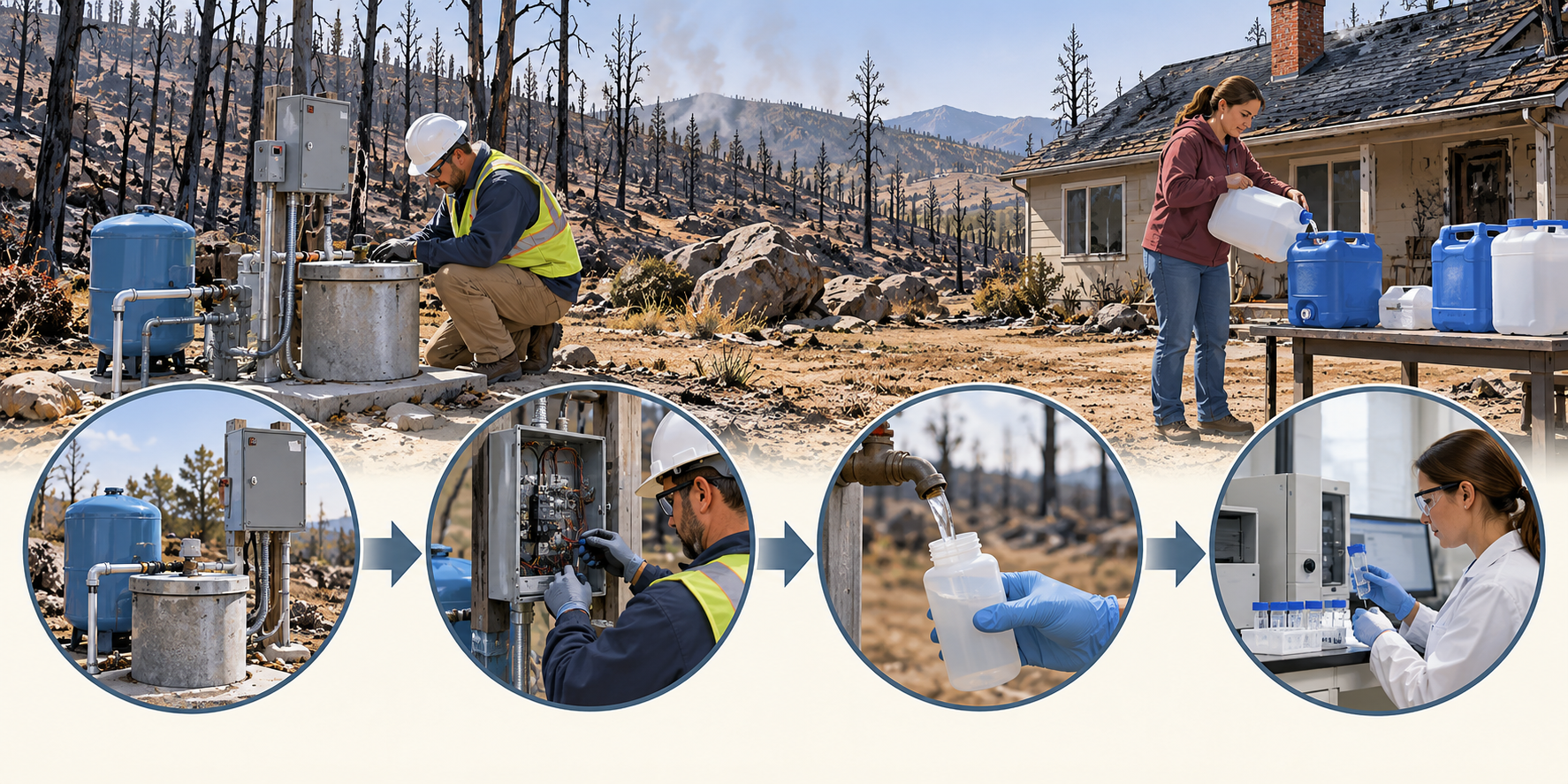
Establish which water uses are affected
Follow local public-health advice about water use while the affected well is assessed. Health Canada advises owners to avoid use after a nearby fire until potential damage is assessed and testing is planned for the event. CDC says wildfire effects and response vary by region and recommends contacting the local health department for situation-specific help. Those sources do not determine the condition of an individual well.
Budget an interim supply separately from repair. The duration may depend on access, fire response restrictions, equipment availability, test turnaround, repair scope, and any follow-up directed by the authority. Ask what the temporary source can serve, how it will be delivered or stored, and whether the quote includes a second delivery. No general price or duration is established for this item.
Start with qualified assessment
The first paid step may be an inspection of the well cap, casing, pump, wiring, controls, visible piping, pressure system, and surrounding site. Loss of pressure or flow after an outage or fire matters even if power has since returned. An altered taste, color, or odor is a reason to report the change, but it cannot identify a contaminant or select a treatment.
Fire damage can affect different materials and components unevenly. CDC identifies pressure loss, altered water, equipment damage, and synthetic components such as PVC, HDPE, and rubber as conditions that may change assessment and testing decisions. Extent of nearby fire or component damage can matter. A qualified well contractor may need to assess the well; damaged electrical equipment may need a licensed electrician or utility. This is a budgeting guide, not an inspection or restart checklist.
The quote should identify what was examined, which parts were inaccessible, and what the inspection does not establish. A visual wellhead check does not determine laboratory water quality. A laboratory sample does not show whether a pump, casing, pressure control, or interior pipe is damaged.
Select testing from the event and site
Testing is not one standard post-fire product. CDC says bacterial testing is a minimum in certain fire-related risk situations and advises considering volatile organic compounds, semi-volatile organic compounds, and locally relevant contaminants when damage or materials warrant it. Health Canada similarly ties additional analysis to the event, component damage, and nearby possible contamination. The local health authority, qualified professional, and laboratory should determine the sample points and analytes for the actual property.
Price these items separately: sample collection, bottle or courier, each laboratory analysis, rush processing, interpretation, and any repeat sample. Ask whether a suggested panel is based on observed pressure loss, damaged synthetic components, direct fire impacts, fuel or chemical storage nearby, or another identified condition. Do not pay for an unexplained broad panel, but do not treat a bacteria-only result as proof that chemical questions are resolved.
Local component estimates are not a wildfire total
Available cost sources give some local service components, not a complete post-fire package. Use them only to frame a written quote. They do not include wildfire-specific site access, temporary water, a defined contaminant panel, repair findings, repeated visits, or a return-to-use decision.
| Component example | Published planning context |
|---|---|
| Pump/flow-rate check | Massachusetts state program-planning report: about $150–$350 USD |
| Professional well evaluation with sampling | Massachusetts report: about $350–$500 USD; camera inspection or evaluation with sampling is listed at about $450–$700 USD |
| Well cap or sanitary seal | Massachusetts report: about $75–$250 USD |
| Full wellhead assembly | Massachusetts report: about $500–$1,500 USD |
| Pump replacement | Massachusetts report: about $3,000–$5,000 USD |
| Inspection and water-quality test | Ontario service-cost guide: about $300–$600 CAD |
| Pump replacement | Ontario service-cost guide: about $1,500–$4,000 CAD |
MassDEP’s March 2026 report assembles Massachusetts planning estimates from program and market research; they are not individual household quotes. The Ontario figures are a third-party regional planning guide, not an official schedule or a wildfire estimate. Neither provides a national U.S. or Canada price. Keep the currencies and markets separate and obtain local estimates for the actual damage.
Build a staged recovery budget
List costs in the order they become known: interim water and delivery; the first qualified assessment; sample collection and each selected lab test; confirmed component repairs; then any repeat testing, treatment verification, or second visit. Ask whether access limits, restricted roads, after-hours attendance, or parts availability could change the schedule or price. Do not assume a property-wide fire assessment includes the separate well inspection or laboratory work.
Record what each stage will answer and what result authorizes the next expense. For example, a pressure or flow issue may require equipment diagnosis even while a separate sample answers a water-quality question. If the source of a possible chemical concern is not established, price the local authority’s recommended investigation before accepting a permanent treatment package. This keeps both over-testing and under-scoped repairs visible without pretending the event has one standard scope.
Compare three recovery paths
Pressure loss, no visible component damage. Price the assessment, water-quality sample selected by the authority, temporary water, and follow-up. The result may show that the problem is a repairable pump/control issue, a water-quality issue, or both. Do not authorize a pump replacement before the professional has identified the failure branch.
Visible damage to a well or water-system component. A cap, casing, pump, control, or pipe repair may be needed. Ask whether disconnect/reconnect, pressure testing, sample collection, treatment-device service, electrical work, and restoration are included. Fire can create several separate trades; a well contractor’s quote does not automatically cover electrical or interior plumbing work.
Unresolved source or water-quality concern. Further laboratory work, a source investigation, a suitable treatment design, or an alternate supply may be considered. A disinfection service responds to specific microbial conditions; it does not remove every chemical contaminant or repair damaged components. A treatment system should follow interpreted results and a defined performance claim, with verification included in the budget.
Make quotes comparable
Separate each proposal into assessment, laboratory work, repair, temporary supply, follow-up, and any longer-term treatment. Ask:
- What did the provider observe, and what is still unknown?
- Who selects the sample location, analytes, lab, and interpretation?
- Is sample collection included, or is only laboratory analysis priced?
- Does the estimate include after-hours travel, restricted access, or a return visit?
- Which well, pump, control, electrical, plumbing, or treatment components are included?
- Is disinfection being proposed for a supported microbial reason, and what does it exclude?
- What test or authority decision is still needed before normal use?
- What costs are allowances, and what event or discovery changes the price?
Do not compare an inspection-only visit with a package that includes sample collection and a pump repair. Ask for a written approval limit before concealed or uncertain damage expands the job. Temporary water and repeat sampling can continue after the visible repair is complete, so keep those lines open in the estimate.
Keep related work in separate scopes
Wildfire cleanup of the house and land, insurance claims, generator installation, septic work, fuel-system work, and environmental site investigation are separate projects. This article covers the private-water system. If the event affects several property systems, coordinate schedules but retain separate qualified assessments and quotes. A well repair does not assess indoor wiring, septic condition, or every nearby contaminant source.
If water testing identifies a microbial concern, the positive-bacteria guide and well-disinfection cost guide explain that response. If a lasting treatment system is proposed, compare its scope and maintenance in the treatment-system and maintenance guides. A flooded-well recovery decision uses a different event context.
Keep a recovery record
Retain the event date, loss-of-power or pressure history, affected materials, well and pump observations, sample locations, analyte list, laboratory reports, authority guidance, repairs, parts, and follow-up decisions. This allows a later provider to distinguish an unresolved issue from a new water-quality change and prevents repeated diagnostic charges for facts already documented.
Before considering the water-system project complete, ask for a written note describing the work performed, remaining limitations, results received, and who determines the next water-use step. A repaired pump may restore flow without answering a water-quality concern. A favorable result may not prove that a damaged pipe or control is serviceable. The project needs both system information and the applicable water-quality decision.
Set the next decision before the first visit
The first quote should say what the provider can inspect at the initial visit and when more work needs separate approval. If the source is inaccessible, electrical damage is suspected, or the lab advises a broader panel, identify the next decision and its likely scope rather than assuming the first estimate covers everything. This protects the household from confusing an assessment allowance with a final recovery price.
Funding or disaster assistance may offset some eligible work, but it has a separate application and approval process. Confirm eligibility and current availability before deducting an award from the budget. The private-well assistance guide covers local program terms; it does not determine whether this well needs repair, treatment, or another source.