
Finish repair comes after the leak or other moisture source has been corrected and the affected assembly has been assessed. The remaining work might be stain treatment, a small patch, board replacement, plaster repair, texture matching, primer, and paint. Hidden insulation, framing, wiring, or contamination can change the scope before that finish work begins.
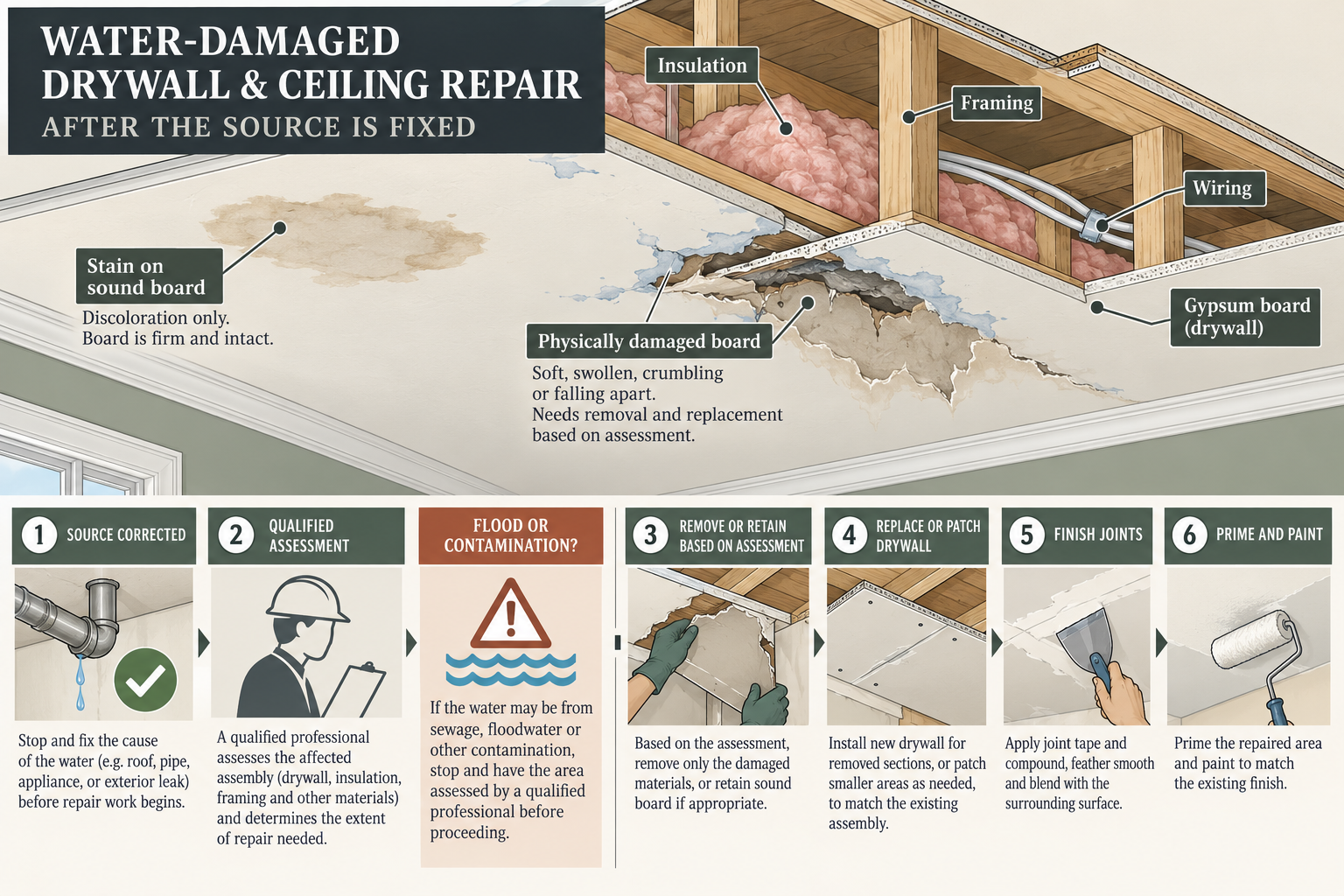
Separate flood or sewage exposure from other water damage
The Gypsum Association’s flood FAQ says gypsum board exposed to flood or sewage water must be replaced. It also says that site-specific remediation decisions require in-person evaluation by a knowledgeable building professional. This is a specific flood and sewage boundary, not a universal drying threshold or a complete cleanup procedure.
For Canadian flood cleanup, Health Canada says finished walls may need complete removal when water stood several feet high, drainage took many days or longer, or the area remained very humid for an extended period. These are source-specific flood conditions, not a diagnosis of a particular wall or permission to handle contaminated materials without appropriate help.
For other water exposure, GA-231-2025 describes replacement as the default unless all of these conditions are met: the source is identified and eliminated; the water was uncontaminated; the board can be thoroughly dried before mold growth begins; and it remains structurally sound without rusting fasteners, delaminated facing, a soft or powdery core, or physical damage that reduces system properties. These are the Association’s general assessment criteria, not a homeowner test or a property-specific determination. Its 24–48-hour mold-growth discussion is general guidance, not a deadline that proves a panel has dried.
A stain, surface appearance, or single meter reading does not establish that a panel can remain or that a cavity is ready to close. GA-231-2025 says handheld meters do not reliably establish absolute gypsum moisture; with material-specific calibration and careful interpretation they may help compare relatively wetter and drier areas. A repair to a fire- or sound-rated assembly also needs to match its original design, including board type, fastener type and spacing, and staggered joints. Have the assembly assessed in context before finish work resumes.
Staining is different from damaged board
A dry stain on stable material may need stain-blocking primer and repainting. Soft, swollen, delaminated, crumbling, or otherwise damaged board may need an opening or replacement. Plaster can require a different repair method and may need assessment of the supporting lath or substrate.
The cost difference is not just the price of a new sheet. A small patch may require backing, joint compound, tape, sanding, texture, and paint. Replacing a wider section adds controlled removal, disposal, new board, corner or trim work, and a larger finishing area. A ceiling can cost more than the same square footage on a clear wall because overhead access, protection, and working around lights or vents take additional setup.
The visible mark can be smaller than the wet area behind it. Water may affect insulation, framing, fasteners, wiring, plumbing, trim, or adjacent surfaces. Ask who is checking those layers and what is outside the finish contractor’s scope. Do not use a new coat of paint to conceal an active source or unresolved condition.
The correct repair boundary may also extend beyond the damaged board. A new section must connect to sound edges and may need enough surrounding work to restore joints, corners, and the same appearance under normal room lighting. Conversely, a broad repaint may be unnecessary if a small repair can be finished acceptably at a natural wall break. Ask what the proposed boundary solves and whether an appearance mock-up or sample patch would help set expectations.
How the repair scope changes the price
A small accessible patch may include opening the surface, replacing a section, taping and finishing joints, sanding, priming, and painting. The total can rise when the repair is overhead, the texture is difficult to match, the room needs extensive protection, or the finished surface must extend beyond the patch to blend.
A replacement quote may also include removal and disposal, insulation or backing assumptions, corner and fixture details, multiple finishing visits, primer, paint, and cleanup. Ceiling height and access can add setup and protection even when the visible damage is limited. Canadian and U.S. market observations use different scopes; they should remain separate rather than being combined into one rate.
The drying and finishing sequence can add labor even when the final patch is small. Joint compound is applied in stages, and each pass may need to dry before sanding or the next coat. Matching an existing texture and coating can require test areas or a wider blend. Ask whether labor and return visits are included, and whether the price ends at a sanded joint, a textured surface, or a primed and painted finish.
Compare complete restoration paths
A limited clean-water case may involve a corrected source, a stable dry stain, sound board, and repainting. Confirm that the quote states the assumed condition and whether primer, color matching, and a larger wall or ceiling repaint are included.
A localized board repair may require removal, replacement, joint treatment, texture, sanding, primer, paint, and protection. It is useful to compare the finished endpoint rather than a patch price that stops before the surface is restored.
A flood or sewage case requires the flood-specific replacement and contamination boundaries above. Removal may expose insulation, framing, or other materials requiring qualified assessment. Price the finish reconstruction only after the responsible professionals have determined what may be cleaned, removed, dried, or rebuilt.
Sequence the work before approving the finish quote
Keep the stages visible: source correction; assessment of water exposure and affected materials; required cleanup or remediation; removal; cavity or substrate work; replacement board or plaster; finishing; primer and paint; and cleanup. Not every project needs every stage, but a quote should say which ones it includes and what must be resolved first.
If the source is not corrected, water quality is uncertain, the wall has remained wet, or demolition may expose a larger area, ask for a pause point and change-order process. Mold remediation, contaminated-water handling, structural repair, and major insurance restoration are separate scopes when they control the work.
Questions that make bids comparable
Ask whether the estimate assumes staining only, a board patch, or replacement; whether ceilings, fixtures, insulation, framing, and disposal are included; how texture and paint will be matched; and whether the price covers protection and cleanup. Confirm the moisture and source assumptions, what must be verified before closing a cavity, and who handles concealed conditions.
Compare bids only when they end at the same point. “Drywall repair” may mean taped joints to one contractor and a finished, primed, painted wall or ceiling to another. State the desired finish and the included stages so a lower allowance does not hide work that will be priced later.
For ceiling work, also compare ladder or lift access, fixture removal and replacement, floor and furniture protection, debris handling, and whether the repair extends to a natural break in the ceiling. For a wall, ask how corners, trim, outlets, cabinets, and adjoining surfaces will be protected and finished. These details help explain why similar-looking water marks can produce different bids without implying that every project needs full-room replacement.