
Interior painting is priced by the surface and the preparation, not simply by the floor area of a room. Walls-only, complete-room, and whole-home work can have very different labor and protection requirements.
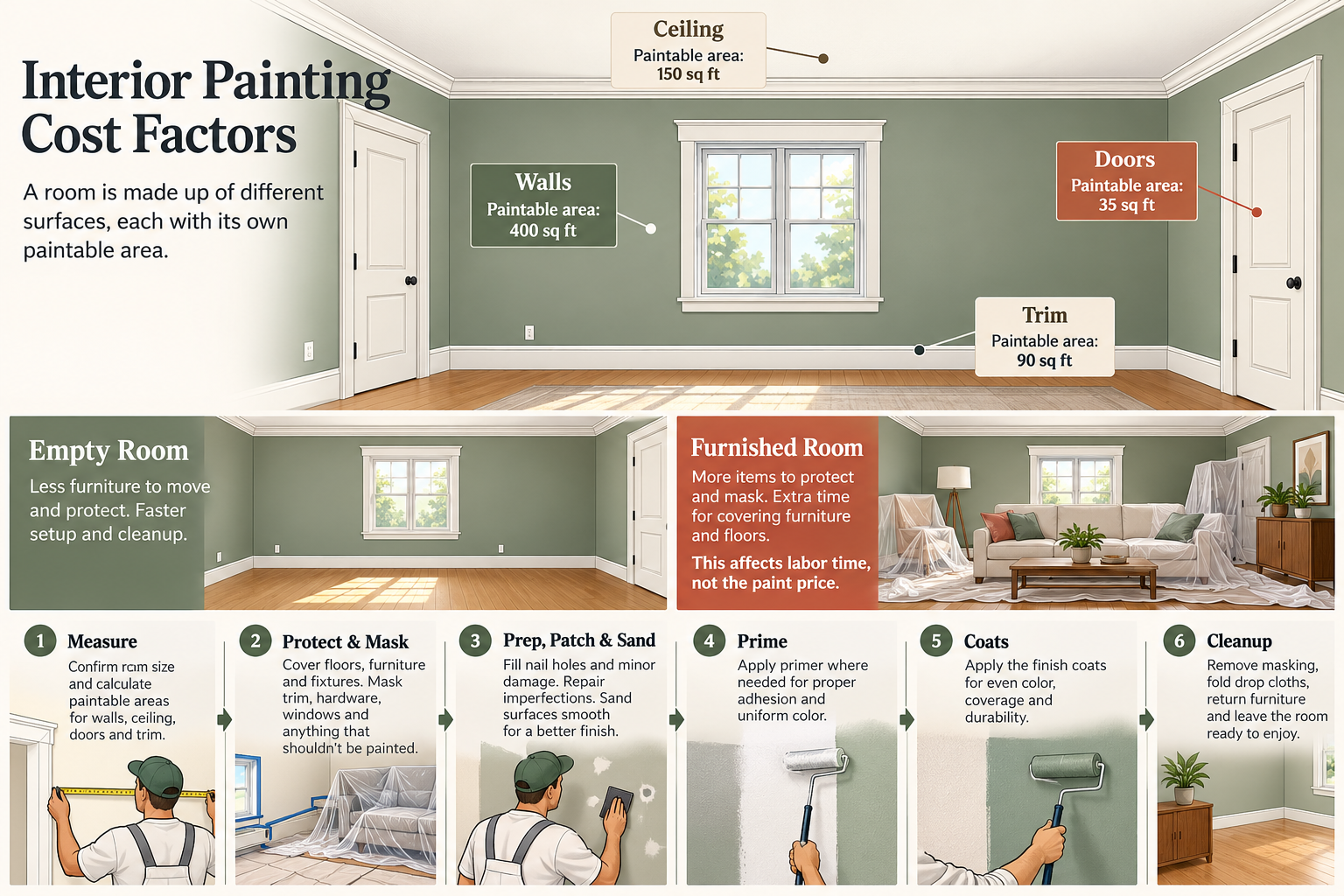
How painters build the scope
Ask whether the estimate measures painted wall area, floor area, rooms, or features. Clarify the number of coats, color change, paint grade, ceilings, trim, doors, repairs, caulking, stain blocking, furniture moving, masking, protection, and cleanup. Occupied homes and detailed rooms can require more labor even when the area is modest.
Canadian market observations report roughly $2–$4 per square foot for interior walls and $3–$5 when ceilings and trim are included. The source also reports labor at about 60–75% of total and notes preparation as a major driver. The measurement basis and regional labor vary, so these are market observations, not a national rate. No U.S. figure is created by converting them.
Preparation is the swing factor
Sound, clean walls may need limited preparation. Peeling paint, stains, cracks, holes, texture, wallpaper, smoke residue, or moisture-related failure can add patching, sanding, priming, or broader resurfacing. An active leak or persistent moisture source must be corrected before painting.
Compare bids fairly
Give each painter the same rooms, colors, finish, and repair expectations. Request line items for labor, materials, prep, protection, ceilings, trim, furniture, and cleanup. Keep U.S. and Canadian prices in their local currencies and ask about tax, minimum charges, and change-order rates.
How painters measure the project
“Per square foot” can mean painted wall area, floor area, ceiling area, or a bundled room allowance. Ask the contractor which measurement is being used. A whole-room price may include more than wall area because it also reflects setup, doors, trim, masking, furniture, and cleanup.
The useful budget separates walls, ceilings, doors, trim, preparation, and special coatings. A small room with many openings and detailed trim can take longer than a larger open room. A whole-home project may have a lower average setup cost per room while requiring more staging, color coordination, and return visits.
Labor and preparation
Labor often dominates the total because of masking, protection, patching, sanding, caulking, priming, edge work, and the number of coats. Sound, clean walls may need limited preparation. Peeling paint, stains, cracks, holes, old wallpaper, texture, smoke residue, or moisture-related failure can turn repainting into surface restoration.
The finish level matters. A color change from a dark or saturated coating may require additional coverage or primer. A high-sheen finish reveals more surface variation than a forgiving low-sheen coating. The painter should identify whether the price includes the preparation needed for the chosen result.
Occupied versus vacant homes
In an empty home, the owner may save on furniture handling, but fixtures, floors, cabinets, and doors still require protection. In an occupied home, moving, covering, staging, daily cleanup, and access restrictions can add labor. Confirm who moves beds, electronics, wall art, appliances, and packed furniture.
Ask how many rooms can be worked at once and whether the quote assumes continuous access. A project spread over weekends or partial days may require more setup and return visits than a vacant-home schedule.
U.S. and Canadian context
Canadian market observations report approximately $2–$4 per square foot for interior walls and about $3–$5 when ceilings and trim are included, with labor commonly representing a substantial share. These are commercial planning observations, not a complete national schedule. U.S. and Canadian price measures differ and should not be converted or ranked mechanically.
Cost scenarios
A simple repaint has clear walls, one color, limited repair, and an empty or easily protected room. A typical project includes patching, two or more finish coats as needed, furniture, doors or trim, protection, and cleanup. A complex project includes extensive preparation, wallpaper or texture, high access, multiple colors, stains, legacy coatings, occupied-home staging, or whole-home sequencing.
Quote checklist
Ask for the measurement basis, rooms and surfaces, paint grade, colors, coats, preparation, primer, ceilings, trim, doors, furniture, protection, access, taxes, cleanup, and change-order rates. Keep active moisture, hazardous-material assessment, and major wall repair separate from ordinary painting.
The best painting estimate explains what surface is being coated, how it will be prepared, and what the homeowner must do before the crew arrives.
Define the measurement
An interior-painting estimate can be based on floor area, wall area, rooms, doors, trim, or a task list. These bases are not interchangeable. List the rooms and surfaces, ceiling height, openings, built-ins, closets, and whether ceilings, trim, doors, and closets are included. A floor-area quote may be useful for a quick planning signal, but it needs a surface and preparation description before approval.
Labor is often preparation
Cleaning, patching, caulking, sanding, stain blocking, priming, masking, moving furniture, protecting floors, and allowing coats to dry can exceed the time spent rolling paint. Dark-to-light changes, glossy surfaces, smoke or water staining, textured walls, and poor adhesion may require additional preparation. Ask which conditions are included and which trigger a change order.
Paint grade, color, sheen, number of coats, and the required cut line also affect the result. “Two coats” does not mean the same labor on a ready wall as on a repaired or strongly contrasting surface.
Simple, typical, and complex scopes
A simple project has empty rooms, sound surfaces, a compatible color, and limited trim. A typical project includes repairs, furniture protection, several colors, ceilings or trim, and normal access. A complex project includes high ceilings, many openings, wallpaper or texture, extensive patching, stains, occupied rooms, or coating-compatibility questions.
Compare the finished quote
Request separate lines for preparation, primer, paint, ceilings, walls, trim, doors, protection, furniture, access, materials, tax, cleanup, and return visits. Keep active moisture, major drywall or plaster repair, hazardous-material assessment, and structural work outside ordinary painting unless explicitly included. The best comparison is a defined finished-room scope, not a low rate multiplied by an unclear area.