
Ceiling painting has its own access and protection scope. Height, texture, stains, repairs, masking, and the decision to bundle walls and trim can matter more than the ceiling’s square footage.
What changes the price
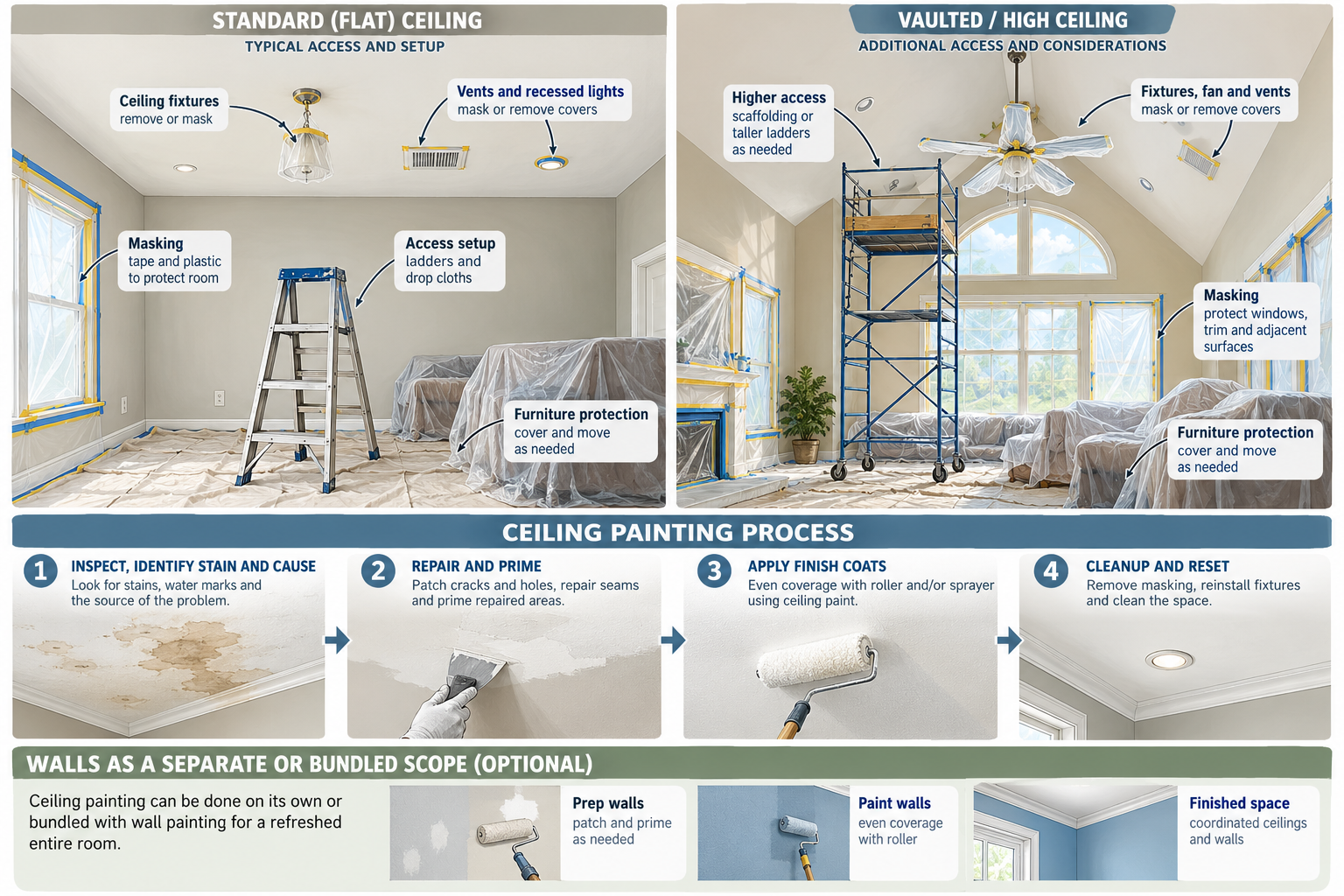
Vaulted or high ceilings may require additional access equipment and setup. Texture, repairs, stain blocking, furniture protection, light fixtures, vents, corners, and the number of coats add labor. A color change or a ceiling that needs a smoother finish can increase preparation.
Canadian observations report about $3.50–$6.50 per square foot for ceiling-only painting. Angi’s 2026 U.S. ceiling-painting guide reports a $250 national average and says most projects fall between $200 and $500. Its broader $150–$10,000 span reflects differing ceiling heights, textures, and access conditions; the guide gives no common room size or project sample. Keep these source-specific signals separate and compare the surfaces, preparation, and access in the quote.
Stains need a cause check
A ceiling stain may be an old cosmetic mark or evidence of an unresolved leak. Correct the water source and assess the material before painting. EPA guidance does not provide a universal finish-repair threshold, and a fresh coat does not establish that hidden moisture or contamination is absent.
Compare quotes
Ask whether the bid includes repairs, stain-blocking primer, texture, masking, fixtures, furniture, access, coats, paint, cleanup, and any return visit. Compare ceiling-only and bundled scopes using the same assumptions.
Why ceiling painting is a separate labor scope
Ceilings require overhead work, masking, protection, access, and a consistent finish across a broad plane. Height, vaults, beams, fixtures, vents, texture, stains, and room contents can matter more than the area itself. A ceiling-only bid may also include setup and cleanup that would be shared with walls in a larger bundled project.
Ask whether the quoted measurement is ceiling area, room area, or a project allowance. Confirm whether the contractor is painting only the ceiling or also crown, walls, doors, vents, fans, and light fixtures. A lower price may simply exclude the interfaces the homeowner expects to look finished.
Preparation before paint
A clean ceiling with a stable existing coating may need limited preparation. Cracks, holes, texture damage, peeling, stains, smoke residue, or prior patching can require repair, sanding, primer, or texture matching. Smooth and high-sheen finishes show more variation than forgiving textured surfaces.
A stain may be cosmetic or may indicate unresolved water. Correct the source and assess the material before painting. EPA guidance does not establish a universal finish-repair threshold, and a coat of paint is not proof that a cavity is dry or free of contamination.
Height and access scenarios
A simple project has a standard-height room, clear furniture path, stable finish, and one color. A typical project includes masking, furniture protection, minor repair, stain-blocking primer, texture or finish blending, multiple coats, and cleanup. A complex project includes vaulted or high ceilings, stairs, limited access, extensive repairs, fixtures, occupied-room staging, or a finish change that requires several preparation stages.
Use the source-specific price context above only as a planning signal. The source figures do not establish a price for a particular ceiling or allow a direct comparison between markets.
Standalone or bundled work
Bundling walls and ceilings can share protection and setup, but it may also hide the amount of preparation assigned to each surface. Request a ceiling-only price and a bundled price with the same repair assumptions. If walls, trim, or a leak-related restoration are included, identify them separately.
Quote checklist
Ask for ceiling height, access equipment, area basis, texture, repairs, stain blocking, coats, paint, fixtures, furniture, masking, protection, return visits, and cleanup. Confirm what happens if the surface has recurring moisture or movement. Compare the final finish and preparation, not only the paint quantity.
Define the ceiling-only scope
State which ceilings are included, their height and texture, and whether the estimate covers repairs, primer, stain blocking, fixtures, crown molding, adjacent walls, and closets. A ceiling priced by floor area can hide differences in height, access, and surface condition. The final sheen and tolerance for visible variation matter especially under recessed or directional lighting.
Stains and the source boundary
Water marks, smoke, grease, peeling paint, and uneven sheen may need cleaning, sealing, or broader preparation before finish coats. A stain-blocking primer can improve appearance, but it does not correct an active leak, condensation, damaged board, or structural movement. Ask what has been verified and keep source correction, remediation, and structural work separate from ordinary painting.
Height, texture, and protection
Textured ceilings can take more material and careful coverage than smooth ones. High ceilings, stairwells, fixtures, furniture, masking, floor protection, sanding, and return visits add labor even when the measured area is modest. Confirm who removes or protects fixtures and what the homeowner must clear before work begins.
Compare bundled work
Ask for separate lines for preparation, repairs, stain blocking, primer, paint, access equipment, fixtures, protection, furniture, and cleanup. Compare ceiling-only work with a room-wide or whole-home bid only after the same surfaces and finish standard are defined. The useful budget prices a clean, uniform ceiling and identifies conditions that would make the scope expand.
Choose the finish and preparation together
Specify whether the ceiling is being refreshed in the same color, changed to a new color, or repaired after a stain or patch. The number of coats and the risk of visible flashing depend on the existing surface, paint condition, repairs, and finish. Ask the contractor to identify the assumed sheen and whether a test area is needed where old and new surfaces meet. A paint allowance without the preparation assumption is difficult to compare.
Before work begins, decide what happens to light fixtures, fans, vents, smoke alarms, crown, and wall edges. Some items may be protected in place; others may need removal by an appropriately qualified person. Note whether closets, stairwells, and small ceiling areas are included. These details reduce disputes about a “whole-room” price that excluded difficult surfaces.
Plan for occupied rooms
Room protection and access can change both labor and schedule. Ask whether furniture must be cleared, how floors and built-ins are covered, how long the room should remain undisturbed, and whether a second visit is expected after repairs or primer. A ceiling-only job may save material compared with a full-room repaint, but it can still require separate masking and setup.
If the ceiling has a water mark, peeling paint, or a recurring crack, separate the finish decision from source or movement correction. A bid can include a defined cosmetic repair after the cause is addressed, but painting alone does not establish that the underlying condition is resolved. Include that boundary in the estimate before comparing the contractor’s total.