
“Complete HVAC replacement” can mean a straightforward equipment changeout or a wider project involving ducts, pipes, controls, electrical capacity, venting, condensate, removal, and access. Canadian specialist examples include about CAD $3,500–$7,000 for a gas furnace with usable ducts, CAD $6,500–$12,500 for a gas furnace plus central AC with existing ducts, and CAD $4,500–$10,000 for a ducted air-source heat pump. These are configuration examples, not national quotes. U.S. market guides likewise report broad system ranges and add-ons rather than one standardized price.
Build the quote around actual constraints
List equipment, rooms, ducts, returns, controls, electrical, condensate, venting, refrigerant or fuel work, removal, access, finish restoration, testing, and commissioning. A replacement can be simple when infrastructure is compatible or difficult when the existing distribution, service capacity, or equipment location is deficient. Ask what changes if the old system is not reusable.
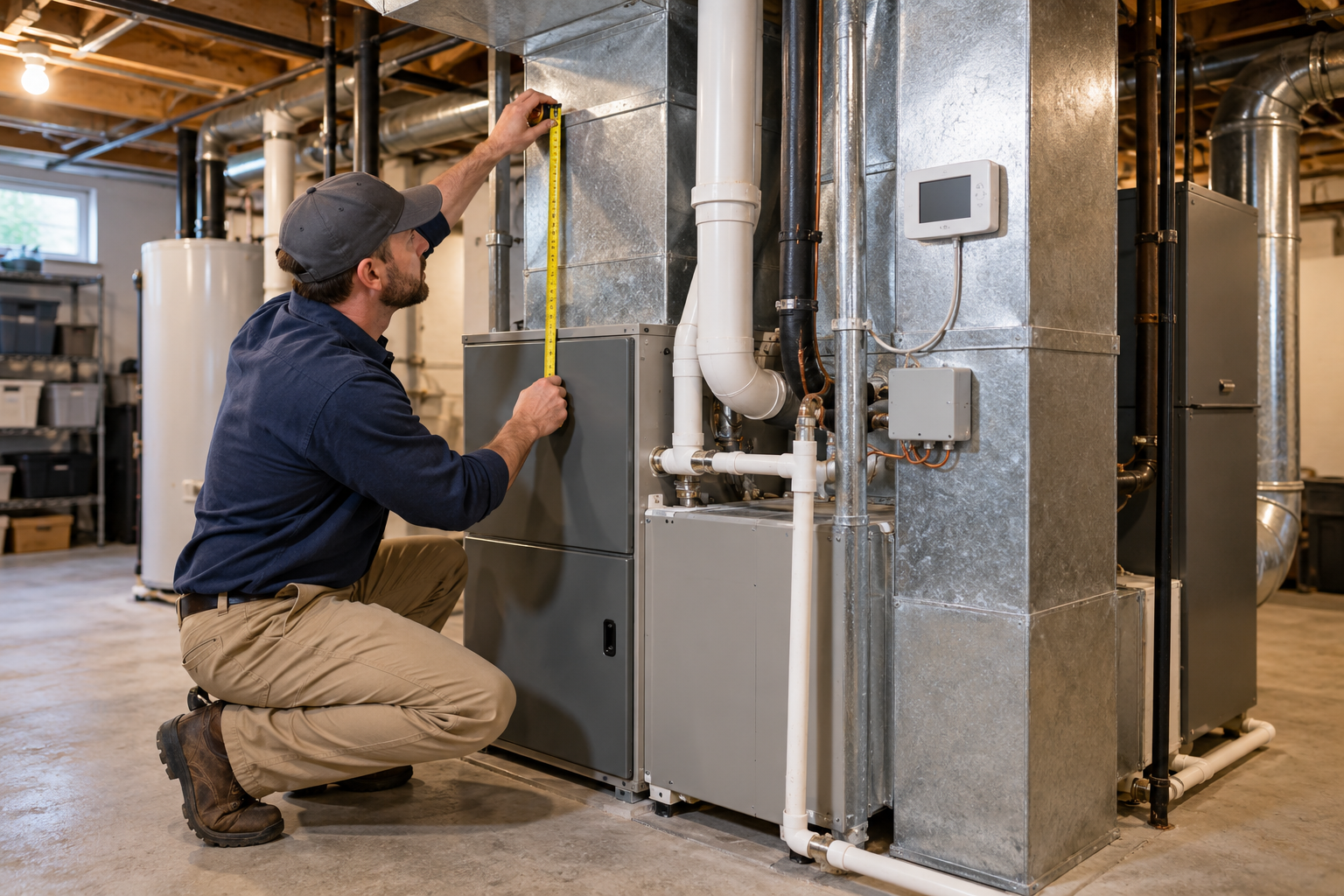
Compare repair, staged replacement, and alternative systems using the same coverage and ownership horizon. Include repeat-work risk, operating assumptions, maintenance, future service, and planned envelope or electrification work. A complete system price is useful only when its boundaries are visible.
Ask whether the proposal covers heating, cooling, or both; the indoor and outdoor equipment; air handler or furnace; boiler and distribution; ducts or hydronic piping; thermostat and controls; refrigerant lines; condensate; electrical and venting; removal; disposal; access; testing; permits where applicable; and warranty documents.
Two contractors can quote the same project name while pricing different boundaries. One may reuse a line set, pad, thermostat, ducts, and venting. Another may replace or modify them. Neither total is comparable until retained components and assumptions are written down.
Equipment is only one cost layer
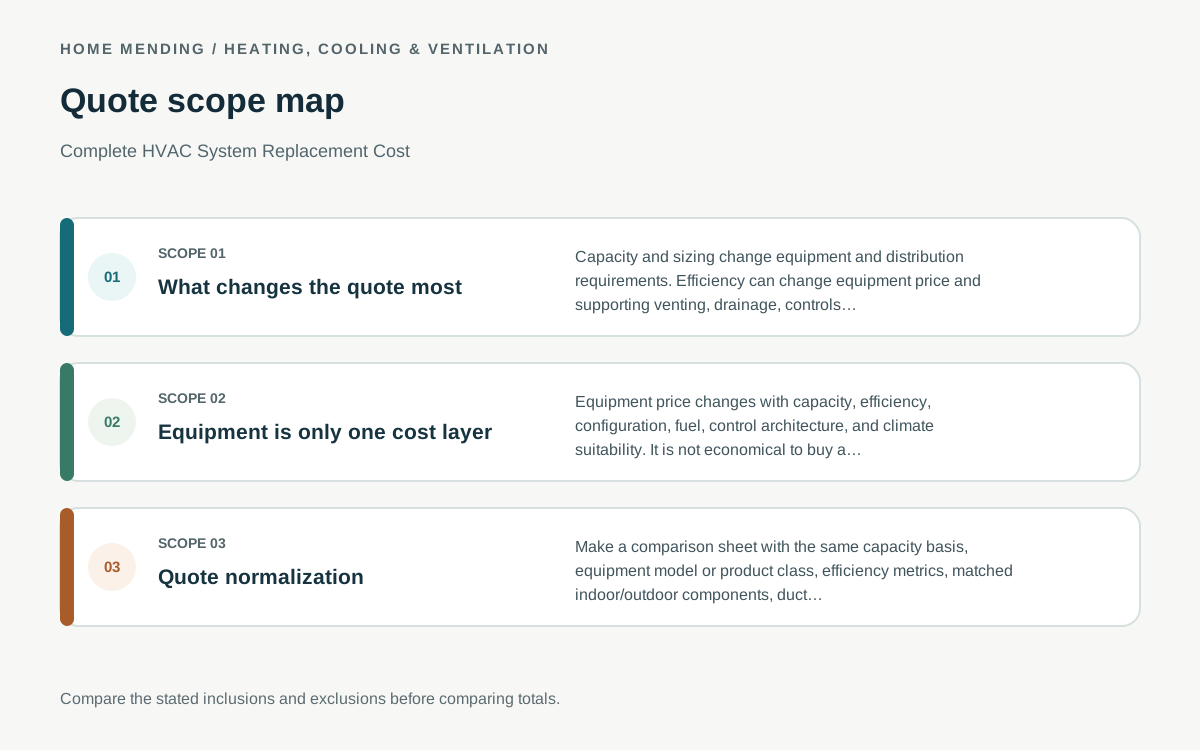
Equipment price changes with capacity, efficiency, configuration, fuel, control architecture, and climate suitability. It is not economical to buy a larger unit simply because it is available. ENERGY STAR’s quality-installation guidance emphasizes evaluation of ducts, leakage, airflow, and refrigerant charge; poor installation can undermine comfort, efficiency, and equipment life.
Supporting layers often include:
- Distribution: ducts, returns, dampers, registers, hydronic pipes, circulators, or emitters.
- Controls: thermostat, staging, communicating controls, sensors, zoning, and equipment interlocks.
- Utilities: gas or oil connections, electrical circuits, disconnects, service capacity, or fuel storage interfaces.
- Venting and drainage: combustion venting, condensate routing, refrigerant lines, pumps, drains, and outdoor penetrations.
- Project logistics: removal, lifting, protection, attic or crawl-space access, disposal, and finish repair.
The more layers included, the less meaningful an equipment-only price becomes.
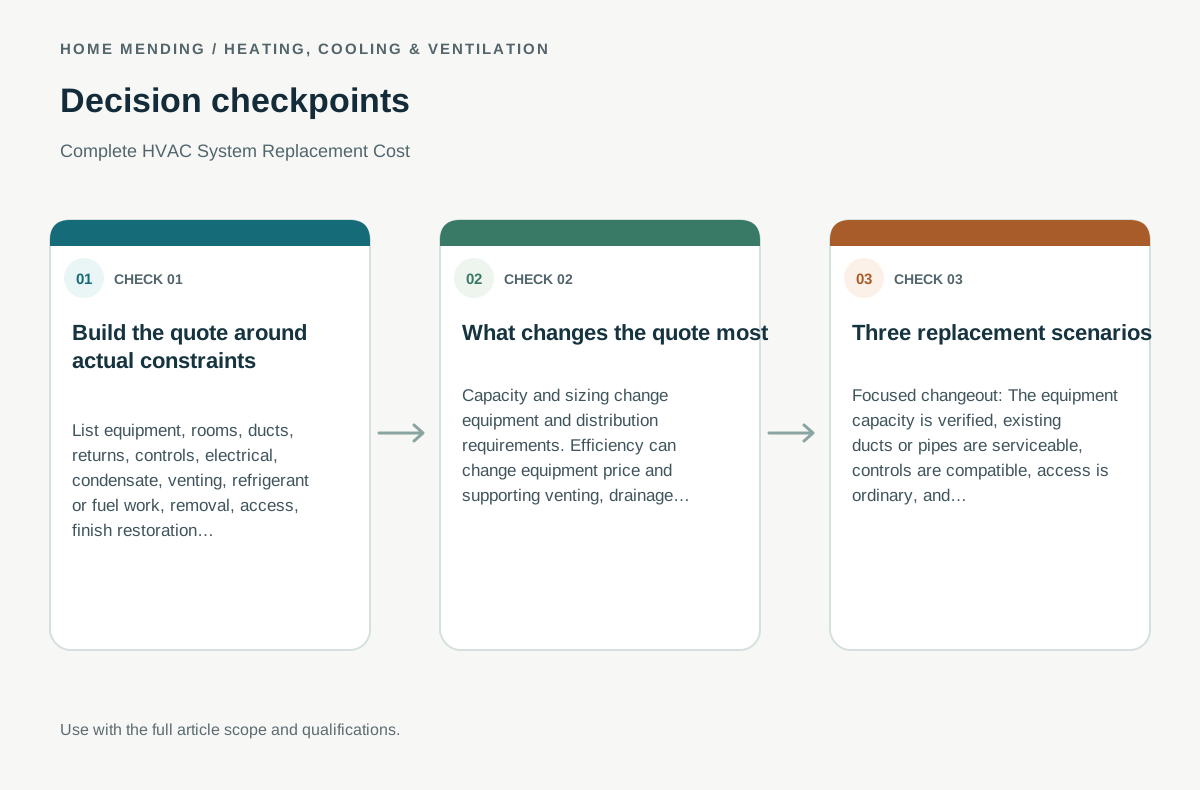
Three replacement scenarios
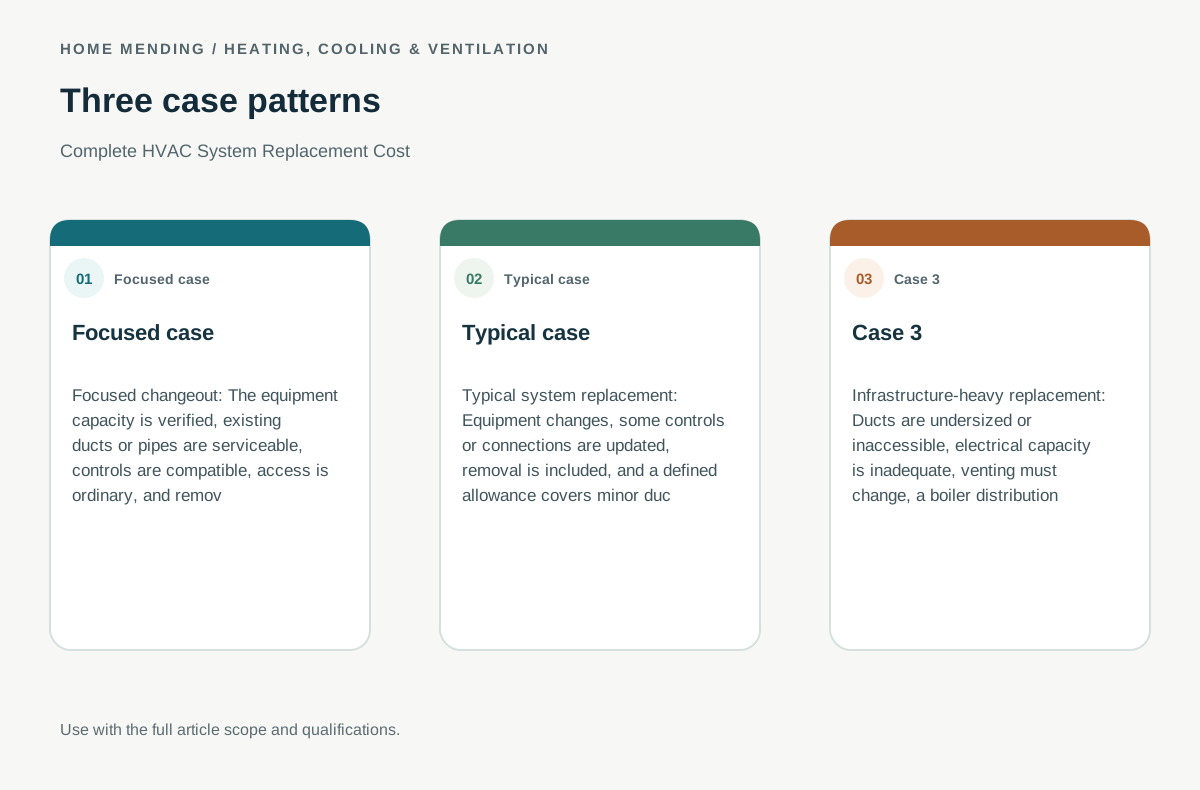
Focused changeout: The equipment capacity is verified, existing ducts or pipes are serviceable, controls are compatible, access is ordinary, and removal is simple. This is the lowest-uncertainty case.
Typical system replacement: Equipment changes, some controls or connections are updated, removal is included, and a defined allowance covers minor duct, condensate, venting, or electrical adjustments. This is often the useful planning case for a homeowner replacing a system at the end of its service life.
Infrastructure-heavy replacement: Ducts are undersized or inaccessible, electrical capacity is inadequate, venting must change, a boiler distribution system needs modification, or several trades must coordinate. New ductwork alone is reported by HomeStars in a broad Canadian example of CAD $10,000–$20,000; it should not be silently treated as a standard equipment add-on.
What changes the quote most
Capacity and sizing change equipment and distribution requirements. Efficiency can change equipment price and supporting venting, drainage, controls, or commissioning. Climate changes the value of low-temperature heat-pump capability and supplemental heat. Access changes labor, protection, removal, and schedule. Existing infrastructure determines whether a one-day changeout is realistic.
Location also changes labor, fuel, permit, disposal, and seasonal demand. U.S. and Canadian numbers should be obtained in their own markets rather than converted. Local authority requirements for gas, oil, electrical, refrigerant, combustion, and permits must be verified for the property.
Quote normalization
Make a comparison sheet with the same capacity basis, equipment model or product class, efficiency metrics, matched indoor/outdoor components, duct or pipe assumptions, controls, refrigerant lines, condensate, utility work, venting, removal, disposal, testing, balancing, commissioning, permits, warranty, tax, and exclusions.
Ask each bidder to identify retained equipment and the condition they are relying on. Include unit prices for concealed duct, pipe, or substrate work where the condition cannot be known before opening. Keep optional upgrades, comfort accessories, and premium finishes separate from required scope.
Cost interaction is the real uncertainty
A restricted access path can increase removal, equipment handling, protection, and installation time together. A duct problem can add design, repair, sealing, balancing, and testing rather than one “duct charge.” A heat pump can require controls, backup heat, electrical work, and a different capacity discussion. A condensing combustion appliance can require venting and condensate changes.
This is why the best budget has a defined base, an expected total with reasonable allowances, and a difficult-case total for known risks. It does not pretend that every concealed condition can be priced in advance.
When complete replacement is not the best project
If the only failure is a bounded component on otherwise sound equipment, repair may preserve value. If the comfort problem is an envelope, airflow, or moisture issue, replacement may not solve it. If you are considering a gas-to-heat-pump conversion with panel upgrades, fuel abandonment, or multiple systems, the dominant decision belongs to broader electrification planning rather than this ordinary changeout guide.
Replace when the equipment, supporting infrastructure, and ownership horizon justify the coordinated scope. The winning quote is the one that makes both included work and remaining risk visible.
Build the quote in layers
Start with equipment and capacity. Add indoor or outdoor match, ducts or hydronic connections, controls, utility and venting work, condensate, removal, access, testing, and commissioning. Then list optional work such as zoning, smart controls, filtration, or efficiency upgrades. This shows whether a higher total buys a more complete system or simply more options.
For concealed work, request a shared allowance, unit price, photographs, and an approval threshold. A contingency is useful when it describes a plausible condition. It is not useful when it gives the contractor open-ended authority to expand the project.
Why high and low bids differ
A high quote may reflect difficult access, new distribution, electrical or venting changes, premium equipment, multiple trades, or better-defined commissioning. A low quote may be appropriate for a simple changeout—or omit removal, duct work, controls, permits, testing, or warranty administration. Ask each bidder to name the two or three conditions that drive the difference.
Also ask how long the home will be without service, how openings and finishes are protected, and what is retained. If solar, remodeling, insulation, or electrical work is planned, coordinate the sequence while keeping unrelated costs separate from the HVAC base.