
U.S. specialist guidance reports a very broad boiler installation range of about $600–$12,000 because fuel, equipment type, removal, distribution, venting, permits, and site conditions differ. That spread is a scope warning, not a local price. A replacement quote should explain whether it is a boiler-only changeout or a hydronic-system project.
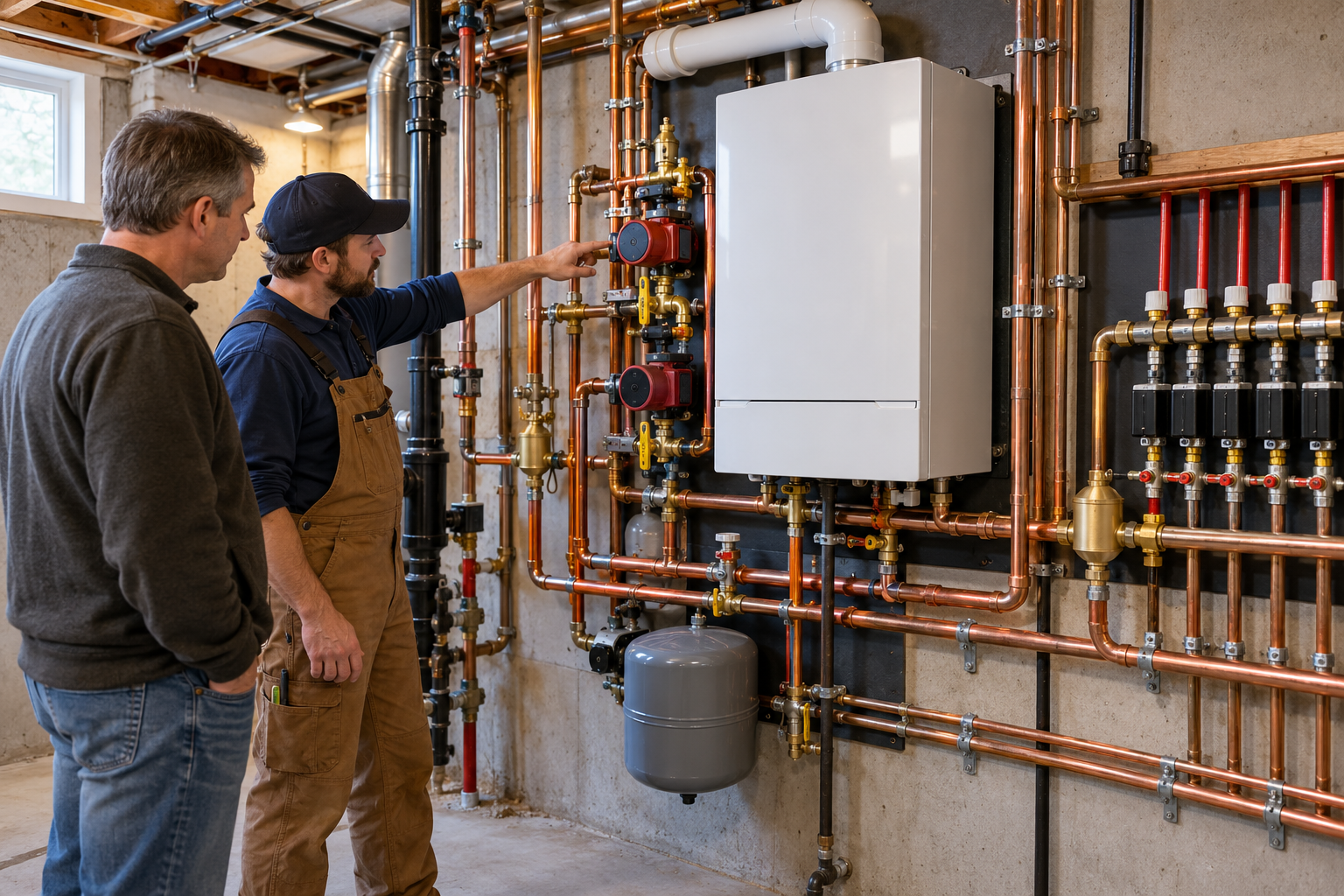
Ask what happens to the existing loop
The boiler is only the heat source. Confirm which zones, emitters, piping, circulators, valves, expansion components, controls, venting, condensate, and water connections remain. If a new boiler operates differently, ask whether distribution temperature, balancing, controls, or pumps need review. Keep concealed piping and finish restoration as explicit assumptions.
Compare a compatible replacement with a broader hydronic correction and with an alternative heat source only when coverage, comfort, access, fuel, controls, and future service are matched. The lowest cabinet price can be the most expensive path if it leaves the same distribution failure or forces a second retrofit.
Price the heat source and the distribution together
A boiler replacement may reuse radiators, baseboard, pumps, piping, controls, and venting, or it may expose a distribution, balancing, expansion, or water-quality problem. Ask which zones, emitters, controls, circulators, tanks, valves, venting, removal, and commissioning are included. A cabinet-only price is not comparable with a quote that corrects the hydronic system.
The simple case has an accessible compatible boiler and sound distribution. A typical case adds controls, pumps, venting, condensate, removal, testing, and selected piping corrections. A difficult case includes concealed leaks, poor balance, obsolete controls, constrained access, or a change in fuel or heat source. Compare repair, staged replacement, and alternative heating only after matching room coverage, comfort, infrastructure, and future service.
Identify hot-water or steam distribution, fuel, boiler type, number of zones, controls, circulators, expansion components, radiators or baseboards, piping, venting, and condensate. A new boiler may connect to existing emitters, but it does not automatically correct poor flow, undersized distribution, leaks, or room-by-room comfort problems.
Ask for the capacity basis and how the existing distribution was evaluated. Do not select a replacement by copying the old nameplate or multiplying floor area. An oversized or undersized boiler can create economic and comfort problems even when it starts reliably.
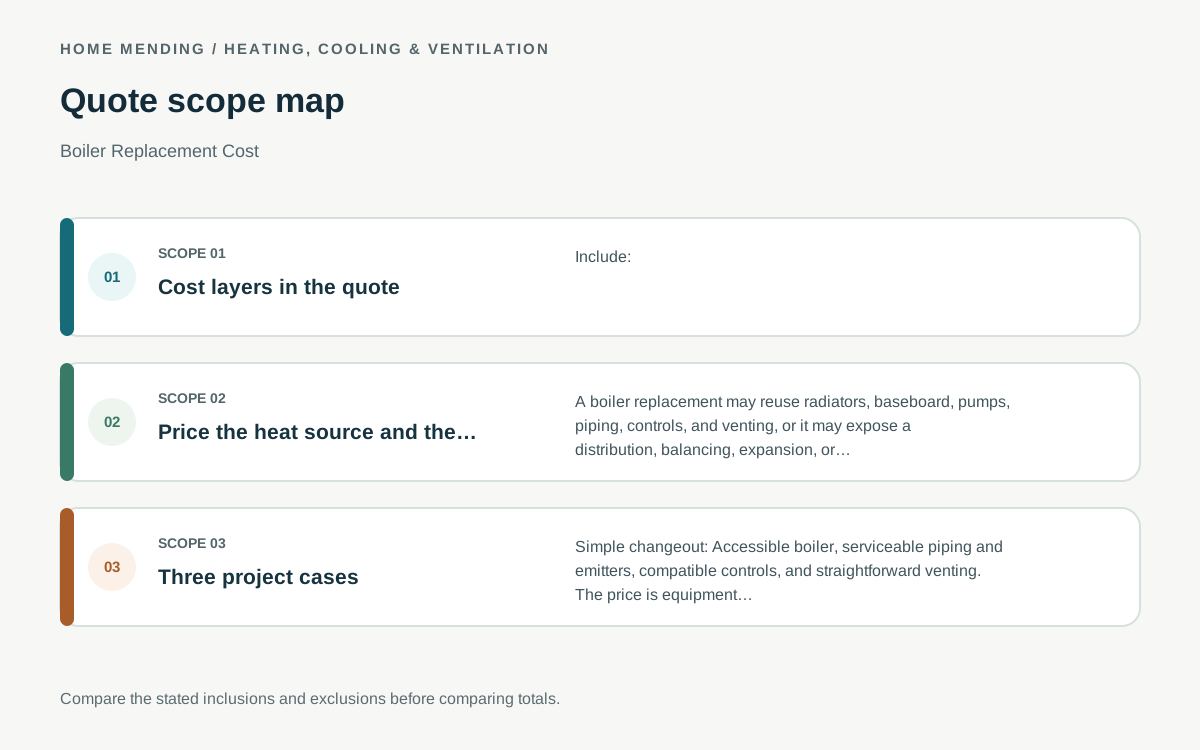
Cost layers in the quote
Include:
- boiler and efficiency or operating class;
- fuel connection, burner, and electrical controls;
- circulators, pumps, valves, expansion components, and zoning;
- supply and return piping or steam connections;
- venting and combustion-air work;
- condensate drain or pump where applicable;
- thermostat, outdoor reset, and other controls;
- removal, disposal, access, protection, testing, and commissioning;
- permits, inspections, and warranty documentation where locally applicable.
Combustion, pressure, gas, oil, venting, and electrical work requires qualified professionals and local verification. A market guide is not authority for safe or code-compliant installation.
Conventional and condensing options
A condensing boiler can change venting, condensate, controls, and return-water design. Its value depends on equipment fit, existing emitters, fuel price, runtime, climate, and ownership horizon. A higher rated efficiency does not guarantee the same field result in every distribution system. The condensing comparison belongs in a separate economic decision, but its supporting scope should be visible in a replacement quote.
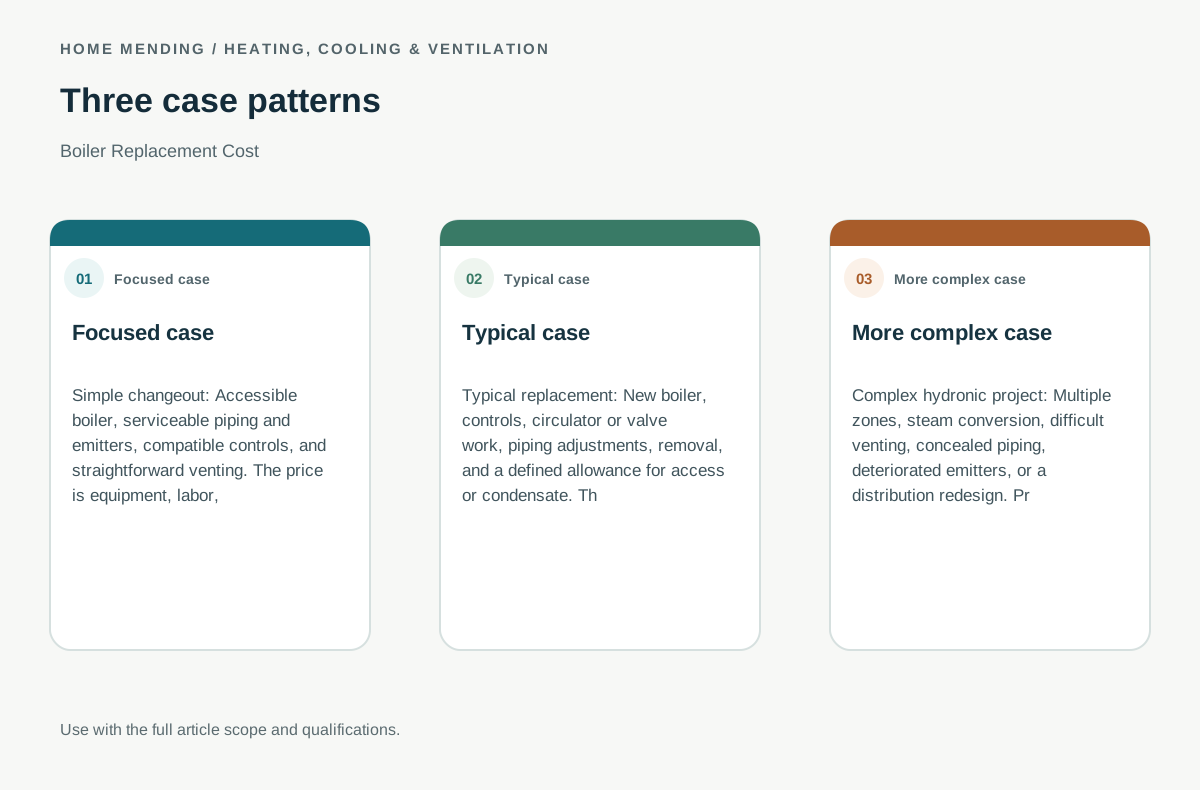
Three project cases
Simple changeout: Accessible boiler, serviceable piping and emitters, compatible controls, and straightforward venting. The price is equipment, labor, removal, testing, and minor connections.
Typical replacement: New boiler, controls, circulator or valve work, piping adjustments, removal, and a defined allowance for access or condensate. This is the proper comparison for many end-of-life systems.
Complex hydronic project: Multiple zones, steam conversion, difficult venting, concealed piping, deteriorated emitters, or a distribution redesign. Price the distribution separately. If radiators or baseboards need replacement, do not hide that work inside the boiler total.
Repair, replace, or redesign
Repair can be sensible when the boiler is reliable and the failure is bounded. Replacement gains weight with repeated repairs, leaks, uncertain parts, rising bills, poor comfort, or a high-cost heat-transfer or control failure. A redesign is justified only when the decision is actually distribution performance, not merely because a new boiler is available.
ENERGY STAR’s replacement guidance treats age, repeated repairs, rising bills, uneven comfort, and suspected broader system problems as prompts for evaluation; it does not impose a universal age rule.
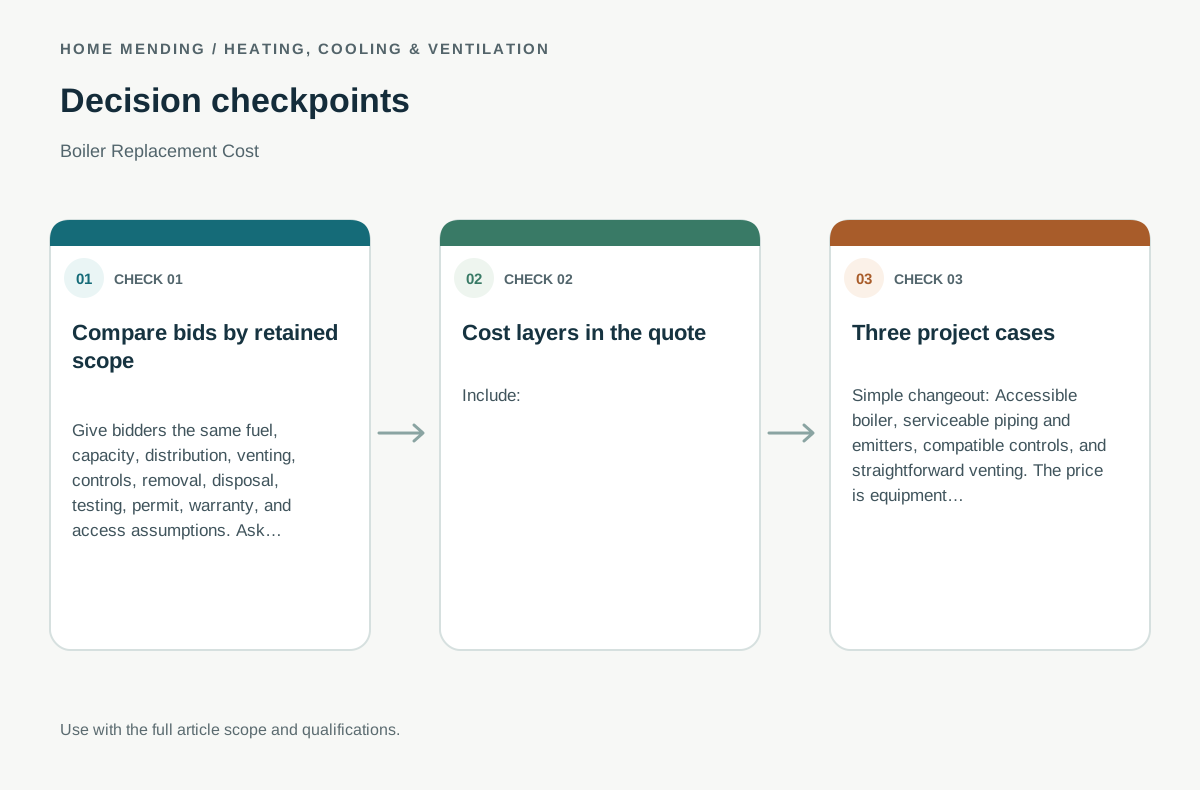
Compare bids by retained scope
Give bidders the same fuel, capacity, distribution, venting, controls, removal, disposal, testing, permit, warranty, and access assumptions. Ask what is retained and what condition is assumed. For concealed piping or masonry, use defined allowances and unit prices where appropriate, while keeping adjacent trade work separate.
The best boiler budget states the base changeout, the expected supporting work, and the difficult conditions that could alter the total. It also explains how the new boiler will interact with the old distribution after installation.
Check the distribution before ordering capacity
Ask whether the installer assessed zones, emitters, circulation, piping, controls, and room comfort. A replacement selected solely from the old nameplate may preserve oversizing or fail to address a distribution restriction. Planned envelope changes can also affect the load. Keep radiator, baseboard, and major piping work separate when those components are the actual project.
Hidden scope and change orders
Use agreed allowances or unit prices for concealed piping, difficult vent routes, access, and finish restoration. State who approves work above the allowance and what evidence is provided. A broad “code upgrade” line should identify the local authority or professional basis without pretending this article supplies a universal rule.
For a long ownership horizon, compare conventional and condensing options with the same capacity, removal, distribution, controls, venting, condensate, testing, and warranty assumptions.
Boiler-only versus hydronic-system replacement
A boiler-only quote assumes the emitters, piping, pumps, controls, and zones can continue to work. A hydronic-system project may replace circulators, valves, expansion components, radiators, baseboard, or concealed piping. Ask which condition was inspected and which components are expressly excluded.
An old distribution system can still be serviceable, but it may limit a high-efficiency upgrade or expose leaks when connections are disturbed. Price known risk with a unit price and approval threshold. Do not accept a broad “upgrade as needed” clause as a substitute for a plan.
For a reliable system with one failing boiler, a focused replacement may be best. For repeated repairs and poor comfort, a coordinated boiler-and-distribution assessment may cost more initially but avoid repeated mobilization.
State what is retained
Ask whether radiators, baseboard, zones, circulators, valves, expansion components, piping, controls, and venting were inspected. A new boiler does not automatically correct poor balance, leaks, restricted flow, or an oversized design. Use unit prices and approval thresholds for concealed piping or access rather than an unlimited allowance.
If comparing condensing and conventional options, use the same capacity, distribution, controls, removal, venting, condensate, testing, and warranty assumptions. The equipment rating is only one part of the replacement economics.