
Central AC repair pricing is driven by the failed component and by whether the symptom is actually an equipment failure. A broad U.S. HVAC repair guide reports roughly $130–$2,000 for repairs across system types; use that only as general planning context. A central AC call can be inexpensive when the fault is a control or airflow issue, or become a major decision when the compressor, coil, refrigerant circuit, or matched indoor equipment is involved.
Use the repair visit to reduce uncertainty
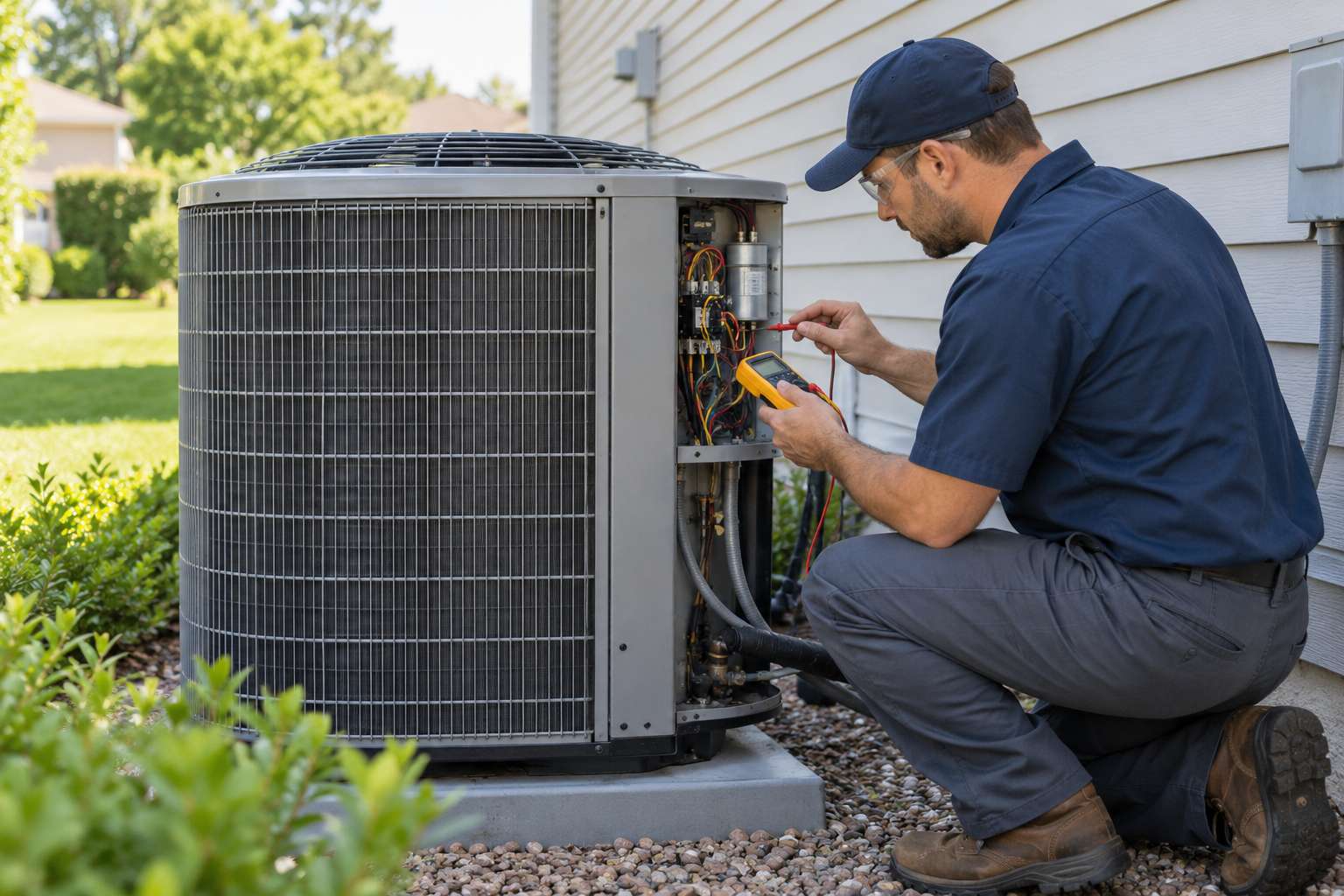
Ask what the technician observed in the indoor and outdoor units, airflow path, controls, refrigerant circuit, and thermostat, and which findings remain uncertain. A repair quote is more useful when it states whether the work is intended to restore cooling, prevent recurrence, or only confirm a component fault. Separate diagnosis, part, refrigerant, access, testing, and warranty.
Compare repair with replacement when the system has repeated failures, corrosion, a failing coil or compressor, difficult access, or an adjacent component near replacement. Include removal, indoor coil or air handler, line set, condensate, electrical, controls, and commissioning in the replacement option. A low repair price can be poor value if it leaves a likely second failure unaddressed.
Separate a repairable fault from a declining system
Poor cooling can reflect airflow, filters, ducts, controls, refrigerant, coil, condenser, compressor, sizing, or a thermostat rather than one predictable part. Ask what was observed, what tests were performed, and what the repair is expected to change. A repair quote should distinguish diagnosis, component, refrigerant work, access, testing, warranty, and recommended but unapproved work.
Repair is stronger when the failure is isolated and the indoor and outdoor equipment remain credible. Compare replacement when the repair joins age, repeated failures, coil or compressor concerns, obsolete refrigerant context, or a likely second major component. Include indoor coil, outdoor unit, line set, condensate, controls, electrical, removal, and commissioning in the replacement comparison.
“The AC is not cooling” can describe a failed control, fan, blower, dirty coil, restricted filter, duct leakage, poor return air, refrigerant problem, compressor problem, incorrect sizing, or a building-envelope load. ENERGY STAR recommends evaluating ducts, airflow, refrigerant charge, and installation quality as part of whole-system performance.
That makes the diagnostic visit economically important. A quote to replace a compressor or add refrigerant should identify the evidence for that failure and whether a leak, airflow restriction, or control problem remains unresolved.
Common repair families
- Controls and electrical components: thermostat, capacitor, relay, contactor, disconnect, control board, wiring, or sensor work. The part may be modest, but diagnosis and safe access still carry labor.
- Fans and motors: outdoor condenser fan, indoor blower, motor, wheel, or related control. A motor replacement may also expose airflow or cabinet issues.
- Coils and condensate: evaporator or condenser coil, drain pan, condensate line, or pump. Coil access can make labor substantial, and a leaking coil changes the refrigerant scope.
- Refrigerant circuit: leak diagnosis, repair, recovery, evacuation, and recharge as appropriate. A top-off without addressing a leak is not a universal long-term repair.
- Compressor: a major repair that warrants a system-age, warranty, contamination, compatibility, and replacement comparison.
Refrigerant handling, electrical testing, and component replacement require appropriately qualified personnel. U.S. EPA guidance recommends technicians with applicable Section 608 certification for refrigerant handling; Canadian requirements depend on the applicable federal, provincial, or territorial scope.
Cost drivers that interact
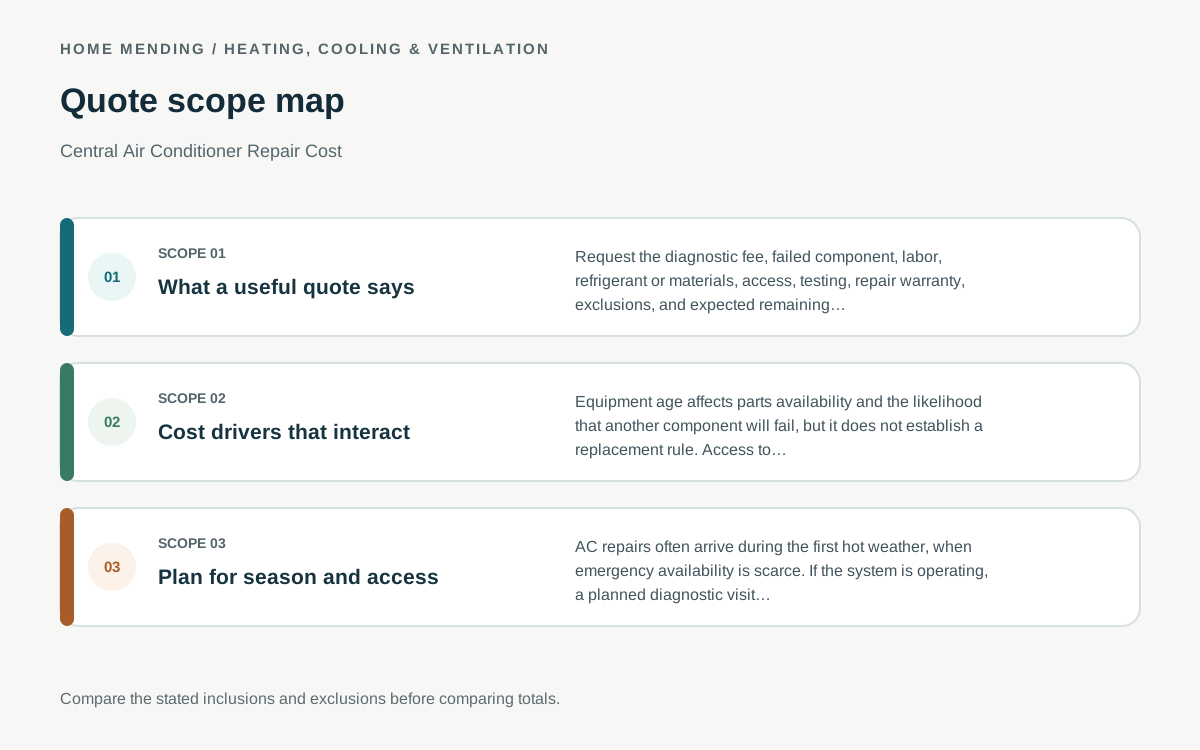
Equipment age affects parts availability and the likelihood that another component will fail, but it does not establish a replacement rule. Access to an indoor coil or attic air handler can dominate labor. Peak cooling season affects scheduling and emergency premiums. A paired furnace or air handler may determine whether the coil and controls remain compatible.
The system’s surrounding condition matters too. Leaky ducts can create weak cooling and high bills even when the condenser operates. An undersized return or envelope problem can make a repaired system feel unsuccessful. ENERGY STAR’s replacement guidance lists uneven comfort, humidity, noise, rising bills, and suspected duct or coil issues as prompts to evaluate more than the visible appliance.
Scenario budgeting
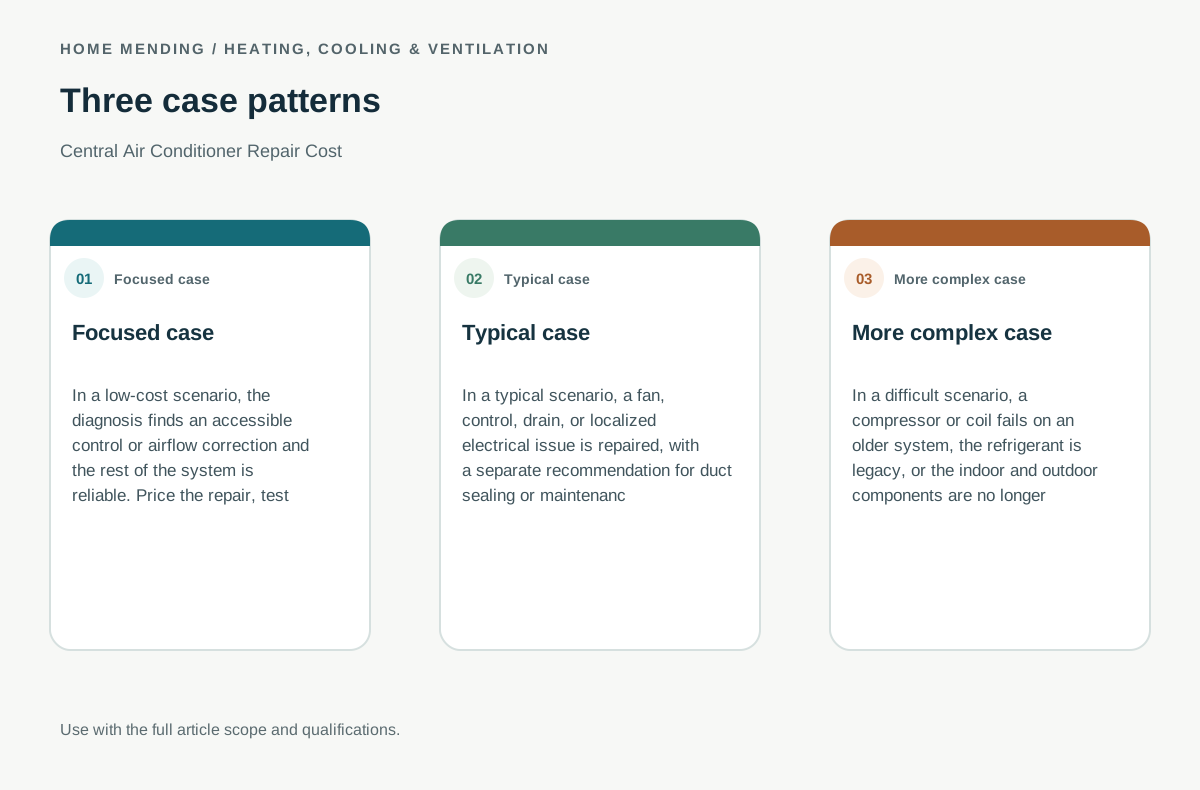
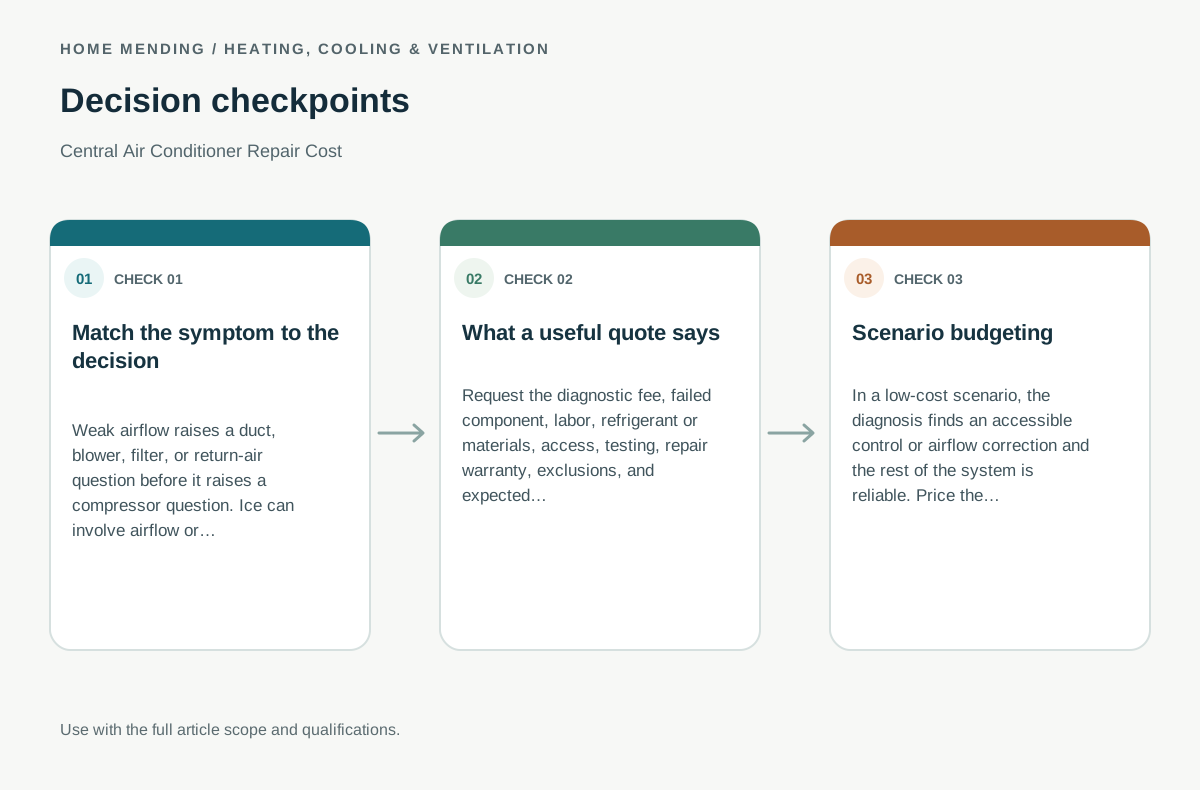
In a low-cost scenario, the diagnosis finds an accessible control or airflow correction and the rest of the system is reliable. Price the repair, testing, and any warranty.
In a typical scenario, a fan, control, drain, or localized electrical issue is repaired, with a separate recommendation for duct sealing or maintenance. Keep required work separate from optional cleaning or efficiency upgrades.
In a difficult scenario, a compressor or coil fails on an older system, the refrigerant is legacy, or the indoor and outdoor components are no longer a confident match. Compare the all-in repair with replacement, including removal, matched equipment, refrigerant lines, controls, ducts, and electrical work.
Repair or replace after a major failure
Repair is stronger when the failure is bounded, the system has a useful service history, parts are available, and the repair preserves a reasonable ownership horizon. Replacement is stronger when repairs repeat, comfort remains poor, a major component has failed, the system has a refrigerant or compatibility complication, or the repair would be followed by likely duplicate mobilization.
EPA states that an existing R-22 system is not required to be replaced solely because it uses R-22 in the U.S. That does not mean every R-22 repair is economical, nor does it establish Canadian rules. Ask the contractor to explain refrigerant availability, leak repair, compatibility, and the alternative replacement scope.
What a useful quote says
Request the diagnostic fee, failed component, labor, refrigerant or materials, access, testing, repair warranty, exclusions, and expected remaining condition. If replacement is plausible, request a comparable quote with capacity basis, matched coil and condenser, air handler or furnace compatibility, ducts, line set, controls, removal, and commissioning.
Do not compare a component-only repair with an equipment-only replacement. Compare the next complete decision, including the risk and cost that remains after the repair.
Match the symptom to the decision
Weak airflow raises a duct, blower, filter, or return-air question before it raises a compressor question. Ice can involve airflow or refrigerant. Water near the indoor unit can involve condensate or coil conditions. A loud outdoor unit can involve a fan, mount, electrical component, or compressor. These are diagnosis paths, not homeowner repair instructions.
Ask the contractor to state which alternatives were considered and why the proposed repair is the next useful step. The more expensive the component, the more valuable that explanation becomes.
Plan for season and access
AC repairs often arrive during the first hot weather, when emergency availability is scarce. If the system is operating, a planned diagnostic visit may provide more choice than waiting for a complete failure. Indoor coils in attics, crawl spaces, or finished areas can add protection and access cost; outdoor work can still require refrigerant, electrical, or lifting scope.
If a compressor, coil, or refrigerant issue is involved, request a matched replacement alternative and state the furnace or air handler condition. That comparison shows whether the repair preserves a useful system or only postpones a likely larger mobilization.