
Make future work visible
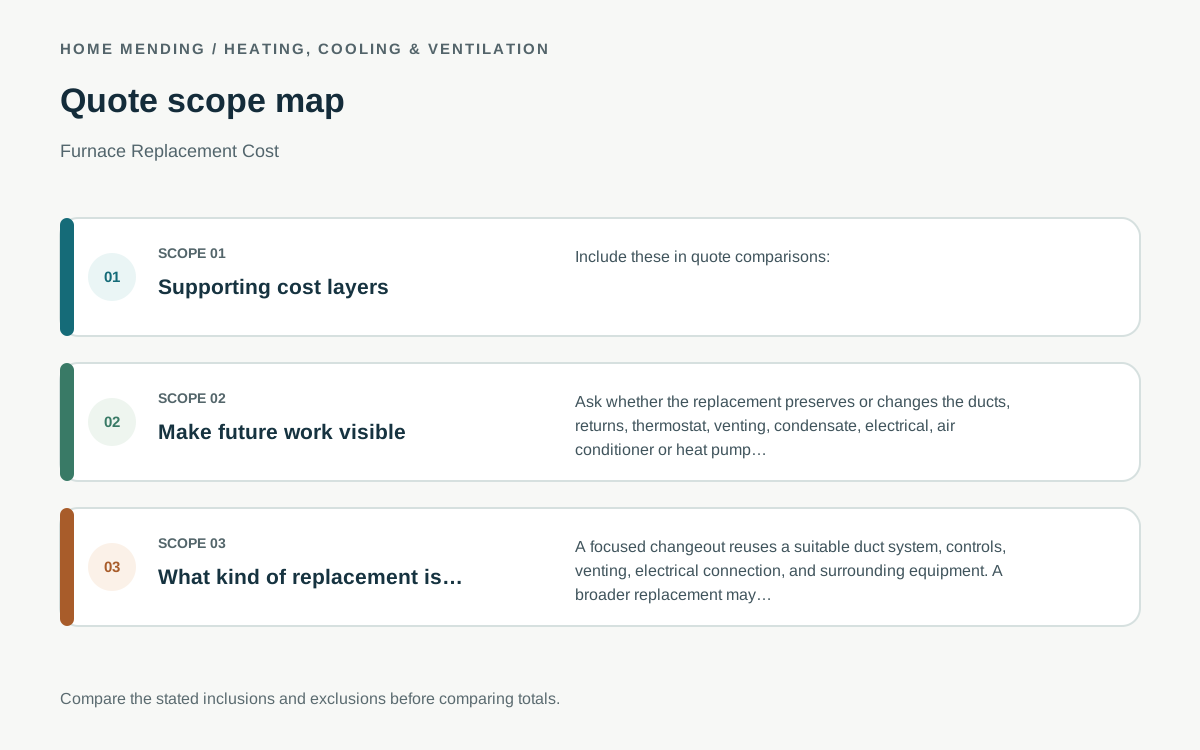
Ask whether the replacement preserves or changes the ducts, returns, thermostat, venting, condensate, electrical, air conditioner or heat pump interface, and service access. A low equipment price may omit the interfaces that determine whether the new furnace operates well. Include testing, commissioning, removal, disposal, and warranty.
Compare a compatible swap with a broader distribution correction or an alternative heat source. Use the same rooms, capacity, backup, operating assumptions, and ownership period. If an envelope or duct project is planned, ask whether it changes sizing or sequencing.
Compare the replacement paths
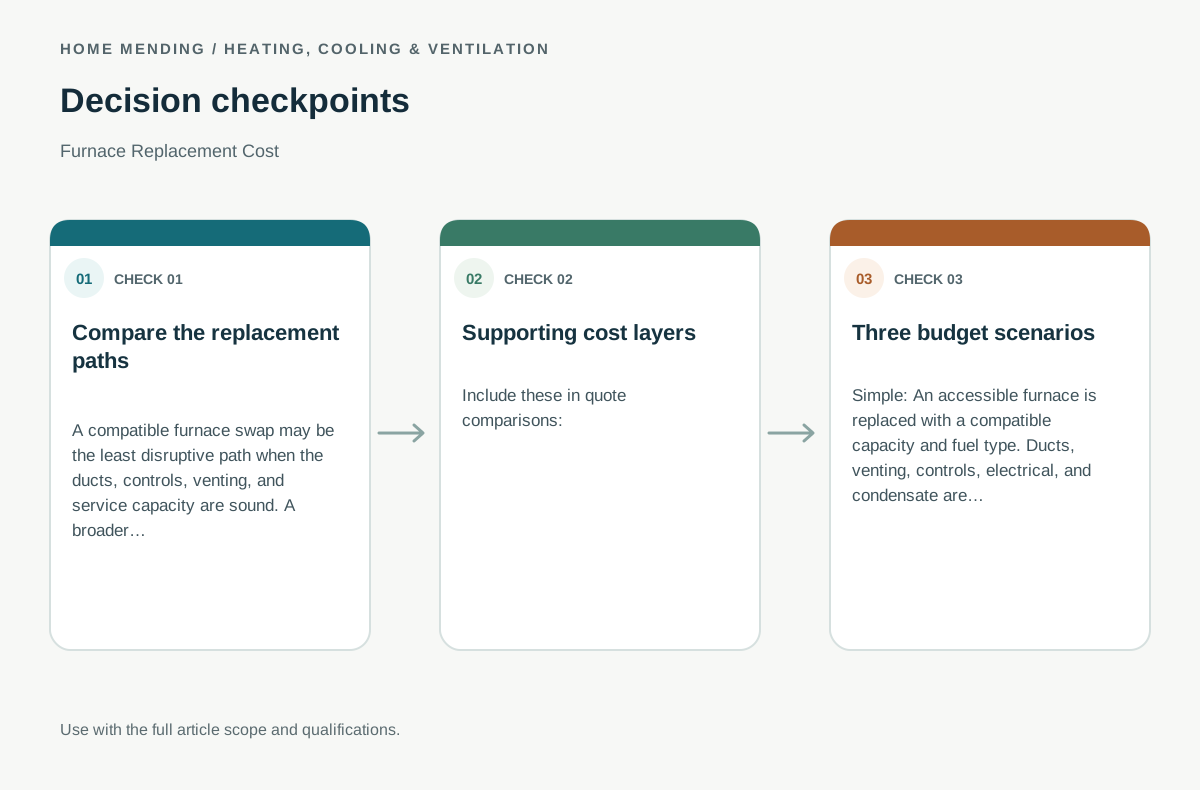
A compatible furnace swap may be the least disruptive path when the ducts, controls, venting, and service capacity are sound. A broader replacement may include airflow correction, return work, coil or air-conditioner matching, controls, condensate, electrical, removal, and commissioning. If a heat pump or dual-fuel system is a genuine alternative, price its backup, low-temperature capacity, electrical, controls, and distribution rather than comparing only cabinets.
Ask what the quote assumes about room coverage, equipment capacity, ducts, access, venting, removal, finish restoration, and future service. A difficult attic or crawl-space installation can change labor and maintenance even when equipment is identical. For a long ownership horizon, include operating cost, repair exposure, parts availability, and the next replacement interaction. The least expensive furnace is not automatically the least expensive heating strategy.
Ask what load or capacity basis was used, what ducts were inspected, and whether comfort complaints were considered. Reusing ducts is good value only when the air path is adequate. Otherwise a new furnace can preserve restricted returns, leakage, poor balance, or oversizing.
For combustion equipment, identify qualified installation, venting, fuel, inspection, and permit responsibilities locally. For electric equipment, identify circuit and service assumptions. If central AC shares the blower, coil, controls, or difficult access, request a paired option without assuming both appliances must be replaced.
HomeStars reports an indicative Canadian range of about CAD $3,500–$7,000 for a gas furnace installed in a straightforward home with usable existing ductwork. That is a configuration example, not a national price. A U.S. replacement quote may differ with fuel, capacity, efficiency, labor, removal, controls, venting, access, and local requirements. A furnace replacement budget is complete only when those supporting assumptions are visible.
What kind of replacement is being quoted?
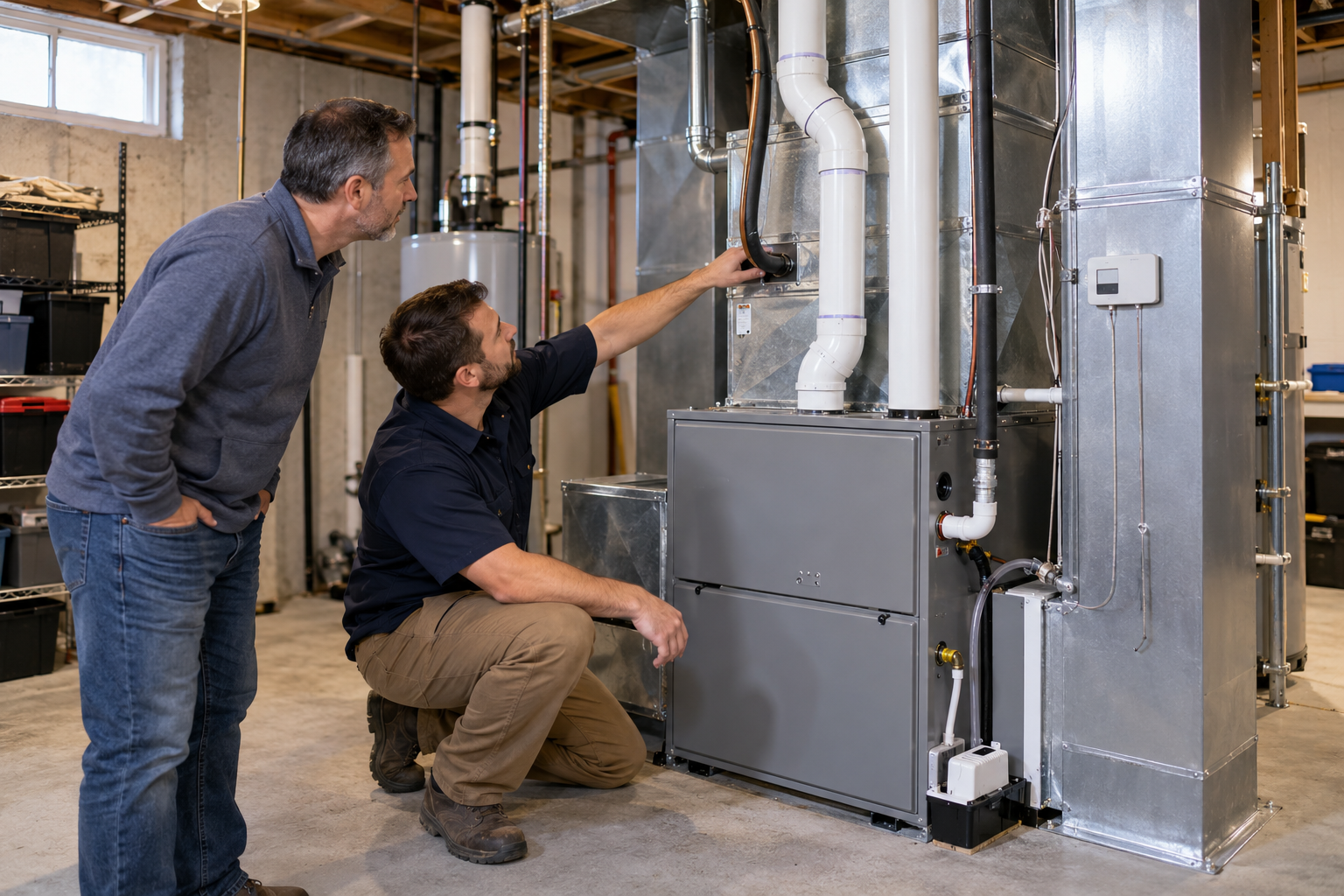
A focused changeout reuses a suitable duct system, controls, venting, electrical connection, and surrounding equipment. A broader replacement may change the thermostat, transitions, venting, condensate, gas or oil connections, blower strategy, or air handler. A difficult project may require access work, duct repair, electrical changes, combustion evaluation, or finish restoration.
Ask the contractor to state whether the quote covers the furnace only, the complete heating system, or a furnace paired with central AC. “Installed” does not always identify removal, disposal, permit responsibility, startup testing, or future warranty documentation.
Fuel and equipment choice
Gas, oil, propane, and electric furnaces are not interchangeable price categories. Fuel connections, venting, combustion air, storage or delivery interfaces, electrical requirements, and local technician availability can change the scope. Gas and oil work should be performed and inspected under the requirements that apply to the property.
Capacity should be based on the home and distribution system, not simply the old nameplate or floor area. An oversized furnace can interact badly with comfort and cycling; an undersized system can fail to meet demand. ENERGY STAR’s quality-installation guidance also places ducts, airflow, refrigerant charge where applicable, and installation quality inside the system decision.
Supporting cost layers
Include these in quote comparisons:
- furnace and blower configuration;
- capacity and efficiency basis;
- return and supply transitions;
- duct repair, sealing, insulation, or balancing;
- venting and combustion-air work for combustion equipment;
- condensate drainage for equipment that produces it;
- thermostat, staging, sensors, or zoning compatibility;
- gas, oil, electrical, or disconnect work;
- removal, disposal, access, protection, startup testing, and warranty;
- permits and inspections where locally applicable.
If a contractor says the existing infrastructure is reusable, ask what was inspected and what condition is being assumed.
Three budget scenarios
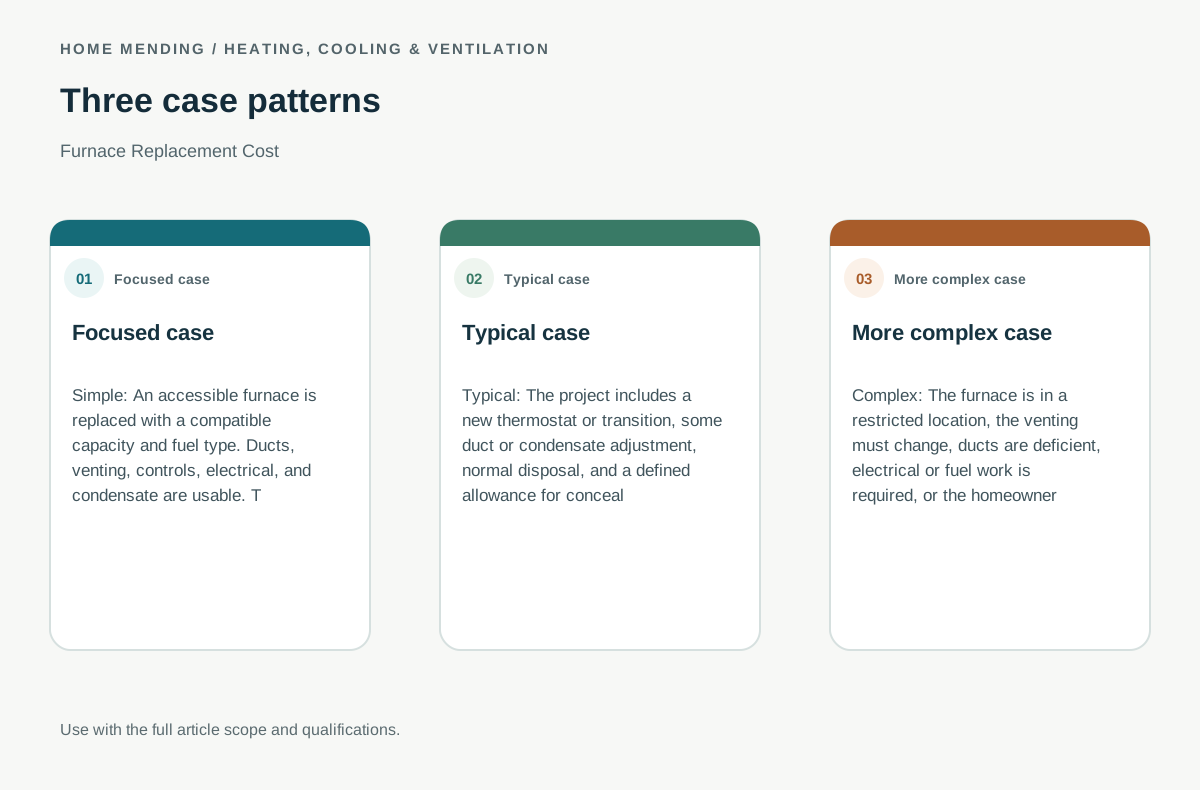
Simple: An accessible furnace is replaced with a compatible capacity and fuel type. Ducts, venting, controls, electrical, and condensate are usable. The price is mostly equipment, labor, removal, testing, and minor connections.
Typical: The project includes a new thermostat or transition, some duct or condensate adjustment, normal disposal, and a defined allowance for concealed access. This is often the appropriate planning case for a conventional end-of-life replacement.
Complex: The furnace is in a restricted location, the venting must change, ducts are deficient, electrical or fuel work is required, or the homeowner is coordinating central AC or a heat pump. Price each supporting scope explicitly. If a whole-home fuel switch or service upgrade becomes the main decision, use the electrification category rather than hiding it in a furnace line.
Efficiency and replacement economics
A higher-efficiency furnace can increase equipment and installation cost, especially where venting, condensate, controls, or distribution change. Its operating value depends on climate, fuel price, runtime, existing efficiency, sizing, installation, and ownership horizon. Do not promise a universal payback.
For a long-term owner, predictable service, comfort, and appropriate efficiency may justify a coordinated scope. For a short-term owner, a suitable simpler installation may be more rational than an upgrade whose extra cost cannot be recovered. Keep resale claims and incentives separate and verify them locally.
A scheduled U.S. efficiency standard is tied to manufacture date
DOE’s current consumer guidance continues to list a December 18, 2028 compliance date for the amended U.S. standards covering non-weatherized and mobile-home gas furnaces. It lists an 80% AFUE minimum for products manufactured from November 19, 2015, through December 17, 2028, and 95% for covered products manufactured on or after December 18, 2028. In 2026, industry petitioners asked DOE to extend the date to January 1, 2030, at a minimum; DOE sought public comment on whether to grant the petition. That request is not an adopted change. The Supreme Court later vacated and remanded a lower-court judgment in the related case, a procedural action that did not itself amend DOE’s standard. Before a purchase near the scheduled date, confirm the current agency rule and the product’s class and manufacture date. The date is not a deadline to replace a furnace already installed, an installation code, a price prediction, or a Canadian standard. For the upgrade economics, see high-efficiency gas furnace cost.
Normalize the bids
Ask every bidder for the same capacity basis, fuel and efficiency, equipment identifiers, duct assumptions, venting, controls, condensate, electrical or fuel work, removal, disposal, access, testing, permits, warranty, taxes, options, and exclusions. Separate required work from smart thermostats, zoning, filtration, and other upgrades.
The strongest furnace quote explains what is new, what is retained, how airflow and compatibility were evaluated, and what concealed condition would change the total. The cheapest equipment line is not necessarily the cheapest installed system.
Sizing and retained infrastructure deserve evidence
Ask what load or capacity basis was used, what ducts were inspected, and whether rooms with comfort complaints were considered. Reusing a duct system can be good value when it is adequate; it can preserve a problem when returns are restricted, branches leak, or the furnace was previously oversized.
For combustion equipment, request the venting and combustion-air assumptions, local inspection or permit responsibility, and the qualified installer’s documentation. For oil equipment, clarify the tank and line boundary. For electric equipment, clarify circuit and service assumptions. These are not universal code conclusions; they are quote items to verify locally.
Decide whether to coordinate cooling
If central AC shares a blower, coil, controls, or difficult access, price a paired option. If the AC is reliable and compatible, retaining it may preserve value. A furnace replacement quote should say what it assumes about the cooling system so a future coil or control problem does not become a surprise.