
One U.S. specialist guide reports central-AC replacement around $1,400–$12,500, with an average near $5,977. A Canadian specialist example puts central AC with existing ductwork around CAD $3,500–$7,000 and with new ductwork around CAD $6,000–$14,000. These are broad market observations with different scopes, not interchangeable national prices. A real budget starts by defining the indoor and outdoor equipment, retained infrastructure, and required supporting work.

Ask what the replacement is expected to fix
If the old complaint is uneven cooling, high bills, noise, or short cycling, identify whether the cause is equipment, ducts, airflow, controls, sizing, or the envelope. A new condenser and coil may not change a distribution defect. The quote should state the expected improvement and which related work is included or excluded.
Compare a focused replacement with a broader project that corrects duct access, returns, electrical, condensate, controls, or equipment matching. For a long horizon, include serviceability, future repairs, retained furnace or air handler, and the possibility of a heat-pump strategy. A complete scope is more useful than a precise price for an incomplete one.
Compare the full replacement boundary
Ask whether the proposal includes the outdoor condenser, indoor coil or air handler, line set, refrigerant work, condensate, thermostat, electrical, pad or support, removal, duct transitions, access, testing, and commissioning. Existing ducts may need sealing, insulation, balancing, or replacement if they are the actual performance problem. Keep that related work visible.
A simple compatible replacement differs from a difficult retrofit with concealed access, poor returns, electrical work, coil uncertainty, or a near-end-of-life furnace or air handler. Compare the replacement with repair and with a heat-pump alternative only on the same room coverage, controls, backup, operating, and future-service assumptions.
A split central AC normally has an outdoor condenser and an indoor evaporator coil, often associated with a furnace or air handler. Replacing only the outdoor unit may be possible in some situations, but the existing coil, refrigerant, controls, line set, and efficiency match must be checked against the proposed equipment. Do not assume that a physically similar component is a compatible match.
Ask for the proposed equipment identifiers, capacity basis, efficiency metrics, matched-system documentation where relevant, and what the contractor is retaining. The quote should state whether the furnace or air handler is included, excluded, or being evaluated separately.
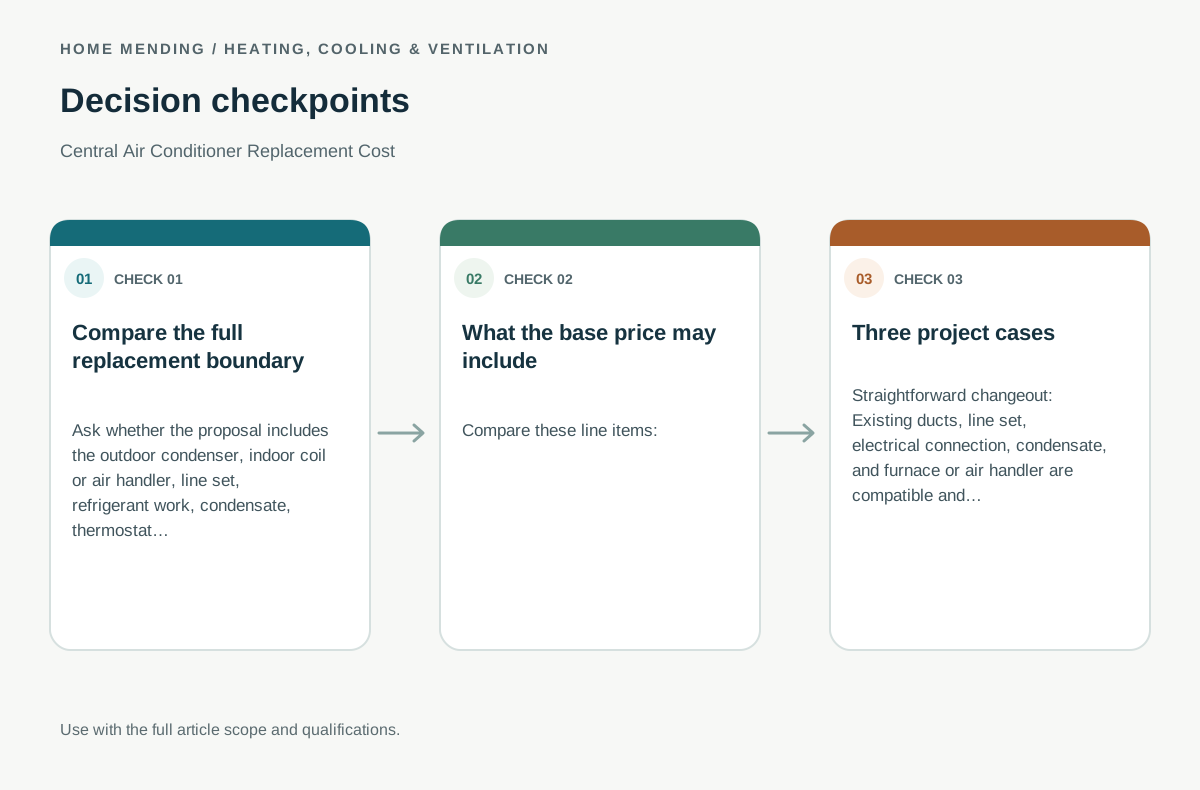
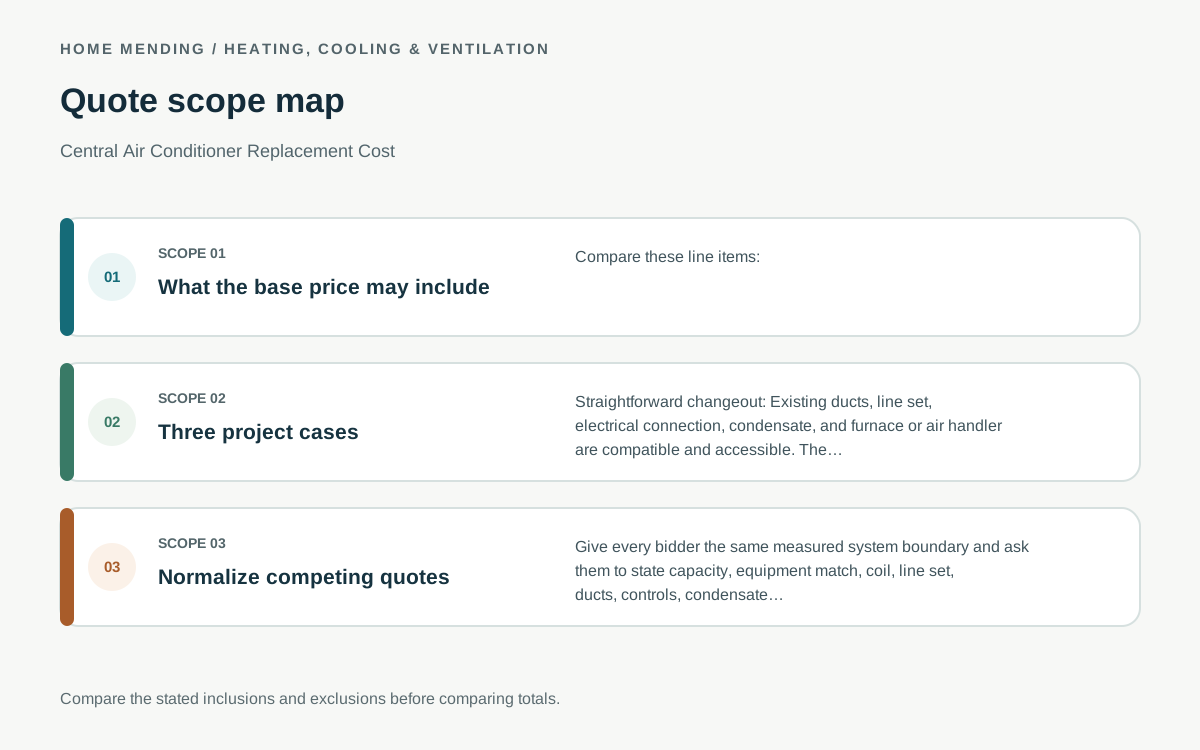
What the base price may include
Compare these line items:
- equipment and matched indoor coil;
- pad, disconnect, electrical connections, and refrigerant line assumptions;
- thermostat or communicating controls;
- condensate pan, drain, or pump;
- duct transitions and return/supply connections;
- removal, disposal, protection, and access;
- refrigerant recovery and commissioning;
- testing, airflow verification, and warranty documentation;
- permits or inspections where applicable.
An equipment-only price is not a complete replacement budget. A contractor who includes new lines, controls, removal, and testing can appear more expensive than one who assumes they will be reused.
Capacity and efficiency
Capacity should be selected for the home and system design, not simply copied from the old label or increased because rooms feel warm. Poor airflow, duct leakage, insulation, solar exposure, humidity, and building load can all affect comfort. ENERGY STAR’s quality-installation guidance treats duct leakage, airflow, refrigerant charge, and installation quality as performance issues.
Efficiency metrics can change equipment price and may interact with matched components and controls. Do not treat a higher rating as a guaranteed bill reduction. Runtime, climate, electricity price, maintenance, duct condition, and installation quality affect actual ownership cost.
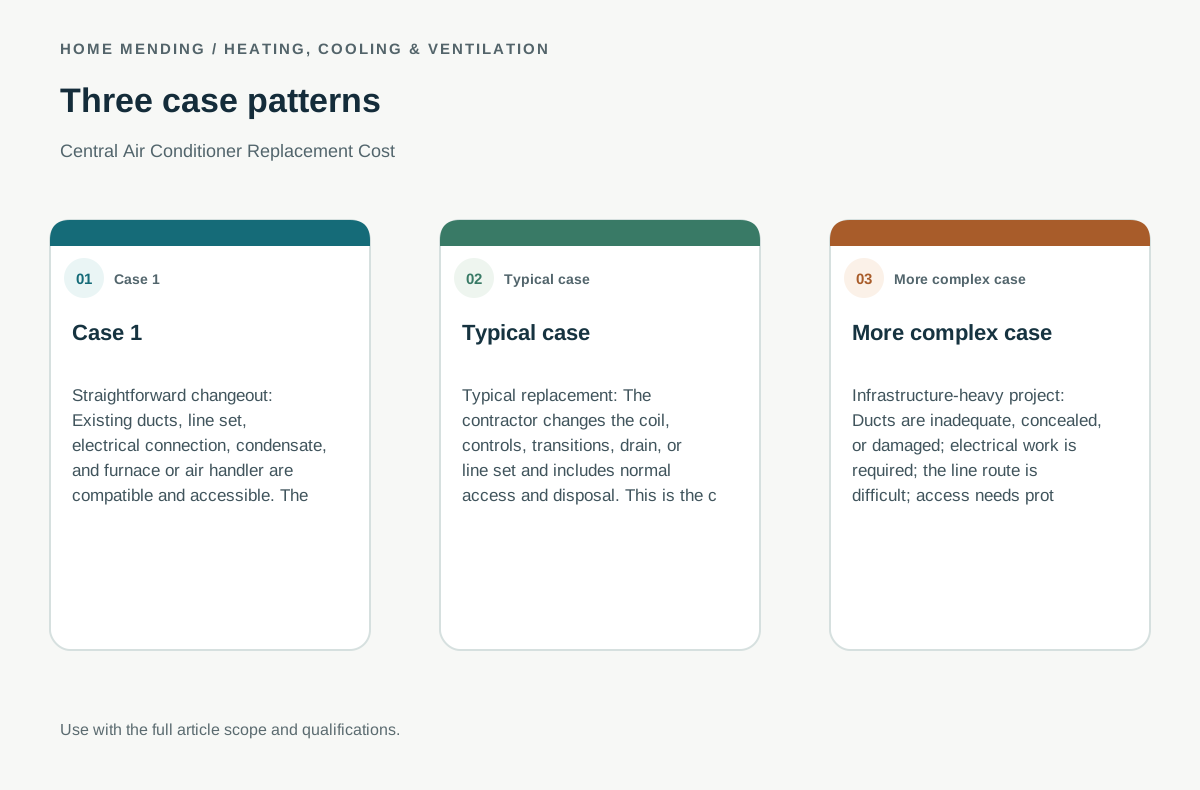
Three project cases
Straightforward changeout: Existing ducts, line set, electrical connection, condensate, and furnace or air handler are compatible and accessible. The quote mainly covers matched AC equipment, labor, removal, testing, and minor connections.
Typical replacement: The contractor changes the coil, controls, transitions, drain, or line set and includes normal access and disposal. This is the case to compare when a complete AC system is at end of life.
Infrastructure-heavy project: Ducts are inadequate, concealed, or damaged; electrical work is required; the line route is difficult; access needs protection or lifting; or the furnace and AC must be coordinated. Canadian examples suggest new ductwork can move a central-AC project into a much higher range. Price that scope separately rather than burying it in a vague allowance.
Refrigerant and regulatory questions
EPA says existing U.S. systems may continue to be maintained and repaired under the stated federal refrigerant context, while new split-system rules and refrigerant requirements apply to new installations and can change. A refrigerant retrofit is not a simple charge substitution. Canadian federal halocarbon rules have a limited scope, and provincial or territorial legislation governs other situations; verify the local requirement and technician qualification.
Do not make a purchase decision based only on a refrigerant label. Ask what happens to the existing refrigerant, whether the replacement is a new matched system, and which local rules and manufacturer instructions apply.
Normalize competing quotes
Give every bidder the same measured system boundary and ask them to state capacity, equipment match, coil, line set, ducts, controls, condensate, electrical, removal, disposal, testing, warranty, permit responsibility, tax, and exclusions. Record unit prices for duct, electrical, or access work that cannot be known before opening a concealed area.
Separate required work from options such as zoning, smart controls, premium filtration, duct sealing, or a furnace replacement. Those may be valuable, but combining them with the base replacement hides the actual comparison.
Replace AC only or coordinate with the furnace?
If the furnace is reliable, compatible, and has a credible remaining horizon, replacing only the AC can preserve capital. If the furnace is also old, has repeated repairs, shares a blower or controls, or would require reopening the same access later, price a paired project. The linked furnace-and-AC decision is not automatic; it is an ownership-horizon and compatibility calculation.
The best AC replacement quote explains what is new, what is retained, how the system will be matched and tested, and what would cause the total to change.
Make the proposals comparable
Ask each bidder to state cooling-capacity basis, indoor coil and outdoor condenser, efficiency metrics, line-set treatment, thermostat, condensate, duct transitions, electrical connection, removal, disposal, access, testing, and warranty. Note whether the furnace or air handler is retained and what condition is assumed.
Where a line set or coil is retained, ask why and what compatibility information supports that decision. If a legacy refrigerant or new-system rule affects the project, ask which current rule and product documentation apply to the installation jurisdiction. Do not turn a general federal statement into a local compliance conclusion.
Commissioning is part of the purchase
Even a one-day changeout should include startup and performance checks. Ask how airflow, charge, controls, condensate, and equipment match will be verified. A system that cools on day one but has poor airflow or an unresolved drain condition can create later cost.
If a furnace is retained, document its age, blower, coil compatibility, and repair history. If it is near a similar decision point, compare coordinated replacement without assuming both appliances must be replaced.