
Air-to-water heat pumps use outdoor air to heat water for a home’s hydronic system: radiators, hydronic baseboard, or radiant floors. A retrofit can reuse some existing distribution, but a radiator that worked with a hot boiler does not automatically deliver enough heat with the lower water temperatures often used by a heat pump. The installed price depends on the heat source, water-side integration, the condition and output of each room’s emitters, backup strategy, and local labor.
Current published cost examples are too limited to establish a reliable U.S. or Canadian market range. One 2026 U.S. specialist guide places a typical installation at about USD $12,000–$28,000. A British Columbia guide lists CAD $12,000–$28,000 before rebates, but does not disclose its quote count or itemized scope. These are separate, method-limited regional guide estimates, not comparable national ranges or guaranteed bids. A Minnesota field evaluation reported historical project totals from about $14,945 to $41,160 across four different systems and service configurations; those 2023 observations are useful for understanding scope, not a current price list. Ask local contractors for itemized quotes based on the same design and equipment boundary.
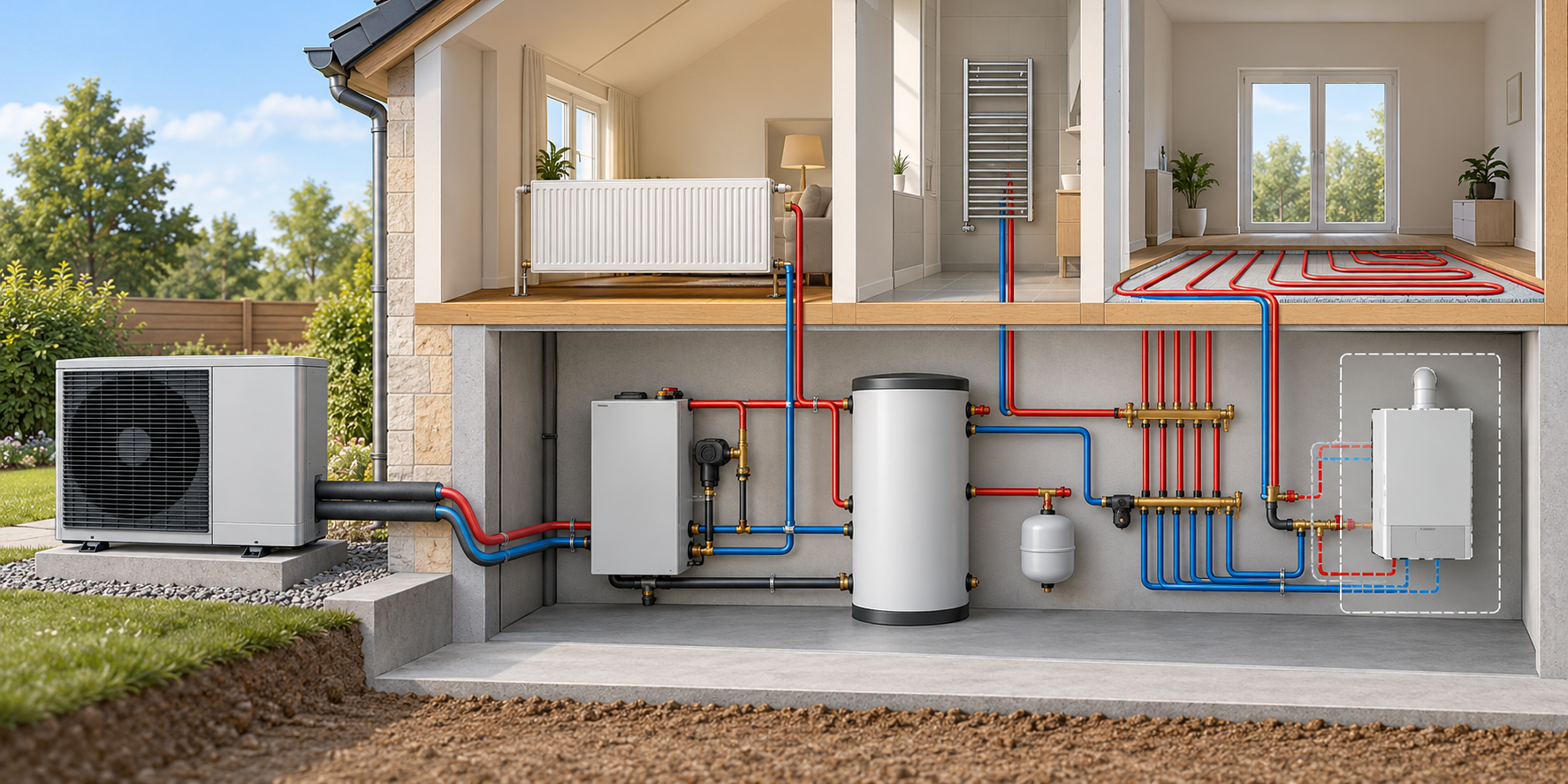
What the retrofit includes
Unlike a ducted air-source heat pump, an air-to-water system transfers heat into water and distributes it through a closed hydronic loop. Product families differ: some serve heating only, while others can provide cooling with suitable terminals. The outdoor unit is only one part of the project. A complete proposal may include water-side equipment, circulation and controls, a buffer or volume vessel if the design calls for one, connections to existing zones, removal or retention of the old boiler, and commissioning.
The exact arrangement is model- and property-specific. For example, one manufacturer price list shows an outdoor unit and buffer vessels as separate equipment prices, not a complete retrofit. It does not include a home’s required emitters, piping, labor, design, electrical work, permits, or commissioning. Treat equipment listings as one line in a quote, not as a project budget.
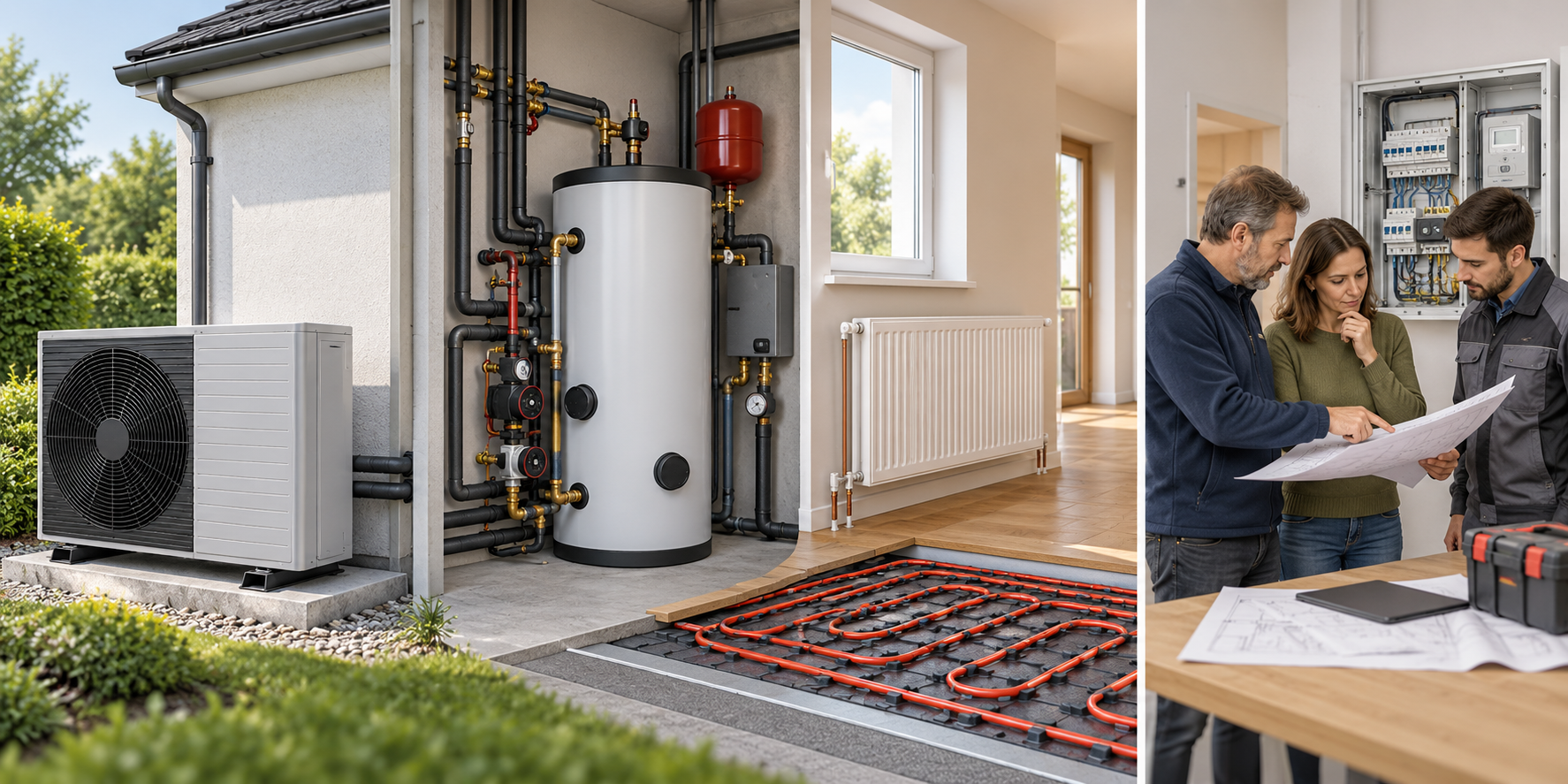
How much of the existing system can stay?
The central design question is whether each room’s emitters can meet its heat loss at the water temperatures the proposed heat pump can produce efficiently. Radiator size and type, baseboard length, radiant-floor construction, water flow, insulation, air leakage, and the local winter design condition all matter. A whole-house square-foot estimate or the old boiler’s nameplate cannot answer this room by room.
Lower supply-water temperatures can improve heat-pump efficiency, but an existing emitter may then provide less heat. Caleffi’s technical example estimates that a representative panel radiator at a 110°F average water temperature may deliver about 27% of its output at a 180°F reference condition. That is an illustration for the stated radiator and conditions, not a universal conversion factor. Some larger radiators, low-temperature baseboards, radiant systems, or fan-assisted emitters may work well at lower temperatures; ordinary high-temperature fin-tube baseboard may need a different plan.
A designer may find that existing emitters are adequate, that only a few rooms need larger or different terminals, or that the home needs broader distribution changes. Envelope improvements can also lower room heat loss and change the required water temperature, although they should be evaluated as their own scope and cost. The quote should state which rooms and emitters were assessed, what design temperature was assumed, and whether any future envelope work is included in the load calculation.
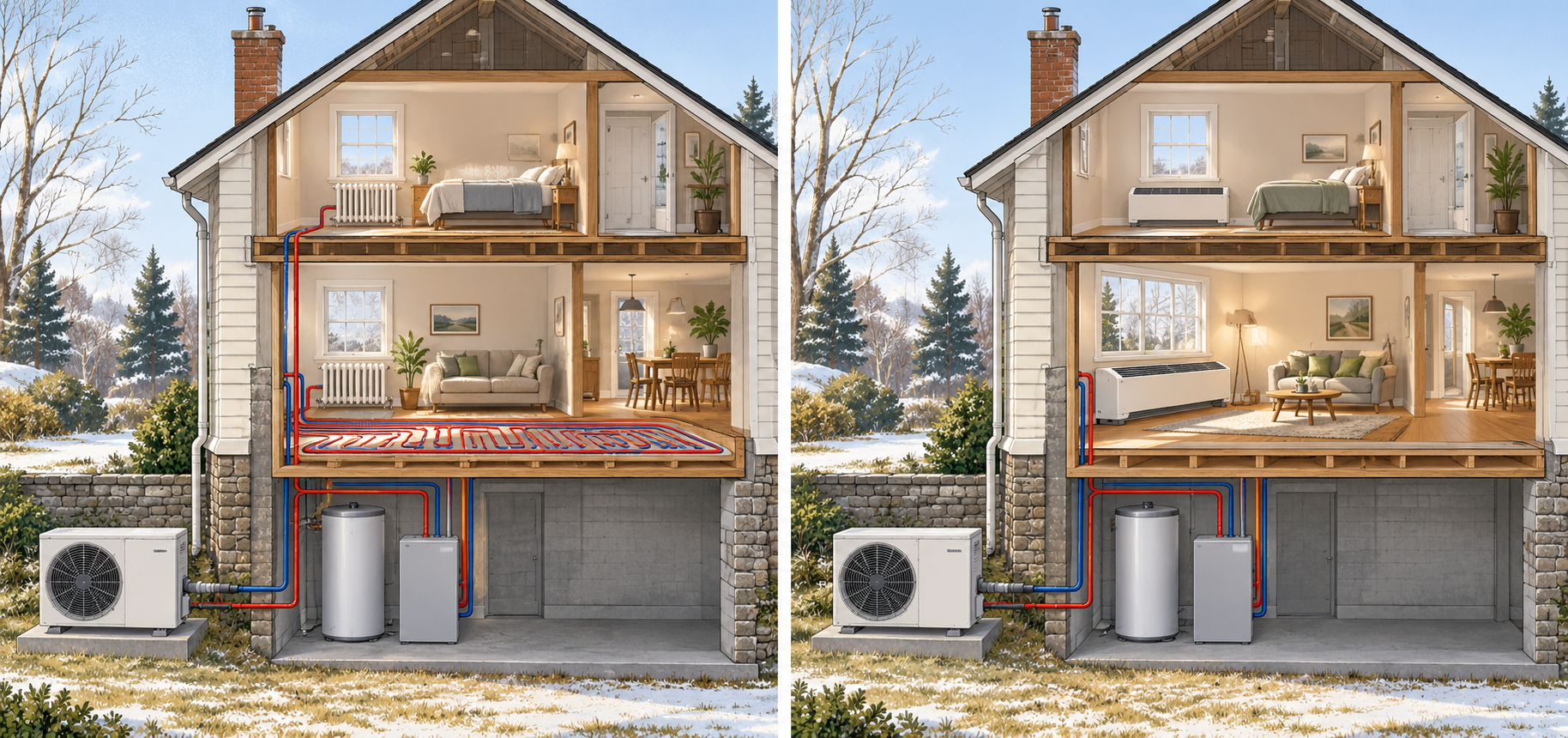
What moves a quote up or down?
A straightforward retrofit may be possible when the heat pump is properly sized, the existing emitters deliver the needed room heat at suitable water temperatures, the piping and zones are usable, and the outdoor unit can be placed with ordinary access. Even then, the contractor must confirm the system design and required components for the selected model.
An intermediate project may add controls, pumps, piping changes, selective emitter upgrades, a buffer vessel, or a retained boiler for the coldest conditions or resilience. Each item should be tied to a design need. A buffer tank, glycol, or specific piping arrangement required by one manufacturer’s manual must not be assumed to apply to every brand or system.
A complex retrofit can involve undersized emitters in many rooms, high required water temperatures, poor or undocumented hydronic circuits, difficult piping routes, electrical work, boiler removal, or substantial controls and backup integration. If existing distribution would need widespread replacement, compare the full cost with a different heat source, a ductless or ducted air-to-air heat pump, or staged work. A lower equipment price does not make an incompatible distribution system economical.
Ask the contractor to separate equipment, hydronic integration, emitters, electrical work, backup or boiler changes, removal, permits, design, and commissioning where they apply. The useful comparison is between complete proposals with the same rooms served, indoor comfort assumptions, backup role, and work exclusions—not between outdoor-unit prices.
Operating cost and backup heat
Annual cost depends on the home’s heat loss, local electricity and fuel rates, heat-pump output and efficiency at actual outdoor and water temperatures, circulation energy, controls, and how often backup heat operates. A model’s published rating point is not a seasonal household result. A Minnesota field study of four early systems found different outcomes across configurations, auxiliary heat, homes, and rates; it cannot predict savings for another house. Ask for the assumptions behind any modeled operating-cost comparison, including the heat load, rate plan, water temperature, backup hours, and pumps.

Keeping a boiler can reduce the amount of immediate emitter work or provide backup, but it adds its own fuel, service, controls, and eventual replacement considerations. Removing it may require a different cold-weather or outage strategy. Compare the alternatives over the period you expect to own the home, and avoid counting incentives or projected fuel savings as guaranteed reductions in the quote.
Heating is not automatically cooling
Radiators and radiant floors designed for heating should not be assumed to provide safe or effective cooling. Cooling requires equipment and terminals selected for the cooling load, moisture removal, and condensation management. Hydronic fan coils or air handlers may support cooling in some configurations, but they can require new terminals, drainage, insulation, controls, and additional design. A Minnesota study of selected systems did not establish net cooling-season savings. Price cooling as a separate, explicit scope and compare it with a conventional air conditioner or air-source heat pump.
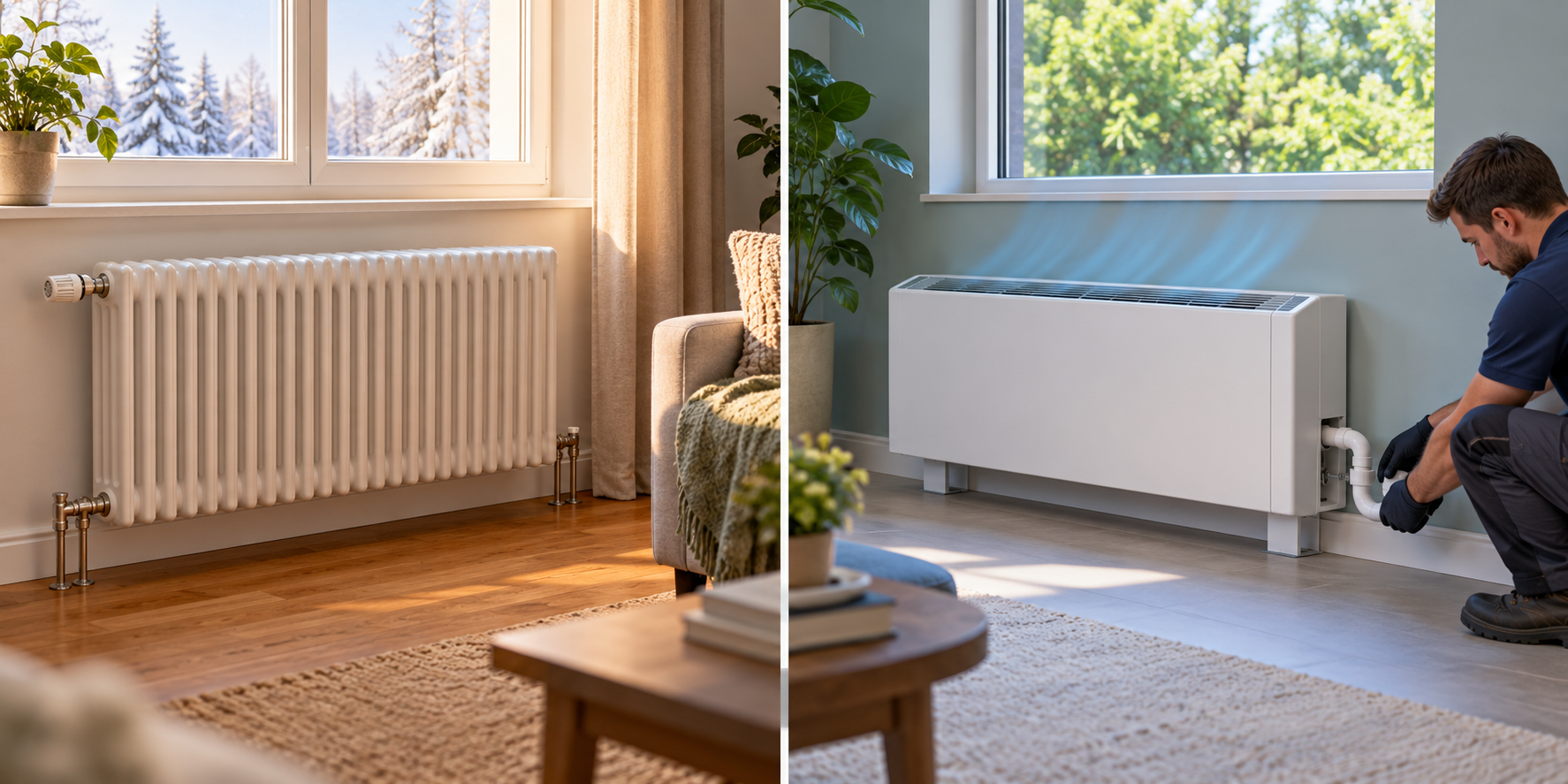
Compare alternatives before approving work
An air-to-water retrofit is most worth pricing when a home already has hydronic distribution and the owner wants to retain it, but suitability depends on measured room loads and equipment-specific performance. Compare at least these paths when they fit the property:
- Retain and repair the current boiler if it is serviceable and the project economics or compatibility are unfavorable.
- Add an air-to-water heat pump while retaining the boiler as backup, with both operating roles and controls defined.
- Replace selected emitters or reduce room loads, then reassess the heat-pump design and total project cost.
- Price ducted or ductless air-to-air equipment if it better matches the home’s distribution needs.
- Stage the work if electrical, envelope, or hydronic upgrades need separate planning.
In the United States and Canada, equipment availability, contractor experience, electricity and fuel rates, winter conditions, permitting, and incentives vary by location. Incentives may have narrow territory, product, contractor, and installation-date rules. For example, Minnesota Power’s 2026 program page describes a conditional utility rebate for eligible customers; it is not a statewide or Canada-wide benefit. Verify current terms with the program administrator and do not subtract a possible award until eligibility and amount are confirmed.
Questions to put in the quote request
Ask each bidder to document:
- the room-by-room heat-loss method, outdoor design condition, and proposed water-temperature target;
- the selected model’s capacity and efficiency at those conditions, not just a nominal rating;
- which existing radiators, baseboards, zones, or floor loops are expected to remain and why;
- any required emitter, piping, pump, buffer, fluid, control, electrical, or backup changes, with the model-specific basis;
- whether the existing boiler remains, when it operates, and what fuel and service costs continue;
- whether cooling or domestic hot water is included, and what separate terminals or equipment it requires;
- permits, removal, commissioning, warranty responsibilities, and exclusions;
- the assumptions used for annual operating costs and any incentive application.
If quotes differ widely, compare the design and scope before comparing totals. A proposal that includes room-by-room emitter assessment, backup integration, and commissioning may not be comparable to one that prices only an outdoor unit and basic connections. The best next step is a design-specific quote that shows what can be retained, what must change, and what remains uncertain before work begins.