
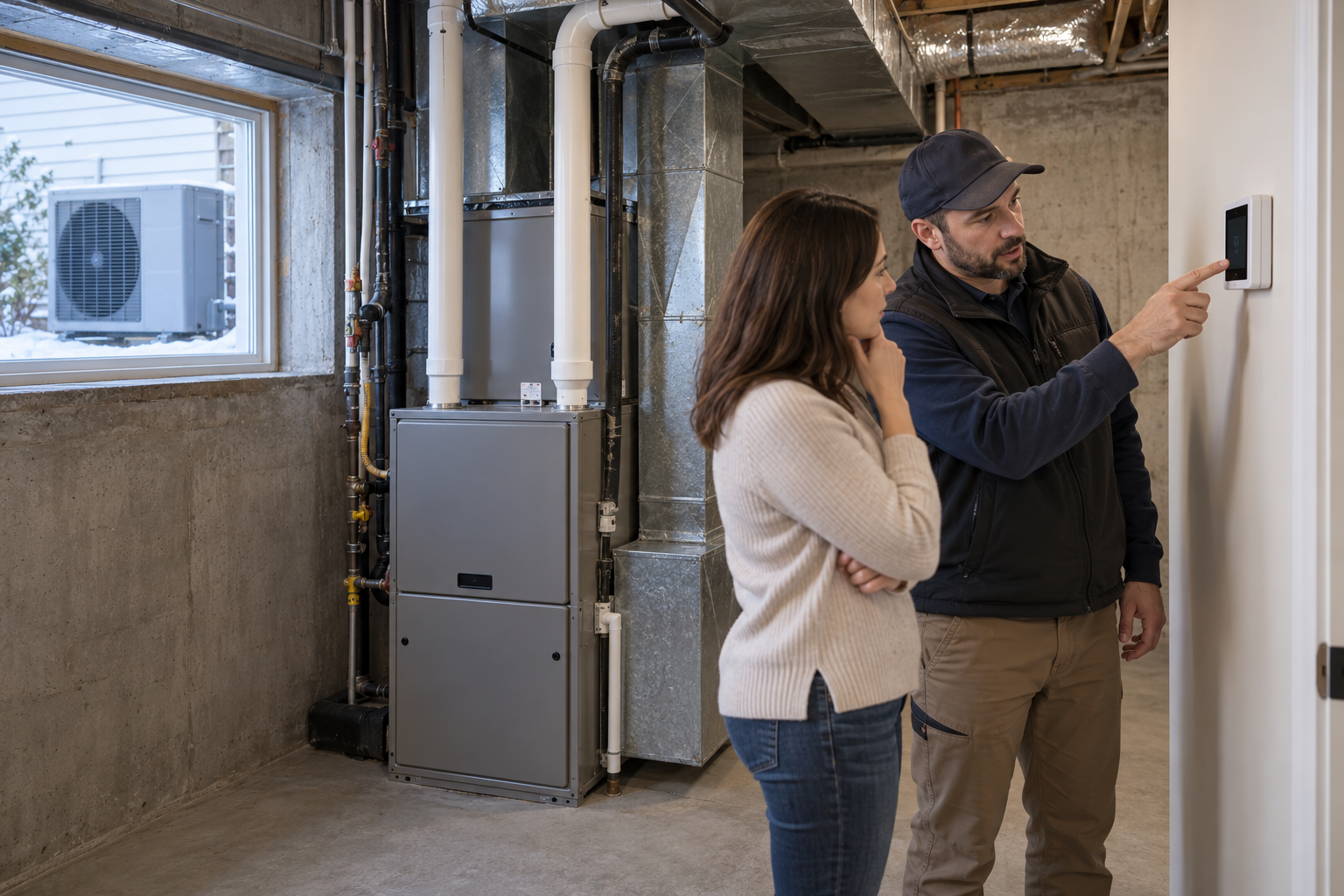
A dual-fuel or hybrid system combines an air-source heat pump with a furnace or other secondary heat source, usually using shared ducts and controls. It can preserve existing equipment and use different heat sources under different conditions, but it adds equipment matching, changeover controls, installation, and operating-strategy questions. The best choice depends on climate, fuel and electricity prices, existing infrastructure, and the reason for retaining the backup.
Illustrative planning scenario (U.S. dollars, September 2026)
This is a worked scope example, not a market average: assume $8,000 for the heat pump, $5,000 for a compatible furnace and indoor equipment, and $2,000 for controls, electrical, removal, and commissioning. The illustrative dual-fuel project is $15,000 before tax or incentives; fuel-switch settings and backup capacity require a property-specific design.
Make the operating sequence a quote line
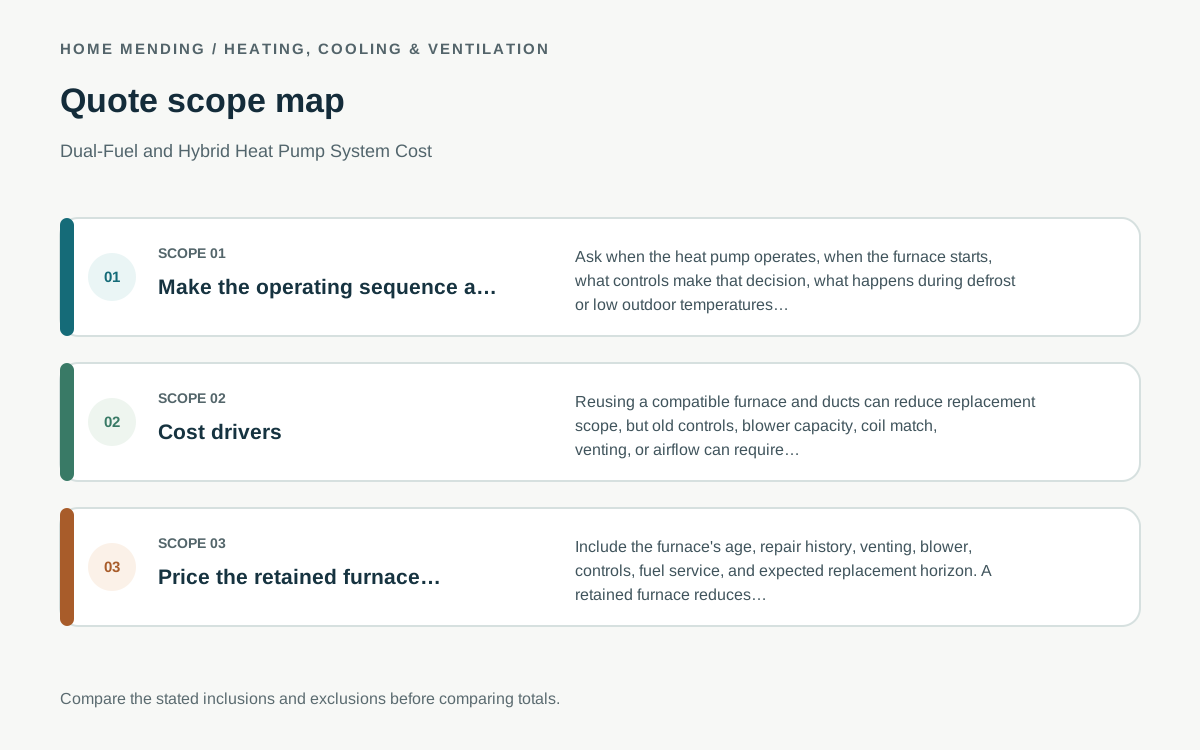
Ask when the heat pump operates, when the furnace starts, what controls make that decision, what happens during defrost or low outdoor temperatures, and whether auxiliary heat is available. The proposal should identify the retained fuel equipment’s service and venting assumptions. A hybrid system earns its complexity only when the operating constraint is real and the sequence is commissioned.
Compare the full hybrid scope with an all-electric heat pump plus backup and with a conventional replacement. Include equipment, electrical, controls, removal or retention, duct corrections, maintenance, and future replacement. Use local energy and climate assumptions without presenting a modeled operating result as guaranteed.
Identify the constraint the hybrid solves
A hybrid system can be rational when the home needs supplemental low-temperature capacity, wants to retain a fuel system for a defined operating reason, or has a distribution and infrastructure constraint that makes an all-electric design less suitable. It is less compelling when the retained furnace is included by habit and its service, venting, controls, and future replacement are ignored.
Ask for the capacity and changeover assumptions at relevant temperatures, the control sequence, backup behavior, outdoor and indoor equipment match, electrical scope, removal or retention, and commissioning. Compare the hybrid with a conventional replacement and an all-electric system on the same room coverage, comfort, outage, maintenance, and ownership assumptions. A lower first cost can hide two systems that both require eventual service.
Price the outdoor heat pump, indoor coil or air handler interface, furnace compatibility, thermostat and changeover controls, auxiliary or backup heat, refrigerant line, condensate, ducts and airflow, electrical work, fuel and venting assumptions, removal, testing, and commissioning. A furnace that remains in place still needs to be evaluated, controlled, and maintained.
DOE identifies dual-fuel systems as a distinct heat-pump configuration. It does not establish one universal changeover temperature or operating-cost result for every home.
Cost drivers
Reusing a compatible furnace and ducts can reduce replacement scope, but old controls, blower capacity, coil match, venting, or airflow can require work. The outdoor unit’s low-temperature performance and the control’s ability to change sources affect design. Access, line-set route, electrical connection, and removal of old AC equipment can add cost.
Do not assume the heat pump is an add-on to any furnace. Ask for manufacturer or system-specific compatibility information and a commissioning plan.
Operating strategy
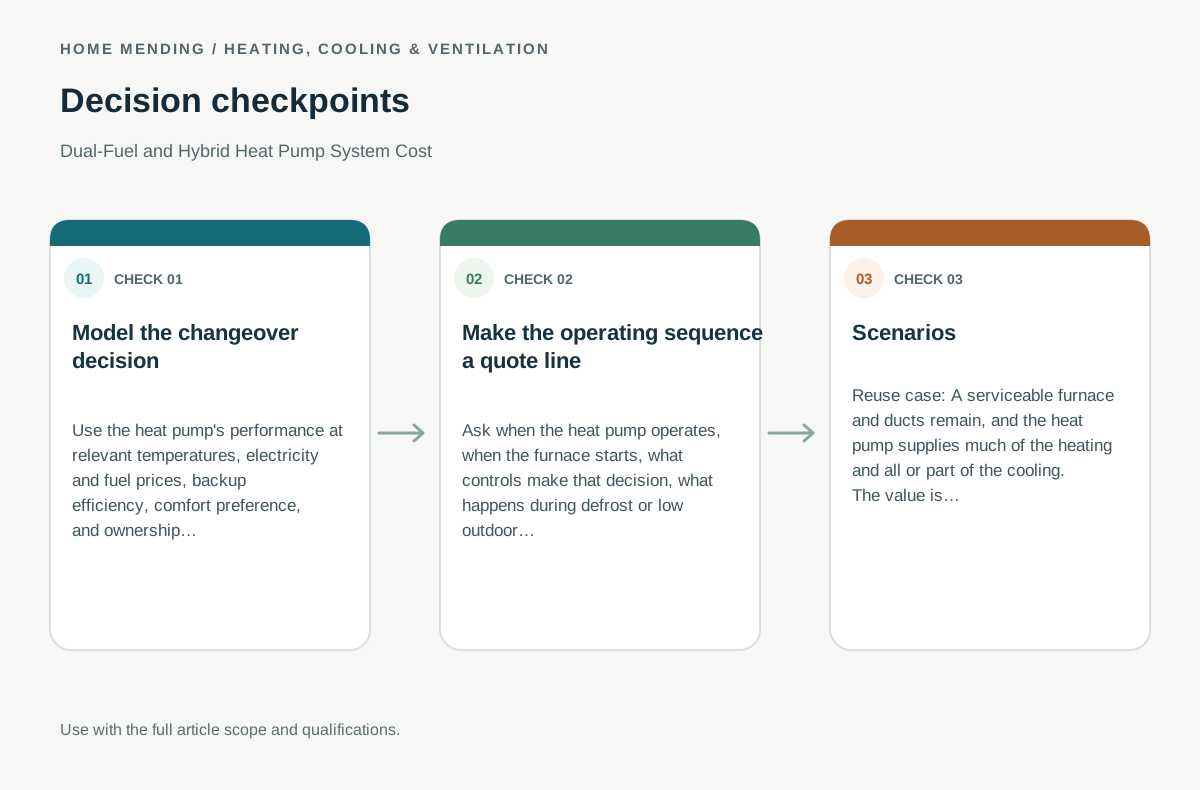
The changeover point depends on heat-pump performance, outdoor temperature, electricity price, fuel price, backup efficiency, and comfort or resilience priorities. Model those assumptions rather than accepting an unexplained thermostat setting. A lower operating cost under one tariff can reverse under another.
NRCan notes that heat-pump outcomes depend on the system being replaced and local energy prices. Include cooling value, maintenance, future replacement, and the cost of retaining two heat sources.
Scenarios
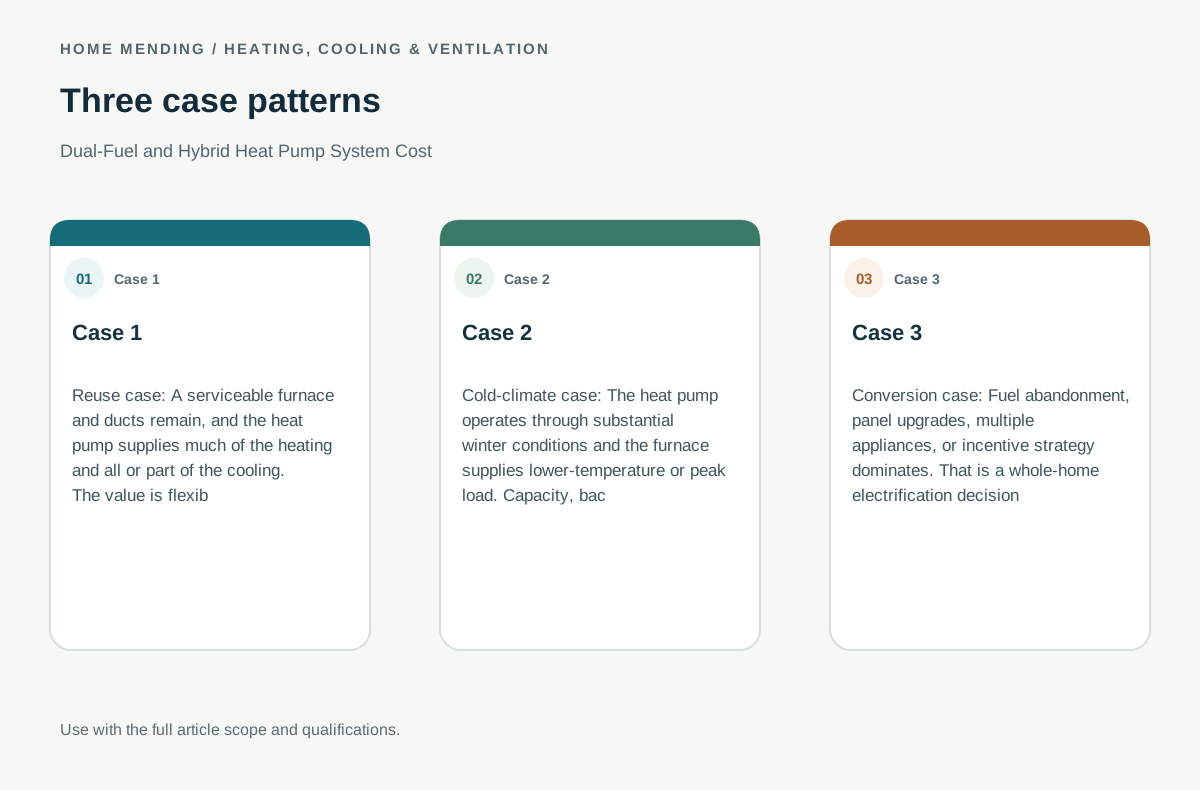
Reuse case: A serviceable furnace and ducts remain, and the heat pump supplies much of the heating and all or part of the cooling. The value is flexibility, but controls and match must be verified.
Cold-climate case: The heat pump operates through substantial winter conditions and the furnace supplies lower-temperature or peak load. Capacity, backup timing, controls, and fuel availability drive cost.
Conversion case: Fuel abandonment, panel upgrades, multiple appliances, or incentive strategy dominates. That is a whole-home electrification decision and should not be hidden inside a dual-fuel equipment quote.
Compare proposals
Ask for equipment identifiers, capacity at relevant conditions, duct and blower assumptions, coil match, control sequence, changeover assumptions, backup role, electrical and fuel work, line set, condensate, removal, testing, warranties, and exclusions. Request an operating model with local rates if savings are claimed.
Choose dual-fuel when retaining the secondary source solves a genuine climate, capacity, or infrastructure constraint and the extra ownership cost is understood. It is not automatically cheaper than a furnace or full heat pump; it is a third system strategy with its own maintenance and replacement decisions.
Price the retained furnace honestly
Include the furnace’s age, repair history, venting, blower, controls, fuel service, and expected replacement horizon. A retained furnace reduces immediate equipment scope only if it is compatible and serviceable. It is not free backup if it needs a near-term repair or replacement.
Model the changeover decision
Use the heat pump’s performance at relevant temperatures, electricity and fuel prices, backup efficiency, comfort preference, and ownership horizon. Changeover settings are product- and control-specific; avoid universal temperature claims. Ask the installer to explain what happens during defrost, extreme cold, and a control or sensor fault.
If electrical capacity, fuel abandonment, or multiple appliance conversion dominates, move the broader decision to electrification planning while retaining this system-level comparison.
Compare three ownership paths
Model a new heat pump with backup, a dual-fuel system retaining the furnace, and a furnace-plus-AC replacement where relevant. Include installation, controls, electrical or fuel work, maintenance, service calls, and future replacement. Dual-fuel can reduce immediate conversion work but retains two systems and two failure paths.
Make the control logic auditable
Ask what outdoor conditions, energy prices, comfort requirements, and system performance drive source changeover. The exact strategy is product-specific. Request the installed control sequence, what happens during defrost or sensor failure, and which component is responsible for backup operation.
The hybrid choice is strongest when it solves a defined climate or infrastructure constraint. It is weak when it is added without a reason and its retained furnace cost is ignored.
Make the retained furnace a real cost
The furnace does not become free because the heat pump is installed. Include its removal if it is being replaced, or its service, venting, controls, fuel supply, and eventual replacement if it remains as backup. A hybrid proposal should explain the changeover logic, what happens during low outdoor temperatures, which system handles cooling, and how the controls are commissioned.
Compare a hybrid with an all-electric heat pump plus backup, a conventional replacement, or a dual-system approach only after matching comfort and coverage. The choice may be defensible where the home needs supplemental capacity or a particular fuel strategy. It is weaker when the retained equipment adds maintenance and complexity without being used often enough to justify it. Model those ownership consequences rather than comparing only equipment prices.