
Selective demolition removes only the parts needed for a remodel while preserving adjacent construction. It may involve opening a wall, removing a ceiling, gutting a room, taking out cabinets, or exposing structural work. Because the goal is controlled removal, a small area can cost more per square foot than bulk demolition.
What the contractor is pricing
An interior-demolition quote should say what is being removed and what is being protected. Common cost components include:
- careful removal rather than rapid machine demolition;
- temporary floor, wall, stair, doorway, and furniture protection;
- work-zone barriers and dust control;
- locating and working around electrical, plumbing, HVAC, and other services;
- carrying debris through finished areas or down stairs;
- sorting reusable material from waste;
- loading, containers, hauling, and disposal;
- cleanup at the boundary between demolition and the next trade.
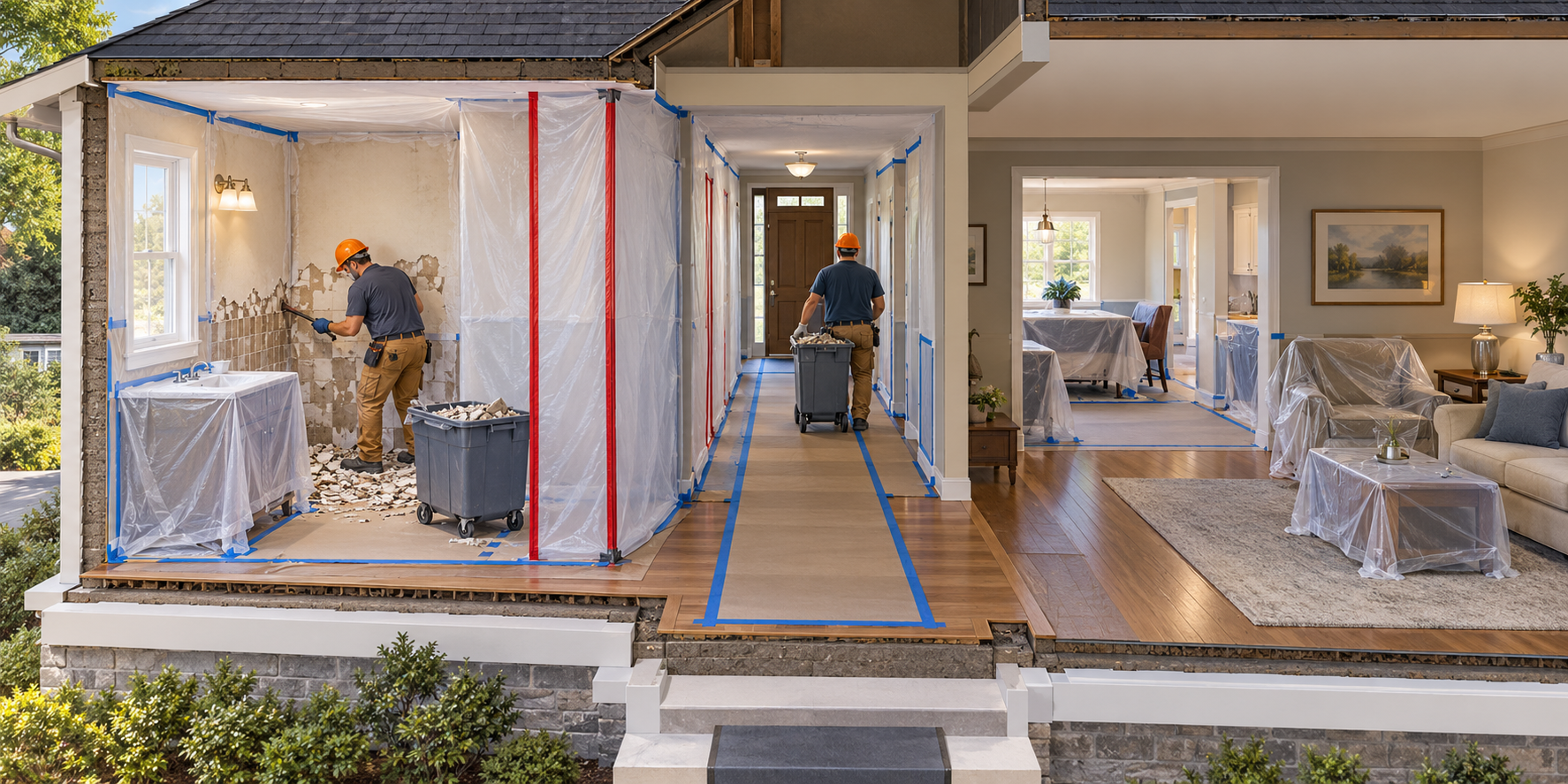
“Interior demolition” is not a standardized scope. One contractor may include cabinets, fixtures, and flooring; another may leave them for the remodeler. Compare inclusions rather than headline prices.
Why a smaller area may not be cheaper per unit
Bulk teardown spreads setup, equipment, and loading over a large amount of material. Selective work has more edges, transitions, and decisions. The crew may need to remove material in smaller pieces, protect finishes, pause for utility confirmation, and move debris a long distance to the container. A contractor may also need to return after another trade exposes additional material.
The main price question is not only how much material is removed. It is how much control, protection, handling, and coordination the removal requires.
Hand demolition versus machine assistance
Hand tools can be appropriate where the work is close to retained finishes, concealed utilities, or occupied rooms. Machine assistance may speed removal when there is a safe path and enough room, but it can increase protection, access, or restoration requirements. The contractor should explain the assumed method and what changes if the site does not support it.
Do not treat this as a DIY demolition sequence. Removing finishes can expose live utilities, unstable assemblies, sharp material, dust, or structural elements. The work method and temporary support decisions belong to qualified professionals.
Protection, containment, and occupied spaces
When people remain in the home, the quote should address how the work area is separated and how debris travels out. NIOSH describes planning, isolation or containment, pathway control, and communication as important during occupied construction and renovation because dust and emissions can affect indoor environmental quality.
General protection and ordinary construction-dust control are not the same as hazardous-material abatement. If the project may disturb lead, asbestos, mold, silica-containing materials, PCBs, or contaminated contents, stop treating the scope as ordinary interior demolition and obtain hazard-specific assessment. In the United States, EPA’s lead guidance distinguishes renovation or partial demolition from total demolition; requirements are jurisdiction- and project-specific, and Canadian rules are not interchangeable with U.S. rules.
Who includes the demolition
The remodeling contractor may include demolition in its own bid, or a separate demolition contractor may perform it first. A trade contractor often understands exactly what must be exposed for its work, while a dedicated demolition crew may handle protection, sorting, and disposal more extensively. Either arrangement can work if responsibility is clear.
Ask:
- Who disconnects or protects each utility?
- Who protects retained finishes and removes that protection?
- Who supplies the container and pays disposal or overage charges?
- Who owns salvageable material?
- What condition is the area left in for the next trade?
- What happens if concealed conditions expand the removal scope?
Compare bids by scope
Request a marked-up plan, photos, or room-by-room description if the boundary is difficult to see. Separate demolition, protection, dust containment, debris hauling, disposal, and post-construction cleaning where possible. That makes a low bid easier to test: it may be efficient, or it may simply exclude the protection, carrying, or cleanup another bid includes.
For a whole-structure teardown, see house demolition cost. For the separate cost of protecting occupied rooms, see temporary protection during remodeling.
Cost examples need a surface and an inclusion list
HomeGuide’s 2026 U.S. guide reports an overall interior-demolition range of $2–$8 per square foot and a $1,000–$5,000 average project range. Its selected surface estimates are $0.50–$1.50 per square foot for an interior wall, $1.50–$3.00 for a ceiling, and $1.50–$3.50 for a floor. The inclusions differ: the wall figure is demolition only, with disposal and follow-up repairs extra, while the floor figure says debris removal is included. The guide also reports kitchen and bathroom ranges, but a room label alone does not define which fixtures, finishes, or services are removed.
These are consumer estimates, not matched local bids or a representative survey. They show why a single square-foot number can mislead: one surface may include debris and another may stop after removal. Ask for a measured scope and compare labor, protection, loading, disposal, and restoration line by line. A lower demolition-only allowance may still produce the larger project total once those other tasks are priced.
The removal sequence affects labor and protection
Selective work is often performed in an occupied home or beside finishes that should remain. The crew may need to protect a route from the entrance, isolate the work area, move debris through a narrow path, preserve utilities serving other rooms, and clean between phases. That setup can be similar whether the immediate work area is large or small, which is one reason a small project can have a high cost per square foot. A whole-room removal may spread setup across more quantity but create more debris and a longer interruption.
Ask the contractor to describe the boundary between removal and retained work. For example, “remove the bathroom” could mean fixtures only, wall and floor finishes, framing to a defined point, or a complete gut. Specify which cabinets, fixtures, tile, trim, doors, plumbing components, and nonstructural partitions remain. If a wall’s structural role or a hidden service is unknown, do not treat that uncertainty as ordinary demolition labor; have the appropriate professional establish the scope.
Protection and dust control solve different problems. Floor coverings and corner guards reduce physical damage along travel paths; containment and filtration address migration of dust or other particles. A proposal may include one without the other. For an occupied project, ask where residents can walk, whether any room remains in use, how the route will stay usable, and who restores or replaces protection after a trade removes it. The separate articles on temporary protection and construction dust containment explain those scopes.
Compare three levels of complexity
A straightforward case may involve one accessible room, nonstructural finishes, a clear debris route, and no suspected regulated material. A more involved case may add several finish layers, concealed fasteners, hand carrying, occupied rooms nearby, or work phased around family use. A high-uncertainty case may involve structural questions, concealed utilities, water damage, or suspected lead or asbestos. Each shifts the estimate for a different reason: crew time and handling; protection, staging, and repeat visits; or professional assessment and specialized scope.
Do not accept a single contingency line as a substitute for identifying which condition could change the price. Ask what is included in the base scope, which discovery triggers a stop or change order, and whether the contractor will document the condition and price before proceeding. This makes the homeowner’s decision clearer without pretending the concealed condition can be priced before it is known.
Make the disposal and restoration boundary visible
Demolition may finish when the material is removed from the room, at the curb, or after hauling and disposal. The contract should say which. It should also identify whether the crew removes fasteners, sweeps the exposed area, protects surfaces during travel, and leaves the substrate ready for the next trade. “Clean up” can describe anything from collecting debris to detailed cleaning, so define the expected endpoint.
Ask whether reusable materials are being retained, who owns them, and whether salvage is actually credited. Separating usable doors, fixtures, or lumber may take careful labor and storage; it is not automatically cheaper than disposal. If disposal weight or a container limit is relevant, compare dumpster rental and construction debris disposal separately from the room-removal price.
Plan for retained materials and room-by-room handoffs
A selective project can leave some cabinets, fixtures, doors, or finish materials intact for reuse or later installation. Identify which items are to remain, who removes and stores anything being retained, and who is responsible if it is damaged during work. A salvage goal can add careful removal and sorting labor even when no resale value is expected. If a later trade needs the item, note the condition and storage location at handoff. This avoids treating all removed material as ordinary debris or assuming that a contractor’s demolition price includes packaging, transport, or protection of owner-retained items.
Confirm the scope during a site walk
Before a quote is finalized, walk the rooms with the contractor and point out finishes to remove, items to keep, access routes, occupied areas, and surfaces that cannot be damaged. Record unclear boundaries in writing and ask how an unexpected concealed condition will be reviewed before additional removal begins. This is more useful than relying on a room name or a generic allowance because both bidders can price the same work and explain their exclusions. When the work is phased, document the endpoint of each phase and the condition the next trade expects to receive.