
A construction dumpster quote is a service agreement, not just a price for an empty box. The total can depend on container size, rental time, included weight, material restrictions, delivery, pickup, placement, and what happens when the container is full.
The parts of the price
Ask the hauler to identify each of these items:
| Pricing item | Why it matters |
|---|---|
| Container size | Controls volume, but not how much weight the truck or facility allows |
| Rental period | Extensions may be charged by day, week, or another provider-specific term |
| Included weight | Heavy concrete, masonry, soil, and roofing can reach the allowance quickly |
| Delivery and pickup | Distance, access, timing, and truck requirements may be separate |
| Disposal | May be included, estimated, or adjusted after weighing |
| Overage | Extra weight, prohibited material, contamination, or late pickup can add charges |
| Swap-out | Continuous work may need a full container removed and an empty one delivered |
| Placement | Restricted access, surface protection, or public-space use may affect feasibility and cost |
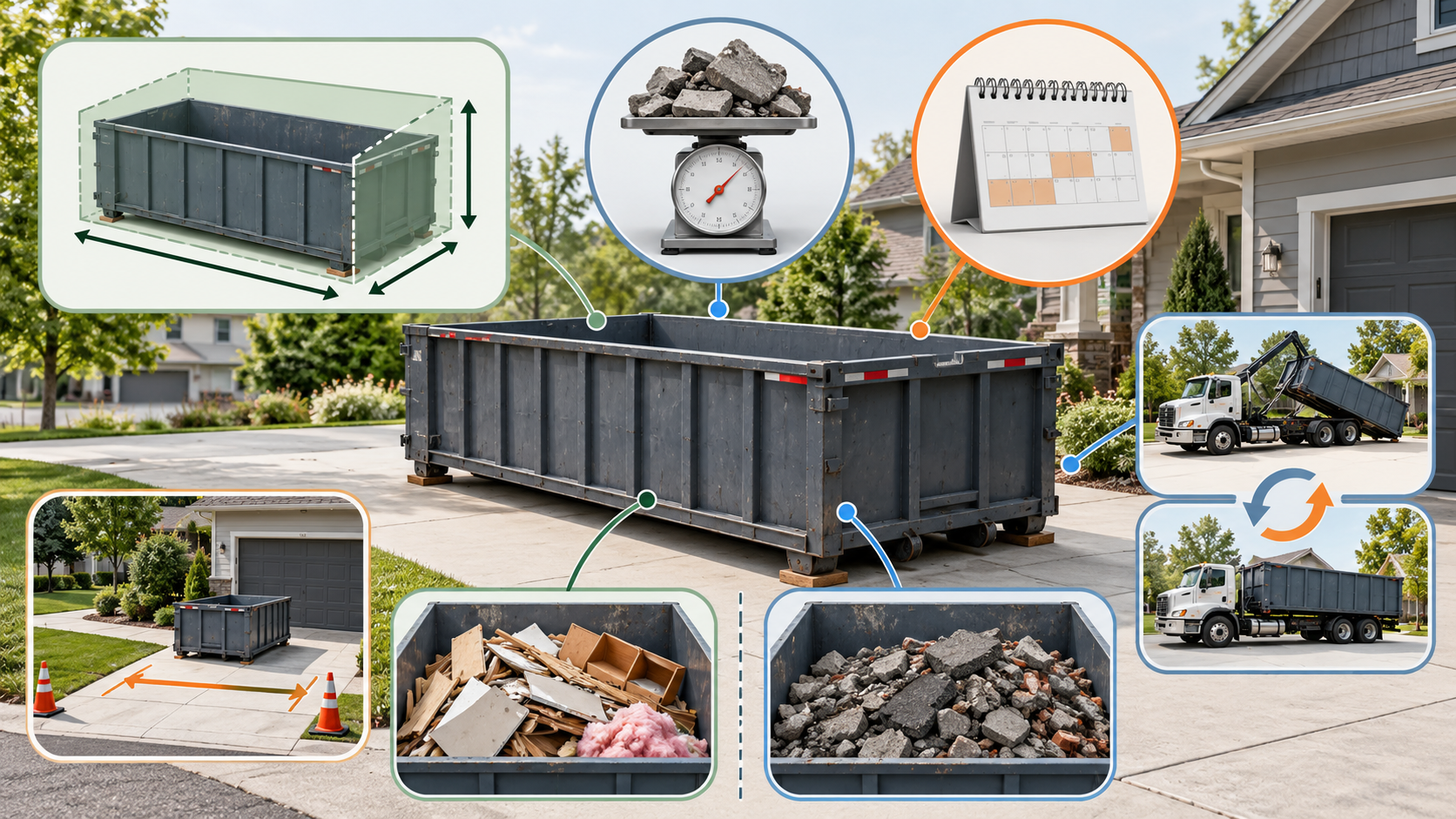
There is no meaningful national dumpster price without these assumptions. Rates are local and change with the hauler, facility, material stream, season, and distance.
Two Southern Ontario postings show how included weight changes the headline. All Stars Disposal lists a 20-yard bin at $365 plus tax for seven days with one ton included; extra days are $15 and excess weight is $120 per ton. Tubro lists a 20-yard bin at $485 with two tons included for seven days and driveway-protection boards; an extension is $20 per day, while the page does not state tax treatment. Both providers use $ without an ISO currency code. These are local offers checked October 12, 2026, not an Ontario market range or comparable all-in quotes. Confirm accepted material, placement, tax, extra-time and overage terms at booking.
Volume is not weight
Light mixed debris may fill a container by volume. Concrete, masonry, soil, asphalt, and some roofing materials can reach a weight limit first. Do not assume that a larger container solves a heavy-material problem; the hauler may require a smaller container, a separate clean load, or direct delivery to a specialized facility.
Government of Canada reporting identifies construction, renovation, and demolition streams such as commingled material, metal, plastic, gypsum, masonry, concrete, asphalt, and wood. The categories show why the material description on a quote matters. Federal-project diversion results are not a private-home fee schedule, and local facilities may use different acceptance rules.
Rental duration and swap-outs
Estimate how quickly debris will be generated. A short demolition may need one container for a concentrated load. A long renovation may pay for rental time, an extension, or one or more swap-outs. A container that sits unused can still create a charge, while scheduling removal too early can interrupt the project.
Ask what triggers an extension, missed pickup, exchange, or second delivery. Confirm whether the provider can serve the required date and whether a full container can remain safely on site between work phases.
Prohibited and restricted material
Do not rely on a generic “construction debris” label. Tell the hauler whether the load includes concrete, soil, roofing, drywall, appliances, paint, liquids, treated material, vegetation, or suspected hazardous material. The provider or local facility must confirm what it accepts.
Lead, asbestos, mold, PCBs, contaminated contents, and other hazardous materials require separate hazard-specific decisions. A construction dumpster is not a substitute for regulated containment or abatement.
Placement and public space
The container needs a safe, reachable location with enough clearance for delivery and pickup. A driveway may need surface protection; a narrow street, sidewalk, or public right-of-way may require approvals and conditions. Those administrative requirements are local and belong in the project-planning scope. Confirm them before the delivery date rather than assuming the hauler handles every approval.
Questions before booking
- What size and material description does the quote assume?
- How much weight is included, and how is overage calculated?
- Are delivery, pickup, disposal, tax, and fuel or distance charges included?
- What rental period is included, and what is the extension policy?
- Are swap-outs available, and what does each exchange cost?
- Which materials are prohibited, restricted, or priced separately?
- What placement, access, surface, and public-space conditions apply?
- Who pays if the load is overweight, contaminated, rejected, or inaccessible?
If you are deciding whether a container is the right service at all, compare dumpster vs. junk removal vs. contractor hauling.
Select capacity from the waste, not the label
Container sizes are commonly described by volume, but a project also has a weight limit and material restrictions. A bulky but light load may fill the container first; dense concrete, soil, tile, or masonry can reach a weight limit while space remains. A container appropriate for mixed remodeling debris may not suit a heavy material stream, and a single container may not be allowed to combine every material.
Before choosing a size, make an inventory of material types, the order they will be removed, and whether any material will remain separate. Tell the provider about unusually heavy or bulky items and ask which size, fill line, weight allowance, and load configuration apply. A provider’s recommendation depends on its containers and local disposal rules, so confirm the proposed size can reach the placement area and be serviced on the planned date.
Compare an all-in service period
A rental offer may combine delivery, pickup, a set number of rental days, and a weight allowance. Additional days, extra tonnage, a swap, prohibited material, or special placement can add charges. Another quote may separate container rental from disposal. Normalize the total for the expected project duration and number of hauls before deciding that one offer is cheaper.
For example, a short bathroom-remodel load that is ready immediately may fit a brief rental, while a phased kitchen renovation can generate debris over several weeks and require the container to remain available. A smaller container swapped more often can be easier to place but create multiple haul charges. A larger container may reduce swap frequency but need more driveway area and can be difficult to load efficiently. Neither pattern is universally less expensive; compare a realistic schedule and loading pace.
Ask whether the quoted rental clock begins at delivery, ends at pickup request, or follows another contract rule. Identify who can request a swap, the notice required, and whether weekends or weather affect service. If another trade controls when debris is ready, clarify whether the homeowner or contractor pays when the container remains onsite longer than planned.
Placement is part of the price and the plan
The container needs a suitable delivery route, a stable placement area, overhead clearance, and room for the truck to approach and remove it. A driveway may be available but not strong or wide enough for the delivery vehicle. A narrow street or shared access can affect timing, maneuvering, protection, and local authorization. If the container would sit on a public street or sidewalk, confirm applicable local requirements rather than assuming the rental includes permission.
Show the provider the intended placement, access path, overhead obstructions, surface condition, and any gate or turning limitation. Ask whether driveway boards or other protection are included, who moves vehicles, and what happens if the driver cannot place the container at the planned location. A failed delivery can create a separate trip or delay even when the container price is otherwise attractive.
Keep material restrictions and loading responsibility clear
Prohibited and restricted materials vary by provider and facility. The agreement should identify what may go in the container, what must be separated, how mixed loads are treated, and what happens if material is rejected. Do not assume that a material accepted by one local facility is accepted under another provider’s terms. Suspected regulated material should not go into ordinary construction debris based on a generic dumpster quote.
Clarify who loads the container and who is responsible for keeping material below the fill line. If the homeowner or separate trades load it, the provider may not be able to verify weight or contents until pickup. If the contractor controls disposal, ask whether the allowance is fixed or actual charges will pass through. Keep load receipts or service records if they determine the final amount.
Compare quotes with the same assumptions
Put the following on one page for each offer: container size, allowed materials, included weight, rental period, delivery and pickup, swap fee, extra-day terms, overage method, placement conditions, and public-way responsibility. Add the expected first delivery, last pickup, and any phase when a swap is likely. If two bids use different sizes, ask each provider to price the alternative size or explain why it does not fit the material mix.
If a proposal uses a flat price, identify what variability it absorbs and which events are excluded. If it uses actual disposal weight, ask how the measurement is documented and which facility rate applies. The estimate can remain provisional where quantity is unknown, but the pricing mechanism should be visible. For a different service model that includes labor to remove debris, compare dumpster vs. junk removal; for facility fees and material-stream differences, read construction debris disposal cost.
Estimate capacity from a material list
A provider can help select a container, but the recommendation improves when the homeowner or contractor first lists the debris type, approximate quantity, and expected loading period. Photos of the material and the intended placement can clarify whether it is bulky, dense, mixed, or likely to require separation. The provider must confirm its own weight allowance and accepted material rules. If the estimate is uncertain, ask for a second size or a separate heavy-material option and compare the potential extra-day and swap charges. Do not overfill a container or treat the volume label as permission to exceed a weight or fill limit; have the provider explain what its terms require.