
Remodeling protection keeps construction traffic, tools, debris, moisture, and dust from damaging parts of the home that are not being replaced. It can be included in a contractor’s general conditions or listed as a separate line. Either way, the scope should identify what is protected, for how long, and who maintains and removes the protection.
What may need protection
Depending on the route and work area, the plan may address:
- floors and thresholds;
- walls, corners, trim, doors, and stairs;
- cabinets, counters, fixtures, and fixed furnishings;
- paths from the entry to the work area;
- elevators, shared corridors, and neighboring property;
- HVAC openings and return-air paths;
- rooms that remain occupied;
- stored materials and debris routes.
Protection is not only a material purchase. It includes installation, transitions, inspection, repair, removal, disposal, and cleaning after a project that may last days or months.
Why the cost varies
The main drivers are the length and complexity of the travel path, the value and fragility of retained finishes, the number of rooms, the duration, the amount of debris or material movement, and whether people remain in the home. A short unoccupied work area may need little protection. A long path through finished rooms may require repeated maintenance and more careful movement.
Ask whether the quote assumes ordinary construction traffic or unusual loads such as stone, appliances, steel, demolition debris, or equipment. The access route can matter more than the size of the room being renovated.
Protection versus dust containment
Surface protection prevents physical damage. Dust containment limits particulate migration and controls the boundary between work and living areas. They overlap at doorways and paths but are not the same service. A floor covering does not by itself create a controlled dust zone.
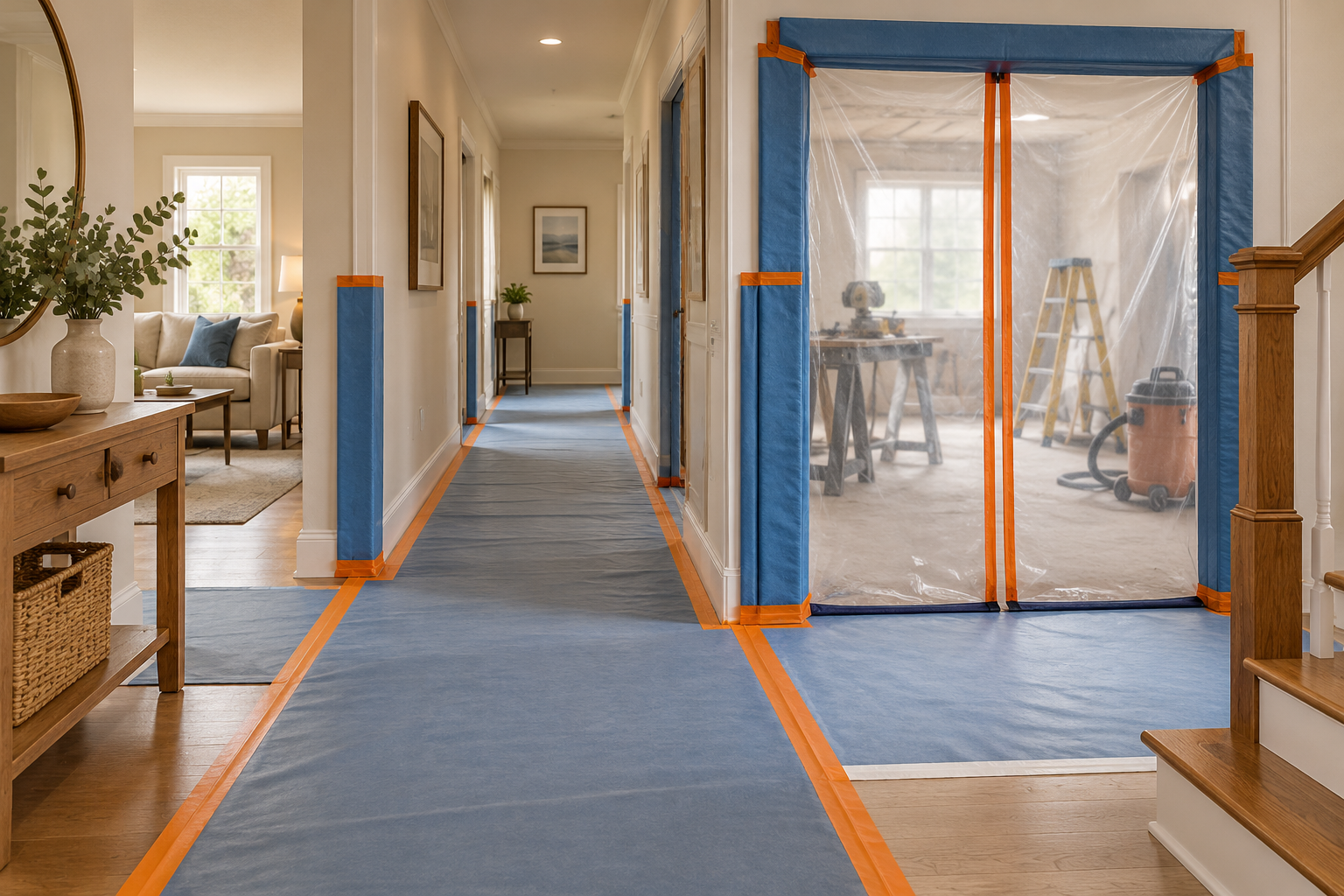
NIOSH recommends planning, isolation or containment, pathway control, and communication during occupied construction and renovation because dust and emissions can affect indoor environmental quality. If the work involves lead, asbestos, mold, silica, PCBs, or contaminated contents, ordinary remodeling protection is not a substitute for hazard-specific assessment, containment, and abatement.
Who supplies and maintains it?
Clarify whether the contractor, homeowner, demolition crew, or cleaning service:
- Supplies and installs the protection.
- Inspects it each day and repairs gaps or damage.
- Moves or replaces it when the work route changes.
- Protects items that the owner leaves in place.
- Removes it and disposes of the material.
- Pays for damage if the agreed protection is inadequate.
If the home is occupied, also clarify working hours, access for residents, ventilation or HVAC expectations, daily cleanup, and how hazards are communicated.
How to compare a quote
Request a simple marked-up plan or written route description. A useful scope names the surfaces, barriers, rooms, duration, maintenance, removal, and cleanup. “Protect house” is too vague to compare. A line item is not automatically extra or unnecessary; it may reveal work that another contractor has hidden inside a lump sum.
For particulate control, read construction dust containment cost. For removal-phase protection, see selective and interior demolition cost.
Protection is a maintained scope, not just material on the floor
Protection can require preparation, installation, inspection, repair, relocation, and removal. A short task may need only a simple route cover; a multiweek remodel can require several sections to be reset as materials move and trades change. Ask whether the estimate is a one-time setup or includes maintaining the protection throughout the project. If only installation is priced, identify who replaces a torn cover, clears a blocked path, or restores protection after another trade moves it.
The work area and the travel route are different exposures. A floor covering inside the room may protect the finish where work occurs but not the stairs, doorway, hall, or exterior path used to carry materials. A barrier across a doorway may reduce accidental access without providing the containment needed for dust control. List the surfaces and routes that must remain protected and identify where the coverage starts and ends.
Compare the expected damage with the full protection cost
Protection is a risk-control decision. The homeowner and contractor should consider the value and condition of the surfaces, how often people or materials pass through, how long the work lasts, and whether the surface can be restored easily if damaged. More coverage may add material, setup, and maintenance; too little coverage can leave the owner with repair, replacement, or cleaning expense. No universal material or protection level fits every house.
For a single delivery through a durable unfinished area, limited protection may be adequate. Repeated movement through finished hardwood, a tight stair, or an occupied common corridor may justify a more carefully defined route. A long project can damage protection through ordinary wear, so the estimate should say how inspections or replacements are handled. Compare the protection price against the exposure and duration rather than choosing solely on the cheapest sheet or board.
Public and shared routes need separate consideration
Some projects affect a shared entry, common hallway, sidewalk, or route used by neighbors and pedestrians. Route protection can involve a separate setup, ongoing maintenance, relocation, and removal scope. It is distinct from a worksite perimeter or floor protection inside the home. Local rules and permissions for public space depend on the jurisdiction and project; do not assume a particular walkway assembly or approval is universally required.
Ask who determines the route, who keeps it clear, how deliveries are scheduled, and which contractor is responsible for damage or obstruction. If a path must remain available to residents or others, include that requirement in the contractor’s work plan and quote. A temporary barrier that protects a finish but makes the only exit unusable does not solve the project problem.
Coordinate protection with trades and site logistics
Protection can conflict with staging, temporary utilities, debris containers, access equipment, and weather coverings. A delivery may puncture or displace a floor covering; a dumpster route may need a different surface treatment from an indoor path; scaffold setup may affect landscaping or a neighboring route. Ask the general contractor to identify which trade installs, maintains, and removes each protection layer, and whether costs are already included in a demolition or mobilization allowance.
At project handoffs, inspect whether the protected route remains intact and whether the next crew needs a different layout. If furnishings are moved, specify whether the contractor or homeowner is responsible and where items may be stored. For an occupied home, clarify which paths remain usable, what hours work occurs, and how the site is left at the end of each day if that matters to the household.
Put the scope into the estimate
Have the bidder identify the areas and surfaces covered, the protection material or system at a high level, installation and removal, maintenance, repairs or replacement, and any route or shared-space responsibilities. Ask whether protection includes equipment tracks, stair edges, corners, doorways, and exposed finishes, and whether cleanup after removal is included. State any excluded surface or route so there is no assumption gap.
The protection plan is also an opportunity to define damage responsibility and documentation. Note pre-existing damage and identify who reports a new issue. This does not guarantee that damage will occur, but it gives the parties a clearer process if it does. For dust migration and containment, use construction dust containment cost; for storage that may compete for the same space, see construction staging and storage.
Close the protection scope at each handoff
Protection can be installed by one trade and then crossed, moved, or removed by another. The contract should identify who is allowed to change the layout and who restores it afterward. If no one owns that handoff, the homeowner may discover that a route is uncovered just as heavy deliveries begin. Include the expected work sequence, the people who use the route, and any surface that cannot be covered or blocked.
At the end of a phase, ask the contractor to review the protected area with you and note any damage or repair before the next trade arrives. This is a practical record of condition, not a substitute for the contract’s responsibility or insurance terms. For longer work, schedule periodic checks instead of assuming that the original installation remains intact. A clear start, maintenance, and removal scope makes the protection allowance easier to compare and the occupied home easier to manage.
Keep resident access usable throughout the work
For an occupied home, the route used by residents may also be the route used for debris and material. Agree which paths remain open, when a route can be temporarily closed, and who communicates a change. A protected surface is not useful if the barrier or stored material makes an essential route unusable. Where a shared corridor or public sidewalk is involved, the contractor should identify the applicable project requirements and arrange the appropriate responsibilities; this article does not prescribe a universal walkway design. Add any required setup, maintenance, relocation, and removal to the quote so the access plan is funded for the full work period.