
Disposal is the cost of accepting, sorting, processing, transferring, recycling, or burying material after it leaves the work area. It is separate from demolition labor, container rental, and hauling even when a contractor combines all four into one line item.
Why disposal appears separately
Facilities price waste according to what it is and how it arrives. A load may be charged by weight, volume, vehicle, material class, or a combination. The invoice can also reflect contamination, sorting, minimum gate fees, special handling, or a destination farther away than the nearest household-waste site.
Ask whether an estimate includes:
- loading and transport;
- container or truck service;
- facility gate or tipping charges;
- sorting and processing;
- recycling or salvage credits;
- overweight, rejected-load, or contamination charges;
- receipts or documentation;
- return trips and final cleanup.
Material stream matters
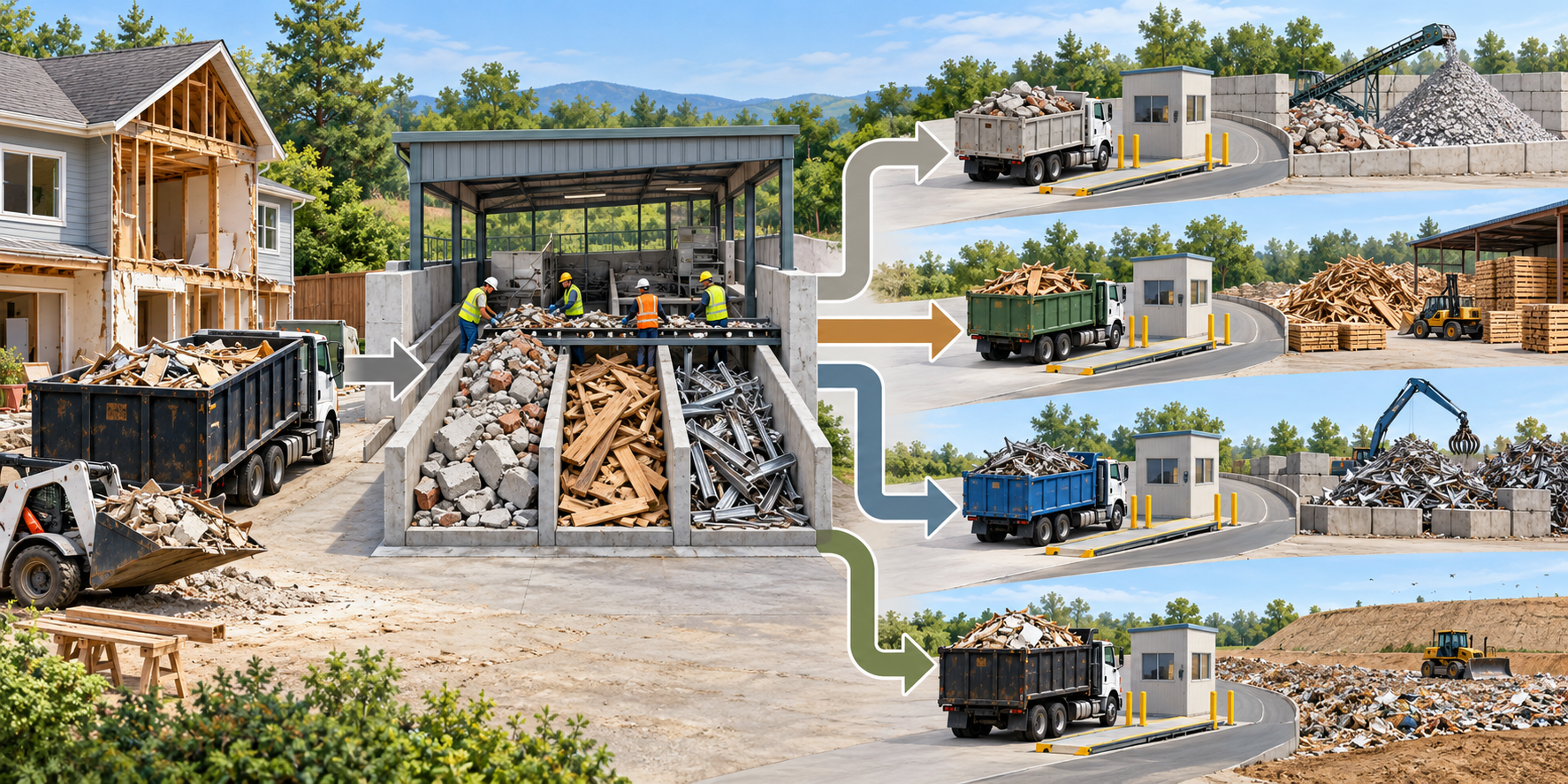
Construction and demolition waste is not the same as household trash. Common streams include concrete, masonry, asphalt, wood, drywall or gypsum, metal, plastic, roofing material, and mixed debris. Clean, separated material may have a different destination from a mixed or contaminated load.
The Government of Canada identifies these kinds of construction, renovation, and demolition streams in its federal reporting context. Its displayed project data shows materially different diversion results by material and jurisdiction. That demonstrates variation; it does not create a national private-residential disposal rate or guarantee acceptance at a local facility.
EPA encourages source reduction, salvage, reuse, recycling, and deconstruction where practical. A diversion option can reduce landfill dependence or disposal fees, but sorting, extra containers, labor, storage, and transport can also add cost.
Weight, contamination, and distance
Concrete, masonry, soil, asphalt, and some roofing debris can reach a weight limit before filling a container. Lightweight mixed debris may be priced more by volume. Paint, liquids, treated materials, appliances, batteries, and suspected hazardous material can trigger separate rules or rejection.
The destination matters too. A nearby transfer station may not accept every stream. A recycling facility may require clean separation. A landfill may charge differently for mixed construction material than for a dedicated heavy load. Haul distance and waiting time can turn a low gate fee into an expensive total.
A practical way to compare a disposal allowance
Request the assumed material mix and approximate quantity. Then ask the bidder to show:
- How much material is expected in each stream?
- Which streams are separated and which are mixed?
- What facility or type of facility is assumed?
- Is the allowance based on weight, volume, or a fixed trip?
- What happens if the load is heavier, contaminated, or rejected?
- Are recycling credits real, estimated, or merely possible?
If the quote says only “disposal included,” ask whether the contractor is taking the risk or reserving the right to pass through actual charges. Neither approach is automatically better, but the risk should be visible.
Hazardous-material boundary
Asbestos, lead, mold, PCBs, contaminated soil, and other hazardous materials cannot be handled as ordinary construction debris merely because they are inside a renovation load. Hazard identification, containment, transport, and disposal may require qualified specialists and jurisdiction-specific rules. This category covers ordinary logistics; hazard-specific testing and abatement belong in the environmental-hazard scope.
Why a national number misleads
Disposal rates vary with facility ownership, local policy, material acceptance, regional landfill capacity, haul distance, market demand for recyclables, and the exact load. Use local facility or hauler information for a real budget. Treat a published national average as orientation only unless it states the same material, weight, destination, and included services as your project.
For the container portion of the cost, see dumpster rental cost for construction. For the service-model choice, compare dumpster, junk removal, and contractor hauling.
A local fee schedule shows why the label matters
The City of Calgary’s 2026 residential landfill schedule is one example of a facility charging according to both load and material. The City lists a flat $25 charge for charged or mixed residential loads under 250 kilograms. For charged or mixed loads at 250 kilograms and above, the total load weight and highest applicable material rate determine the charge. Its schedule lists $113 per tonne for Basic Sanitary Waste, and $90 per tonne for qualifying recyclable drywall and untreated raw wood. It also lists a $275-per-load hard-to-handle surcharge for certain low-weight, large-volume, or special-handling loads.
Those figures are a local municipal drop-off example, not private hauling prices, contractor pass-through, or a national benchmark. The currency code is not stated on the page. Calgary staff decide acceptance, customer classification, and the final charge; material definitions and contamination limits matter. The example is useful because it shows why “one load” or “one ton” can be an incomplete assumption, not because it predicts what another facility or project will charge.
Nashville-Davidson County’s convenience-center schedule provides a small-load example with a different fee unit: its Omohundro center lists $20 per C&D visit, limited to two cubic yards and one visit per day. The city’s page requires proof of Davidson County residence and self-unloading, excludes commercial vehicles, and lists materials that are not accepted, including concrete and roofing shingles. The fee is not a roll-off or contractor-hauling price, and the page does not state a currency code. Verify the current material list and terms before making a trip.
Follow the material from work area to destination
For each major stream, identify who separates it, where it is expected to go, and what happens if that destination will not accept it. A contractor may combine labor, loading, hauling, and gate charges into a single disposal allowance. That is convenient, but the estimate should still state what kinds of debris and quantities it assumes. If an allowance is based on actual facility receipts, ask whether a management fee or additional trip is added. If it is fixed, ask who absorbs a heavier or rejected load and which exclusions remain.
Material categories can overlap in practice. Clean concrete may have a recycling destination, while concrete mixed with soil, drywall, or household contents may be treated as a different stream. Untreated wood and painted or treated material may follow different routes. Drywall, shingles, metals, and appliances may each have local acceptance conditions. The relevant facility, not the material name in a homeowner’s estimate, decides whether a load qualifies.
Sorting can save one cost and create another
Separating a valuable or recyclable stream may reduce landfill tonnage or make a lower-cost facility available. It can also require extra labor, containers, protected staging area, multiple pickups, and longer handling time. A project with plenty of space and a predictable quantity may support separate streams; a tight urban site with short work windows may make the extra container or trip uneconomic. The contractor’s estimate should explain whether the projected credit is based on an actual local outlet and whether the homeowner receives it as a credit or only as a reduced allowance.
Do not count a recycling credit as guaranteed savings until the quote names the material condition, receiving destination, and adjustment if rejected. A public sustainability target or federal waste report does not set a private homeowner’s fee or prove that a local facility will accept a particular load. Keep any salvage value separate from avoided disposal costs as well: they are different potential benefits with different assumptions.
Compare estimates line by line
When two bids differ, ask the contractors to align these assumptions before comparing totals:
| Assumption | What to make explicit |
|---|---|
| Quantity | Estimated weight, volume, number of loads, and expected material mix |
| Sorting | Which materials are separated, who performs the separation, and where they wait |
| Destination | Facility type or named outlet, distance, and any acceptance condition |
| Included charges | Loading, hauling, containers, gate fees, transfer, taxes, and receipts |
| Exceptions | Overage, contamination, prohibited material, rejected loads, and extra trips |
| Credit | Whether a reuse or recycling credit is firm, conditional, or excluded |
If the source of a fee is unclear, ask for the facility receipt or the contract term that governs a pass-through. You do not need the contractor to guarantee a fee outside its control, but you do need to know whether the allowance can change and how the amount will be documented. That distinction can matter more than a small difference in an initial estimate.
Keep hazardous and ordinary disposal separate
Ordinary construction debris assumptions do not cover asbestos, lead, contaminated soil, PCBs, or other regulated materials. A suspected hazard can affect testing, containment, worker qualifications, transport, and the receiving destination. It may also make a mixed-load estimate unusable. Do not place a suspected regulated material in an ordinary container based on a general debris quote; use qualified guidance and the rules for the particular jurisdiction and material.
The same principle applies to materials that are ordinary but restricted at a specific site, such as liquids or certain treated products. Confirm the receiving facility’s current acceptance requirements before demolition or cleanup starts. If the material is discovered after work begins, have the contractor identify the stop point, temporary handling, and price-change process rather than silently mixing it into the expected stream.
For a container rental estimate, compare dumpster size, duration, and overage terms. If the project is choosing a hauling model, see dumpster vs. junk removal; disposal is only one portion of the total service cost.