
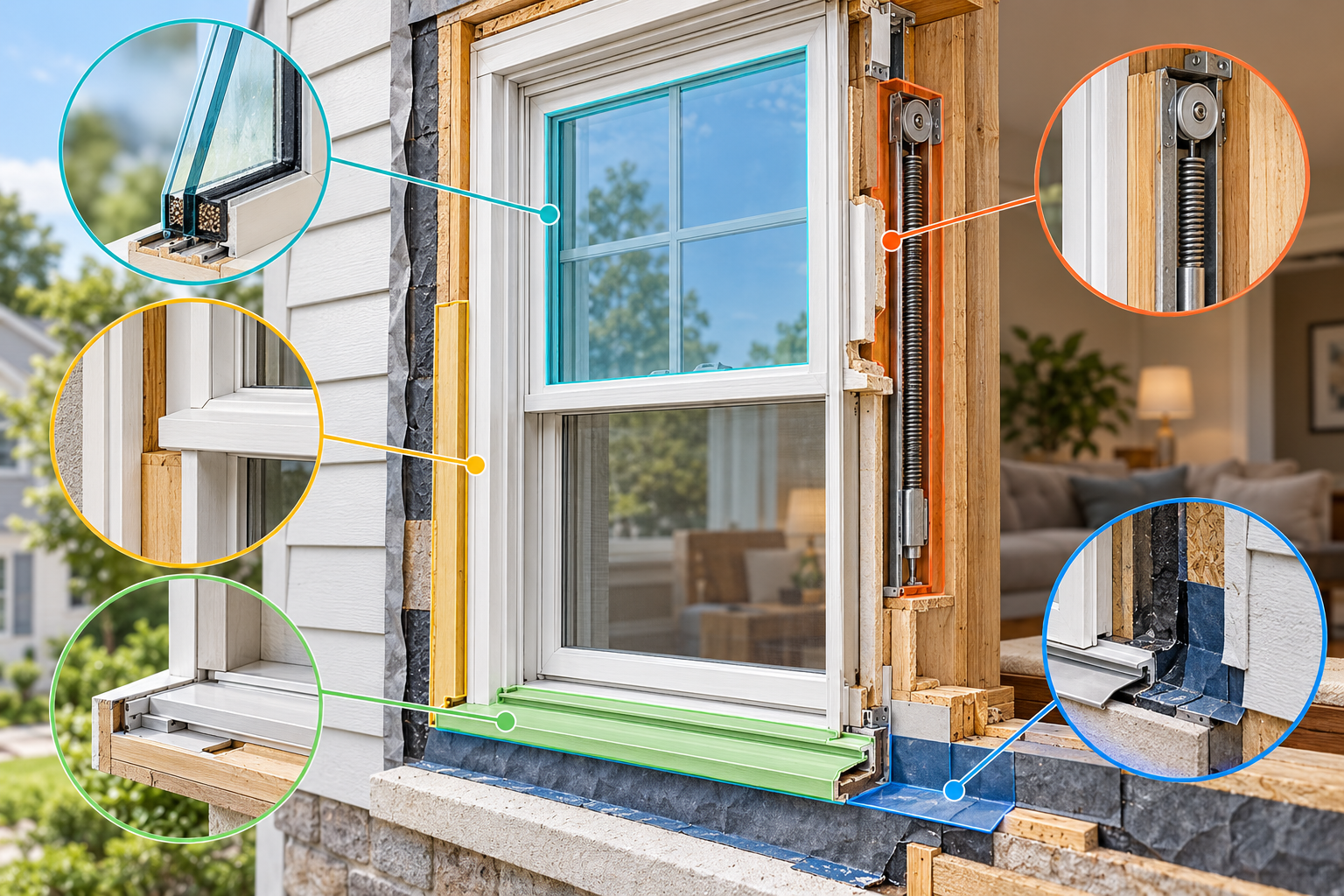
“Window repair” is a diagnosis category, not one standardized job. A cracked pane, failed insulated-glass unit, broken balance, rotten sill, leaking perimeter, and distorted frame require different materials and labor. Parts availability and a contractor’s service minimum can matter more than the visible size of the defect.
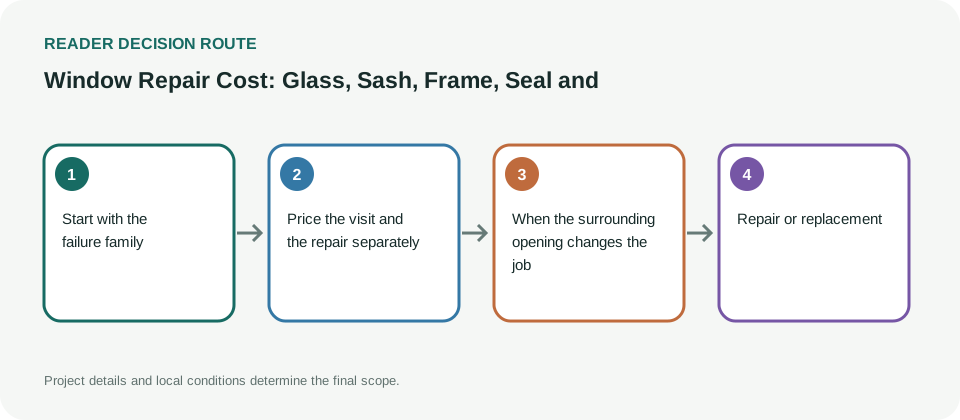
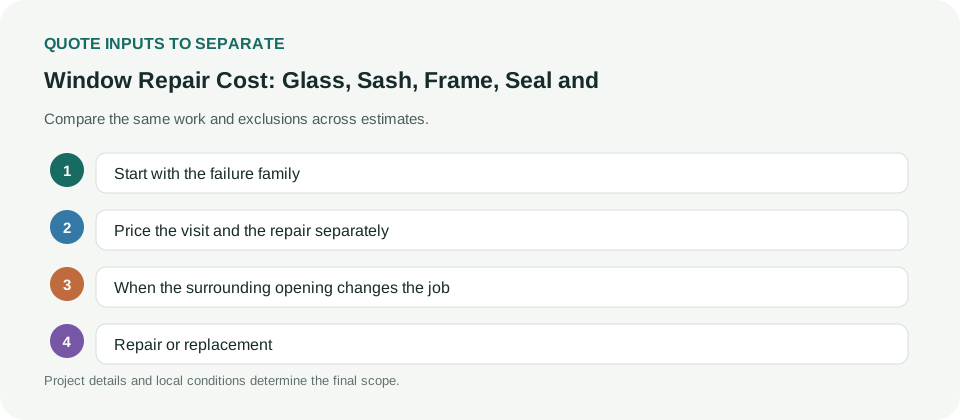
Start with the failure family
| Symptom or finding | Possible scope | What changes the quote |
|---|---|---|
| Cracked or broken glass | Pane or insulated-glass-unit replacement | Size, coatings, safety-glass specification, access, and whether the sash can be reused |
| Fog between panes | Insulated-glass-unit or sash replacement | Product design, seal failure, warranty, and available parts |
| Window will not open or stay open | Balance, hinge, crank, operator, lock, or frame adjustment | Exact mechanism, product generation, and whether the frame is square |
| Soft or damaged sill | Localized wood repair, frame reconstruction, or full-frame work | Water source, concealed wall damage, trim and cladding disturbance |
| Water near the opening | Diagnostic, flashing, perimeter, roof, wall, or unit repair | Where the water enters, not only where it appears indoors |
The DOE describes frame, glazing, coating, spacer, and operator choices as interacting parts of window performance. Replacing one part does not necessarily correct a different part of the system.
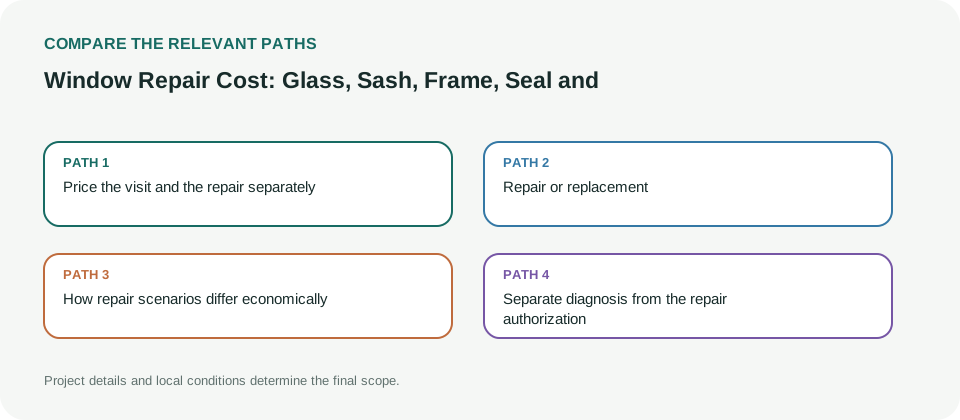
Price the visit and the repair separately
Ask whether the diagnostic or service-call charge is credited toward the repair. The invoice may combine dispatch, inspection, measurement, parts, labor, access, disposal, testing, and a return visit. A custom or discontinued part can require more time even when the installation itself is simple.
For a glass repair, confirm whether the price is for the pane, a sealed insulating unit, a sash, or the complete window. For hardware, identify the balance, hinge, operator, lock, or keeper rather than accepting a generic “mechanism” allowance. For water damage, ask whether the scope includes removing trim to inspect the perimeter and tracing the source.
When the surrounding opening changes the job
Windows interrupt the wall’s drainage plane. Building America guidance treats sill, side, and head flashing as connected water-management work. A leak can therefore involve the window, its installation perimeter, cladding, wall sheathing, or an opening above the window. Surface sealant may conceal the problem without correcting the drainage path.
Visible rot can also understate the condition behind the trim. A responsible quote should state what was opened and inspected, what remains concealed, and what discovery would trigger a separate allowance. Do not infer structural safety from a photograph or a soft spot alone.
Repair or replacement
Repair is easier to justify when the failure is bounded, the frame and opening remain sound, compatible parts are available, and the repair restores the outcome the homeowner needs. A balance, lock, or operator repair can be good value when the sash is sound and aligned; replacement becomes more plausible when the frame is distorted or leaking, several unrelated components are failing, parts have no credible supply path, finish work would be extensive, or the repair would leave a recurring water or performance problem. Compare the next likely repair and remaining service life rather than applying an arbitrary age or percentage rule.
Older homes need a hazard check before disturbing painted or suspect materials. U.S. paid window work in pre-1978 housing can fall under EPA RRP requirements, while Canadian guidance warns about lead paint and other older materials. Ask the contractor to identify testing, containment, cleanup, certification, and disposal responsibilities.
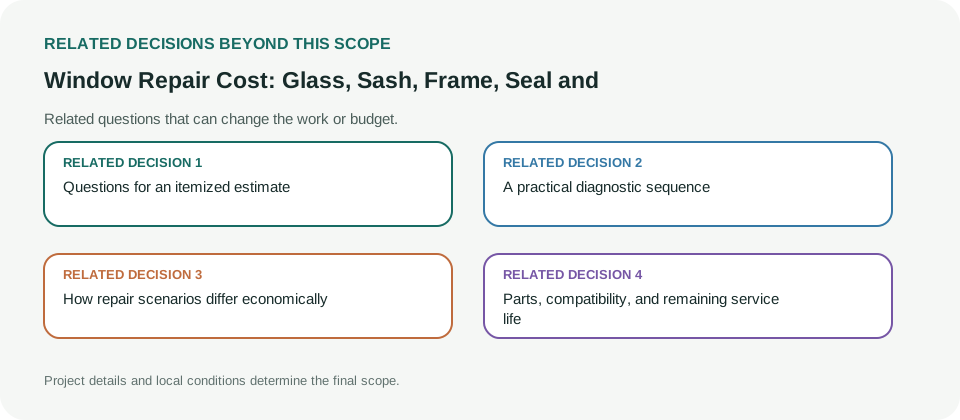
Questions for an itemized estimate
Request the suspected failure, tests or observations supporting it, exact parts, labor, access, finish restoration, disposal, warranty, and limits of the repair. Ask what would make a repair uneconomic and whether a same-opening insert or full-frame replacement is the next alternative. A good repair quote narrows the likely intervention without pretending that an unresolved diagnosis is certain.
A practical diagnostic sequence
Begin with the result that is failing: does the window need to open, stay open, close, lock, keep out rain, reduce a draft, retain heat, or provide a clear view? A service visit that treats every complaint as “replace the window” skips the most useful economic question. The same visible symptom can lead to a balance repair, a glass order, a flashing investigation, or a full-frame project.
Ask the technician to identify the component and the evidence for that conclusion. For a window that will not stay open, the likely component may be a balance, hinge, operator, or sash, but frame distortion can make a new mechanism a temporary fix. For water, the point where moisture appears indoors may not be the point where it enters. For fogging, the distinction between the room side and the space between panes changes the proposed work.
How repair scenarios differ economically
A minor adjustment or replacement of a compatible weatherstrip may be a short visit with limited material. A hardware repair can still carry a service minimum, measurement time, and a return trip if the part must be ordered. Glass or insulated-glass-unit replacement adds fabrication, handling, glazing specifications, and access. Frame or sill repair can involve demolition, drying, flashing, trim, and finish restoration.
The apparent size of the defect is a poor predictor of the total. A small pane on an upper floor can require more setup than a larger accessible pane. A common part can be cheaper than a custom part even when the labor is identical. A repair in an older home may require qualified disturbance controls before the visible component can be removed.
Use scenarios rather than a single “window repair” average:
| Scenario | Likely scope | Main uncertainty |
|---|---|---|
| Bounded operating fault | Adjustment, balance, operator, lock, or hinge | Correct part and frame alignment |
| Glass or failed sealed unit | Pane, IGU, sash, or glazing-pocket work | Glass specification, access, and frame condition |
| Localized wood deterioration | Repair or reconstruction at sill or frame | Concealed damage and water source |
| Recurring leak or broad distortion | Flashing, wall, full-frame, or replacement work | Extent of the opening and adjacent assembly |
These scenarios overlap. The table is a way to ask better questions, not a substitute for inspection.
Parts, compatibility, and remaining service life
Record the manufacturer, product line, approximate installation date, sash dimensions, operator type, and any markings before ordering a part. A visually similar balance, crank, lock, or IGU may not fit or may change how the window performs. The available technical evidence does not establish cross-brand compatibility, and a manufacturer-specific part should be verified against the actual product.
When a part is discontinued, compare the cost and waiting time for a substitute, a sash, or a complete unit. Include the risk that another component will fail shortly afterward, but do not turn that risk into an arbitrary replacement rule. Age alone does not prove that a window should be replaced; condition, repairability, opening performance, and the homeowner’s objective matter more.
Test the result, not just the part
The quote should say whether the completed work is expected to open, close, stay open, lock, weather-seal, and remain operable without excessive force. A new crank does not prove the frame is aligned. A new balance does not repair a damaged sash. A lock can engage while water still enters at the perimeter. Testing the whole operating sequence reveals whether the repair solved the cause or only one symptom.
If the opening is part of a bedroom escape route, do not assume a hardware change preserves the applicable clear opening or operation. Egress requirements are jurisdiction-specific and should be confirmed by the responsible authority or professional.
Separate diagnosis from the repair authorization
A first visit can produce a useful diagnosis without committing the homeowner to a larger repair. Ask what the service fee includes: travel, inspection, adjustment, testing, written findings, and whether it is credited toward approved work. A fee that buys only a short visual check should not be compared with a proposal that includes measurements, opening a component, or identifying a discontinued part.
Before work begins, have the contractor describe the observed failure and the intended result. “Repair the window” is too broad if the actual scope could be a balance, sash, insulated glass unit, operator, lock, frame section, or perimeter water-management detail. The estimate should identify which part is being repaired or replaced, how compatibility was confirmed, and whether the frame or opening condition limits the expected result.
For a problem with more than one plausible cause, compare the cost of a staged diagnosis with the cost of authorizing a larger intervention based on an assumption. For example, a draft that may come from sash weatherstripping or the installation perimeter should be traced before a new unit is ordered. If opening the assembly may reveal additional damage, specify a stop point: the contractor should document the condition and provide a price before proceeding beyond the approved boundary, except for any separately agreed protective measure.
The lowest estimate is not necessarily the least expensive outcome if it leaves the window unable to close, lock, drain, or shed water. Ask for the post-repair checks and any remaining limitation in writing. This helps compare repair with replacement on the same practical basis: restored function and opening condition, not simply a parts subtotal.
Access, older materials, and visit setup
Upper floors, tight interiors, furniture protection, weather exposure, and the need to secure the opening during a return visit can change labor and setup. Ask whether the service charge includes diagnosis, measurement, and one trip, or whether parts ordering and installation are billed separately. Removing stops, trim, paint, or glazing may also disturb older materials. Confirm how the contractor will assess and manage that risk under the requirements applicable to the property and location.
A defensible hardware estimate identifies the exact mechanism, compatibility evidence, labor and service minimum, access, expected operating result, warranty, and the condition that would move the project to a broader repair or replacement. That is the information a homeowner needs before buying a part that may not fit.