
A window that sticks, drops, will not stay open, will not lock, or has a broken crank may need a small operating repair rather than a complete replacement. It may also have a distorted frame, failed sash, water damage, or unavailable parts. The first useful budget is therefore the cost of identifying the mechanism and confirming that the surrounding window is worth repairing.
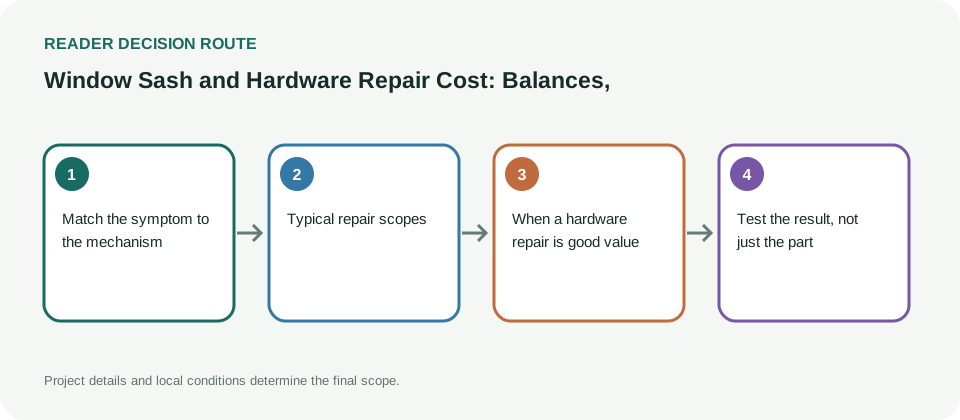
Match the symptom to the mechanism
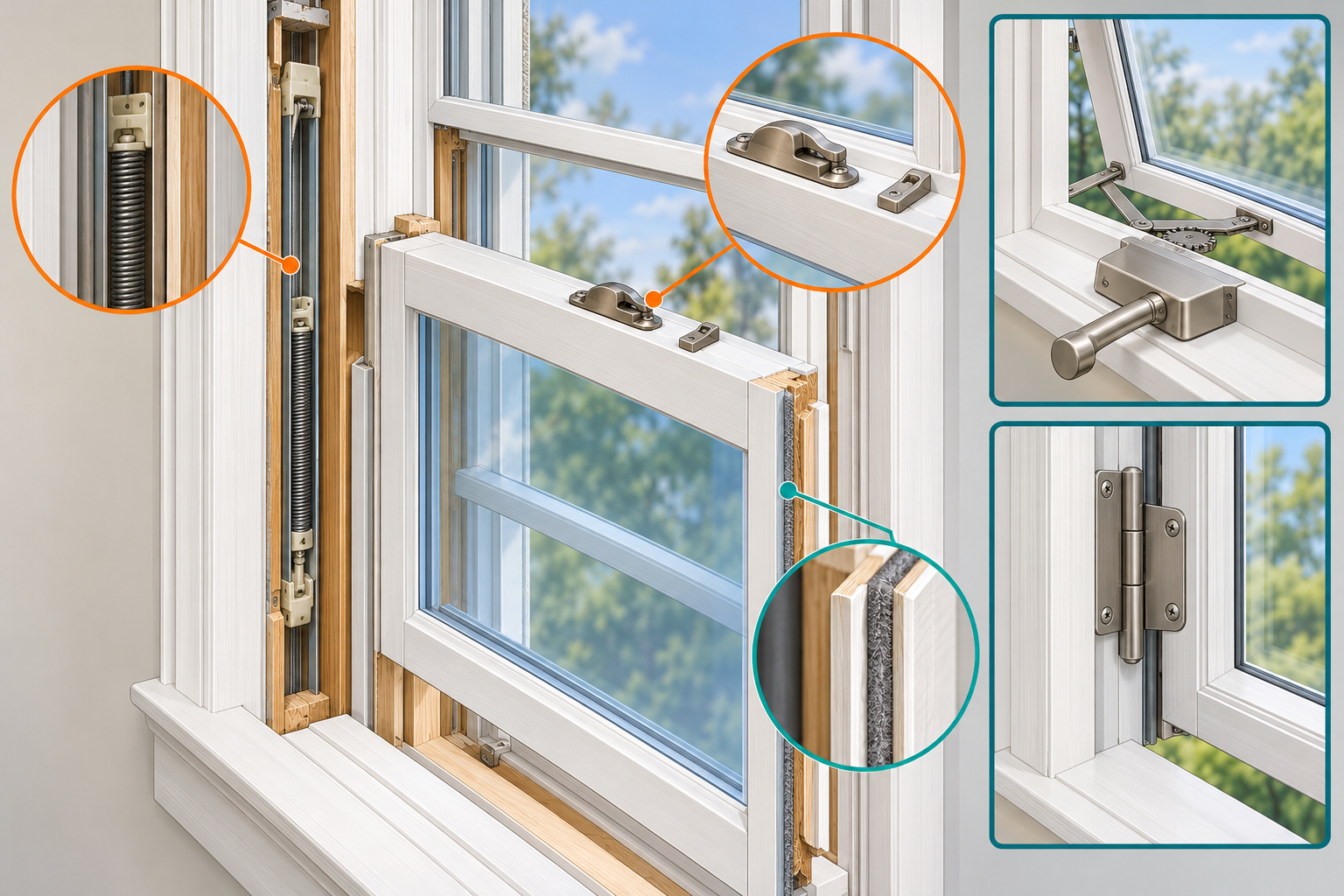
“The window is broken” is not enough information to order a part. A hung window that drops may have a failed balance, loose sash connection, damaged jamb, or frame movement. A casement that will not open may have a worn crank, operator, hinge, lock, or an obstruction. A window that will not lock may be out of alignment rather than missing a lock. The repair estimate should identify the mechanism that was inspected and the outcome it is expected to restore.
Use the product’s manufacturer, series, approximate age, sash dimensions, and hardware markings when requesting parts. DOE’s technical guidance distinguishes fixed, sliding, hung, casement, awning, and hopper operation, but it does not make one manufacturer’s balance or operator universal. A visually similar mechanism can have different mounting, travel, load, or handing requirements.
Typical repair scopes
| Failure | Work that may be included | What can expand it |
|---|---|---|
| Sash will not stay open | Balance or spring replacement and sash adjustment | Damaged jamb, wrong balance, or heavy replacement glass |
| Casement is hard to operate | Crank, operator, hinge, or fastener repair | Frame distortion or inaccessible hardware |
| Window will not lock | Lock, keeper, alignment, or sash adjustment | Out-of-square frame or failed weather seal |
| Sash is damaged | Sash repair or compatible replacement | Unavailable product, glass failure, or frame damage |
| Several mechanisms fail | Consolidated service visit or replacement comparison | Obsolete product and recurring labor minimums |
The material may be inexpensive while the service call, diagnosis, return trip, and access dominate the invoice. Ask whether the first visit is credited, whether parts are stocked, and what happens if the identified part is not the actual cause after disassembly.
When a hardware repair is good value
Repair is often more useful when the frame is square, the sash and glass are sound, the opening seals, compatible parts exist, and the repair restores the homeowner’s actual need. A balance repair can be preferable to replacing a full window that otherwise performs well. A lock repair can be enough when the sash is aligned and the frame remains sound.
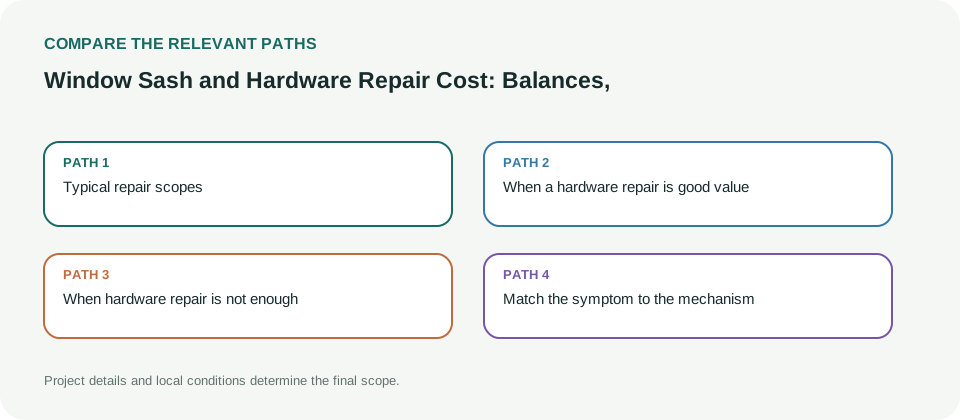
Repair is less attractive when the sash is distorted, the frame is rotten, the opening leaks, several mechanisms have failed, or the product has no credible parts path. Compare the cost of another service visit with an available sash, insert, or full-frame alternative. Do not use age or an arbitrary percentage of replacement cost as the only decision rule.
Test the result, not just the part
The quote should say whether the completed work is expected to open, close, stay open, lock, weather-seal, and remain operable without excessive force. A new crank does not prove the frame is aligned. A new balance does not repair a damaged sash. A lock can engage while water still enters at the perimeter. Testing the whole operating sequence reveals whether the repair solved the cause or only one symptom.
If the opening is part of a bedroom escape route, do not assume a hardware change preserves the applicable clear opening or operation. Egress requirements are jurisdiction-specific and should be confirmed by the responsible authority or professional.
Older materials and access
Removing stops, trim, paint, or glazing around the sash may disturb older materials. EPA’s current U.S. RRP guidance covers paid work that disturbs paint in pre-1978 housing, and Canadian health guidance recommends checking lead paint and other suspect materials before renovation. Ask how the contractor handles testing, containment, cleanup, and disposal. Upper floors, tight interiors, furniture protection, and weather exposure can also change labor.
A defensible hardware estimate identifies the exact mechanism, compatibility evidence, labor and service minimum, access, expected operating result, warranty, and the condition that would move the project to a broader repair or replacement. That is the information a homeowner needs before buying a part that may not fit.
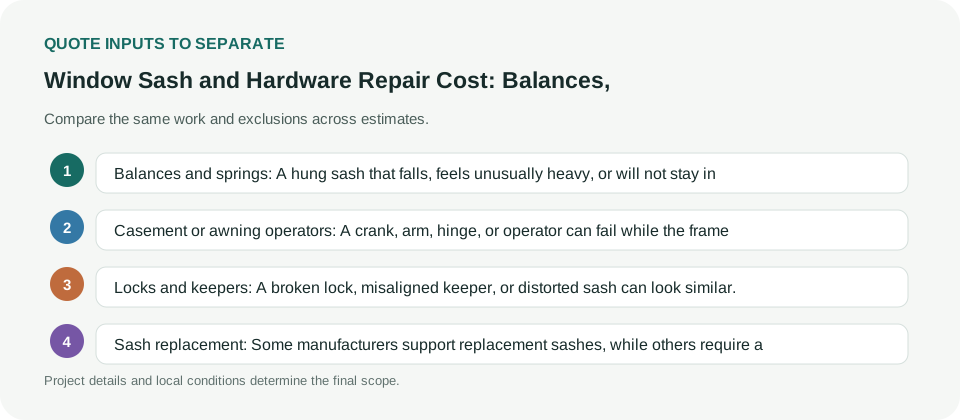
- Balances and springs: A hung sash that falls, feels unusually heavy, or will not stay in position may have a failed balance system. The correct part depends on sash weight, channel or coil design, and product generation.
- Casement or awning operators: A crank, arm, hinge, or operator can fail while the frame and glass remain serviceable. Matching the operator matters; a generic crank may not fit the geometry.
- Locks and keepers: A broken lock, misaligned keeper, or distorted sash can look similar. Replacing the lock alone will not correct a frame that is out of square.
- Sash replacement: Some manufacturers support replacement sashes, while others require a complete unit or have discontinued parts.
- Adjustment and weatherstripping: Cleaning, alignment, fastener correction, or new weatherstripping can improve operation and air leakage when the underlying frame is sound.
DOE consumer guidance distinguishes fixed, sliding, hung, casement, awning, and hopper operation and notes that product construction and weatherstripping affect performance. A repair decision should match the actual window type rather than assuming all hardware is interchangeable.
What makes the quote widen
The service visit may include measurement, product identification, diagnosis, labor minimum, part ordering, installation, adjustment, and a return trip. Upper floors, furniture protection, fixed screens, painted or seized fasteners, and difficult access add labor. A discontinued part may require a custom substitute, sash, or full replacement.
Ask whether the proposed part is an exact match, an approved substitute, or a best-effort repair. Ask what operation will be tested afterward and whether the quote includes screens, locks, weatherstripping, cleanup, and disposal. For a lock or keeper, treat security as an outcome to verify, not a rating that can be promised without product evidence.
Confirm the mechanism and the available part
A window that will not stay open, crank, latch, or slide can have more than one failed component. Before ordering parts, record the window style, approximate dimensions, manufacturer label or spacer code, hardware markings, and whether the sash is distorted or difficult to move even when unlocked. These clues help distinguish a balance or operator problem from frame movement, debris, a failed keeper, or a sash that no longer fits its track.
Ask the repairer to identify the mechanism being replaced and how the proposed part matches the original. Two balances can look similar but differ in length, spring strength, mounting, or sash weight; casement operators and locks can be specific to a frame profile or handing. If the exact part is discontinued, get the compatible-substitute basis and any difference in operation in writing. A generic part price is not a complete repair price until labor, fitting, adjustment, and testing are included.
The quote should say whether both sides of a paired mechanism are being replaced, whether the sash must be removed, and whether the service visit includes a return trip if a custom part is ordered. A temporary adjustment may restore movement but not correct a worn balance or damaged mounting point. For upper-story or heavy sash work, include safe access and handling in the professional scope rather than comparing a parts-only estimate with a completed repair.
After the repair, test the full operating sequence: opening, holding position, closing, locking, and weather seal contact. If hardware replacement does not make the sash square or secure, the frame, sash, or opening may need broader assessment. This final functional check prevents a low-cost part swap from being mistaken for a complete repair when the window still leaks air, will not lock, or binds under normal use.
If parts are ordered after the first visit, ask whether the estimate is a not-to-exceed amount or whether the labor is only an initial allowance. Confirm whether an unsuccessful fit attempt, a second trip, or a substituted part changes the total. A written stop point prevents a service visit from turning into an open-ended series of part changes without a clear operating result.
For a group of windows, ask whether each mechanism can be identified during one visit and which parts must be ordered. A common service-call fee may cover inspection of several openings, but custom parts can still require separate return trips. The proposal should distinguish the shared visit from per-window labor and parts so a multi-opening discount or charge is visible.
When hardware repair is not enough
Compare a broader repair or replacement when the sash does not sit square, the frame is rotten, the opening leaks, multiple mechanisms have failed, or the hardware failure is a symptom of movement. Window replacement may also be reasonable when the correct part is unavailable and the remaining product has poor serviceability, but age alone is not a sufficient criterion.
If the work disturbs painted surfaces in pre-1978 U.S. housing, EPA RRP rules may apply to paid renovation work. Older Canadian homes also warrant a lead-paint and suspect-material check before disturbance. Ask the contractor to state how those conditions affect the scope.
The best repair estimate names the mechanism, part, access, labor, testing, and remaining limitations. It should make clear whether the window will merely open, or whether it will also close, lock, seal, and perform as expected.