
Moisture or haze between the panes of an insulated window can indicate a failed seal, but moisture on the room-side surface is a different problem. The economic decision depends on where the moisture is, whether the frame and sash remain sound, and whether a compatible replacement unit or sash is available.
Between-pane fogging versus surface condensation
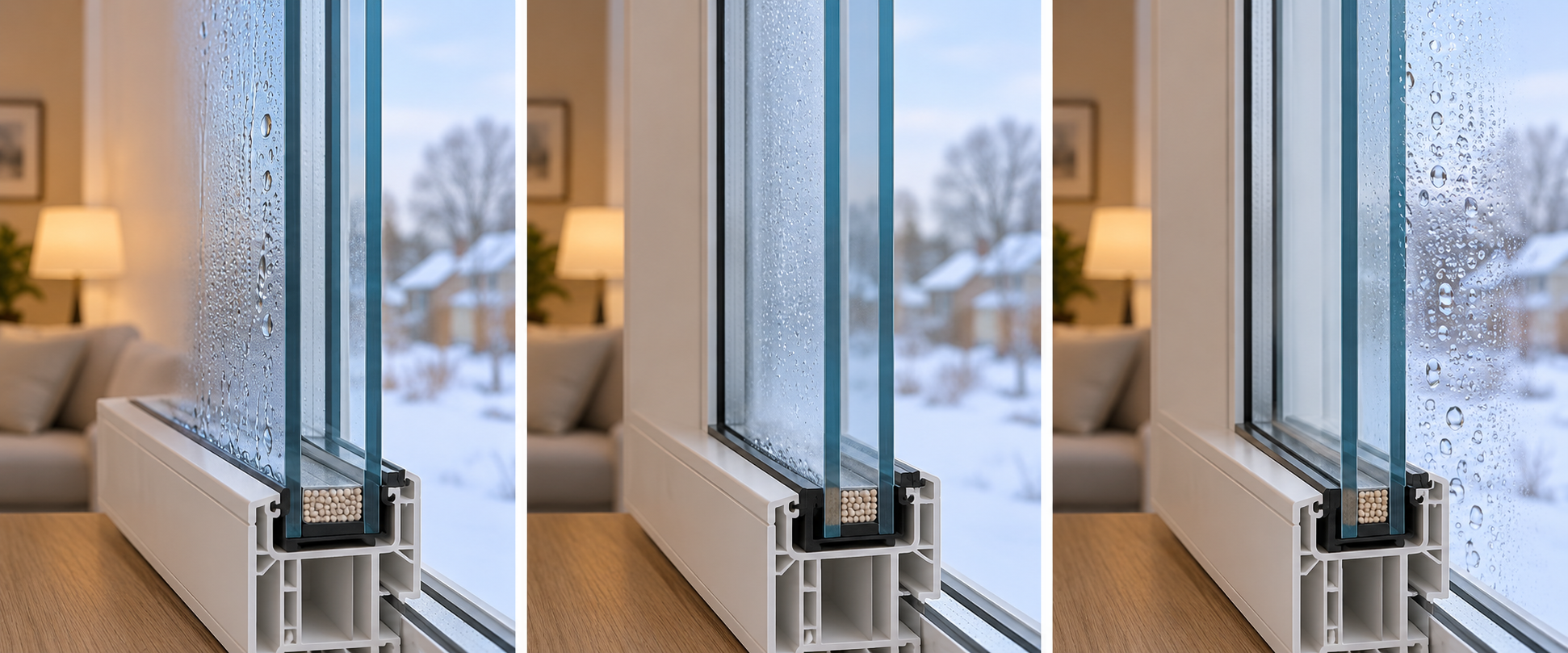
Between-pane fogging appears inside the sealed cavity and may persist after indoor humidity changes. Room-side condensation forms on the interior glass surface when that surface is colder than the dew point of indoor air. Exterior condensation can occur in warm, humid weather when the outside glass becomes cool. These conditions can look similar from across a room but lead to different next steps.
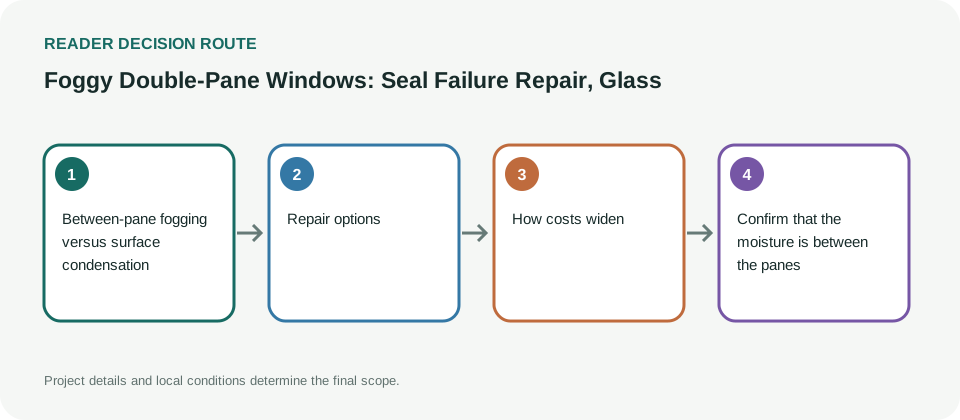
Confirm the location before ordering glass. A contractor may use inspection, temperature and humidity observations, product identification, or removal of trim to distinguish the possibilities. Do not authorize a sealed-unit replacement solely from a photograph if the moisture is actually room-side.
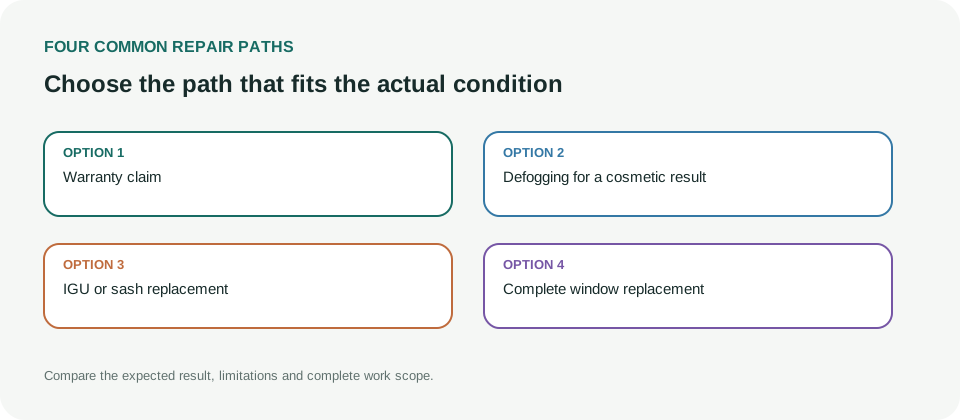
Repair options
| Option | When it may fit | Main limitation |
|---|---|---|
| Warranty claim | The product and seal failure are covered and the manufacturer still supports the unit | Eligibility, labor coverage, and product records vary |
| Defogging service | A specialist offers a cosmetic treatment for a serviceable assembly | Removing visible moisture does not by itself prove restored factory performance |
| IGU replacement | The frame and sash are sound and a matching sealed unit is available | Dimensions, coatings, spacer, seals, and installation must be compatible |
| Sash replacement | The product line supports a replacement sash | Discontinued or proprietary parts can limit the option |
| Complete window replacement | The frame, sash, opening, or other components are failing | More product, finish, flashing, disposal, and installation scope |
DOE guidance explains that insulated glazing, coatings, gas fills, spacers, frames, and operating types interact in the finished product. A replacement glass unit is therefore a specification problem, not simply a piece of transparent material.
How costs widen
Size, pane count, coatings, access, interior protection, removal, and finish work affect a glass or sash quote. A complete replacement adds the unit, installation, flashing or perimeter work, trim, disposal, and possible concealed-condition work. Multiple failing units may justify a broader comparison, but one failed seal does not automatically mean every window needs replacement.
A Greater Vancouver glass provider advertises replacement of a fogged or failed insulated-glass unit from $400 installed while retaining the existing frame. The listing does not identify a currency code, effective date, price unit, or detailed installation inclusions; it says size, glass type, and access affect the price. Treat it as one provider’s starting offer, not a typical Vancouver or Canadian estimate. Ask for the measured unit, access, disposal, and finish scope in a current written quote.

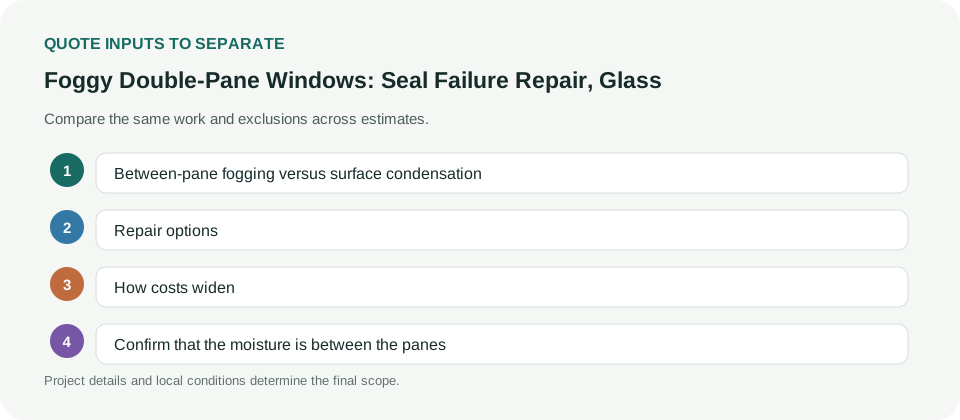
In older U.S. housing, window work that disturbs paint may fall under EPA RRP requirements. Canadian guidance recommends checking older painted surfaces before renovation and treating suspect materials cautiously. Include any testing, containment, cleanup, or qualified contractor scope in the comparison instead of treating it as an unexplained surcharge.
Confirm that the moisture is between the panes
Fogging on the room side can result from indoor moisture and a cold glass surface. Fogging outdoors can occur under conditions where the exterior surface is cooler than the surrounding air. Persistent haze, droplets, or mineral marks inside a sealed cavity point toward a possible failed insulated-glass unit, but the appearance should still be checked against the window’s construction and condition.
This distinction matters because the remedies are different. Humidity or ventilation work may address room-side condensation; an IGU or sash replacement may address a failed seal; a flashing or wall investigation may be needed for rain leakage. A new window is not a universal answer to all three.
What a seal failure changes
An insulated-glass unit combines panes, a spacer, and a factory-sealed cavity. If the perimeter seal no longer keeps the cavity dry, the window may develop haze or moisture between panes. The failure can also affect the appearance and the expected performance of the unit, but the available evidence does not support treating every foggy window as identical or assigning one universal loss of efficiency.
Ask the contractor to identify whether the failed component is the IGU, sash, frame, or an installation joint. Some window designs allow a replacement IGU or sash; others have limited parts support or require a complete unit. A field treatment marketed as “defogging” may improve visibility without restoring the original sealed assembly. Request a specific description of the expected result and any performance or warranty limitation.
Compare the repair paths
| Path | When it can fit | Questions to ask |
|---|---|---|
| IGU replacement | Frame and sash are sound and a matching unit is available | What thickness, coating, spacer, and warranty apply? |
| Sash replacement | The manufacturer supplies a compatible sash | Does the replacement match hardware, frame, and appearance? |
| Cosmetic or defogging service | The goal is visual improvement and limitations are accepted | Does it remove moisture without restoring a sealed IGU? |
| Complete window replacement | Frame, opening, hardware, or several units also fail | Is the project insert or full-frame, and what finish is included? |
Prices vary with unit size, pane count, coatings, access, product generation, and return visits. A single failing unit in an accessible opening is economically different from many failed units in an obsolete product line. If several units are affected, compare the cost of staged IGU work with a broader replacement plan, including the value of keeping sound frames and the disruption of changing them.
Warranty and identification can change the answer
Look for a manufacturer label, spacer marking, invoice, warranty document, or installation record. The warranty may cover the insulated unit for a different period from labor or the surrounding frame. It may also require an approved replacement part or installer. Do not assume a similarly sized unit is an acceptable substitute when the product, sash, or warranty is unknown.
The quote should state who measures, who orders, how a mismatch is handled, whether the sash is removed, what interior finish is disturbed, and whether disposal is included. If the frame is retained, ask how the perimeter remains weather-tight and whether the work corrects any visible water or air leakage.
When several windows show the same symptom
Fogging at multiple openings changes the budgeting question. It may suggest a group of similar-age insulated units, but it does not prove that every window has the same failure or that all require replacement. Record which openings show moisture between panes, which have room-side condensation, and whether the pattern follows a product series, orientation, room use, or recent weather. Keep that inventory separate from a contractor’s count of units to replace.
Ask for the proposed intervention by opening. One unit may have a replaceable IGU in a serviceable sash; another may have damaged glazing stops, a distorted sash, or a frame that makes glass-only work impractical. If the exact replacement unit is no longer available, a contractor may offer a compatible substitute, a sash replacement, or a complete window. Those options can have different appearance, warranty, lead-time, and finish consequences even when each addresses the visible fog.
For a group quote, request the per-opening scope and the shared setup or trip charge separately. A volume discount is meaningful only if it is clear which measurements, visits, fabrication, and installation steps are shared. Ask whether all openings are being measured before fabrication and how the price changes if one sash cannot accept the proposed unit. Avoid approving a blanket replacement package based only on the count of cloudy windows.
If the product may still be covered, identify the manufacturer, model, label or spacer code, installation or purchase date, and original owner before paying for replacement. A component warranty may have a different term from labor, shipping, or the surrounding finish. A claim decision should be documented before an unrelated paid replacement begins, while protecting the room from an active leak or broken glass as needed. The goal is to resolve the affected units without paying to replace sound frames or treating surface condensation as a failed seal.
Older homes and recurring problems
Removing stops, trim, paint, or glazing materials can disturb older surfaces. Paid U.S. window replacement that disturbs paint in pre-1978 housing generally falls within EPA RRP coverage, while Canadian health guidance recommends checking older painted and suspect materials before renovation. These sources do not establish every local rule or prove that a particular window contains a hazard. Ask for the current testing, containment, cleanup, and qualified-work plan.
Replace or repair based on the complete condition and the intended outcome. A failed seal with a sound frame often supports a glass or sash decision; a failed seal combined with rot, leakage, unavailable parts, or a changed performance goal may justify a complete replacement. The key is to price the component that failed and the work needed to make the opening perform afterward.
Compare complete replacement when the frame is rotten or distorted, the opening leaks, hardware is also failing, compatible glass is unavailable, or the homeowner wants a different size, operation, or performance package. Keep the failed-seal decision separate from room-side condensation and whole-envelope problems; replacing glass will not solve high indoor humidity or a leaking wall.
Ask for the diagnosis, product identification, exact proposed component, warranty status, documented performance assumptions, finish restoration, and the conditions that would change the scope. A clear diagnosis is more valuable than a promise that a cosmetic treatment will make the window “like new.”