
A purchase price and current monthly fee show only part of the cost of owning a shared-property home. The association may already be planning a roof, facade, garage, elevator, plumbing, or mechanical project. A low reserve balance, a recent assessment, or unresolved maintenance can change the buyer’s cash needs and financing options.
The goal is not to predict every future repair. It is to determine whether the building has identified its major obligations, is collecting enough to address them, and has disclosed decisions that may follow the buyer after closing.
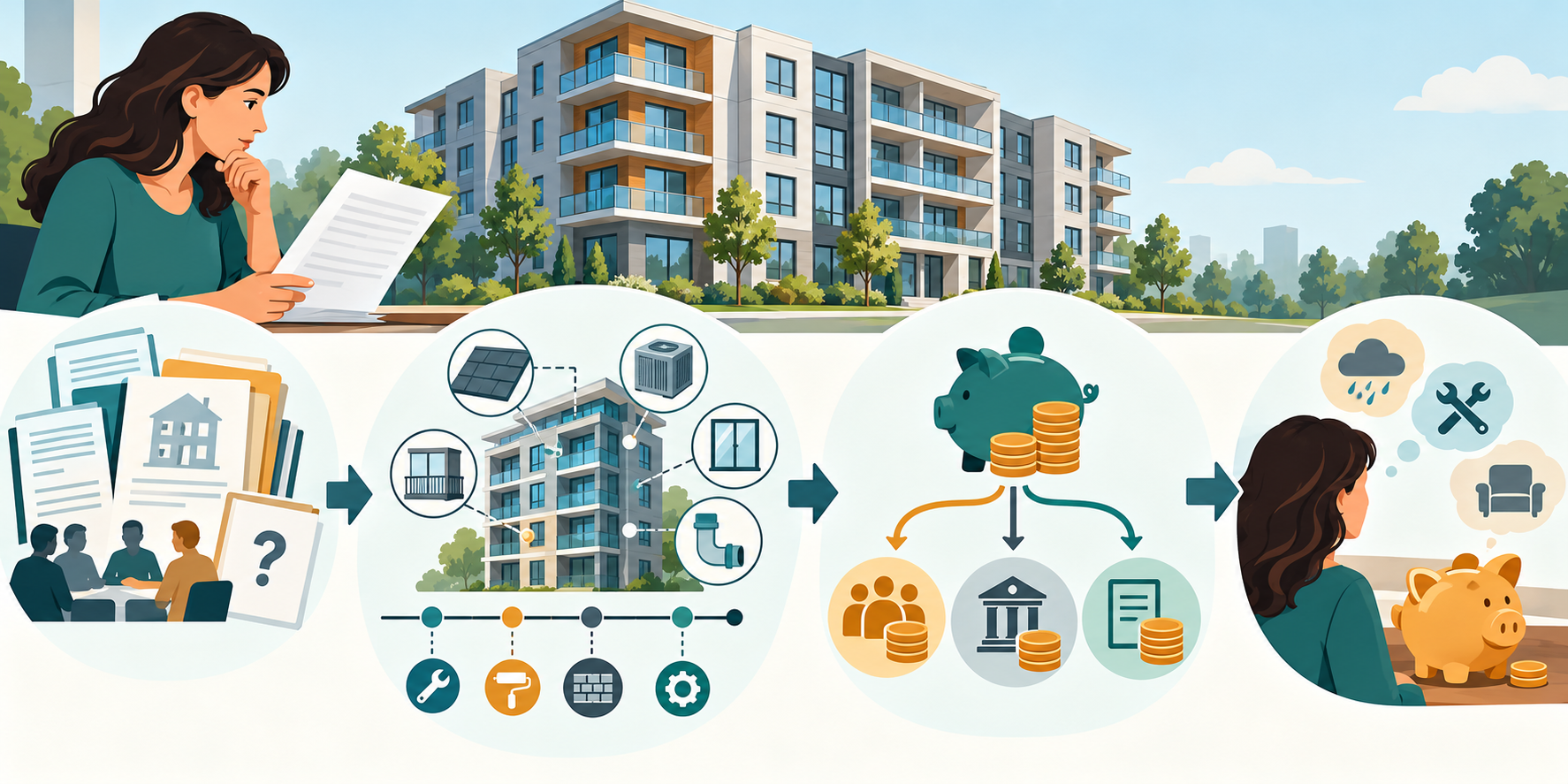
Confirm what you are buying
First identify the ownership form: condominium unit, co-op share, planned-development townhouse, fee-simple townhouse with an HOA, or another structure. The declaration, bylaws, plat, resale package, or proprietary lease may assign components differently. “Townhouse” describes a building form, not a universal repair rule.
Determine which roof, exterior wall, balcony, window, pipe, parking area, and mechanical systems serve the unit. A private-looking component may still be association-controlled, while an exclusive-use area may have a special maintenance obligation.
Build a repair-exposure file
Request and review the documents available for the project:
- declaration, bylaws, rules, and maintenance matrix;
- current budget, balance sheet, reserve study, depreciation report, or capital plan;
- recent board and owner meeting minutes;
- pending or approved special assessments;
- engineering, inspection, leak, structural, elevator, or building-envelope reports;
- insurance summary, deductibles, and open claims;
- loan or litigation information affecting the association;
- notices about construction defects, warranty claims, or major contracts.
A resale certificate or equivalent disclosure is useful, but it is not a substitute for reading the governing documents and asking questions. Dates matter: a report can be technically sound yet no longer reflect current bids or newly discovered defects.
Estimate exposure in four layers
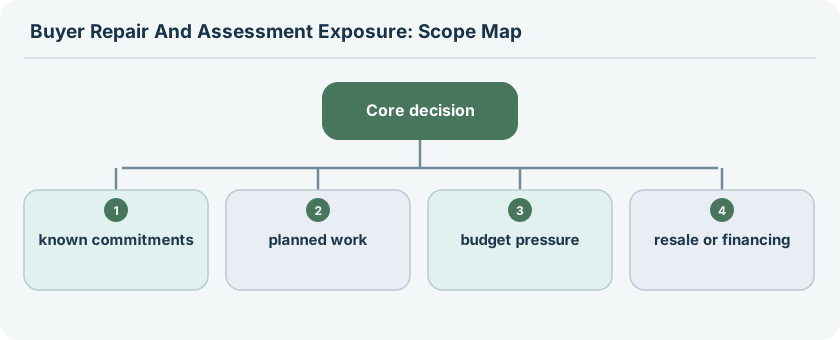
1. Known commitments
Start with assessments already approved, signed contracts, loan repayments, and scheduled projects. Find out whether a stated assessment is the total charge or an installment in a larger program. Ask whether the seller has paid all installments due before closing and how the contract allocates future installments.
2. Underfunded planned work
Compare the reserve balance with the list of major components and their projected replacement dates. A balance alone is not a health score. A building with a large roof replacement next year may have more exposure than one with a smaller balance and no near-term projects.
Look for repeated deferrals, “to be determined” line items, unusually optimistic useful lives, and contributions that fall below the adopted plan. Ask what happens if the project cost is higher than the report estimate.
3. Operating-budget pressure
Review fee changes, recurring deficits, unpaid owner balances, utility contracts, insurance premiums, and loan payments. These may consume cash that owners assume is available for repairs. A recent sharp fee increase is not automatically bad; it may represent a credible catch-up plan. The question is whether the plan matches the work.
4. Financing and resale effects
Some mortgage or appraisal reviews apply project-level standards for critical repairs, insurance, reserves, litigation, or special assessments. Fannie Mae’s project guidance is one program’s framework, not a universal rule for every lender or country. Ask the buyer’s lender to review the project early and identify documents needed for underwriting.
Freddie Mac’s 2026 bulletin adds application-date conditions for its own condo project reviews: the highest reserve-study allocation must be reflected in the project budget for applications received on or after August 3, 2026, and a 15% minimum reserve allocation applies to applications received on or after January 4, 2027. These figures do not determine a buyer’s legal share or prove that a building is adequately funded. Ask the lender to confirm the program and application date, then compare the actual study, budget, committed projects, and assessment terms. The reserve-study guide explains how to read those assumptions.
Questions that reveal the real risk
Ask the board, manager, seller, and lender separately:
- What major work is recommended, approved, bid, or underway?
- Which report or inspection supports the timing?
- How much is funded, and how much remains?
- Are there open insurance claims, construction-defect claims, or litigation?
- Has work been deferred for budget reasons?
- Are there owner delinquencies or an unusually high fee burden?
- Does the assessment attach to the unit, the seller, or the closing allocation under the contract?
- Can the association borrow, and what would that do to future fees?
- Will the lender or insurer require additional project documents?
Red flags and balanced signals
Red flags include meeting minutes that repeatedly postpone safety or envelope work, a special assessment with no complete scope, contradictory reports, a reserve plan that omits visible components, or a board that cannot explain the allocation formula. A low fee with no reserve contribution deserves as much attention as a high fee.
Balanced signals include a current report, transparent minutes, funded projects, realistic contingencies, and a clear plan for items that are not yet fully funded. A building can have a large project and still be manageable if the scope, timing, and funding are credible.
Buyer decision checklist
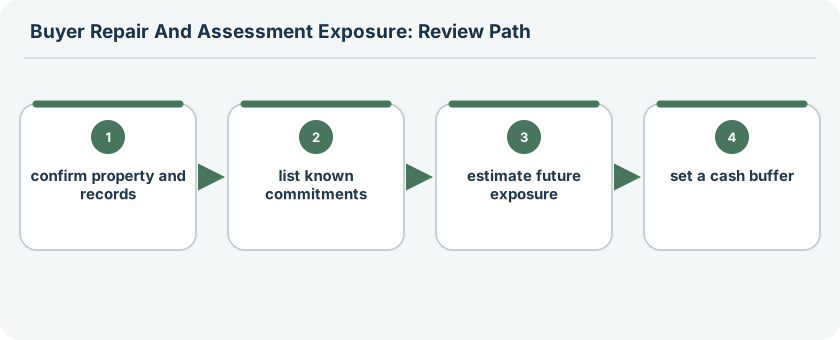
Before removing contingencies, write down:
- the components likely to require work during your ownership;
- approved and probable payment obligations;
- the documents still missing;
- the lender’s project-review status;
- the insurance and deductible assumptions;
- the cash reserve you would retain after closing.
If answers remain incomplete, price that uncertainty as a risk rather than treating the current fee as the whole ownership cost. The right decision depends on the documents, the allocation rules, your holding period, and your ability to absorb a surprise obligation.
Turn the documents into a cash-flow view
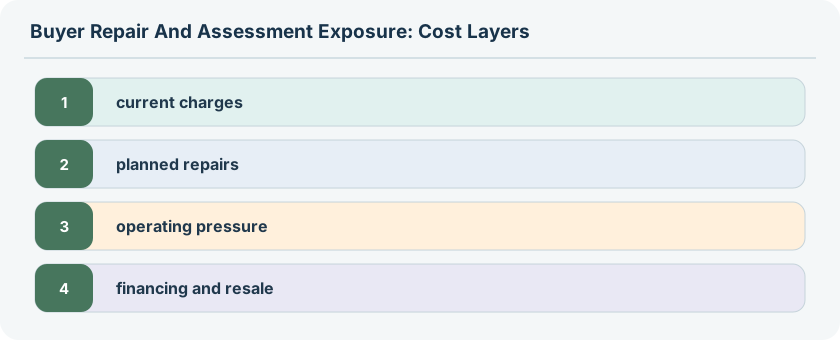
For each known or probable project, record the expected timing, total project scope, available funding, possible owner share, payment schedule, and uncertainty. Include ordinary fee changes, reserve contributions, association loan payments, insurance increases, and any pending assessment. Then compare those obligations with the cash you would have after closing.
Ask the lender whether the project requires a questionnaire, engineer report, insurance review, or evidence of completed work. Ask the insurer whether the building’s condition, claim history, roof age, or deductible changes the unit premium or eligibility. Keep the questions separate: a project can be legally approved but still require additional financing or insurance review.
How to handle incomplete answers
If minutes refer to an engineer, bid, lawsuit, leak, or assessment but the document is not provided, list it as an open item. Ask who holds the record, the date it will be available, and whether the purchase agreement provides a review or cancellation right. Do not convert an unavailable document into either a clean bill of health or a certain defect.
A seller’s disclosure, resale certificate, or manager email can be useful evidence, but compare it with the declaration, current budget, minutes, and reports. Note differences in dates and ask which record is current. If the building cannot explain a major obligation, price the uncertainty or obtain local advice before proceeding.
Keep the ownership horizon in view
A project scheduled after closing may benefit the buyer but still require a contribution. A project delayed beyond the expected holding period can still affect resale and financing. Estimate not only the immediate payment but also the likely fee path, insurance, disruption, and ability to sell while work is pending.
The buyer’s file should end with a written list of confirmed obligations, unresolved questions, documents reviewed, and professional advice requested. That is a better purchase decision tool than the current monthly fee alone.
A pre-closing risk summary
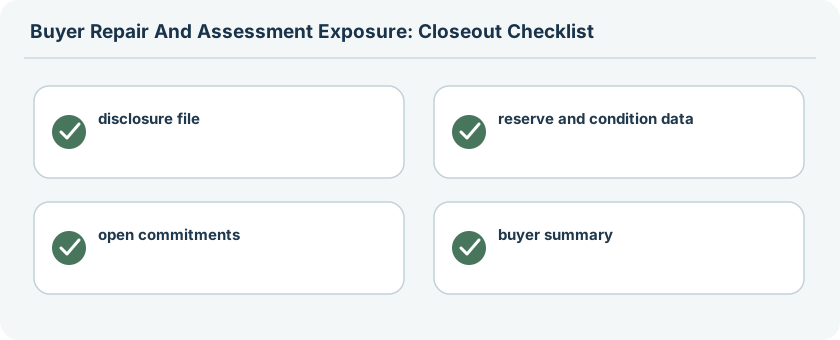
Write one page with four headings: confirmed, probable, unknown, and transaction action. Under confirmed, list approved assessments, contracts, loan payments, and projects already underway. Under probable, list components nearing replacement or repeatedly discussed in minutes. Under unknown, list missing reports, pending bids, unresolved claims, and unclear allocation rules. Under transaction action, list the lender, insurer, seller, manager, or local professional who must answer each item.
Use the summary to test affordability after closing. Include cash needed for installments, a higher monthly fee, insurance changes, temporary disruption, and an emergency reserve. Do not rely on an estimated assessment percentage without seeing the unit allocation formula.
A strong file also records the document date and source. If the seller provides a resale package from months earlier, ask what changed since it was issued. If a board minute refers to a new report, request that report. If the lender’s review is incomplete, do not treat conditional approval as final project clearance.
The decision is ultimately about evidence and capacity: what the association knows, what it has funded, what it has deferred, and what the buyer can carry. A transparent project can be manageable; an unexplained obligation deserves a documented answer before commitment.
A final pre-closing checklist should name the report date, the person who supplied each document, the obligation amount, and the unresolved item. Keep the file with the offer, resale package, lender correspondence, and insurer questions. If a material answer arrives after the review period, obtain local transaction advice promptly.
The final review should distinguish a document that confirms an obligation from a document that merely says no obligation is known. Ask the manager to date any “none known” response. Keep the document list and open-item list with the transaction file.
Example: a low fee and an old roof
Suppose the current fee is attractive, but the minutes mention roof leaks, the reserve report dates the roof near replacement, and the latest budget has only a modest reserve contribution. The right conclusion is not that an assessment is certain. The right conclusion is that the buyer should request the current roof inspection, bids, reserve balance after committed spending, planned funding method, and allocation formula.
If the roof work is approved but not yet contracted, ask whether the estimate includes access, sheathing, flashing, interior restoration, and contingency. If the seller has received an assessment notice, confirm the installment schedule and transaction allocation. Ask the lender and insurer whether the project needs additional review. Then compare the likely cash need with the buyer’s post-closing reserve.
This example shows why a buyer should not use a fee, reserve balance, or meeting-minute phrase alone. The exposure is the connected set of condition, scope, funding, allocation, financing, insurance, and timing evidence.