
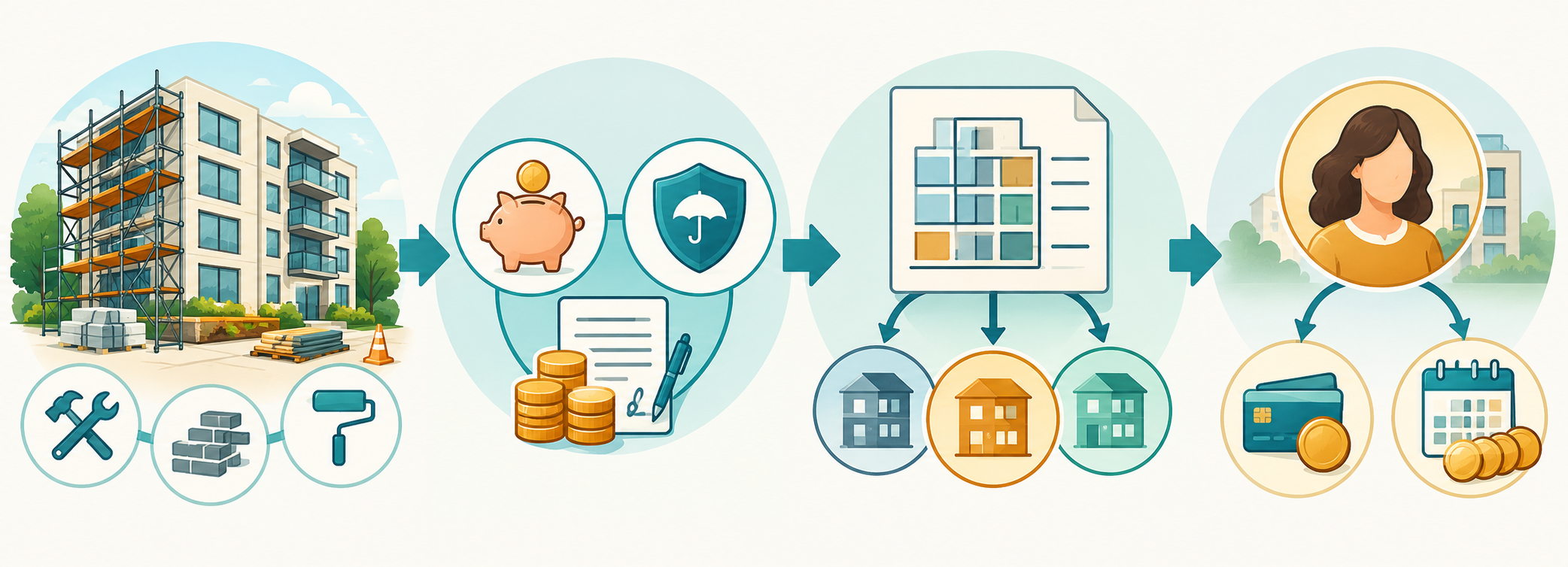
A special assessment, special levy, or similar extra charge is a way for a condo, strata, HOA, or other shared-property organization to collect money outside ordinary recurring fees. It may fund an unexpected repair, a project that exceeds the reserve, an insurance shortfall, a legal or operational obligation, or another expense authorized by the property’s documents and applicable law.
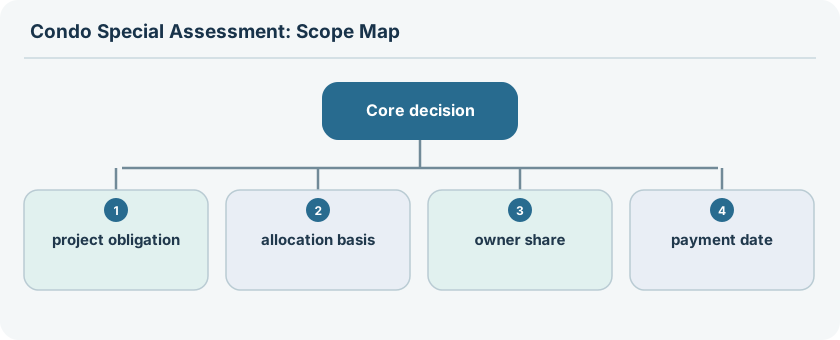
The important budgeting question is not only “how much is my assessment?” It is how the total obligation was established, why ordinary funds are insufficient, how an owner’s share is calculated, when payment is due, and whether the charge affects a sale, loan, or insurance claim.
Why assessments arise
A property may need a special assessment because a major component failed earlier than expected, a reserve was insufficient, a project cost more than forecast, or an urgent condition cannot wait for future contributions. Common triggers can include roofs, facades, balconies, elevators, parking structures, plumbing infrastructure, water damage, electrical systems, or other common property.
An assessment can also arise when the association must fund work that is not a classic replacement project. The notice should identify the legal and documentary basis, the total amount, the purpose, the allocation, the due date, and whether installments or financing are available. If the notice is vague, request the supporting budget, engineering or inspection material, and board or member resolution.
Start with the total project obligation
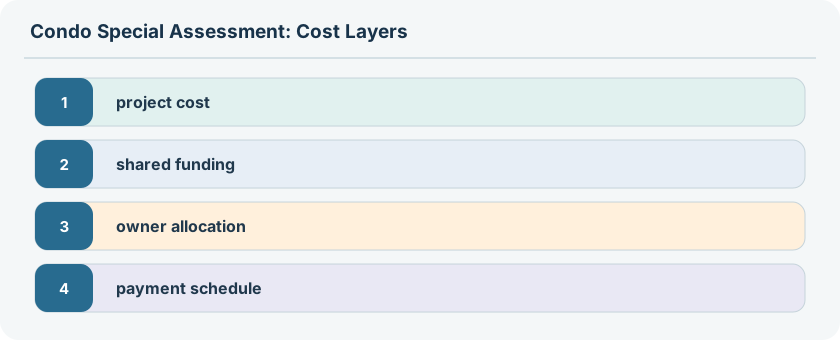
Separate the assessment from the underlying project. Ask what the total budget includes:
- investigation, engineering, design, and permits;
- emergency stabilization or temporary protection;
- demolition, access, and disposal;
- construction and materials;
- testing, inspection, and closeout;
- restoration of common areas or owner finishes;
- contingency, taxes, insurance gaps, financing, or administration.
A reserve withdrawal, insurance payment, loan, or other contribution may reduce the amount collected through the assessment. Conversely, a preliminary assessment may change if the project scope, quote, or coverage changes. Do not evaluate your individual share without understanding the total obligation and the assumptions behind it.
How an owner’s share may be calculated
The allocation may follow a unit factor, percentage interest, ownership share, equal split, benefit received, damage causation, a special bylaw, or another document-defined method. A property can use different methods for common expenses, limited common property, owner-caused damage, or a project that benefits only part of the development.
Ontario guidance gives a jurisdiction-specific example in which the declaration sets contribution proportions and a special assessment can be added to common expenses. That example should not be converted into a rule for every U.S. or Canadian property. Confirm the formula in the declaration, plan, bylaws, assessment resolution, and current law.
Alberta provides another province-specific example. Government guidance describes a special levy for an unbudgeted expense or shortfall and says the board generally approves it by resolution; a capital improvement requires a special resolution. Owners should be told the levy purpose, total amount, unit-share calculation, amount due, and payment date or installments. These are Alberta condominium rules, not a pan-Canadian process. Ask for the current resolution and legislation that apply to the property.
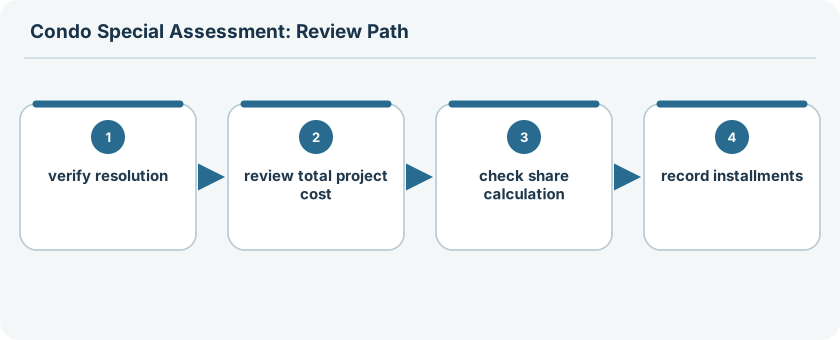
Check the arithmetic. Ask for the total assessment, your stated percentage or factor, credits, installments, interest, late charges, and any separate costs. A management estimate may be useful, but a disputed formula or charge requires local legal review.
Lump sum versus installments
A lump-sum demand creates a concentrated cash requirement but may reduce interest or administration. Installments spread the obligation but can overlap with ordinary fees, other assessments, loan payments, or the period during which a project remains unfinished. Association borrowing may lower the immediate owner bill while adding interest and a continuing common obligation.
Ask whether the assessment is approved, proposed, payable, secured, subject to collection remedies, or contingent on a future vote or project price. Due dates, notice, liens, late charges, and payment options vary by jurisdiction and documents. Do not assume that a sale or refinancing automatically transfers or cancels the obligation.
Assessments and a sale
An assessment can affect both buyer and seller. The relevant date may be approval, notice, closing, the work, or another event under local law and the purchase contract. A buyer may also face an assessment that has not yet been formally levied if the documents and meeting records disclose a likely project.
Request the current status or estoppel information, assessment notices, meeting minutes, project reports, insurance information, and payment ledger where available. Put the allocation in the purchase agreement and obtain advice when the amount is material. A seller’s statement that “the assessment is paid” should be checked against the association’s records and the closing terms.
Keep assessments separate from chargebacks
A special assessment generally addresses a shared obligation collected through the association. A chargeback may seek to add a cost caused by an owner’s act or omission to that owner’s account where the governing documents and applicable law authorize it. An insurance deductible, loss assessment, and owner repair invoice are different mechanisms again.
The same water loss can involve several paths: the association funds common repairs, an insurer pays some damage, an owner pays a deductible, and a permitted chargeback is disputed. Do not call every unexpected invoice a special assessment. Identify the legal and contractual basis for the charge.
What to request before paying
Ask for:
- the notice and authority for the assessment;
- the total project budget and current contract;
- engineering, inspection, or insurance information supporting the work;
- the owner-share formula and arithmetic;
- reserve, insurance, loan, or other funding offsets;
- the payment schedule, interest, and collection consequences;
- the treatment of an owner alteration or prior damage;
- records needed for a sale or lender review.
If the work involves structure, life safety, insurance, a lien risk, or a disputed allocation, consult the appropriate local lawyer, insurer, engineer, lender, or property professional. A special assessment is a real financial obligation, but the notice alone may not explain every assumption behind it.
Check the resolution, not only the notice
A special-assessment notice should be read with the board or owner resolution, budget, governing documents, and project scope. Confirm the legal authority, purpose, total amount, unit allocation, installments, payment date, interest or late consequences, and treatment of units that sell or become delinquent.
Ask whether the assessment is for a defined project, an emergency, a deductible, an operating shortfall, or a reserve contribution. These purposes may have different approval and allocation rules. Request a current balance after committed costs and ask what contingency remains.
Assess the project risk
Review the engineering report, bids, exclusions, permits, access, temporary protection, interior restoration, and warranty. Ask who can approve change orders and how owners will receive updates. If the assessment assumes insurance proceeds, a warranty, or a contractor recovery, identify the amount as uncertain until received.
A payment plan can make the immediate bill easier but may add interest and extend the association’s obligation. Compare installments with borrowing and a higher recurring fee. Ask whether other planned projects will be delayed when this money is spent.
Buyer and owner response
A buyer should ask the contract parties and local advisers how the assessment is treated at closing and whether the lender needs a project review. An owner who disputes an assessment should preserve the notice, resolution, allocation formula, reports, and payment records and use the stated process promptly.
After completion, retain final invoices, credits, change orders, warranties, and the updated reserve plan. A special assessment should leave a clear record of what it funded and what future cost remains.
Keep the assessment file current
Save the notice, resolution, project report, bids, payment ledger, correspondence, and any amendment or correction. Note which installments have been paid and whether a future owner will receive a credit or assume a remaining payment under the transaction documents. Ask the manager to confirm the unit balance in writing.
If work changes, request an updated scope and budget. A change order, insurance credit, or warranty recovery should be reflected in the owner communication. The association should explain whether the assessment is reduced, retained for another phase, or applied to a different obligation.
At closeout, compare the assessment collected with the final project cost and reserve plan. Owners should know whether a surplus, deficit, warranty claim, or additional charge remains. A transparent closeout protects the association and makes future resale review easier.
A final payment and closeout record
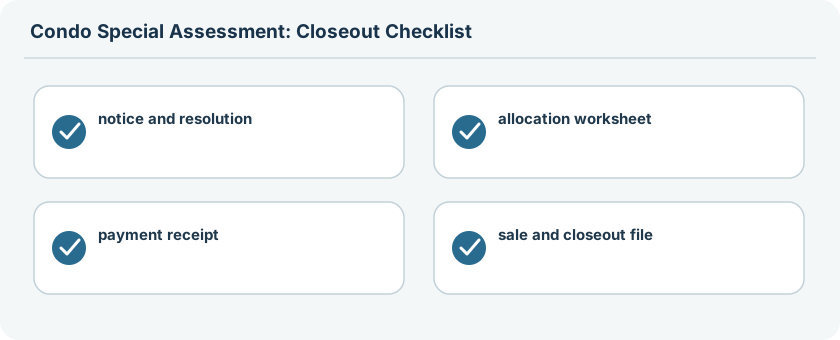
Keep the assessment resolution, notice, allocation calculation, payment history, project scope, change orders, credits, final invoice, warranty, and updated reserve plan. If a later owner will assume an installment, document that in the transaction documents. The assessment is fully understood only when owners can see what it funded and what future obligation remains.
Example: assessment for an exterior project
An exterior assessment should be read with the engineer’s scope and the governing-document allocation. Ask whether it includes facade access, testing, concealed damage, interior restoration, contingency, and owner improvements. Confirm installments, sale allocation, late consequences, and what happens if the project costs more.
Keep the resolution, calculation, payment history, change orders, final invoice, warranty, and updated capital plan. That record shows whether the assessment finished the project or left a later funding gap.
If the assessment covers an emergency, ask what permanent project remains after the immediate work. If it covers a planned replacement, ask what reserve contribution or fee change follows. A payment notice should be paired with the long-term capital record rather than treated as the entire repair plan.