
A major repair creates two separate questions: who has authority to arrange the work, and how the association will collect enough money to pay for it. In a condominium, strata, or homeowners association, the answer may combine reserves, a special assessment, borrowing, higher recurring fees, insurance proceeds, or a developer or contractor claim. The funding method does not by itself decide who is responsible for the underlying component.
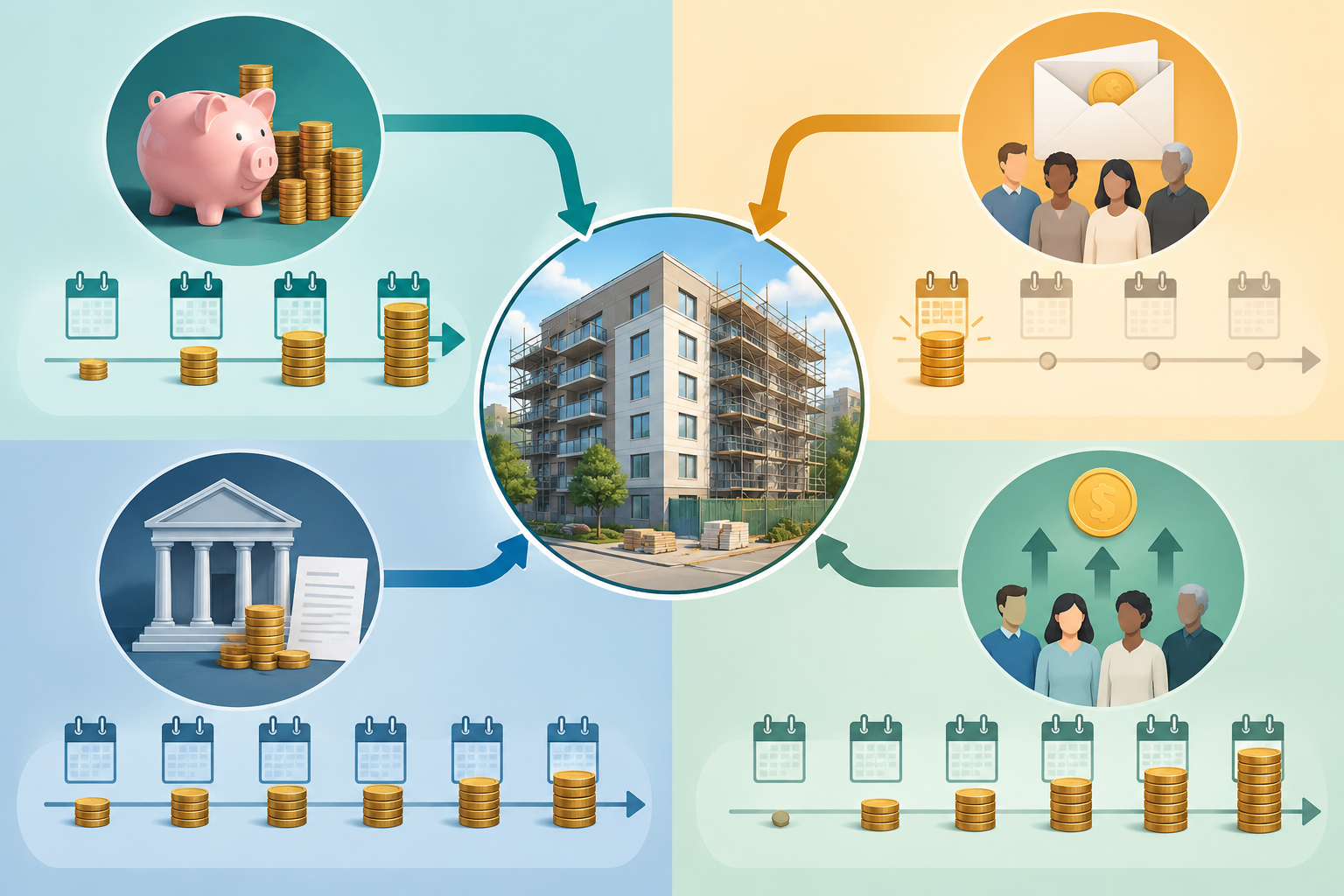
Start with the project, not the funding method
Identify the asset, the scope, and the reason for the work before reading a budget. A roof replacement, structural waterproofing project, failed elevator, exterior repaint, and emergency pipe repair have different planning and approval implications. Ask for the engineer or inspection report, the proposed scope, the expected useful life, and any temporary safety measures.
Then locate the governing documents that classify the asset. A component may be a common element maintained by the association, an element assigned to one unit, an exclusive-use area with a special maintenance rule, or an owner improvement. A reserve withdrawal can pay for work that the association is responsible for, but it does not automatically transfer responsibility for an owner-controlled component to the association.
The main funding methods
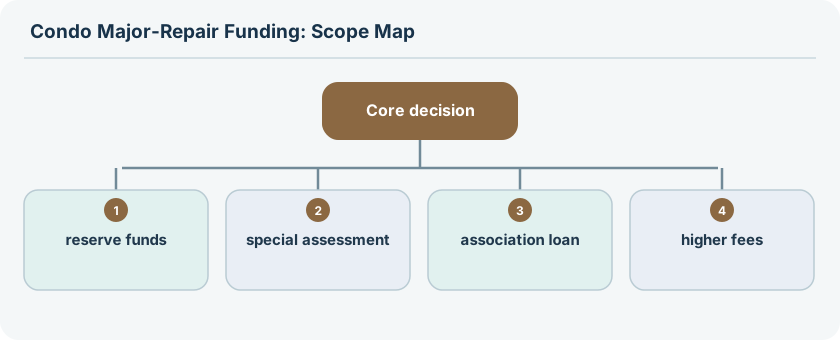
Reserves
Reserve funds are accumulated in advance for predictable major repairs and replacements. A reserve study, depreciation report, capital plan, or similar inspection helps estimate timing and cost. A healthy balance is useful, but the balance must be compared with the component inventory, current estimates, inflation, and projects already committed.
Ask whether the proposed withdrawal is included in the capital plan and what projects would be delayed by using the money. A low current fee can coexist with a large future obligation if contributions have lagged behind the plan.
Special assessment
A special assessment charges owners outside ordinary recurring fees. It may be used when work is urgent, the reserve balance is insufficient, or the governing documents require a separate levy. The amount may be allocated by unit interest, a different allocation rule, or a formula for a particular expense.
Read the assessment notice and resolution carefully. Confirm the total project cost, contingency, payment date, installment options, late consequences, and treatment of units that sell before the final installment. Also ask whether the assessment is only the first phase of a larger project.
California has a specific emergency financing route for repairs to restore qualifying common-area gas, heat, water, or electrical services. If reserves are insufficient, Civil Code section 4775 permits the association to obtain competitive financing and levy an emergency assessment to repay it without a member vote, but the board must first adopt written findings explaining the expense and reserve shortfall. The statute also directs the board to commence the repair process within 14 days of the interruption; that is a start-of-process deadline, not a promise that service will be restored within 14 days. See the California service-restoration guide for the scope and owner-cost questions.
Association borrowing
An association may use a loan or line of credit to spread payments over time, subject to its documents and applicable law. Borrowing can reduce the immediate cash demand but adds interest, fees, covenants, and another recurring obligation. Future budgets may need higher dues to service the debt.
Compare the loan’s total repayment with an assessment, and ask whether the debt is secured, whether owners must guarantee it, and whether lenders reviewing individual buyers will treat the association’s debt or project as a concern. Do not assume borrowing makes an unaffordable project affordable; it changes timing and cost.
Higher recurring fees
The association can sometimes increase regular fees so future contributions catch up with the capital plan. This is slower than a levy and may be appropriate for non-emergency work. It can also be combined with a reserve contribution or a loan repayment.
Look at the fee history, not only the proposed increase. A large one-time increase after years of underfunding may signal that the board is correcting a structural budget problem.
Insurance, warranty, and recovery
Insurance may cover a covered loss, but it generally does not turn ordinary deterioration into an insured event. A warranty, construction-defect claim, contractor recovery, or responsible-owner charge may reduce the net amount, but these sources can be uncertain or delayed. Ask whether the estimate assumes a recovery that has not been received.
How the funding choice affects owners
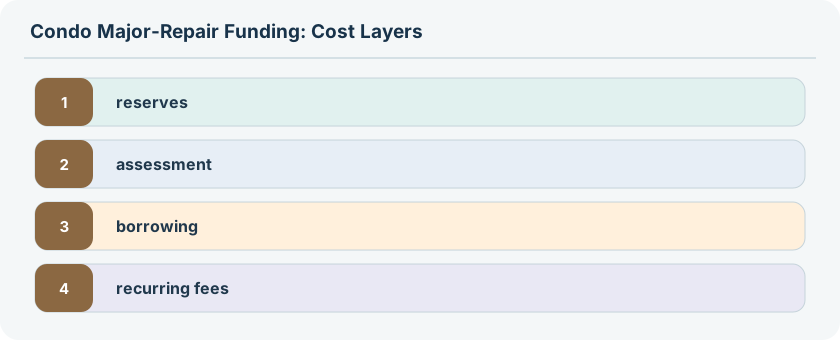
The same project can affect owners through different channels:
- reserves reduce the common balance and may postpone other projects;
- an assessment creates a near-term cash obligation;
- a loan creates future dues or an additional assessment;
- higher fees change the recurring ownership budget;
- insurance or recovery may involve a deductible and a later allocation decision.
For a buyer, obtain the latest budget, reserve or depreciation report, meeting minutes, assessment notices, loan information, insurance summary, and engineering reports. For an owner, ask the board to identify the decision, the funding resolution, the allocation formula, and the records supporting the amount.
A practical funding review
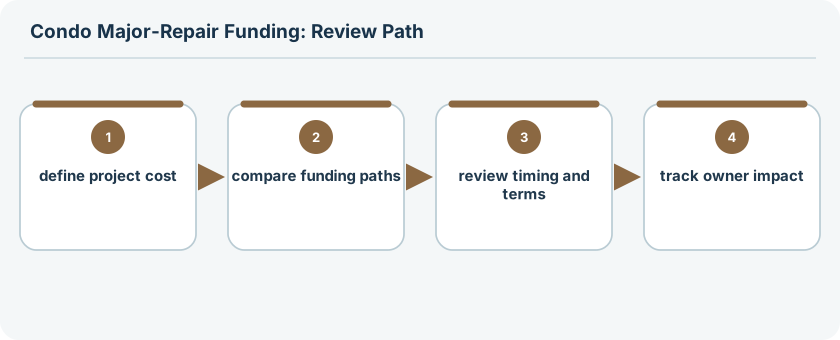
Use this sequence:
- Define the component and document responsibility.
- Separate emergency stabilization from permanent replacement.
- Compare the scope with the reserve or capital plan.
- List confirmed cash sources and uncertain recoveries.
- Compare reserve use, assessment, borrowing, and fee increases by total cost and timing.
- Confirm owner allocation, payment dates, and sale or delinquency treatment.
- Check what other planned work may be delayed.
The important question is not simply “How much will my assessment be?” It is “What is the association’s full obligation, how was my share calculated, and what future funding gap remains?”
Compare funding by total cost and timing
A reserve withdrawal has an opportunity cost because another planned component may be delayed. An assessment creates a near-term owner obligation. A loan adds interest and may require higher fees. A fee increase can improve future funding but may not address an urgent failure. A blended plan should show each source and the assumptions behind it.
Ask the board to provide a project budget with committed cash, uncertain recovery, contingency, soft costs, and remaining gap. Request the allocation formula and payment schedule. If the project is phased, identify which buildings or components are included in each phase and whether later phases are funded.
Governance and owner review
Read the meeting notice, resolution, minutes, and governing-document authority. Confirm quorum or approval requirements where applicable and how owners can inspect records or ask questions. An owner should distinguish a recommendation, an approved assessment, a signed contract, and completed work.
For a buyer, review assessments, reserves, loans, insurance, capital plans, and project notices before relying on current fees. Ask how the contract handles installments and whether the seller or buyer bears a payment after closing. A funding decision is more reliable when the scope and allocation are transparent.
Closeout
Reconcile the final invoice with the project scope, funding resolution, assessments, loan draws, credits, and contingency. Record the amount still available in reserves, any remaining debt, the asset’s updated service life, warranty, and next maintenance date. This lets owners and buyers see both what the repair cost and what obligation remains.
Example: reserves plus an assessment
An association may use reserves for the funded portion of an exterior project and levy an assessment for the gap. Owners should receive the scope, reserve balance after withdrawal, assessment calculation, contingency, payment schedule, and explanation of what other projects may be delayed. If a loan is proposed instead, compare interest and future fee effects with the assessment. The closeout record should reconcile the chosen sources with the final cost and update the capital plan.
California has a separate funding process when common-area gas, heat, water, or electrical service is interrupted. If reserves are insufficient, Civil Code section 4775 permits competitive financing and an emergency assessment after the board documents the expense and reserve shortfall. The board must commence the repair process within 14 days, which is not a completion guarantee. The California service-restoration guide explains the statutory scope and owner-cost questions; other jurisdictions may use different funding procedures.