
A monthly condo, strata, or HOA fee is a contribution to a shared property’s operating and financial obligations. It is not a promise that every repair affecting your home is free, fully funded, or the association’s responsibility. Fees may pay for current services, routine common maintenance, insurance, reserve contributions, administration, utilities, or some combination of them.
The useful budgeting question is not whether the fee is “high” or “low.” It is what the fee pays for, what it is expected to fund later, what it excludes, and whether the property’s plan and governing documents assign additional work to individual owners.
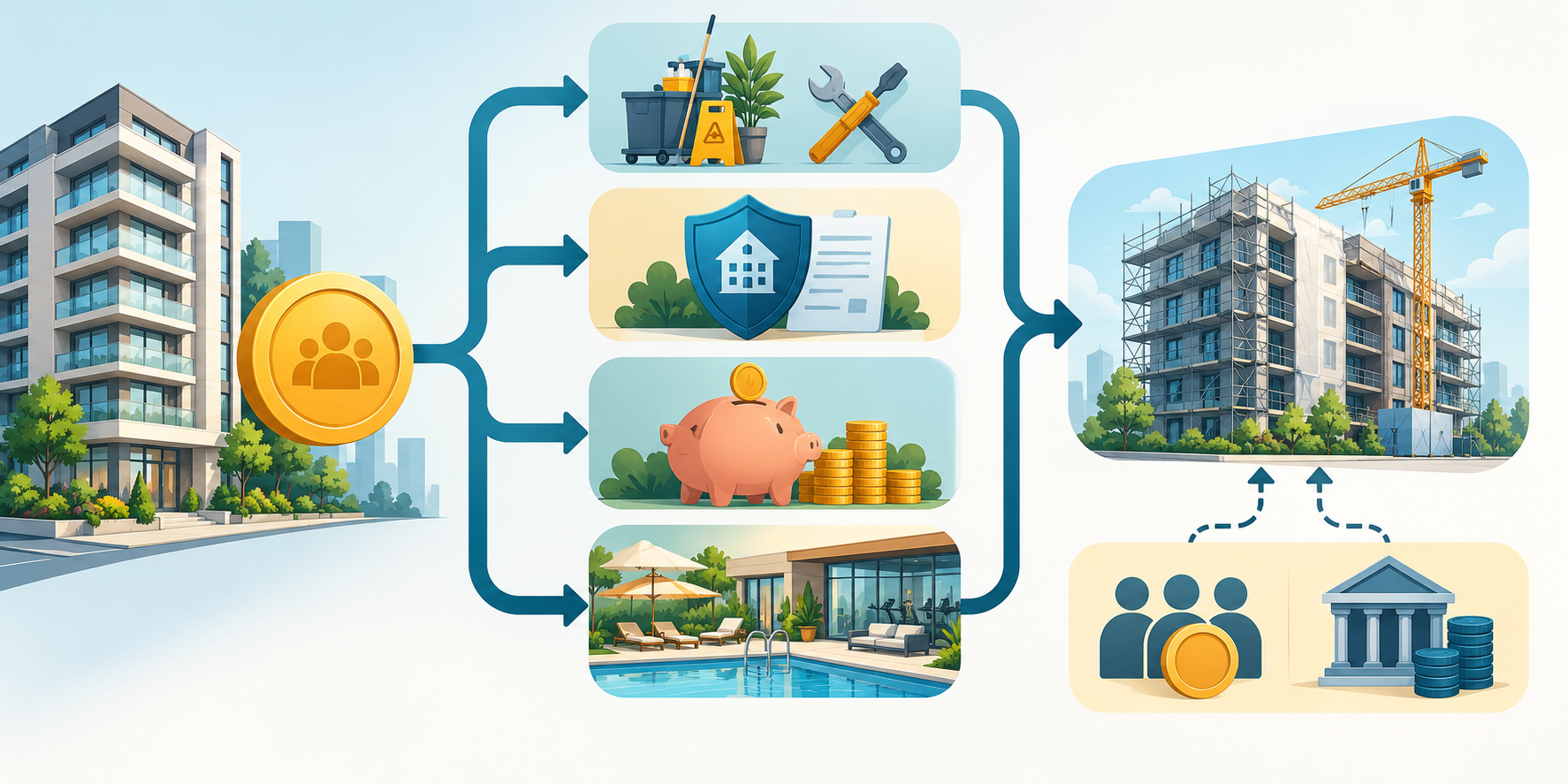
The main fee buckets
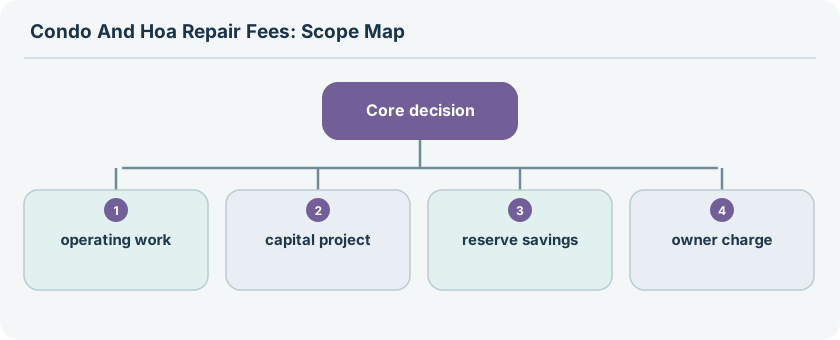
Common expenses vary by property, but a budget often combines several categories:
| Budget area | What it may support | What it does not prove |
|---|---|---|
| Operations and management | Administration, management, contracts, utilities, and services | That every capital project is funded |
| Routine common maintenance | Cleaning, landscaping, servicing, inspections, and minor repairs | That owner-unit work is included |
| Insurance | Corporation or association property and liability coverage | That owner improvements, contents, or deductibles are covered |
| Reserve contribution | Long-term repair and replacement planning | That the reserve is adequate for every future project |
| Amenities and shared infrastructure | Pools, roads, parking, gates, elevators, or other assets | That all owners use or benefit from each service equally |
Official Canadian guidance explains that common expenses can support operation and maintenance of common elements and may include reserve contributions, insurance, utilities, or services. Ontario guidance also describes common-expense fees and property-specific contribution proportions. Those are useful frameworks, not a universal fee schedule.
Why similar homes have different fees
Two buildings with similar unit sizes may have different costs because they have different roofs, elevators, parking structures, mechanical systems, roads, landscaping, utilities, staffing, insurance conditions, service contracts, or construction ages. A townhouse association with private roads and exterior maintenance may have a different obligation profile from a high-rise condominium or a small fee-simple HOA.
A fee can also be temporarily low because the association is using an optimistic budget, postponing work, contributing little to reserves, or excluding costs that fall directly on owners. A higher fee may reflect utilities, stronger reserves, or costly shared infrastructure rather than waste. Compare the budget and project obligations instead of using the monthly amount as a quality score.
Operating work versus capital work
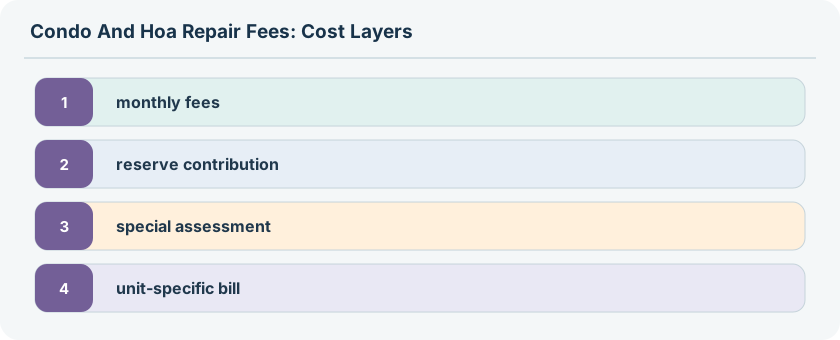
Routine operating work keeps shared property functioning during the current year. Capital work replaces or renews a roof, facade, elevator, central plant, parking structure, plumbing infrastructure, electrical service, or other long-lived component. A reserve contribution is intended to prepare for some future capital obligations, but the timing and adequacy depend on the property’s condition, forecasts, funding assumptions, and governing rules.
A fee may include a reserve contribution without fully funding a scheduled project. If a project is larger, earlier, or more expensive than expected, the association may need to use reserves, raise fees, levy a special assessment, borrow, or combine methods. The physical scope and the legal funding authority are separate questions.
The connection to individual repair bills
Owners may still pay directly for:
- components inside the unit or assigned to the owner by the documents;
- owner-installed improvements or non-standard finishes;
- routine care assigned to an exclusive-use area;
- damage caused by an owner’s act or omission where a chargeback is authorized;
- deductibles, loss assessments, or policy exclusions;
- alterations, permits, professional review, protection, or restoration;
- repairs that the association is not authorized or funded to undertake.
A common fee does not make a private repair a common expense. Conversely, an owner may see no contractor invoice for a common repair but still bear a share through the fee, an assessment, or a financing obligation.
How to read the annual budget
Start with the current budget and compare it with prior years. Identify the operating contribution, reserve contribution, insurance premium, utilities, management, maintenance contracts, capital projects, debt service, and contingency assumptions. Ask what is included in the fee and what is billed separately.
Then compare the budget with the reserve or depreciation report. Is the report’s component inventory complete for this property? Are major projects scheduled soon? Does the funding plan assume higher contributions, borrowing, assessments, or work being delayed? Do meeting minutes show projects not yet reflected in the budget?
A healthy review looks at cash flow and obligations together. A reserve balance by itself does not show whether the association can pay for all work on the required schedule.
Fee increases and special assessments
A fee increase spreads a higher contribution across future billing periods. A special assessment concentrates a defined obligation into a separate charge, sometimes with installments. Borrowing can reduce the immediate bill but adds interest and a continuing association obligation. A reserve withdrawal uses money already collected but reduces capacity for other projects.
The best funding choice depends on urgency, condition, cash flow, reserve policy, project scope, legal authority, and the association’s documents. Do not assume that a board can use one method everywhere or that a vote, notice, due date, or owner-share formula is universal. Read the current local law and governing documents.
A practical fee-review checklist
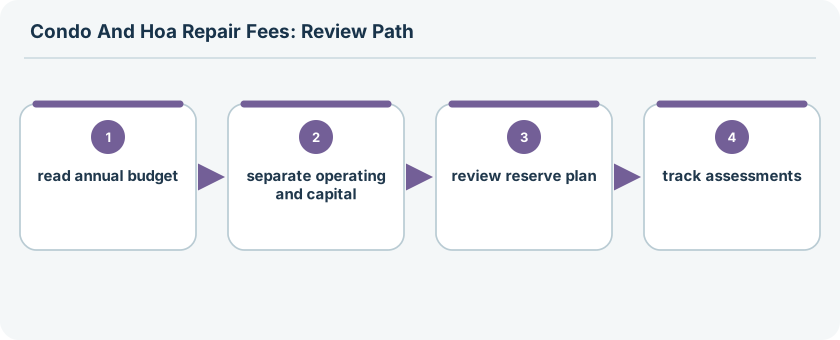
Before buying or approving work, request:
- the current and prior budgets;
- financial statements and reserve information;
- the reserve or depreciation report;
- insurance summaries and deductibles;
- project schedules, contracts, and assessment notices;
- the declaration, bylaws, rules, and maintenance matrix;
- recent meeting minutes or records made available under local law;
- a list of costs billed directly to owners.
Ask management to explain the difference between a recurring common expense, reserve-funded project, owner charge, assessment, loan obligation, and chargeback. If the records reveal a major repair, insurance problem, structural concern, or disputed allocation, use current local legal, financial, insurance, or engineering advice. Monthly fees are one part of shared-property economics, not a substitute for reading the property’s actual obligations.
Read the fee history and cash plan
A current fee is a snapshot. Review several years of budgets, actual results, reserve contributions, insurance premiums, utilities, management costs, delinquencies, and fee changes. Ask whether ordinary fees are paying for routine maintenance while reserves are funded for major replacement. If the association repeatedly uses reserves for operating shortfalls, the apparent capital balance may overstate its ability to fund repairs.
Compare the adopted budget with the reserve study or depreciation report. Identify components that are missing, under-estimated, or approaching replacement. Ask whether the board has a policy for inflation, contingencies, emergency work, and updating the plan after a new inspection.
Owner-specific charges and project costs
A fee or assessment charged to one unit should identify the component, factual basis, governing authority, allocation method, amount, payment date, and dispute process. Common expenses may be shared even when the work is near one building, while an owner alteration, exclusive-use area, or unit-caused event may follow a special rule.
A contractor quote should show demolition, access, permits, testing, temporary protection, restoration, taxes, and contingency. If those items are excluded, a low quote may not be a low project cost. Ask who approves changes and how owners will be told about a growing budget.
Buyer and owner worksheet
Before buying or budgeting, list current fees, confirmed assessments, likely capital projects, planned reserve contributions, loan payments, insurance and deductible exposure, and the cash reserve you will retain. Read minutes for recurring repairs, not only formal assessments. Ask the manager to confirm whether any notices or projects are pending but not yet billed.
Owners can ask for the reserve balance after committed projects, the expected next contribution, and the effect of using reserves for current work. A higher fee may be evidence of a credible funding plan; a lower fee may hide deferred maintenance. Evaluate the plan, not the number alone.
Closeout and annual review
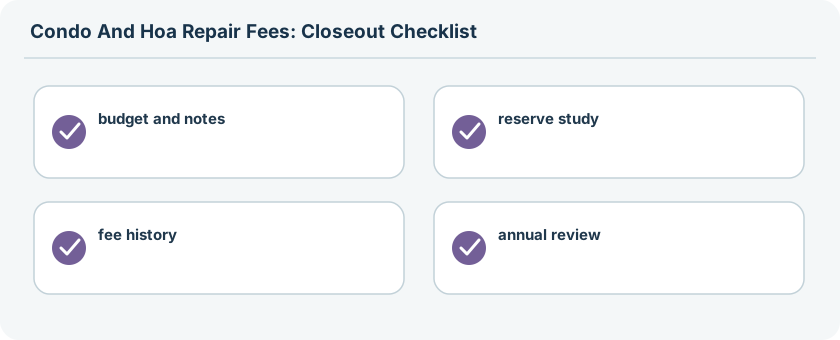
After a major project, confirm the invoice, warranty, asset life, maintenance schedule, and updated capital plan. At least annually, compare actual work and fee collections with the plan. This creates a record that helps future owners understand why the fee changed and whether the association is reducing or accumulating repair exposure.
A practical annual review
At the start of each budget cycle, compare the component plan with actual contributions, withdrawals, completed work, assessments, insurance costs, and loan payments. Ask whether the regular fee covers operations and whether the reserve contribution matches the next known projects. Track unresolved items separately from work that has been completed and accepted.
For a specific bill, request the document rule, inspection or project scope, allocation formula, approval, invoice, and payment terms. Keep a copy with the unit records. If a common project includes an owner upgrade or a unit-specific charge, require the quote to show that increment separately.
The useful question for an owner or buyer is not whether a fee is high or low. It is whether the fee and the capital plan are credible together. A clear budget, current reports, transparent minutes, and a funded schedule can justify a higher fee; a low fee with repeated deferrals can signal exposure.