
A major structural repair may involve a foundation, slab, column, beam, load-bearing wall, parking structure, balcony, facade, retaining wall, or structural connection. Because these components can affect the whole property, an association may coordinate the investigation and construction even when the eventual allocation depends on the declaration, applicable law, insurance, warranties, or an owner-specific cause.
The size of the project does not answer how an individual owner pays. The documents, professional findings, approved scope, and funding decision do.

Define the structural problem
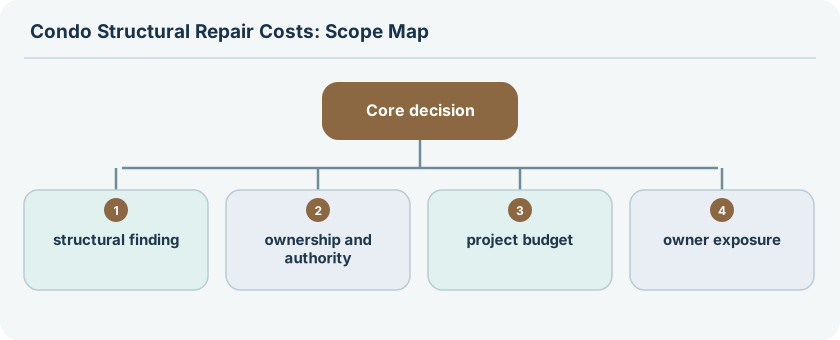
Ask a qualified engineer or other appropriate professional to identify the component, observed condition, urgency, recommended stabilization, and permanent options. Request the report, photographs, testing, assumptions, and limitations.
Separate:
- a safety or access restriction;
- temporary shoring or protection;
- investigation and destructive testing;
- repair of the common structure;
- waterproofing or envelope work;
- interior access and restoration;
- owner alterations or finishes.
A crack, movement, leak, or settlement symptom may have several possible causes. Do not treat a visual observation as a final structural diagnosis or a project headline as proof of the final cost.
Florida owners may also encounter a statutory milestone inspection based on building age and height. That inspection is a separate process from diagnosing a specific symptom, and it does not by itself allocate every repair cost. See the Florida milestone-inspection guide for its limited building criteria, report stages, and owner-cost questions.
Confirm ownership and authority
Read the declaration, plan, bylaws, maintenance matrix, party-wall or easement agreements, and alteration approvals. Identify whether the component is a common element, limited-use area, unit boundary, owner improvement, or a structure maintained under a special rule.
Confirm who can retain the engineer, enter units, approve emergency work, sign a construction contract, and levy or allocate costs. An owner should not independently repair a structural or common component unless the governing documents and an emergency process clearly permit it. A Washington statutory allocation can illustrate association-versus-unit duties, but the declaration and applicable law control the property at issue.
Connect the report to a defensible budget
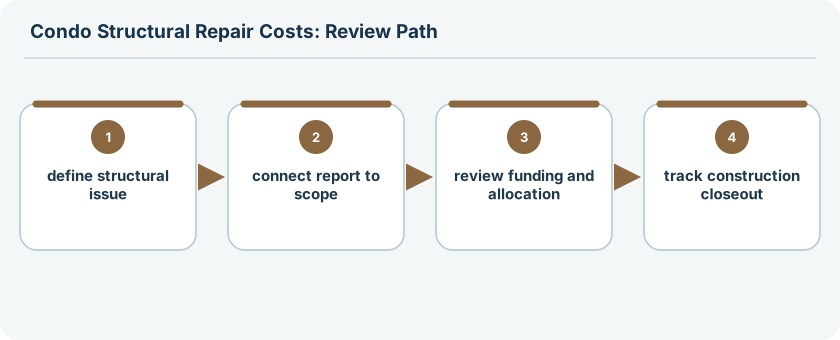
A useful project file connects:
- condition report and priority;
- scope alternatives and design;
- permits, access, and temporary protection;
- bids, contingencies, and schedule;
- reserve, assessment, loan, insurance, warranty, or recovery funding;
- owner allocation formula;
- change-order authority;
- testing, completion, warranty, and future care.
Request a line-item estimate rather than relying on a headline number. Check engineering, testing, permits, shoring, access, demolition, temporary protection, labor, materials, contingency, project management, insurance, taxes, interior restoration, and closeout. Ask which items are fixed, which are allowances, and which depend on concealed conditions.
Compare the estimate with the reserve or depreciation plan, current bids, and meeting minutes. A report written before destructive testing may not include the full repair. A low-complexity project may have a defined scope and reserve source; a typical project may add access, finish restoration, and contingency; a complex project may require phased stabilization, temporary relocation, multiple specialists, and a revised funding plan.
Ask what would change the estimate and the recommendation. A repair may be postponed only while temporary controls keep the condition within an accepted risk, while another finding may require immediate stabilization. A proposed scope may also have alternatives, such as repairing one component, replacing a connected assembly, or coordinating related envelope or waterproofing work at the same time. These choices should be explained by the engineer or project professional; owners should compare their timing, disruption, future maintenance, and failure risk rather than selecting the lowest initial number.
Keep the estimate’s uncertainty visible. Separate confirmed work from allowances for concealed damage, escalation, access, temporary protection, or interior restoration. If the project is divided into phases, identify which owner payment supports investigation, which supports construction, and which remains contingent. This makes a later assessment or loan request easier to test against the actual work instead of treating every change as an unexplained increase.
How owner exposure can arise
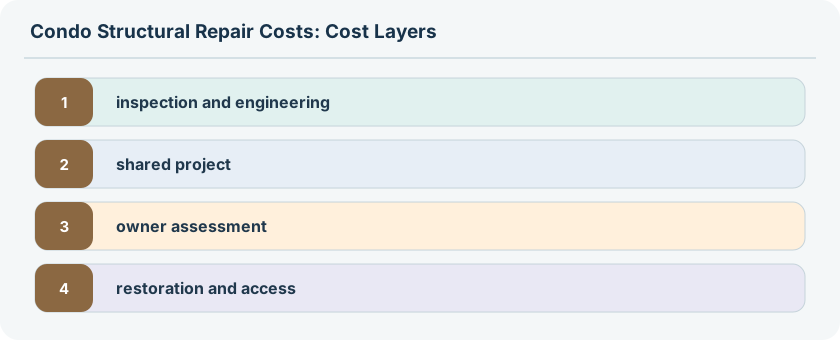
Common structural work may be paid through reserves, ordinary fees, a special assessment, borrowing, or a blend. The allocation may follow unit interest or another formula. A separate chargeback may be considered if an owner alteration, neglect, or specific event contributed, subject to the governing documents and applicable law.
Ask for the calculation, not only the total project price. Confirm installments, payment dates, interest, late consequences, treatment on sale, and what happens if the scope grows. A project notice should identify the problem, urgency, scope, alternatives, funding method, allocation formula, and consequences of nonpayment. If a charge appears wrong, preserve the report, governing-document section, notices, photos, and calculation and use the association’s records or dispute process. Urgent stabilization and a later allocation dispute can proceed on separate tracks.
Insurance and recovery
Structural deterioration and defective construction are not automatically covered losses. A sudden covered event, warranty, contractor claim, or other recovery may affect the net cost, but do not reduce an assessment for money that has not been received. Ask what the policy covers, what exclusions apply, and which deductible is relevant.
If damage has occurred, notify the association and owner insurers, protect the area, photograph conditions, and keep mitigation records. The master policy, unit policy, liability coverage, and loss-assessment coverage may each address different property or causes. Insurance, warranty, and recovery assumptions should be shown separately from the owner allocation so a hoped-for payment is not mistaken for available funding.
Access, disruption, and restoration
Structural work often requires entry to multiple units, removal of finishes, temporary relocation, shutdowns, noise, dust, and restricted balconies or parking. The association should provide a scope, schedule, protection plan, contact person, and restoration standard.
Ask who pays for moving contents, temporary accommodation, custom finishes, access openings, and owner improvements. Photograph concealed conditions and obtain a completion record showing testing and restoration. A new coat of paint is not proof that a structural, fire-separation, or water-intrusion repair was completed. The project may also change future maintenance intervals, reserve assumptions, or inspection requirements.
Buying or refinancing
A pending structural project can affect a buyer’s budget, transaction timing, insurance, appraisal, and lender project review. Request current reports, minutes, assessments, engineering correspondence, insurance information, and funding resolutions. Ask the lender and insurer what project documents they need; one program’s standards should not be treated as universal.
An owner seeking refinancing should assemble the current project packet early. A clear scope and funded plan may reduce uncertainty, while an unresolved safety or insurance issue may require additional review. For a purchase, distinguish an approved and funded project from an early observation, an unfunded recommendation, or a charge whose allocation is still disputed.
The owner’s decision is not simply whether the project is expensive. Consider the timing of installments, the effect of temporary restrictions, the likelihood of another assessment, the condition of related components, and whether the completed work will be documented for a future sale or refinance. A transparent, funded project can still require significant cash, while an apparently smaller project with an unclear scope can carry more uncertainty.
Structural-repair checklist
Before accepting a major cost or approving work, confirm:
- the engineer’s diagnosis and urgency;
- the component classification and document authority;
- emergency versus permanent scope;
- line-item budget, contingency, and change-order controls;
- funding source and owner formula;
- insurance, warranty, and recovery assumptions;
- access, protection, permits, and disruption;
- interior, contents, and improvement restoration;
- testing, warranty, and future-care records.
Major structural work should be evaluated as a chain of condition, authority, scope, funding, allocation, construction, and verification. That chain gives owners a basis for understanding cost without guessing from the project’s headline number.
Construction closeout
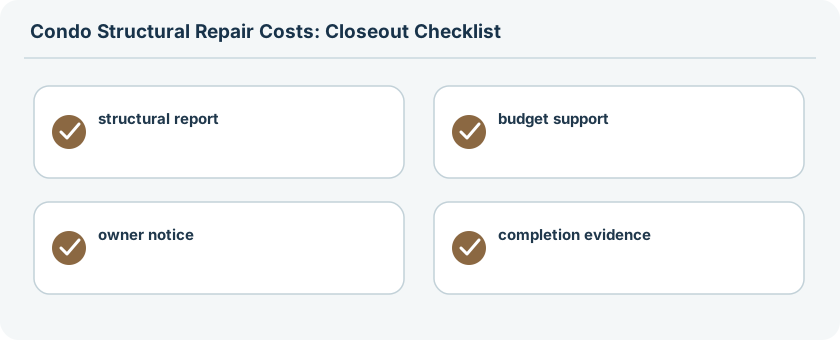
Structural projects may need independent inspection, testing, water management, fire stopping, and a warranty. The association should identify a project manager and retain daily reports, change orders, photographs, test results, permits, payment records, and acceptance documents. An engineer should confirm completion where appropriate.
Owners should document interior access and finishes before work begins. If custom improvements are excluded, obtain that decision in writing. At closeout, verify that temporary restrictions are lifted, common areas are safe, the final scope and owner allocation are recorded, and the capital plan reflects the repaired component and any future inspection or monitoring. Keep one project file for current owners, buyers, lenders, insurers, and the professionals who will maintain the property.
Example: a garage slab project
A garage slab project may involve structural engineering, temporary shoring, parking restrictions, waterproofing, drainage, vehicle relocation, and interior access. The budget should distinguish emergency protection from permanent repair and standard work from owner improvements. Owners and buyers should request the report, scope, bid, contingency, funding resolution, unit formula, access plan, completion testing, and next inspection date.
The example does not establish that every garage slab is a common expense or that every lender will reach the same conclusion. It shows how condition, authority, scope, funding, allocation, disruption, and completion evidence must be connected before an owner can understand the likely financial exposure.