
During reroofing, underlayment changes are usually an incremental material-and-labor cost, often hundreds to a few thousand dollars depending on roof area and how much self-adhered membrane is used. Full-deck sealed-roof strategies, complex valleys, broad eave coverage, premium products, or difficult removal later can raise the premium.
The decision should identify the hazard or assembly need being addressed.
What underlayment does
Underlayment is a secondary layer between deck and covering. It supports temporary and backup water shedding within a complete roof system. Asphalt-saturated felt, synthetic sheets, and self-adhered membranes have different strength, slip, permeability, sealing, temperature, and installation characteristics by product.
Do not choose by generic material name alone. Verify compatibility with covering, slope, deck, fasteners, weather exposure, and manufacturer instructions.
Where self-adhered membrane appears
Common vulnerable locations include eaves, valleys, walls, penetrations, and transitions. Some hazard-resistant assemblies use broader sealed-deck approaches. Exact coverage may be required by local rules or manufacturer details, or offered as an elective upgrade.
Ask the contractor to map membrane coverage on the roof rather than quote only a roll count.
Ice-dam boundary
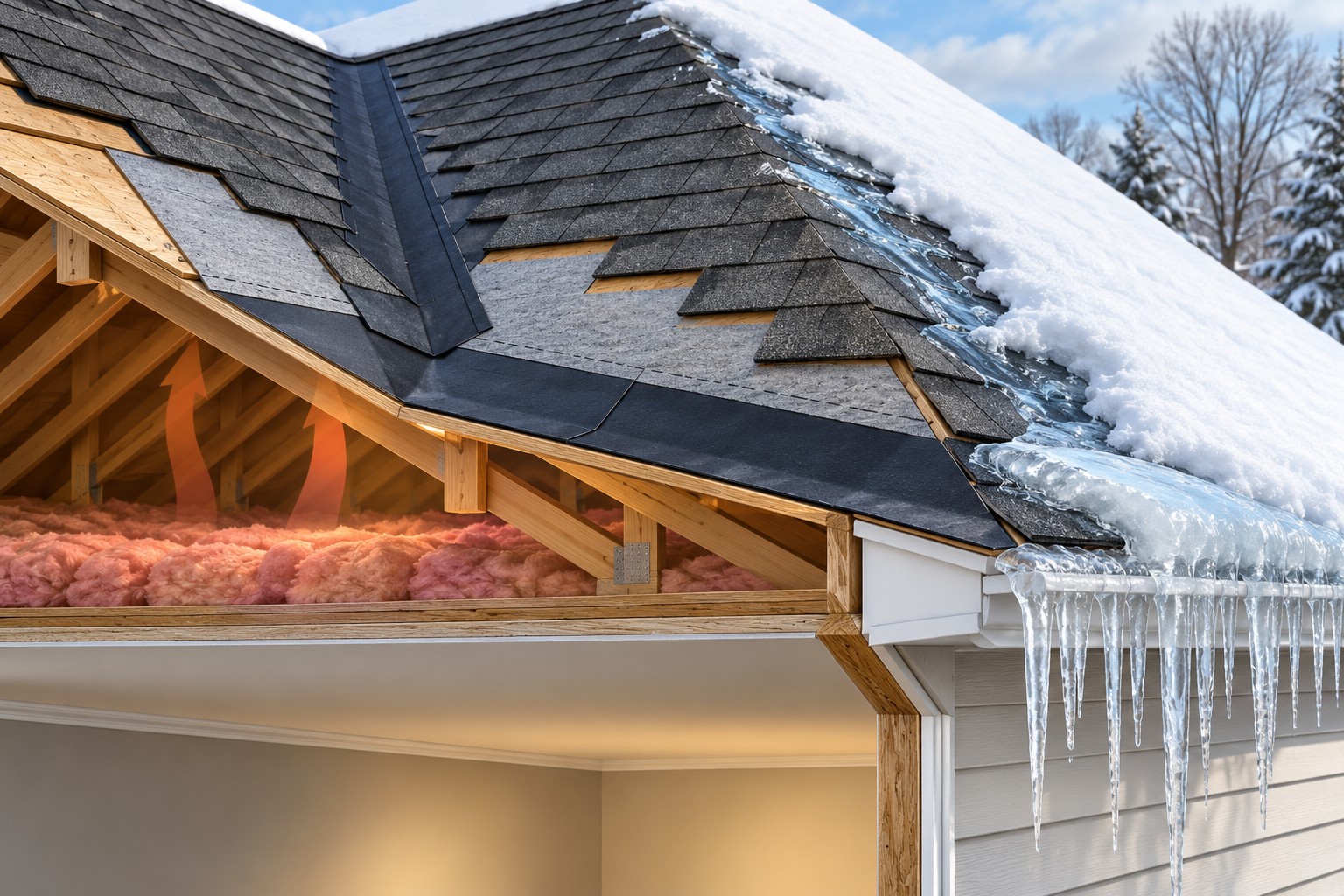
Natural Resources Canada explains that indoor heat and air leakage can melt roof snow, which refreezes at colder overhangs and backs water beneath shingles. Self-adhered ice-shield membrane can limit leakage if water reaches that layer, but it does not prevent the ice dam.
Recurring ice dams may require attic air sealing, insulation, thermal-bridge, or assembly work. Buying more membrane without addressing the heat path can reduce consequences while leaving the cause.
Wind-driven rain and sealed deck
IBHS hazard guidance describes stronger deck attachment, sealed roof decks, and improved edges as parts of some FORTIFIED strategies. These are defined assemblies with program and site requirements, not a universal underlayment upsell. Confirm whether a quote is meeting a named program, local requirement, or general elective scope.
Cost drivers and tradeoffs
- roof area and membrane coverage;
- valleys, eaves, penetrations, and complex geometry;
- deck preparation and adhesion conditions;
- product and primer requirements;
- cold-weather installation limits;
- labor to remove strongly adhered membrane at a future reroof;
- vapor and drying implications in the actual assembly;
- local code, hazard program, and manufacturer requirements.
More coverage is not automatically better for every roof. Assembly drying and compatibility require building-specific thought.
Scenarios
Ordinary reroof: Synthetic or felt underlayment plus localized self-adhered membrane at required or vulnerable details. Compare product and coverage.
Cold-climate ice history: Upgrade eave/valley protection while separately correcting attic heat and air leakage. Budget for both roof consequence control and source correction.
High-wind program: Follow evaluator, product, attachment, sealed-deck, and edge requirements as a package. Do not select one component and claim full program performance.
Low-slope or specialty covering: Use the system-specific underlayment or membrane assembly rather than importing asphalt-shingle practice.
Quote checklist
Require exact products, field underlayment, self-adhered coverage map, primer, deck preparation, required versus elective scope, compatibility, local rule/program basis, penetrations, temporary exposure, and warranty. The upgrade is valuable when it improves a defined water-control path; it is weak when sold as a universal cure for ice dams, leaks, or storm damage.
Compare quote options fairly
Ask for the base underlayment, upgraded field option, localized self-adhered coverage, and broader sealed-deck option as separate prices where applicable. Include accessories, primer, labor, and deck preparation. A roll-price comparison understates installed cost and waste.
Felt, synthetic, and self-adhered tradeoffs
These categories contain many products. Weight, tear strength, traction, exposure limits, vapor behavior, sealing around fasteners, and temperature ranges vary. The correct product supports the selected covering and installation sequence. Do not assume synthetic always replaces self-adhered membrane or that felt is universally inadequate.
Future reroof consequences
Strongly adhered membrane can make later deck or covering removal more labor-intensive and may require deck replacement in some conditions. That future cost does not negate current water-control value, but it belongs in premium whole-deck decisions. Localized vulnerable-area use creates a different tradeoff.
Related work
Deck attachment and edge upgrades, ventilation/envelope correction, flashing replacement, and gutter/drainage work can accompany underlayment. Keep their performance claims and prices separate. A sealed deck in a named wind program may require more than a membrane product.
Human verification points
Confirm required eave/valley coverage, slope limitations, ventilation or assembly effects, product compatibility, and code with the actual jurisdiction and manufacturer. If the salesperson cannot distinguish a requirement from an elective upgrade, do not approve the premium until that basis is documented.
Normalize the underlayment option
Ask each bidder to identify the field underlayment, self-adhered or specialty membrane areas, deck preparation, fastening, laps, exposure limits, compatible roof covering, and treatment at eaves, valleys, walls, penetrations, ridges, and low-slope transitions. Compare square footage and location, not just product names.
One quote may include membrane only at required vulnerable areas, another may add valleys and penetrations, and a third may propose a sealed or fully adhered deck. Those are different risk packages. Request the installed incremental price for each area or assembly so the owner can see which premium buys which function.
Hold tear-off, decking, field covering, flashings, and ventilation constant. If the “membrane upgrade” also includes deck attachment or edge work, separate those lines rather than attributing the full difference to underlayment.
Low, typical, and expanded protection cases
A base case uses a product and coverage pattern suitable for the selected covering and applicable local requirements. The cost is largely embedded in reroofing because the deck is already exposed.
A typical cold- or wind-exposure option extends self-adhered protection at identified vulnerable water paths such as eaves or valleys, subject to the exact assembly. The incremental cost depends on area, deck condition, detailing, and product—not merely the roof’s total size.
An expanded or whole-deck approach may be considered for a named hazard program, unusual exposure, or a documented water-control objective. It can add material, preparation, labor, vapor/assembly questions, and future removal difficulty. Require the program detail or design basis rather than buying “maximum protection” as a slogan.
Decide where the premium has value
Underlayment is secondary protection, so spend first on a suitable covering, sound deck, correct flashing, edges, valleys, and drainage. Added membrane has more decision value where the consequences and pathway of wind-driven rain or ice backup are credible and the product is integrated into a compatible assembly.
It has less value when used to distract from chronic attic heat loss, air leakage, blocked drainage, failed flashing, or unsuitable slope. Ice-and-water membrane can reduce leakage from backup; it does not remove snow or correct indoor heat flow. A sealed-deck measure can be part of a wind package; a random peel-and-stick product does not establish that package.
For a short ownership horizon, meet required and property-specific needs without assuming the premium is recovered at sale. For long ownership, include repair behavior and future tear-off: strongly adhered layers may be harder to remove or may affect how deck repairs are performed. That future tradeoff can be acceptable when current risk reduction is well founded.
Quote and closeout controls
Require product data, coverage map, surface-preparation assumptions, photographs before covering, and responsibility for substitutions. If damaged or unsuitable deck changes adhesion, the contract should state whether repair is mandatory and how it is priced. Keep records because the protection disappears from view once roofing is installed.
A final upgrade test
Ask three questions for each added membrane area: what water pathway or requirement it addresses, what compatible installation detail makes it effective, and what it costs installed compared with the base. If the answer is only “more is better,” the premium has not been justified. If a named vulnerable area or hazard assembly is documented and the increment is acceptable, lack of a guaranteed payback does not make it irrational.
This test also prevents false savings. Omitting required or well-supported vulnerable-area protection to fund a cosmetic product tier can weaken the roof. Conversely, buying full-deck adhesion while leaving failed flashing or an unresolved attic mechanism is not a coherent resilience strategy.
Compare low and high uncertainty
When local coverage requirements and vulnerable paths are clear, the bid can fix product, area, and incremental price. When wind program eligibility, vapor behavior, deck suitability, or an unusual transition is uncertain, resolve the exact assembly with the manufacturer, jurisdiction, or qualified designer before expanding coverage. Evidence limits specificity; it does not justify a vague premium.
Final decision record
Keep the coverage map, exact products, required versus elective areas, deck preparation, laps/transitions, compatible covering, photographs, and basis for any hazard package. Note which attic or drainage concerns remain outside the membrane scope. Because the layer becomes concealed, documentation is the only practical way to preserve its future repair and reroof value.
Ownership decision in one sentence
Select the minimum complete coverage required by the applicable assembly and local rules, then add only those areas or hazard measures supported by documented exposure and a compatible detail. Preserve the installed increment and future-removal tradeoff so “more membrane” never substitutes for a reasoned scope.