
Sewage backup is not priced like a clean-water leak. The contamination can change who should do the work, what can be salvaged, how the area is isolated, how waste is handled, and which materials require removal rather than simple drying.
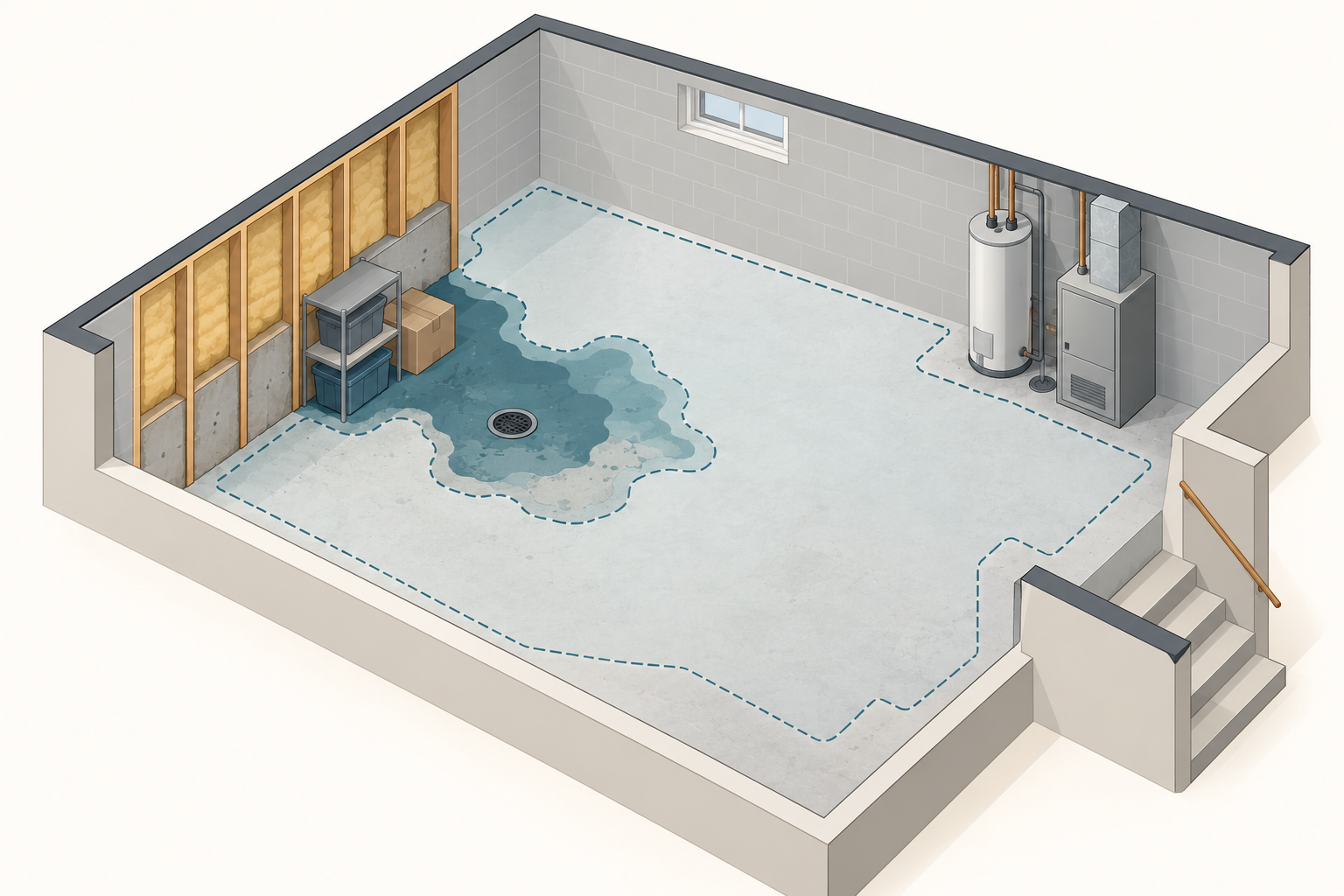
The contamination boundary drives the work
The same room can contain both affected and unaffected materials. The quote should show how the provider will separate those areas, protect clean routes, handle contaminated water and waste, and decide whether materials can be cleaned or must be removed. A general “sanitize basement” line is not enough to understand the likely cost or the end condition.
Ask whether the water reached wall cavities, insulation, HVAC components, stored contents, or electrical equipment. If those areas were not inspected, mark them as unknown. The cost can increase when an assembly must be opened for access or when the source continues to release wastewater.
Cost is not a substitute for a safe decision
The cheapest cleanup proposal is not necessarily appropriate if it leaves contamination, moisture, or the source unresolved. The largest proposal is not necessarily justified if it uses a blanket replacement rule without documenting the affected materials. Request the reasoning, records, and follow-up condition for each major line.
Potentially contaminated water can expose occupants and workers to health hazards. Do not enter or handle it casually. A professional assessment is especially important when sewage has entered the living space, when a septic system may be damaged, or when contamination has reached cavities and porous materials.
The early scope may include isolation, protective equipment, extraction, controlled demolition, bagging and disposal, cleaning, disinfection, odor work, drying, and documentation. Reconstruction comes afterward. The underlying sewer, drain, or onsite-wastewater repair is a separate source scope.
What drives the cost
The main drivers are the affected area, depth and duration of the backup, contamination path, porous materials, contents, access, emergency timing, containment, disposal requirements, drying, hidden cavities, and the amount of reconstruction. A basement loss can involve flooring, drywall, insulation, stored possessions, and mechanical equipment, but a basement is not automatically the same scope as another basement loss.
There is no responsible universal “per-square-foot” answer. A quote should identify whether it covers extraction, contaminated-material removal, disposal, cleaning, drying, contents, odor treatment, and rebuilding. Ask what is excluded and what condition the property will be in when the cleanup scope ends.
Salvage versus removal
Material decisions depend on the contamination, material, exposure, condition, and ability to clean and dry it safely. Do not assume that every porous item is always lost, or that every item can be restored. The contractor should document why an item or assembly is being cleaned, removed, discarded, or sent to a specialist.
Mould can become a later or concurrent scope when moisture remains or contaminated materials were not fully addressed. Fixing the source and drying the building remain necessary; painting or covering a contaminated surface is not a substitute for cleanup.
How to read a sewage-cleanup quote
The price should make the contamination boundary and the clean boundary visible. Ask where workers will enter, what areas will be isolated, what protection and disposal assumptions apply, and whether the quote includes cleaning of adjacent surfaces. A low total can be misleading if it prices only pumping while leaving contaminated drywall, flooring, contents, or disposal outside the scope.
Ask whether monitoring or a return visit is included and what happens if odour or moisture remains. If the building cannot be occupied during the work, keep temporary living expenses in a separate budget. If the drain, sewer lateral, septic tank, or backwater condition remains unresolved, ask who is responsible for source control before reconstruction begins.
The homeowner should not direct a contractor to keep a contaminated material solely to reduce an invoice or make a claim easier. Document the condition, follow the actual policy’s instructions, and use local health or environmental requirements for disposal. The physical cleanup decision and insurance payment decision are related but not interchangeable.
A sewer-backup endorsement, flood coverage, exclusions, deductible, and limits vary by policy and jurisdiction. Health guidance does not establish coverage. Notify the insurer as required by the actual policy, document conditions when safe, and keep estimates and receipts.
The sewer or septic contractor may need to diagnose and repair the source. The restoration contractor handles the affected building. Keeping those scopes separate helps explain why a single backup can produce several invoices.
Why sewage cleanup is a different estimate
The first question is not how many gallons entered the room. It is what the wastewater contacted, where it travelled, how long it remained, and whether the source is still active. Sewage can reach floor assemblies, wall cavities, contents, HVAC components, and areas that are not obvious from the visible waterline. A backed-up drain, a failed sewer lateral, a septic event, and floodwater entering through a sanitary system may also require different source investigations.
Because contamination changes the risk, the quote may include containment, worker protection, controlled extraction, bagging, disposal, cleaning, disinfection, deodorization, moisture control, and documentation. Public-health guidance is not a price list, but it explains why this scope should not be treated as ordinary mopping or a routine clean-water drying visit. Ask how the contractor will prevent the work from spreading contamination to clean areas.
What should happen before cost comparison
First establish whether people can safely remain in or enter the affected area. Sewage or wastewater may expose occupants to hazards, and flood conditions can also affect wells, septic systems, electricity, gas, and building stability. Do not enter contaminated water casually or operate fuel-powered equipment indoors. If the source is active, source control and a qualified trade may be needed before restoration can proceed.
Once the immediate risk is controlled, ask the restoration provider to define the contamination boundary and the clean boundary. The affected area may extend beyond the visible waterline. Wall cavities, insulation, flooring layers, contents, HVAC components, and adjacent routes may require separate assessment. The contractor should explain which materials can be cleaned and dried, which must be removed, and which require specialist review.
Three cost scenarios
A limited backup caught quickly may involve extraction, controlled cleaning, drying, disposal of a defined amount of porous material, and repair of the drain or sewer source. The estimate should still state how contamination is isolated and what completion condition is expected.
A longer or wider backup can add wall and floor removal, contents handling, odor treatment, disposal, containment, repeated monitoring, and reconstruction. Costs can grow because the wastewater travelled through several assemblies or because the building cannot be used while the work proceeds.
A sewage event connected to flooding or a damaged septic system may add contaminated exterior water, unsafe wells, damaged utilities, access problems, and public-health or local-authority decisions. Those conditions can change both the restoration method and the schedule. They are not captured by multiplying a room size by a generic cleanup rate.
What a complete quote should make visible
Ask whether the estimate includes:
- isolation, containment, and worker-protection assumptions;
- extraction and handling of contaminated water;
- controlled demolition, bagging, and disposal;
- cleaning, disinfection, odor treatment, and drying;
- moisture or condition monitoring;
- contents inventory, pack-out, treatment, storage, or disposal;
- source repair by a sewer, drain, or septic contractor;
- reconstruction of removed materials; and
- permits, inspections, temporary living, and exclusions.
The contractor may not know every quantity at the first visit. An allowance can be reasonable when an assembly cannot be opened yet, but the estimate should state what triggers a change, who documents it, and how additional work is approved.
Insurance is a separate decision
Sewer-backup, flood, escape-of-water, deductible, exclusions, limits, and endorsements vary by policy and jurisdiction. Public-health guidance explains why a contaminated loss needs care; it does not establish coverage. Notify the insurer according to the actual policy, preserve records when safe, and ask what contents or removed-material documentation it requires.
Do not keep a contaminated material solely to reduce an invoice or make a claim easier. If material must be removed for safety or sanitation, document its condition and reason for removal. A clean record is more useful than leaving a hazard in place.
The end condition matters
“Pumped out” may mean the water is gone. It does not necessarily mean contaminated materials are removed, cavities are dry, odor is resolved, HVAC is assessed, or the room is ready for reconstruction. Ask what the contractor will document at completion and which specialist or trade owns the next decision.
The restoration price should be judged against that defined end condition. A smaller scope can be appropriate when it addresses a documented limited exposure; a larger scope can be appropriate when contamination or hidden assemblies require it. Neither should be accepted solely because the total is low or high.