
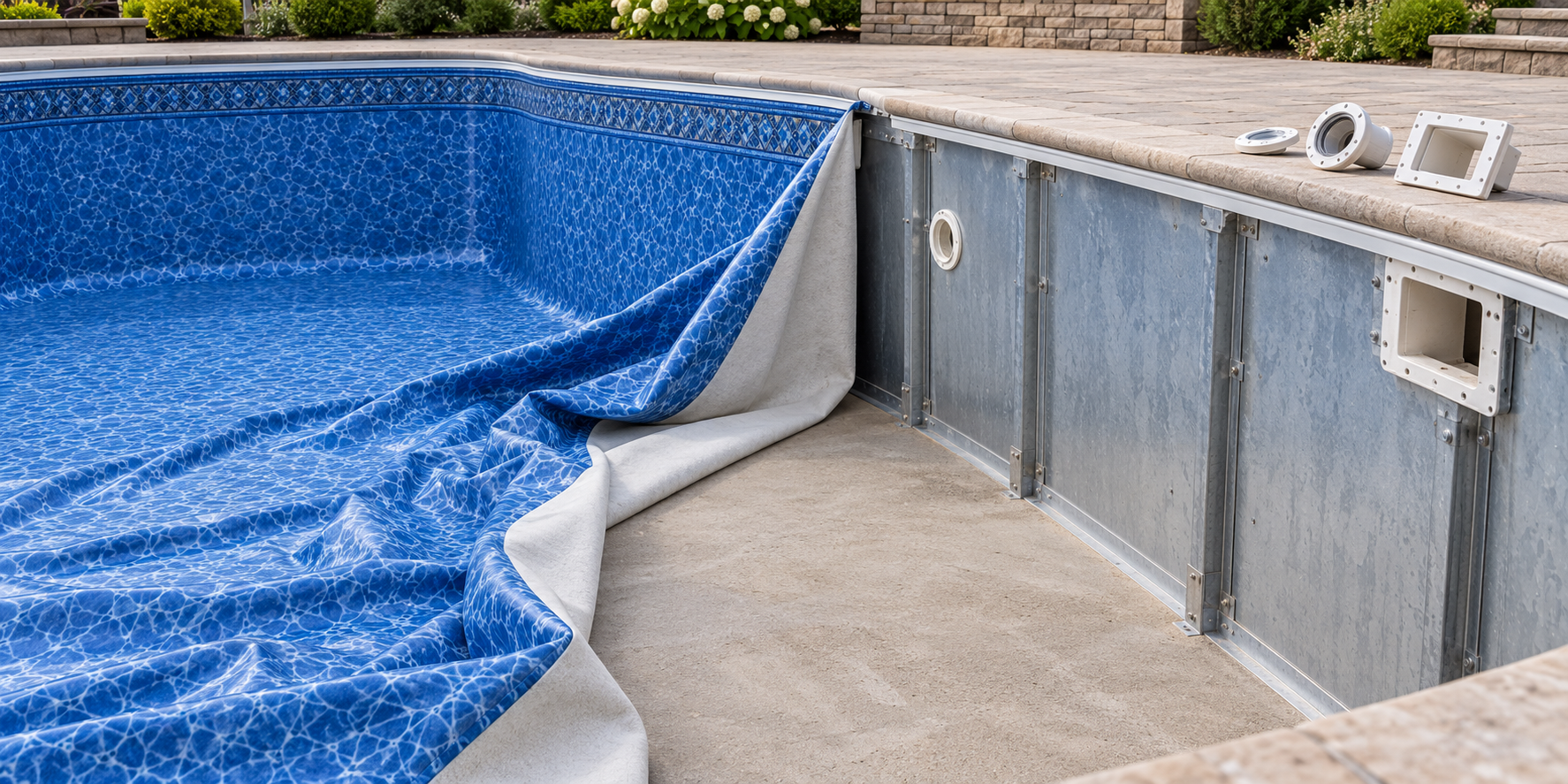
Liner replacement is a periodic lifecycle project, not simply a material swap. The quote may include measurement, custom fabrication, draining, removal, floor and wall preparation, fittings, installation, refill, startup, and repair of conditions exposed after the old liner is removed.
Cost orientation
A full inground-pool market observation of roughly $44,300–$86,500 in the U.S. is useful only as a reminder that a liner project is one component of a larger pool system; it is not a liner-replacement price. Request a liner-specific quote that separates the custom liner, removal, floor and wall preparation, fittings, draining, refill, startup, and restoration. Hidden substrate work can change the total, and Canadian pricing needs local quotes.
The replacement process has several cost checkpoints
Start with a field measurement and a review of the pool’s shape, depth changes, stairs, benches, coves, fittings, lights, drains, skimmers, and returns. The liner is made for the supporting structure; a small measurement or fit error can create a large installation problem. Ask who is responsible for the measurement and how the contractor handles a mismatch.
After the pool is drained and the old liner is removed, the floor, walls, seams, steps, coping, and fittings may reveal conditions that were not visible before. A complete proposal should say whether the contractor is inspecting those areas, what preparation is included, and how additional repair will be authorized. A new liner does not make an unsuitable substrate or damaged structure suitable.
Patch, replace, or coordinate a larger project
A patch may fit a localized, accessible defect in an otherwise serviceable liner. Ask how the professional assessed the liner’s overall condition and what makes the patch a durable repair rather than a short-term measure. Replacement becomes a stronger comparison when leaks recur, the liner is brittle or widely deteriorated, the fit is failing, the owner wants a different product or pattern, or substrate and fitting work is already necessary.
Coordinate other work carefully. Lights, drains, skimmers, returns, steps, coping, equipment, safety systems, and deck interfaces may be easier to address while the pool is empty. Combining work can avoid repeated draining and access, but it also changes the warranty and responsibility chain. Require the contractor to identify which work is essential to the liner and which is an optional renovation.
What the quote should protect against
Ask for the measured dimensions, liner specification, thickness or product description, pattern, warranty, installation method, old-liner removal, water handling, substrate preparation, fittings and gaskets, refill, startup, cleanup, and restoration. Confirm whether the price includes delivery and whether the owner or contractor pays for initial water. Clarify what happens if the floor or wall needs leveling, patching, replacement, or structural attention.
Also ask what is excluded from the liner warranty. Damage from substrate movement, fittings, water conditions, installation, or later equipment work may be treated differently from a material defect. Keep records of the selected product and any preparation performed so a future repair does not begin without the original specifications.
Scenario-based budgeting
A simple replacement scenario has a known shape, sound substrate, accessible site, standard fittings, and a clear drain, refill, and startup plan. A typical scenario adds stairs, benches, multiple fittings, surface preparation, coping or tile coordination, or difficult access. A complex scenario includes wall or floor damage, recurring leaks, structural movement, water handling restrictions, or a broader renovation while the pool is empty.
The available U.S. market evidence does not establish a universal liner-replacement range. A whole-pool construction figure cannot be used as a liner price. Request a liner-specific local proposal and keep Canadian pricing in CAD from Canadian or local providers rather than converting U.S. observations.
When a liner project is not the right first step
Pause if water loss has not been located, the wall or floor is moving, the supporting structure is damaged, the fittings are failing, or drainage and groundwater conditions are unresolved. A liner can restore the interior appearance while leaving the cause of a recurring problem in place. Have the appropriate pool, structural, or site professional define the next test or repair.
Close out the replacement with records
The owner should receive the liner model, dimensions or measurement record, pattern, warranty, fitting and gasket information, substrate preparation performed, water and startup responsibilities, and any unresolved condition. Take photographs before the pool is refilled when the supporting floor, walls, steps, and fittings are accessible. Those records help with future repair and prevent a later contractor from guessing which product was installed.
Ask how the new liner should be cared for, what water conditions or service practices affect the warranty, and who handles a fitting leak or seam concern. If the replacement was coordinated with lights, drains, coping, equipment, or deck work, retain the separate scopes and closeout tests. A clean handoff is part of the replacement value.
Use the removal stage to control hidden-condition cost
Before the liner arrives, agree how the old liner will be removed, what areas will be inspected, and how the owner will receive a record of the exposed floor, wall, steps, and fitting condition. If the base or wall needs repair, the contractor should state the unit or scope basis and seek approval before covering the area. A new liner should not be used to conceal a suspected leak, unstable support, or damaged fitting that was not addressed.
The quote should also describe the relationship between measurement, fabrication, and final fit. Ask whether the installer measured the pool directly, how a changed stair or bench is represented, and which model or pattern is ordered. If a product is custom and cannot be returned, confirm the measurement sign-off and site readiness before release to fabrication.
Schedule matters because the pool is out of ordinary use while drained and the liner must arrive before installation. Ask how delivery delay, weather, unexpected substrate repair, refill, and startup affect the schedule and who pays a return mobilization. Keep the water source and refill responsibility in the contract. These are project-planning conditions, not a universal number of days or a prescribed draining method.
Key points
- A liner replacement includes fit, preparation, fittings, refill, and startup—not just the liner.
- Hidden floor and wall conditions can change the budget after removal.
- Compare a patch with the liner’s overall condition and the likelihood of repeat work.
- Avoid universal replacement schedules; use product, condition, and installation evidence.