
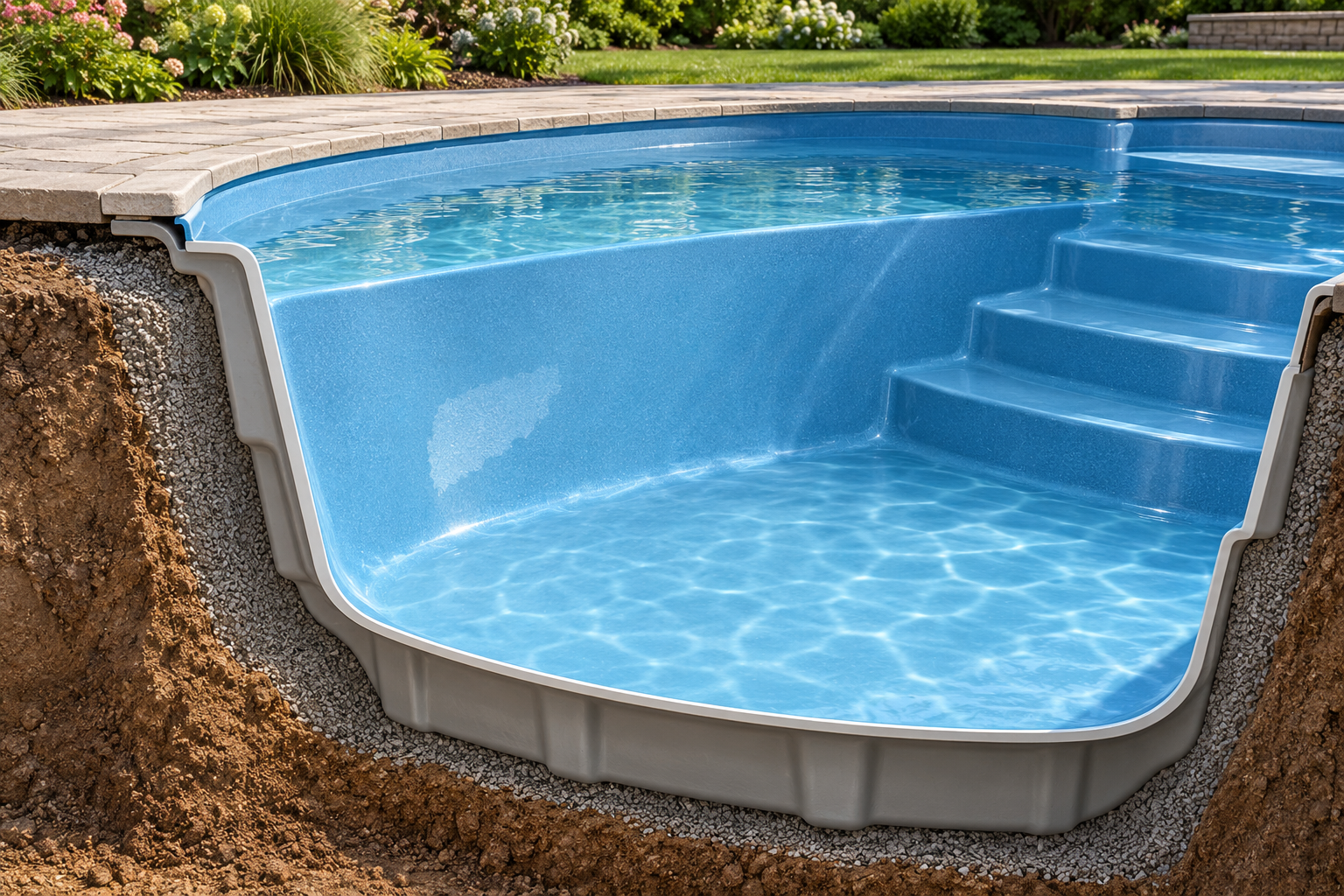
Fiberglass pool repair pricing is less standardized than common plaster-resurfacing or liner-replacement work. A quote should identify whether the problem is a surface defect, a localized vessel repair, a fitting or equipment issue, or a condition requiring manufacturer or structural assessment.
Cost orientation
The category’s U.S. resurfacing observation of about $6,000–$15,000 provides a broad benchmark for a substantial finish or refinishing project, not a fiberglass repair price. Fiberglass repair evidence is more variable, so a responsible quote should separate diagnosis, compatible materials, draining, access, fittings, shell or soil assessment, refinishing, refill, and warranty. Treat the benchmark as scale context only and obtain product- and market-specific pricing.
Identify the layer that is failing
Fiberglass pool problems can involve the visible finish, gelcoat or surface layer, a local vessel defect, plumbing or fittings, or a structural or ground condition. Discoloration, fading, blistering, roughness, a crack, or a leak may look similar from the deck while requiring different evaluation. A refinishing proposal should not be treated as a structural diagnosis.
Record where the defect is, whether it changes with water level or operation, whether the surrounding shell or coping has moved, and whether there are recurring leaks or drainage concerns. Photographs and maintenance history help the specialist plan the visit, but product identity, installation history, and the actual vessel condition may be necessary to choose a compatible repair system.
Repair and refinishing are different scopes
A local surface repair may include preparation, compatible material, color or texture matching, and a limited cure or startup process. It can be appropriate when the defect is isolated and the vessel is otherwise stable. The visual result may vary where a new repair meets an aged surface.
Broader refinishing is an interior-surface project. It may require draining, surface preparation, material removal or treatment, application over a larger area, water handling, refill, and startup. Ask whether fittings, lights, steps, waterline details, coping, and attached features are included. A refinishing product must be suitable for the existing vessel and installed according to its requirements; a generic coating description is not enough.
A shell or structural concern is a higher-uncertainty scope. It may require a specialist familiar with the vessel, manufacturer input, leak or movement assessment, access, water handling, and a repair plan before refinishing. Soil movement, settlement, groundwater, or poor surrounding drainage may need separate evaluation. Do not cover an unresolved cause with a cosmetic finish.
What makes the budget move
Ask the contractor to separate diagnosis, draining, water disposal or refill, surface preparation, local repair, full refinishing, fittings, equipment protection, access, product, labor, startup, cleanup, and warranty. Pool size and surface area matter, but so do the number of features, condition of the substrate, access to the yard, water level, attached spa, and whether other pool work is coordinated during the shutdown.
Compatibility can change the economics quickly. The selected repair system may have limits related to the existing finish, vessel, water conditions, temperature, or manufacturer warranty. If the original product, installation record, or repair history is unknown, include investigation rather than assuming the most familiar material is suitable.
Use vessel-specific evidence
Ask for the vessel identity and original surface or repair record before selecting a product. If those details are unavailable, keep compatibility open and consult a specialist or manufacturer rather than assuming that a material used on another fiberglass pool is suitable. Record the specific layer being treated and the boundary of the work.
A repair handoff should state the product system, preparation, cure or return-to-service requirements, expected matching limits, warranty, and any condition that remains open. If the symptom involves movement, deformation, or water loss, keep those findings separate from a cosmetic surface result. The identity and repair record let a future specialist determine whether a new mark is in the treated area or reflects a different condition.
Decide whether to combine the shutdown
Draining and access may create an opportunity to address fittings, lights, steps, waterline details, coping, equipment, cover, barrier, or deck work. Coordinating tasks can avoid repeated disruption, but it also creates sequencing and warranty dependencies. Ask which work is essential to the fiberglass repair, which is optional, and who protects the completed surface from later access.
For a simple local repair, compare diagnosis, preparation, compatible material, color or texture matching, water handling, startup, cleanup, and warranty. For broader refinishing, include measured surface area, removal or treatment of the old surface, fittings and features, refill, and post-startup service. For a structural or ground concern, keep specialist assessment, leak testing, access, restoration, and conditional work separate.
Preserve the repaired-vessel record
Retain the vessel model or identity, repair or finish system, affected area, preparation, cure or startup, water-handling responsibility, warranty limits, photographs, and any manufacturer or specialist compatibility direction. Ask which conditions remain open, such as movement, water loss, blistering, settlement, or drainage. A refinishing closeout is not a structural certification.
After refill or return to service, monitor the condition according to qualified advice and report a returning symptom with the original record. Do not cover an unresolved leak or deformation with another cosmetic treatment. Canadian owners should keep local CAD invoices and product records separate from broad U.S. resurfacing context.
Key points
- Fiberglass surface damage and structural concerns need different evaluation.
- Product compatibility matters; generic repair materials are not automatically suitable.
- Draining, access, fittings, vessel condition, and restoration change the scope.
- Use a qualified specialist when the vessel is deforming, moving, or losing water.