
Landscape restoration is the post-project work needed after construction, excavation, utility work, drainage, foundation work, a driveway, an addition, or another disturbance. The underlying project cost remains in its own budget. Restoration should be priced from what was disturbed, not from a generic percentage of construction cost.
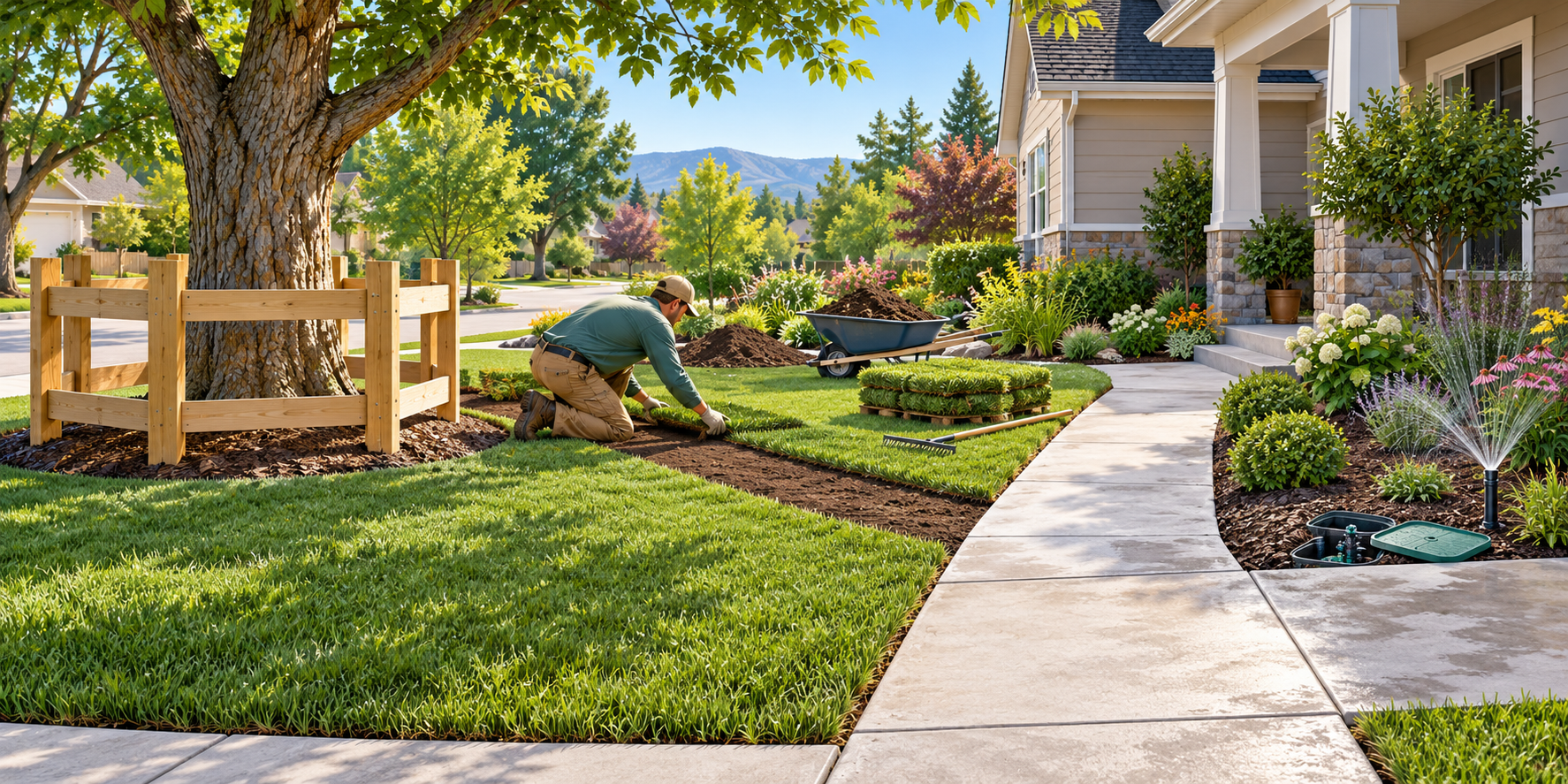
Possible restoration layers
Ask for separate lines for cleanup and temporary-material removal, soil decompaction or minor surface preparation, topsoil, sod or seed, planting replacement, mulch, irrigation line or head repair, controller changes, tree or shrub assessment, access-route restoration, delivery, disposal, and establishment care.
TreesAreGood identifies construction damage such as compaction, severed roots, fill soil, exposure, and grade or drainage changes. An arborist may need to assess mature trees before pruning, support, watering, root-zone work, or removal is chosen. Do not treat replacement planting as an adequate substitute for evaluating a damaged mature tree.
Separate surface restoration from site work
Minor settling or surface preparation may fit a landscape restoration scope. Major regrading, drainage correction, retaining, erosion control, excavation, hardscape reconstruction, or structural repair belongs with the responsible site or construction professional when that is the dominant problem. Government of Canada flood-wise guidance gives rain gardens, bioswales, plants, and permeable pavement as examples, but it does not replace site-specific drainage design.
Cost and contract questions
The active evidence does not establish a comparable current U.S. or Canadian restoration range. Angi’s U.S. landscaping signals combine inconsistent inclusions, so use them only as broad orientation and do not convert them into CAD. Price the disturbed area, access, material quantities, irrigation condition, tree risk, disposal, and aftercare in each market’s own currency.
Ask whether the original contractor has an allowance or warranty, when heavy access will end, who verifies final grade and drainage, what plant or sod warranty means, and which concealed conditions require approval. Restore irrigation and soil only after the preceding work is complete enough to avoid paying twice.
A bounded restoration example
For 1,000 square feet disturbed by utility work, request separate lines for cleanup, soil preparation, sod or seed, planting replacement, irrigation repair, tree assessment, access restoration, delivery, disposal, and establishment care. Keep major grading, drainage, retaining, hardscape, and structural work in the responsible project scope; the active evidence does not support a universal restoration percentage.