
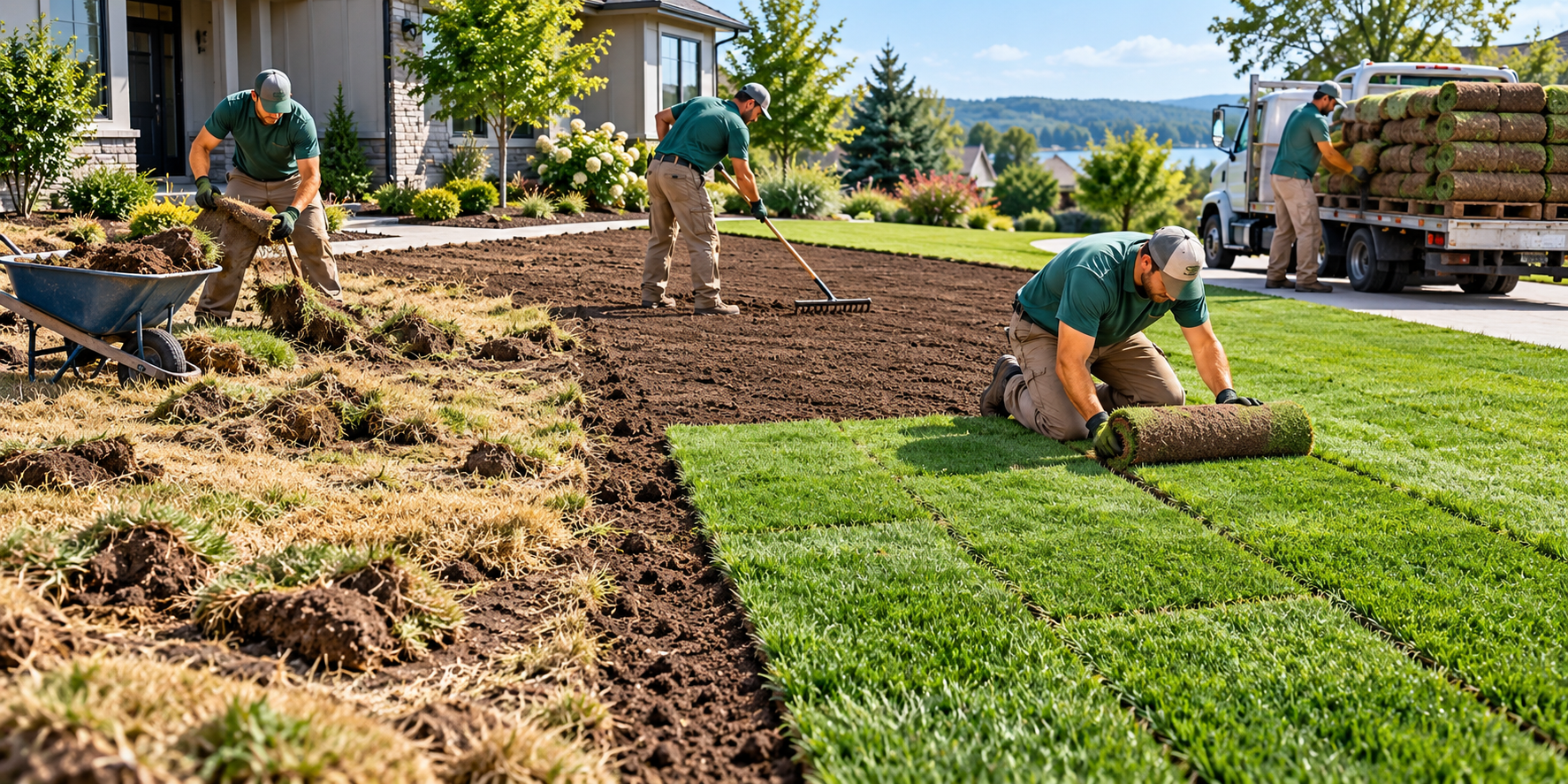
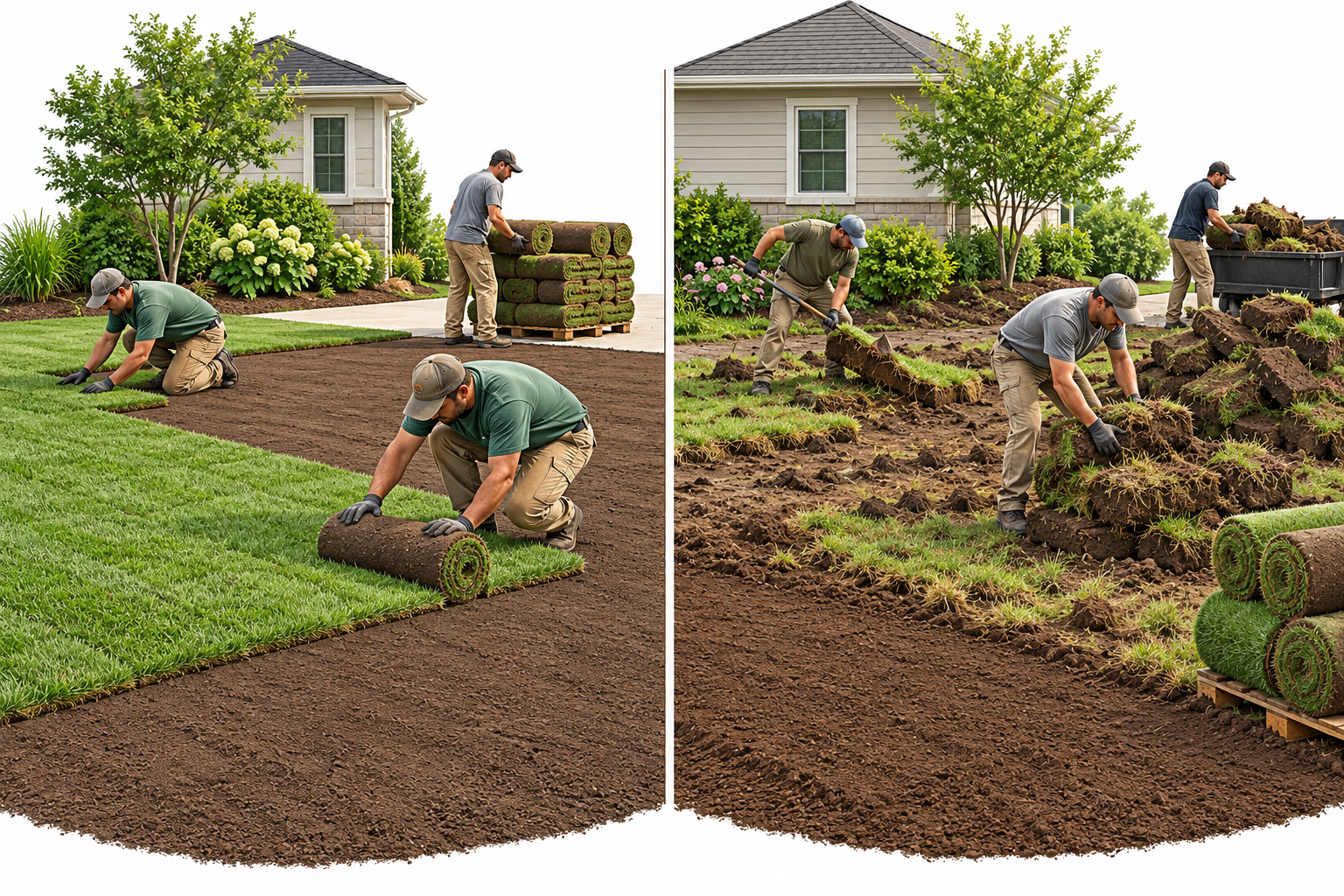
The installed cost of sod includes more than rolls of grass. Removal of the old lawn, disposal, soil preparation, delivery, access, installation, irrigation readiness, and establishment can be the largest parts of the project. New lawn and resodding share the same core decision, but a failed existing lawn may need more removal or diagnosis.
Separate material from the project
Ask for lines for existing turf removal, disposal, soil preparation, topsoil or amendments, minor leveling, sod material, delivery, labor, irrigation adjustments, watering or establishment care, and warranty. A material-only price is not comparable with a full-preparation quote.
Grass type and availability are regional. Site access, irregular edges, slopes, heat or drought timing, soil condition, and whether the irrigation system is ready also change labor and risk. If the lawn failed because of drainage, shade, soil, irrigation, or traffic, replacing sod without addressing the cause may repeat the cost.
Market context and alternatives
Angi’s broad 2026 landscaping guide lists a U.S. sod-installation signal of about USD 950 to USD 4,300. Its dedicated sod guide separately reports USD 1,080 to USD 3,073 as the range most homeowners pay. These page-level summaries use different scopes and should not be combined into one range or treated as a quote.
A British Columbia supplier provides a regional Canadian comparison in CAD: its 2026 guide lists CAD $4.00–$5.50 per square foot for professionally installed projects of at least 1,000 square feet and CAD $5.00–$7.00 below that size. The stated installation includes labor, sod, and standard soil preparation; GST is excluded. Its regional figures differ across the province. This supplier estimate is not a national Canadian average, and it does not establish that old-lawn removal, major soil correction, irrigation, drainage, or grading is included. Compare only quotes with matching area, preparation, delivery, tax, and removal assumptions.
The Town of Okotoks also lists a local rebate for qualifying drought-tolerant turf or groundcover, covering 50% of eligible cost up to $500, including installation under its stated criteria. At the time of the source update, standard rebate funding was reported partly full. Eligibility and funding can change; this is a conditional local reimbursement, not a sod price or guaranteed saving.
Utah State Extension notes that turf can be appropriate where it serves recreation, traffic, or another real function, while nonfunctional areas may support more water-conserving planting. Compare sod with seed or hydroseed, a water-wise landscape, or artificial turf based on use, establishment, water, maintenance, heat, runoff, and lifecycle—not just installation price.
Boundaries and quote questions
Major grading, drainage, retaining, irrigation installation, and hardscape repair are separate scopes. Ask who will prepare the soil, how the surface will be left, what watering is expected, when use can resume, and what the warranty excludes. A complete quote should identify the area measurement and the condition that triggers additional work rather than hiding it in a generic allowance.