
Emergency tree work is priced differently from planned removal because response time, unstable wood, blocked access, structural contact, utility involvement, and regional demand can dominate the job. The first purchase may be a make-safe service rather than complete removal.
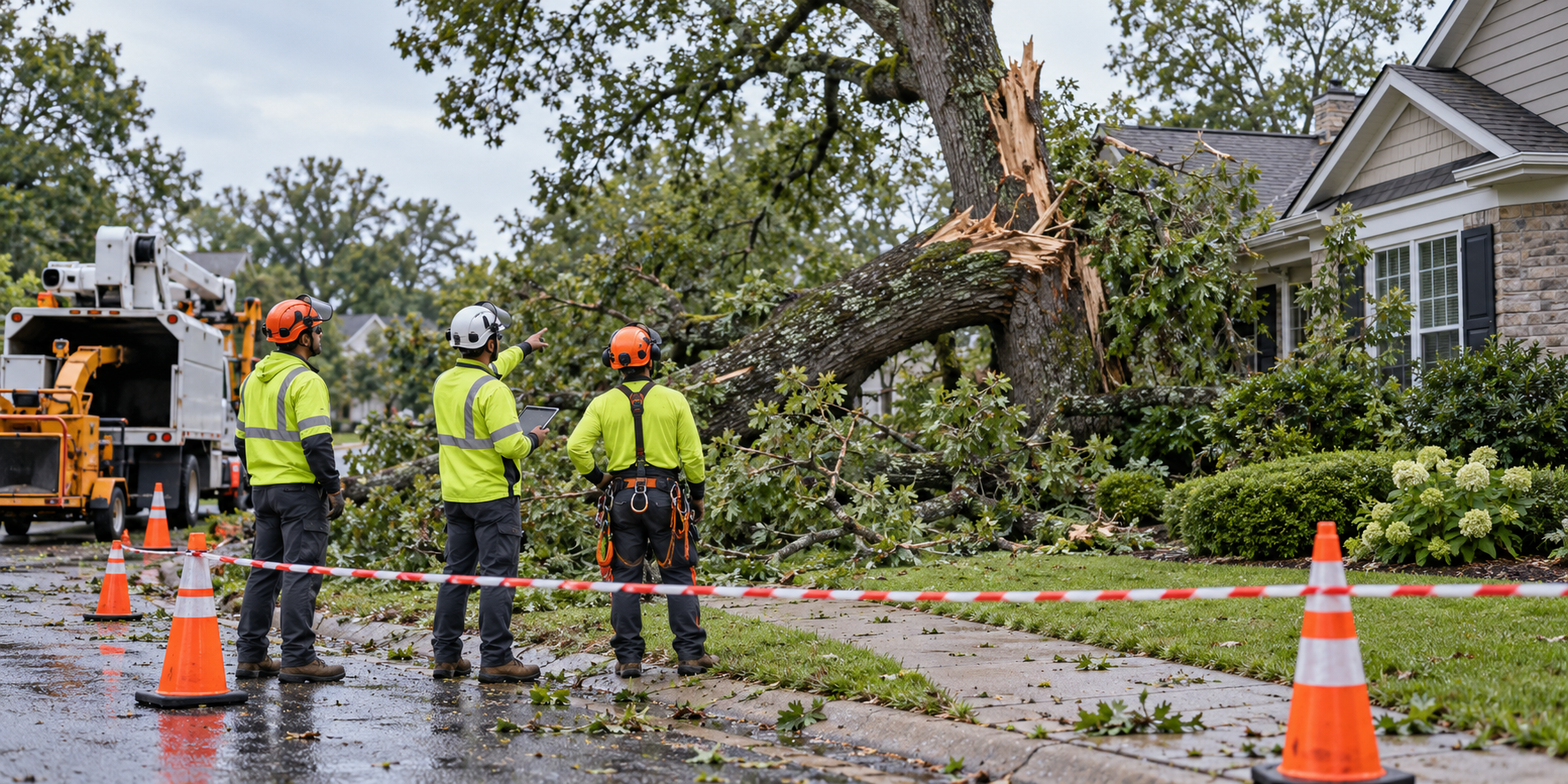
Stabilize the situation first
TreesAreGood advises caution after storm damage and recommends professional assessment rather than a do-it-yourself response. Keep people away from suspended limbs, damaged trees, and areas affected by electrical lines. Contact the electric utility for a line-related hazard and emergency services when there is immediate danger. Do not cut a loaded, hung-up, or structure-contacting limb based on a general cost guide.
Separate the work stages
Ask whether the proposal covers temporary stabilization, removal from a roof or vehicle, complete tree or limb removal, utility coordination, crane or lift work, traffic control, debris hauling, stump work, and site cleanup. A make-safe visit may leave stump, roof, siding, fence, or landscape restoration for another contractor. Widespread storms can also create long waits and changing availability.
The active evidence does not establish a reliable emergency premium or comparable current U.S. and Canadian price. Treat any urgent quote as scope-specific. Ask for the response fee, hourly or equipment minimums, after-hours charge, disposal, and a not-to-exceed approval point where practical.
Insurance and permission questions
Photographs, dates, weather details, estimates, invoices, and records of utility or emergency contacts may help with an insurance conversation, but coverage and responsibility depend on the policy, cause, property, and jurisdiction. Do not assume insurance pays for tree removal, the damaged structure, or preventive work.
Tree rules may still matter after a storm. Toronto’s permit guidance illustrates that local tree bylaws can distinguish private, city-owned, boundary, and protected trees and may impose application or replacement conditions. Check the current authority rather than assuming an emergency exception.
A bounded emergency example
For a storm-damaged tree touching a roof, compare a make-safe visit with the later full removal. The quote should separate stabilization, utility or traffic coordination, crane or lift work, debris hauling, stump work, and roof or landscape restoration. Angi’s USD 200–2,000-plus planned-removal signal is not an emergency premium and should not be used to predict this job.