
Sprinkler repair cost is usually driven by service time and access as much as by the replacement part. A failed head in an accessible bed is a different job from a zone that will not run because of a valve, wiring, pressure, controller, or buried-line problem. Get the diagnosis and the proposed repair separated on the quote.
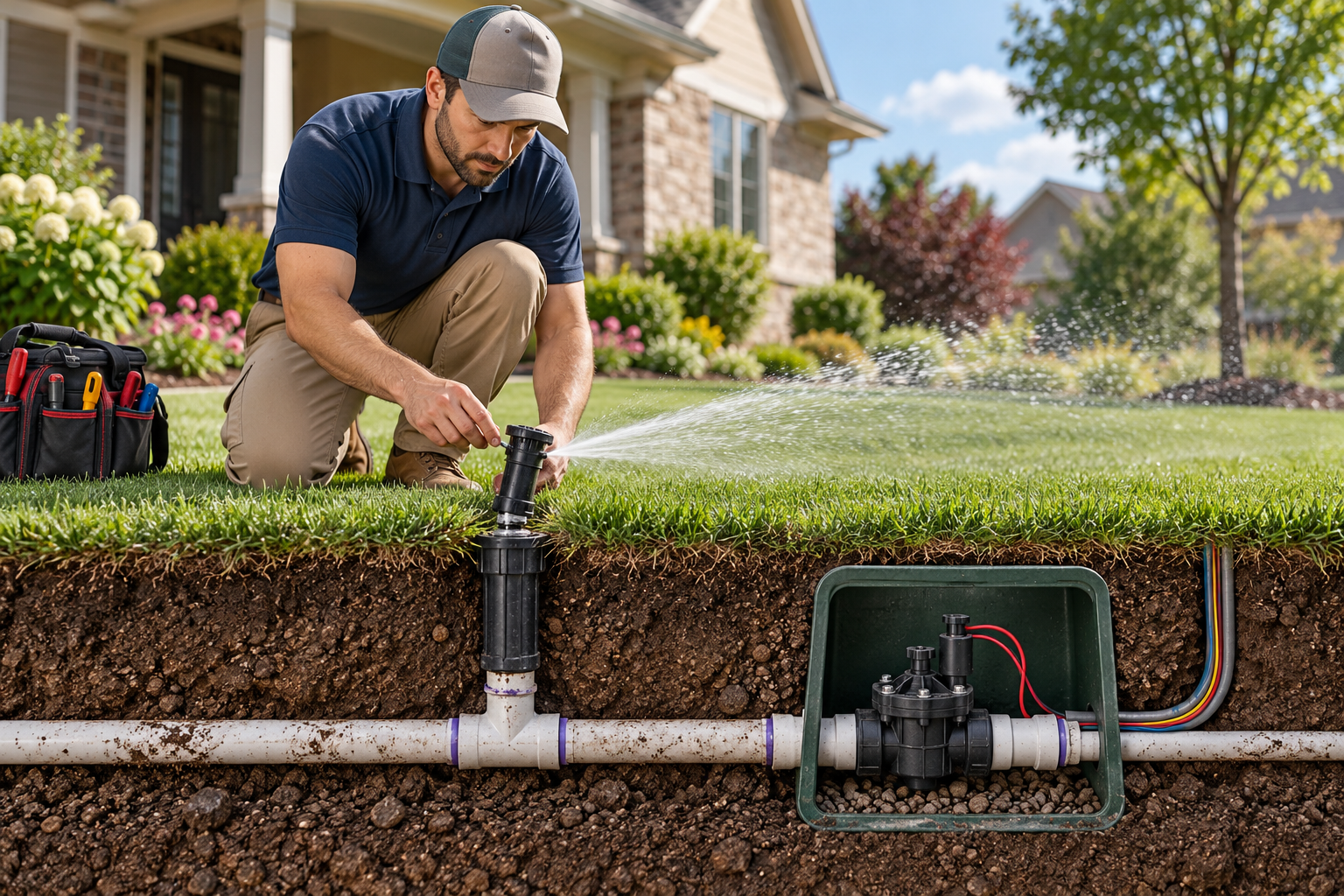
Common repair scopes
An irrigation professional may be asked to correct broken or misaligned heads, valve seepage, damaged wiring, controller faults, clogged components, accessible fittings, poor coverage, or a pressure problem. EPA’s sprinkler guidance identifies broken heads, valve leaks, overspray, uneven coverage, and high-pressure misting as performance and water-waste concerns. Those observations do not prove which component has failed.
The first visit may include a service minimum, system opening, zone testing, diagnosis, and a written recommendation. Parts, excavation, programming, and restoration may be billed separately. A “repair” price that excludes diagnosis can look low until the total invoice is clear.
What makes a repair expensive
- Unknown cause: A zone failure can require controller, wiring, valve, hydraulic, or pipe checks before a repair is authorized.
- Buried or inaccessible work: Depth, roots, mature planting, hardscape, slopes, and narrow access increase labor and restoration.
- System size: More zones and heads take longer to test and may reveal several unrelated defects.
- Water pressure and layout: Coverage problems may require a design correction or pressure work rather than another head.
- Timing: Emergency water loss, peak-season demand, or a bundled seasonal visit can change availability and pricing.
Repair, audit, or leak investigation?
Use a repair visit when the failed component or affected scope is reasonably known. Use irrigation leak detection and underground line repair when the main question is where an unexplained leak is located. An inspection or audit is broader: it can identify coverage, schedule, efficiency, and maintenance issues before you choose repairs.
Do not infer a leak from one symptom. EPA and Calgary guidance identify bill increases, wet or dry spots, hissing, and poor performance as useful clues, but each can have more than one cause.
Compare the quote
Ask for the service minimum, diagnosis included, parts and labor, excavation and restoration, controller programming, testing after repair, warranty, and exclusions. Ask whether the contractor will notify you before exceeding the diagnostic allowance. If several repairs expose poor layout or repeated buried failures, compare the total with a redesign rather than authorizing disconnected work indefinitely.
There is no reliable current U.S./Canadian component-installed price range in the active evidence. Treat retail part prices as only one small input, keep currencies separate, and use local quotes with the same access and restoration assumptions.
A bounded quote example
Compare two scopes: replacing an accessible broken head during a scheduled visit, versus diagnosing a non-running zone and locating a buried valve before excavation. The second scope should identify the diagnostic allowance, authorization point, repair, testing, and restoration separately. A part-only price is not a useful estimate for either total.