
Invasive or aggressively spreading vegetation can cost more than ordinary weeding because roots or rhizomes, containment, repeat visits, disposal, and monitoring may be part of the job. Bamboo is a common consumer example, but one removal method does not apply to every invasive plant.
Diagnose before choosing the method
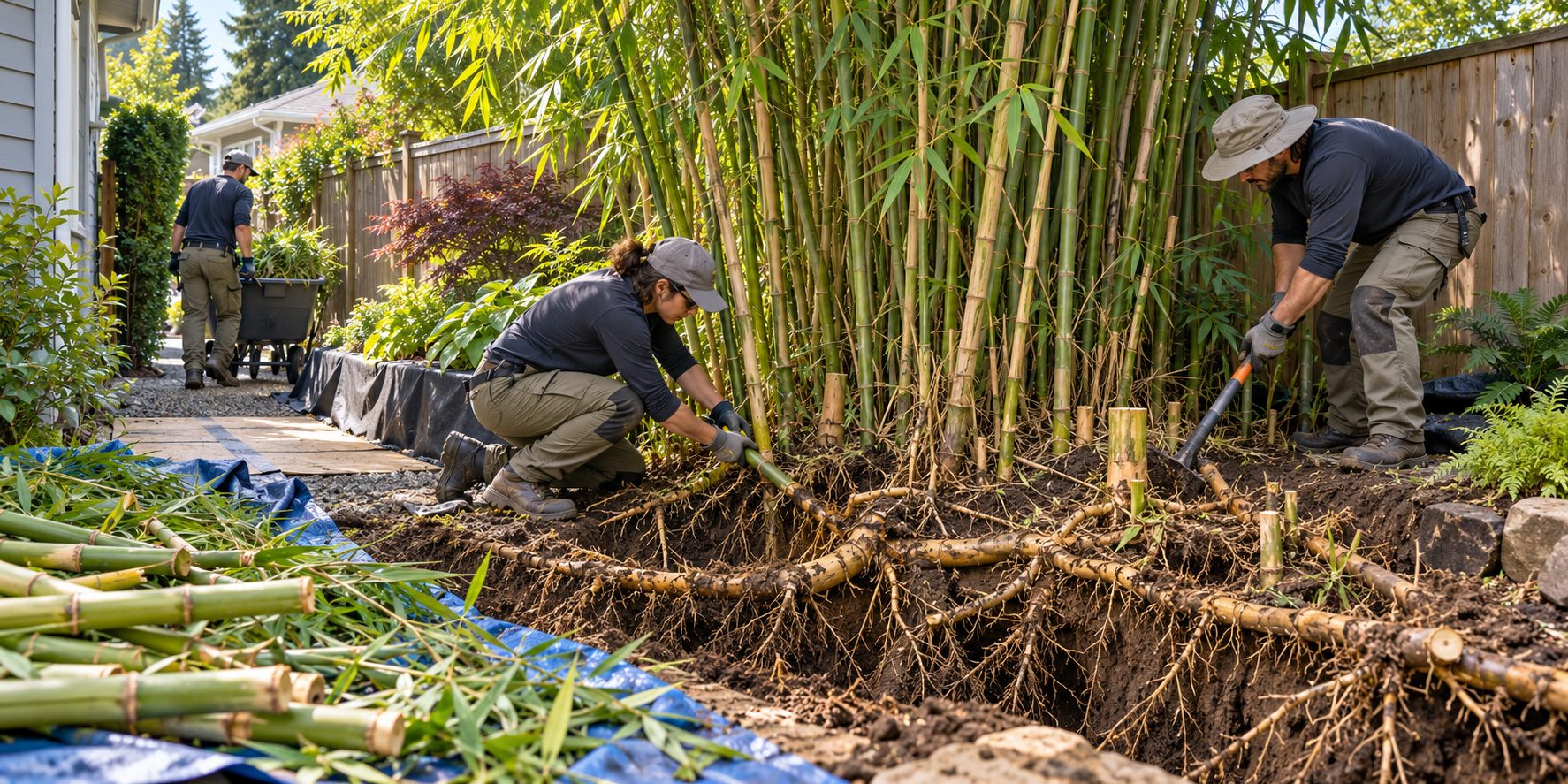
Ask the contractor to identify the plant and state whether the proposal covers mechanical removal, root or rhizome excavation, containment, repeated cutting, treatment, monitoring, disposal, and restoration. Area, density, fences and hardscape, access, neighboring growth, and the depth or spread of underground material affect the scope. For established running bamboo, University of Maryland Extension notes that rhizome excavation can be more disruptive and costly than cutting culms alone. Equipment access, damage to nearby plantings, soil compaction, and regrading may add work; missed fragments can regrow and require follow-up. These are possible scope items, not fixed inclusions or a price schedule, and they do not establish the right method for every species or property.
The Canadian Food Inspection Agency’s federal page identifies regulated plant pests and federal roles in plant protection, but it is not a complete inventory of every invasive plant in Canada or every local weed rule. Identification, local lists, reporting duties, disposal rules, and control methods can differ by species, province, territory, and municipality.
Define the removal outcome and follow-up
For bamboo, clarify whether the quote is for suppressing new growth or removing the plant and rhizomes. Washington State University Extension says repeated cane removal may take one to three years, leaves roots in place, and requires follow-up; immediate removal is a different scope. This regional guidance is not a guarantee. Ask how many visits are included, what counts as regrowth, and how follow-up is priced.
For knotweed in British Columbia, excavation can add soil-handling and disposal scope. Provincial guidance advises confirming an acceptable destination before moving infested soil; facilities may be limited and transport or disposal fees can matter. This is specific to knotweed in B.C., not a rule for other species or jurisdictions. Ask the contractor to identify the material, proposed handling, receiving facility, and included monitoring or containment before work begins.
Why quotes vary
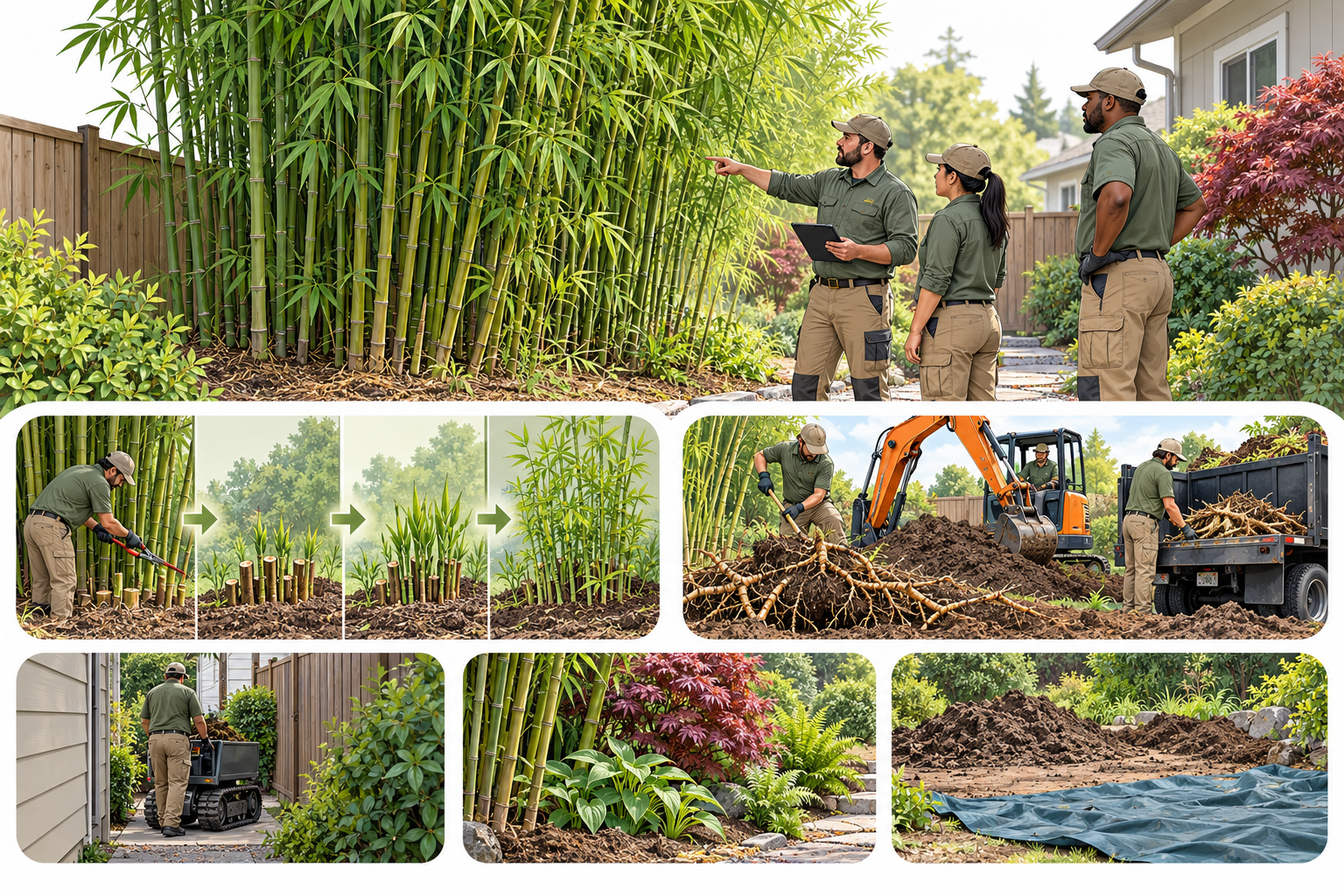
Angi’s 2026 specialist material confirms bamboo removal as a distinct U.S. service category, but the active evidence does not establish a reliable comparable Canadian price or standardized inclusions. Keep currencies separate and request a plan for initial removal, follow-up visits, disposal, neighboring or property-line coordination, and restoration.
Health Canada advises identifying the pest correctly, using physical controls first, checking that a product is authorized for Canada, following the label, and checking local restrictions. Its guidance does not provide a species-specific treatment plan. If chemical control is proposed, ask who is qualified to apply it, which product and label govern, what area and weather restrictions apply, and how storage and disposal are handled. Do not infer that a spray is necessary or effective for an unidentified plant.
Treat property-line disputes as a local coordination issue, not as a universal legal rule. A complete quote should explain how regrowth is monitored and what happens if removal reveals irrigation, hardscape, or other restoration work.
A bounded removal example
For a bamboo stand along a property line, compare identification, initial cutting or excavation, rhizome or root removal, containment, disposal, follow-up monitoring, neighbor coordination, and restoration as separate lines. The U.S. service-category signal does not establish a Canadian price or prove that one treatment will work for an unidentified plant.