
An outdoor faucet may need a washer or stem repair, a complete faucet replacement, or a repair to the pipe inside the wall. A small exterior drip can therefore range from a focused fixture job to concealed freeze damage. EPA identifies outdoor spigots among common leak locations, but local freeze protection, anti-siphon, and installation requirements must be verified for the property and product.
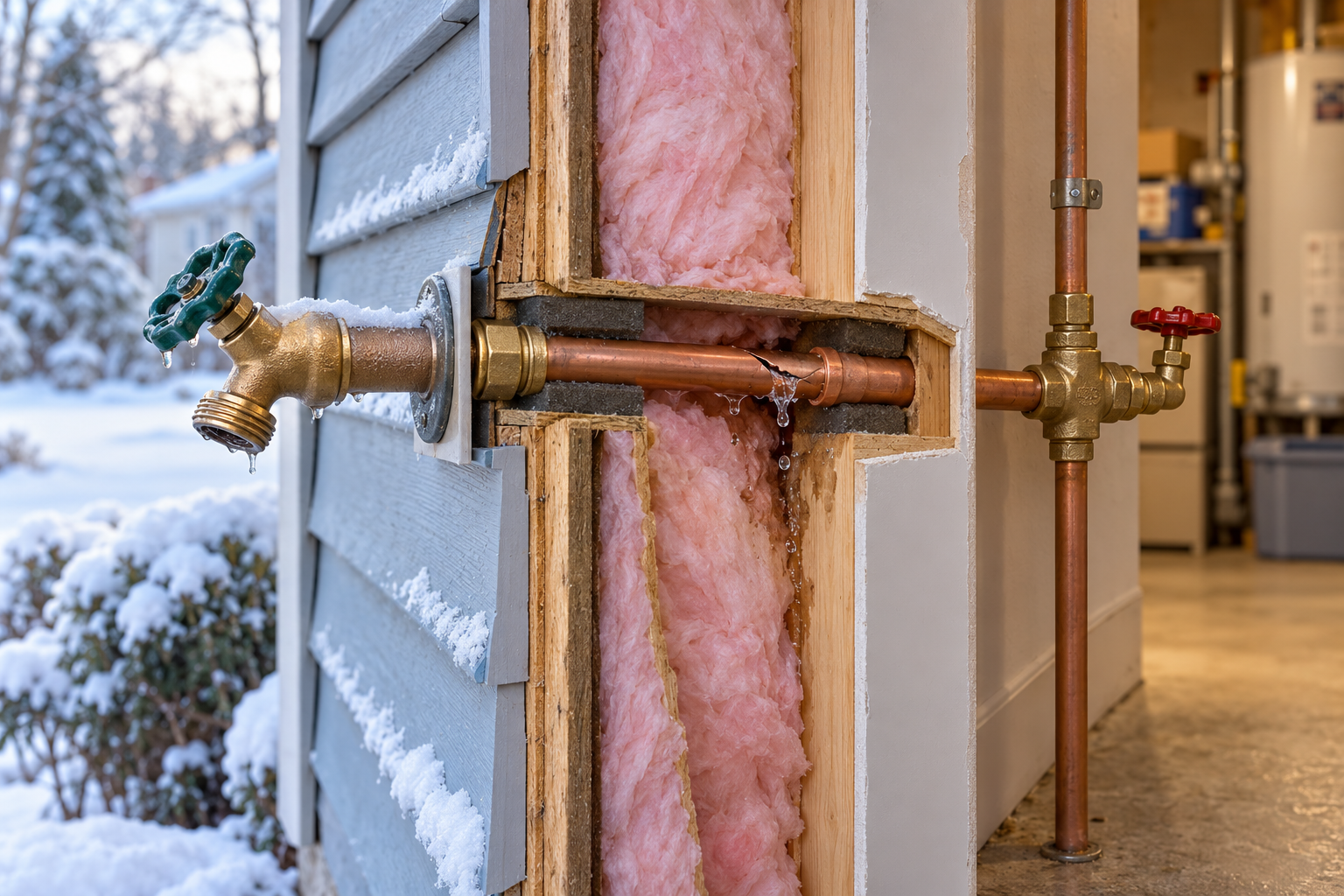
Repairable versus replacement work
A leaking handle or spout may be repairable when the body, threads, shutoff, and interior connection are sound. Full replacement is more likely when the body is cracked, corroded, damaged by freezing, difficult to service, or not suited to the climate and use. A frost-resistant replacement can reduce risk in some conditions, but it is not a universal mandatory configuration.
Ask whether the quote includes the faucet only or the supply pipe and interior connection. If the line behind the wall has split, replacing the exterior bib without repairing the concealed section does not solve the problem.
Cost drivers
- stem, washer, cartridge, or full faucet replacement;
- access to the interior side of the wall;
- pipe material and connection condition;
- an accessible seasonal shutoff or failed isolation valve;
- freeze damage and emergency scheduling;
- wall opening, insulation, and finish restoration; and
- product or local requirements such as anti-siphon protection.
Angi’s 2026 U.S.-oriented guide reports $120–$500 per spigot for replacement, including materials and labor in its published scope. It is a source estimate, not a standardized local quote; it does not price a split pipe inside the wall or finish restoration after freeze damage. Use local quotes that state whether work is planned or emergency and whether interior access is included.
Scenarios
Fixture repair: The leak is at an accessible stem or washer, the pipe is sound, and the shutoff works. This is a small repair but may still be subject to a service minimum.
Like-for-like replacement: The bib is corroded or damaged, but interior access and the connection are straightforward. Include removal, new faucet, connection, testing, and seasonal operation guidance.
Freeze-damage repair: The outside faucet or concealed line has split. The plumber may need to isolate water, open the interior finish, replace pipe, test, and coordinate drying or restoration. Repeated failures may justify investigating routing, insulation, or the seasonal shutoff.
Seasonal and system boundaries
A small hose-bib vacuum-breaker accessory or ordinary shutoff is not automatically the testable premises assembly named in a utility notice. If a notice identifies a covered assembly, use Residential Backflow Preventer Testing, Repair, and Replacement Cost to separate testing, reporting, repair, and replacement scope.
Do not assume that closing an indoor valve, draining a line, or using a frost-resistant faucet works identically in every installation. The appropriate operation depends on the product and piping layout. Ask the installer what the homeowner must do seasonally and what condition indicates a hidden leak.
Irrigation-system repair is a separate site-water scope. Broad cold-weather resilience also belongs elsewhere. This article covers the building-side fixture and its immediate connection.
Quote questions
- Where is the leak: stem, body, connection, or pipe behind the wall?
- Is repair possible, and are replacement parts available?
- Is the selected faucet appropriate for the location and verified requirements?
- Does the quote include interior access, pipe repair, insulation, testing, and finish restoration?
- Is a seasonal shutoff present and functional?
- Is the work corrective, preventive, or emergency stabilization?
The lowest outdoor-faucet quote is useful only if it covers the part that is actually failing. Make the hidden connection and freeze-risk assumptions visible before comparing bids.
The indoor side changes the project
The visible bib is only the endpoint. Ask whether the pipe slopes or drains as intended, whether an indoor shutoff exists, and whether the wall cavity shows prior freezing or moisture. A new exterior fixture cannot protect a concealed line that remains exposed to the same condition. Conversely, a sound interior pipe does not require a whole-wall opening just because the outside handle drips.
Planned versus emergency economics
A planned replacement allows the contractor to verify the product, access, shutoff, and finish plan. Emergency work can add dispatch and after-hours labor before the permanent correction is known. If water is active, the first visit may only isolate or stabilize the line. Request a follow-up scope and ask whether the emergency work is credited toward the permanent replacement.
For a home in a cold climate, compare the expected cost of seasonal operation and a repeat freeze with a planned configuration correction. That comparison may include insulation or envelope work outside plumbing. Do not claim that one faucet style eliminates freezing in every wall or climate; the installation details control.
What to document after the repair
Ask the installer to identify the indoor shutoff, explain seasonal operation, and test the bib under pressure after the work. Photograph the connection before an opening is closed. If the line has frozen before, record the affected location and whether insulation, routing, or a building-envelope correction remains outstanding.
For a home that will be vacant during freezing weather, include a responsible monitoring and shutdown plan in the ownership decision. A faucet replacement alone does not protect an unattended line. Conversely, do not pay for a broad winterization project when the evidence shows only a worn exterior washer and a sound, accessible pipe.
Compare the visible and concealed scopes
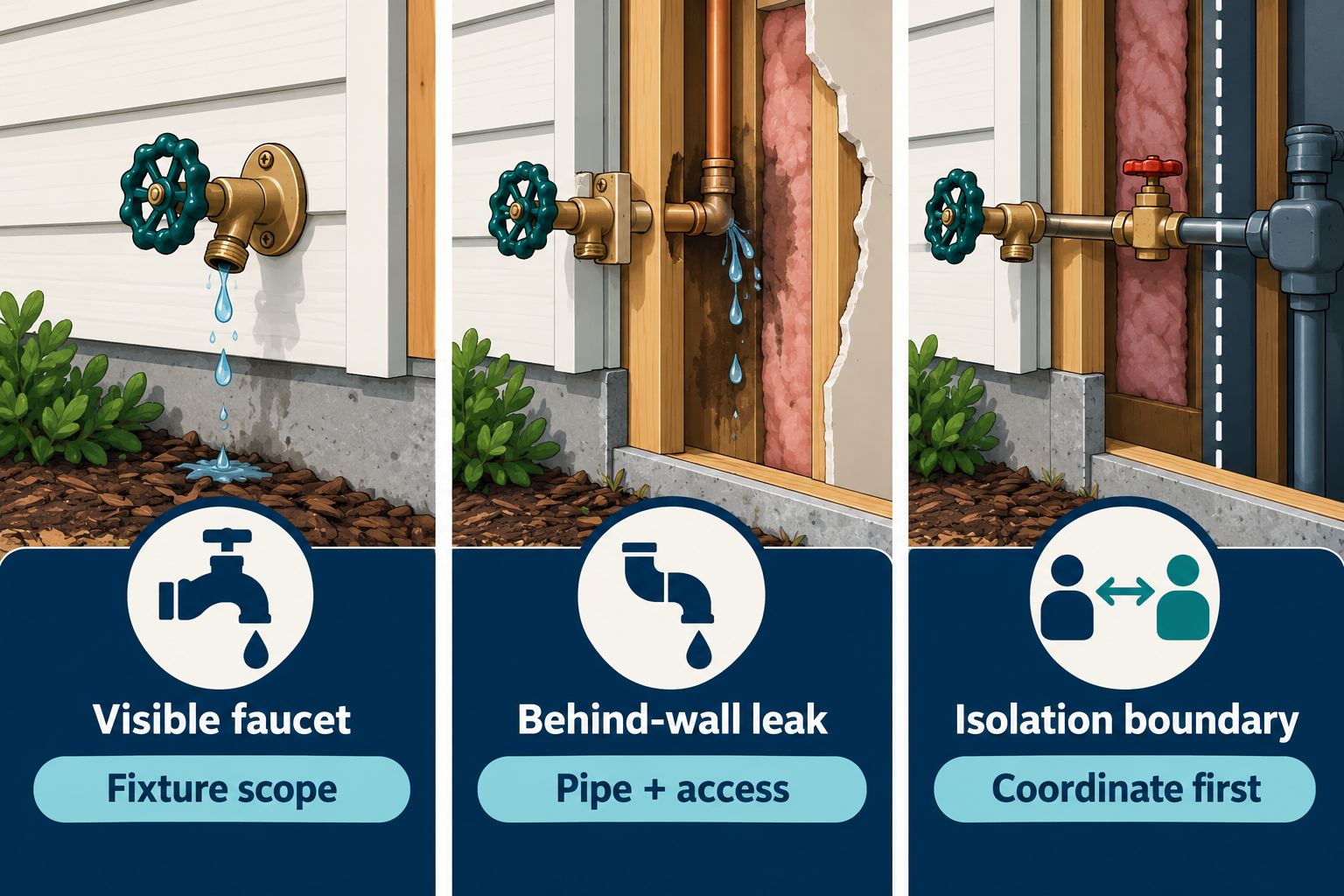
Ask for a line item for the exterior faucet, the indoor connection or shutoff, pipe repair, access, testing, and finish restoration. If the quote says only “replace hose bib,” ask what happens if the wall-side pipe is split or the connection cannot be isolated. This is especially important after a freeze, when the visible damage may not be the only failure.
At handoff, get the product information and seasonal operating instructions. A planned frost-resistant replacement may reduce risk in the right configuration, but no fixture alone guarantees that the wall or supply line will not freeze. Price the building or insulation correction separately when recurrence is part of the decision.
Confirm what the wall-side connection is doing
The visible hose bib is only the end of a piping assembly. Ask whether the shutoff is inside, whether the branch drains when closed, where the connection is supported, and whether the wall penetration is dry. A faucet that drips outside may have a worn washer or cartridge; a leak inside the wall may require access and a different scope. The quote should state which condition was observed and which concealed areas remain unverified.
If a vacuum breaker, anti-siphon feature, freeze-resistant body, or lockable handle is part of the proposal, identify it as a functional requirement rather than an assumed upgrade. Product selection must fit the wall thickness, pipe material, support, and seasonal use. A longer fixture is not automatically safer if it is installed without the required slope, drainage, or interior shutoff arrangement.
Treat freeze recurrence as a building question
Repeated failures may indicate an exposed route, air leakage, insufficient insulation, an unheated cavity, a line that cannot drain, or a seasonal shutdown problem. Ask the contractor to identify which factor the proposed repair addresses. Replacing the outside fixture alone may be reasonable after one localized failure, but it should not be described as a guaranteed prevention plan when the pipe route remains exposed.
For a seasonal property, document the closing and reopening sequence, including who shuts water off, drains the branch, protects the fixture, and verifies the system before use. For an occupied property, keep the accessible shutoff labeled and clear. Prevention work may involve plumbing, insulation, envelope, or property-management decisions, so price those scopes separately when necessary.
Test the completed connection
The final check should include opening and closing the faucet, inspecting the interior connection, observing the wall penetration, confirming the shutoff, and testing under normal supply conditions. Photograph the installed body and any interior access before finishes close. Ask what warranty applies to the fixture and what limitation applies to freeze damage.
The result is a reliable exterior connection with a known isolation and drainage plan. If the quote includes only a product swap, it may leave the underlying access, support, or seasonal-use problem unresolved.
Compare repair, replacement, and access work
An accessible interior shutoff may be the most valuable correction when the outdoor fixture itself is sound. A damaged body may justify a replacement, while a split branch or inaccessible connection requires a larger opening. Ask the contractor to price those choices separately and to identify whether the wall-side pipe can be inspected without removing finishes.
If the property has multiple exterior outlets, map which branch each faucet serves and whether one shutoff controls several locations. A repair at one end does not prove that another branch is protected. For a rental, seasonal, or vacant home, include labeling and a written close-down procedure so the next person knows what to isolate before cold weather.
The final record should show the fixture, interior connection, isolation point, test condition, and any limitation. That information keeps a future freeze repair from repeating an incomplete diagnosis and makes the next quote comparable.
Include the use pattern
An outlet used for irrigation, washing, filling, or seasonal equipment may need a different shutoff, access, or branch review than an occasional hose connection. Ask whether the fixture should remain pressurized during cold weather and who will operate the interior control. If several outlets share a branch, label the boundary so a future emergency response does not isolate the wrong area.
When the fixture is replaced, retain the model, connection material, support method, leak test, and seasonal instructions. If a wall opening or interior repair remains, make the finish responsibility explicit. The complete result is a serviceable exterior connection and a known prevention plan, not just a new handle on the outside wall.