
The main shutoff is a small component with outsized economic value: it controls how quickly a house can stop a leak and whether another repair can be isolated without shutting off the street or a shared system. Replacement may be needed because the valve is seized, leaking, inaccessible, corroded, or unreliable. The project can be more involved than the valve price suggests because the plumber must isolate the water and work at the point where the service enters the home.
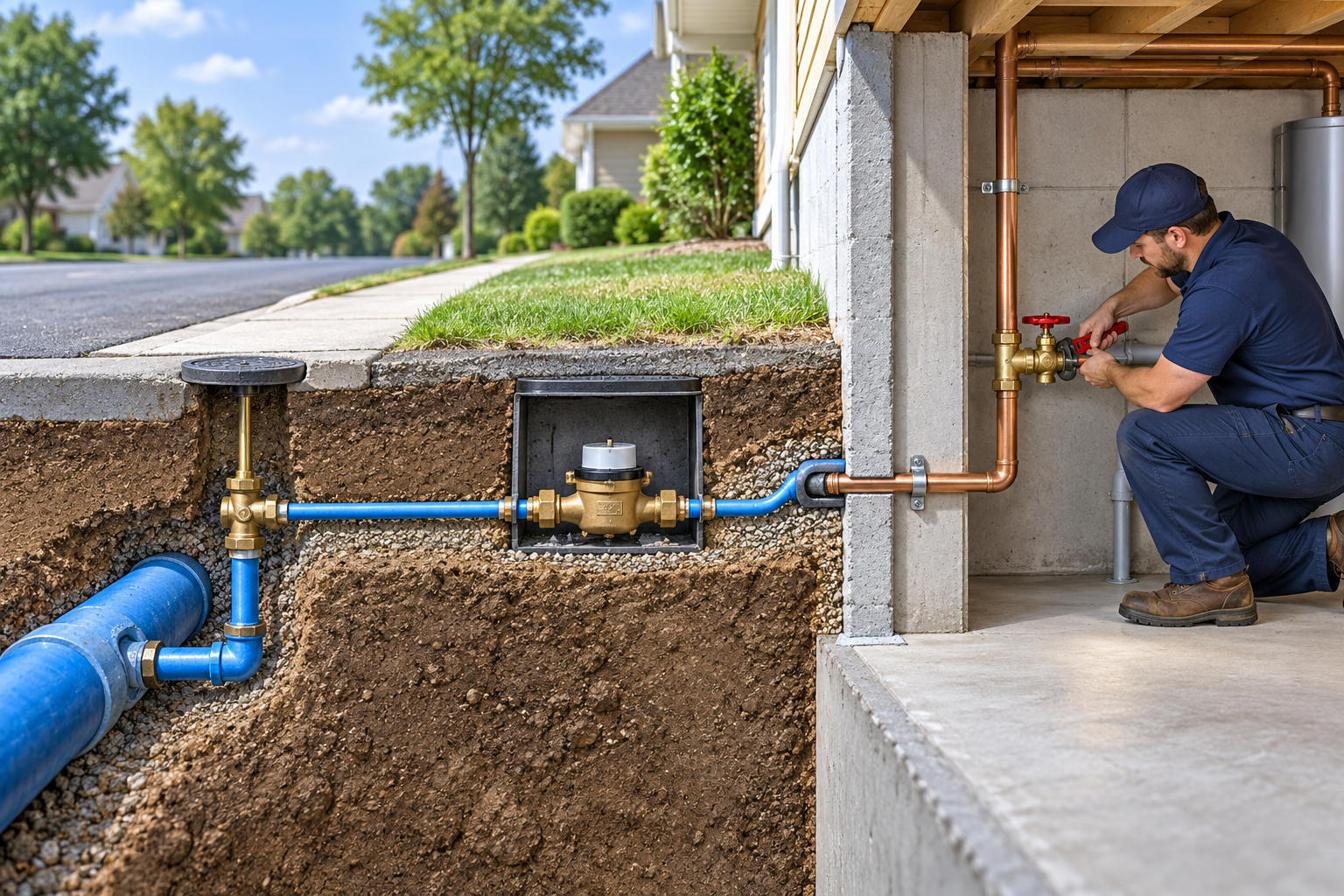
What valve is being replaced?
Confirm that the quote concerns the house-side main shutoff, not a fixture stop, curb stop, utility meter valve, or municipal main. Responsibility at the service connection varies. If the house-side valve cannot isolate the water, utility coordination may be needed before work starts.
Some homeowners replace the existing valve in place. Others add a second accessible shutoff while the line is exposed. The latter can improve emergency readiness but is a different scope from simply exchanging the old valve.
Broad market context
HomeStars reports an illustrative Canadian main-shutoff replacement range of about $225–$325. It is not a universal Canadian price, and available market research does not provide a comparable national US range. The scope may or may not include access, fittings, meter-area coordination, finish restoration, or emergency scheduling. Use local quotes that name the actual valve location and included work.
Cost drivers
- the valve’s location and accessibility;
- whether the water can be isolated on the property side;
- pipe material, size, corrosion, and transition fittings;
- meter-area or utility coordination;
- wall, floor, cabinet, or soil access;
- emergency versus planned scheduling;
- testing, cleanup, and finish closure; and
- whether a pressure regulator, backflow device, or additional shutoff is being addressed at the same time.
An accessible valve in an unfinished basement is a different project from a buried or concealed valve behind a finished wall. A quote should not use a generic “main valve” allowance without describing that condition.
Replacement versus adding accessibility
If the valve works but is hard to reach, the economic problem may be access rather than valve failure. A plumber may recommend relocating the control, adding a second valve, or creating a labeled access panel. That can cost more than a replacement in place but may reduce the time and damage associated with a future emergency.
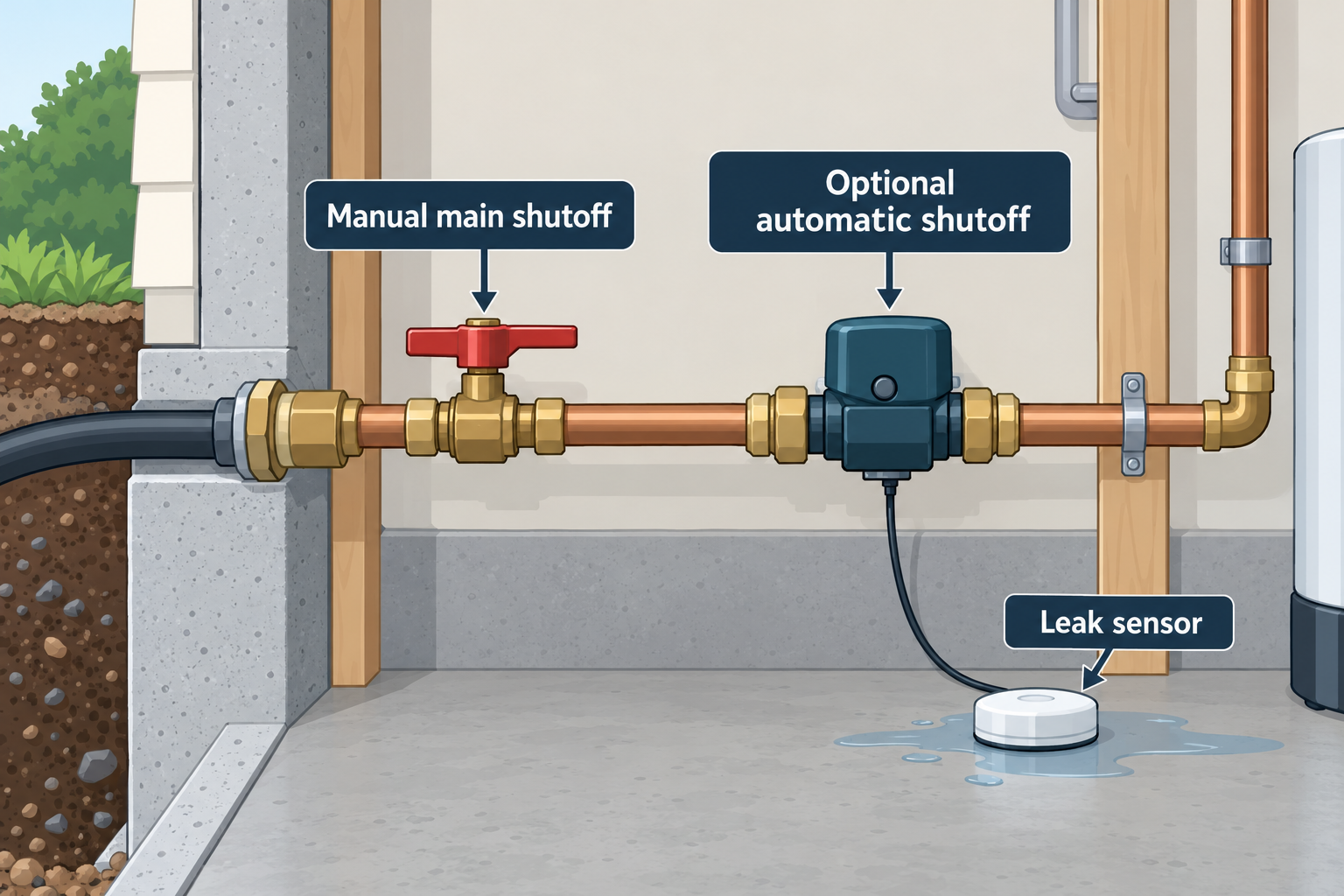
If the existing valve is leaking or cannot close, replacement is corrective work. If the homeowner is adding an automatic leak-shutoff system, ask whether its valve replaces, supplements, or depends on the manual main shutoff. Automatic controls do not remove the need to understand how the house can be isolated when power or connectivity is unavailable.
Project scenarios
Planned accessible replacement: The water can be isolated, the valve is exposed, and the connections are compatible. Labor, valve, fittings, testing, and cleanup dominate.
Concealed or corroded assembly: Access, protection, pipe repair, and finish restoration can exceed the component cost. Request a defined opening assumption and an authorization limit for hidden conditions.
Emergency isolation problem: A leak is active and the main cannot close. The first invoice may cover temporary control or utility coordination. Permanent valve replacement and consequential restoration should be priced separately.
Quote questions
- Which valve and segment are included, and who controls the adjacent valve?
- Can the property be isolated before the plumber begins?
- Does the quote include fittings, pipe repair, access, protection, cleanup, and testing?
- Is a second accessible shutoff recommended, and what problem would it solve?
- Are meter, curb-stop, association, or utility responsibilities excluded?
- Does the project coordinate with a pressure regulator or automatic shutoff?
The value of a main shutoff is partly the loss it helps prevent. Compare the cost of planned access and a reliable valve with the disruption and emergency premium of discovering the problem during a burst-pipe event.
Decide whether access is the real project
Testability and reach can matter as much as the valve body. A working valve behind stored items or a removable panel may only need labeling and a clear access plan. A valve that cannot be operated safely, cannot isolate the home, or is concealed behind a finished surface creates a larger risk. Ask whether the quote improves future access or merely exchanges the component in the same difficult location.
The location relative to the meter and curb stop matters. A plumber may need the utility to close water outside the home, and a shared or attached property may require association coordination. Do not authorize work on utility-controlled equipment based on a generic main-valve price. Confirm the boundary first.
Plan the test and handoff
The finished scope should include pressure restoration, leak observation, operation of the valve, cleanup, and instructions for labeling or seasonal access. Ask for photos before a wall or cabinet is closed. If an automatic shutoff or pressure regulator will also be installed, specify which valve is the primary manual isolation point and how each device behaves without power or connectivity.
A planned replacement can be valuable even when it does not reduce today’s water bill. It can shorten an emergency response and make future plumbing work less destructive. Compare that practical risk reduction with the cost of leaving an unreliable valve in service, without inventing a guaranteed dollar saving.
Confirm the boundary before opening the line
The house-side main, curb stop, meter valve, and utility main are not interchangeable. Ask who can close the water, who owns the adjacent connection, and whether a utility, municipality, association, or shared-property approval is needed. A plumber’s standard main-valve price may assume that isolation is already available.
At completion, request operation and leak testing, a photo before concealment, and clear labeling. If the homeowner is also adding a regulator or automatic shutoff, identify which component is the manual emergency control. This information can save time during a future leak even though it does not create a guaranteed financial return.
The emergency value is practical, not a guaranteed savings
A reliable main shutoff can reduce the time between noticing a leak and stopping water, but the dollar value depends on who is home, how quickly the valve can be reached, the type of failure, and the materials nearby. A planned replacement is therefore a risk-reduction decision. Do not promise that it will prevent water damage or lower an insurance premium.
If the valve is being improved for emergency readiness, make the result usable: label it, keep the access clear, explain the adjacent utility boundary, and make sure household members know which control they can operate. An automatic valve, remote app, or sensor may supplement that plan, but it should not make the manual isolation point less accessible or less understood.
Compare replacement with access work
When the existing valve operates but is hard to reach, a replacement in the same place may not solve the homeowner’s real problem. A labeled access panel, a relocated valve, or a second accessible shutoff can change the labor and finish scope. Ask the contractor to price the current-location replacement and the access-improvement option separately.
If a valve is in a meter area, crawlspace, shared mechanical room, or attached property, confirm who can operate or modify the adjacent controls. Utility or association coordination can determine the schedule even when the house-side component is simple. The quote should not quietly assume control of equipment that belongs to someone else.
Verify the result before closing access
The handoff should include the valve’s location, operation, leak observation, pressure restoration, and any limitation on isolation. Photograph the connections and label the direction of operation before a wall or cabinet closes. If access is rough or temporary, price the finish work rather than treating the project as complete.
For a homeowner comparing bids, the completed condition matters more than the part number. A slightly higher bid that includes testing, labeling, and future access may provide more emergency value than a lower bid that leaves the same inaccessible arrangement.
Identify the isolation boundary
Before work begins, confirm whether the valve controls the whole building, a branch, an attached unit, an outdoor line, or only a downstream section. In a shared, attached, rental, or multi-unit property, a main shutoff can affect another occupant or common equipment. Ask who authorizes isolation and whether the utility or association controls any adjacent valve.
If the existing valve cannot close, price temporary isolation and the replacement separately. If the homeowner wants better emergency access, compare a same-location replacement with relocation, an access panel, or a labeled secondary shutoff. These options change finish, ownership, and service scope, so the lowest part price is not necessarily the most useful result.
At handoff, show household members the valve, direction of operation, and boundary. Keep a photo and written location record with the property file. The purpose is practical isolation under the conditions the home actually has, not a promise that one valve stops every possible leak.