
Preparation is often the difference between a simple repaint and a surface-restoration project. A quote should say what condition the walls are in and what finish the painter is expected to deliver.
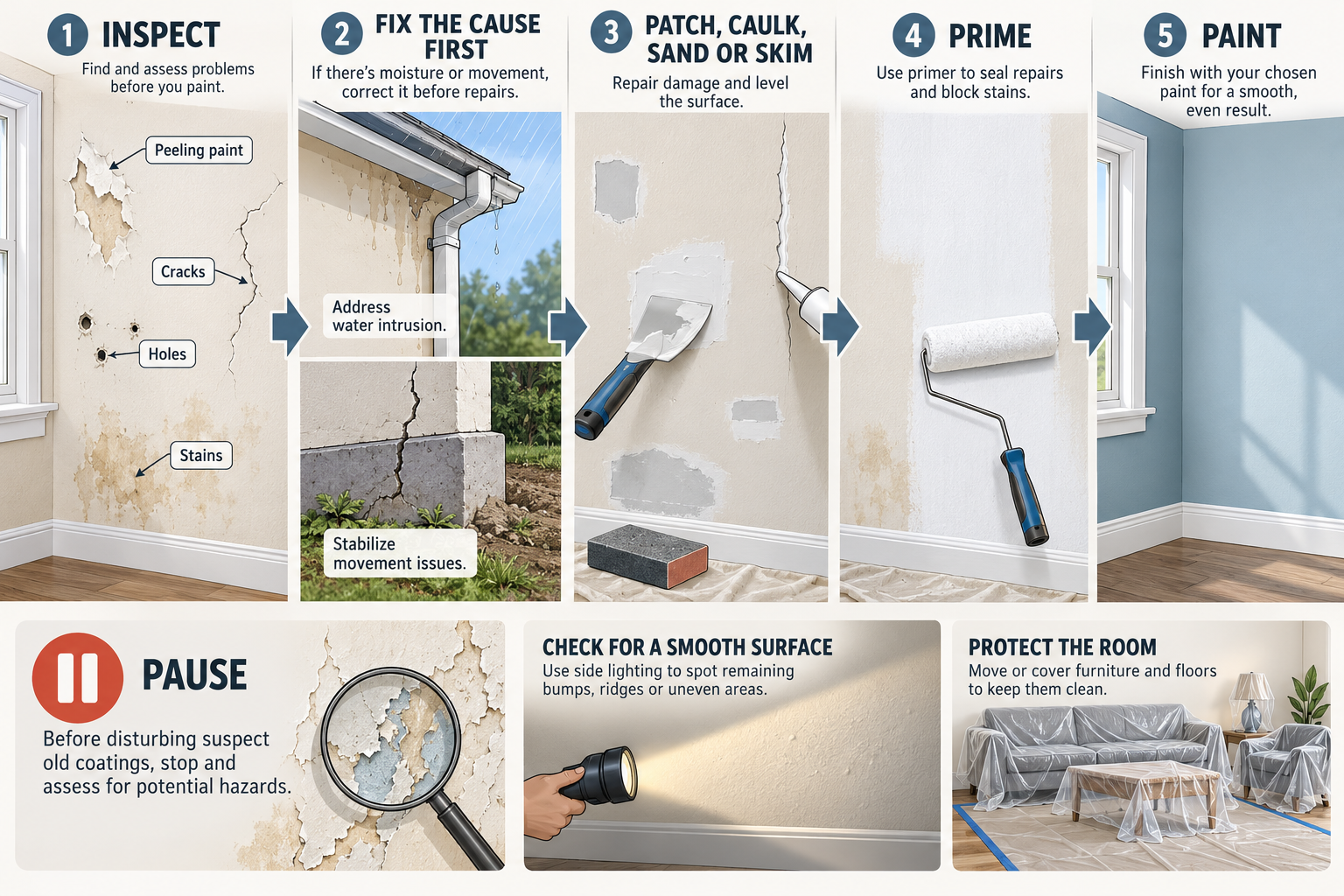
Common preparation scopes
Minor preparation may include filling small holes, sanding, caulking, cleaning, and spot priming. Extensive preparation can include repairing cracks or seams, removing loose paint or wallpaper, stain blocking, skim coating, texture correction, and broader primer and paint work. The price depends on the named defects and finish scope, so request a measured or task-based allowance rather than relying on a generic preparation add-on.
GA-214 ties the expected gypsum finish to decoration, location, and lighting. A smooth, glossy wall under strong side light needs a more exacting surface than a textured or forgiving finish.
Fix the source before the surface
Peeling, staining, or recurring cracking may result from moisture, movement, or another underlying problem. EPA guidance treats moisture control and correction of the water source as prerequisites to finish decisions. Painting over a stain does not prove the wall is dry.
Old coatings need a safety boundary
Older painted surfaces may contain lead, and some finish materials may raise asbestos concerns. U.S. EPA RRP requirements and Canadian guidance have different scopes. Do not sand, scrape, or disturb a suspected material based only on age or appearance; obtain qualified local advice.
Quote questions
Ask for the area and type of prep, number of passes, sanding and dust control, primer, finish coats, protection, furniture, cleanup, and treatment of concealed damage. Compare prep scopes before comparing paint prices.
Why preparation changes the quote
Preparation determines how evenly paint adheres, reflects light, and blends across the wall. Minor preparation may include filling small holes, sanding, caulking, cleaning, and spot priming. Extensive preparation can include removing loose paint or wallpaper, repairing cracks and seams, stain blocking, correcting texture, skim coating, and repainting larger areas so the work does not show as a patch.
The finish expectation sets the threshold. A textured, low-sheen wall may tolerate more variation than a smooth, high-sheen wall under strong side light. A homeowner should decide whether the goal is a practical repaint, a uniform wall, or a high-finish surface before accepting a preparation allowance.
Common preparation paths
Minor preparation is appropriate only when the substrate is sound and defects are small. Ask how many passes, drying time, and sanding are included.
Repair and prime may address holes, seams, nail pops, stains, peeling areas, and caulk joints. A fresh coat can reveal rather than hide an uneven repair if the wall is not prepared to the expected finish.
Skim coating or texture correction is a whole-surface decision. It can add labor, drying, sanding, dust control, primer, and paint. It does not correct structural movement or moisture.
Wallpaper or coating removal can expose damaged paper, plaster, adhesive, or previous repairs. The quote should separate removal from the finish restoration that follows.
Source and safety boundaries
Peeling, staining, and recurring cracks can reflect water, movement, contamination, or another cause. EPA guidance treats moisture source correction as foundational to finish decisions. Painting over a stain does not prove the wall is dry.
Older painted surfaces may contain lead, and some related materials may raise asbestos concerns. U.S. EPA RRP requirements and Canadian guidance have different scopes. Do not sand, scrape, or disturb a suspected material based only on age or appearance; obtain qualified local advice when applicable.
Cost scenarios
A simple project has clean, sound walls with minor nail holes and one finish. A typical project includes patching, sanding, caulking, primer, color change, furniture protection, and two or more finish surfaces. A complex project includes peeling coatings, broad cracks, texture, wallpaper, stains, moisture history, high finish expectations, or a safety assessment.
Preparation estimates are difficult to compare when one stops at patching and another includes sanding, primer, stain blocking, texture, and finish coats. Compare the task list and final surface rather than treating an undefined “prep” line as a complete allowance.
Quote checklist
Request the existing-condition description, repair areas, number of preparation passes, sanding, dust control, primer or stain blocker, finish coats, furniture and protection, access, cleanup, and concealed-condition terms. Ask whether preparation is priced by area, hour, room, or a defined task.
A clear preparation quote makes the invisible labor visible. That is what allows a homeowner to compare a cheap repaint with a complete surface-restoration project.
Preparation is also diagnostic
Loose paint, recurring cracks, soft board, staining, bubbling, and moisture marks may indicate a condition that paint cannot solve. The quote should state whether the surface is assumed dry and stable, what testing or opening is included, and what happens if the substrate fails that assumption. Keep active leaks, structural movement, and hazardous-material assessment outside ordinary preparation pricing unless specifically defined.
Old coatings can have compatibility or material concerns that are not visible in a quick walk-through. Follow the applicable local assessment process when age or condition makes it relevant, and do not treat sanding or priming as a substitute for that assessment.