
Trim painting is detail labor. Baseboards, crown molding, door and window casings, and other profiles require masking, preparation, edge work, and careful coating that is not captured by wall area alone.
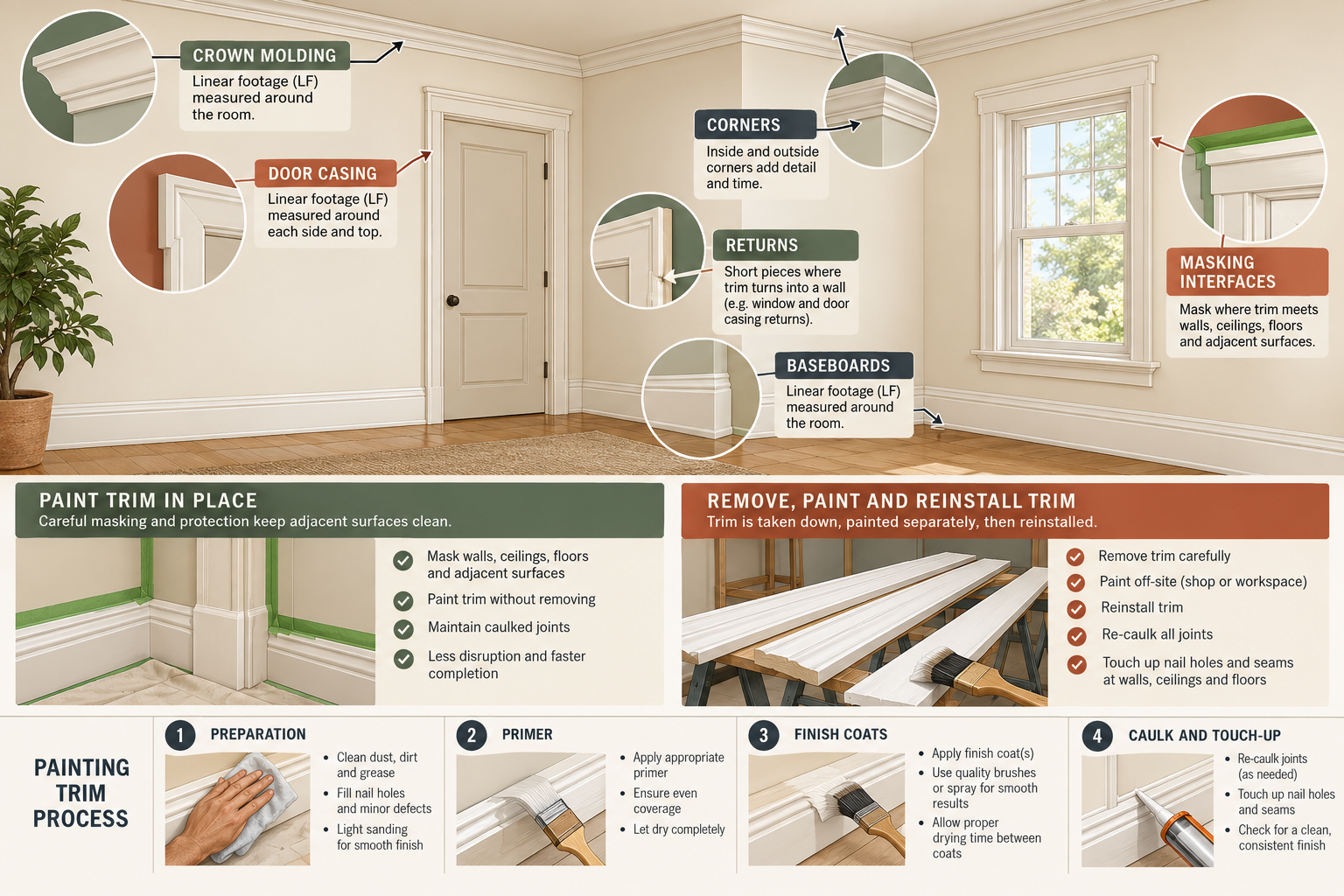
What drives the estimate
Linear footage, profile detail, corners, furniture, flooring protection, old finish, peeling or damaged areas, caulking, sanding, primer, coating compatibility, and the number of coats all matter. Painting trim in place may reduce removal but increase masking; removing it may add restoration and reinstallation work.
HomeStars’ Canada-focused baseboard guide lists $1–$4 per linear foot for baseboard painting or staining. It does not split labor from material or define the trim profile and preparation in that example, so treat it as one source’s planning signal, not a full trim-painting quote or a U.S. equivalent.
Repaint or refinish?
Repainting can be practical when the desired result is an opaque color and the existing surface can be prepared safely. Refinishing is a different scope when the goal is to preserve or restore visible wood grain. Compare both options with the same protection, repair, and finish expectations.
Old paint and compatibility
Older painted trim may require lead-safety assessment before sanding or scraping. U.S. and Canadian rules differ, and material content cannot be identified from appearance. Product compatibility also depends on the existing coating and the named new product; ask the contractor or manufacturer rather than relying on a generic promise.
Quote questions
Request measurements, profiles, removal or in-place work, caulking, sanding, primer, coats, flooring protection, furniture, and cleanup. State whether doors and window openings are included or merely interfaces to the trim work.
Why trim painting is labor-intensive
Trim has more edges, profiles, corners, and interfaces than a flat wall. Baseboards may meet flooring, doors, vents, and cabinetry. Crown molding meets walls and ceilings. Casings surround openings and may require careful masking or removal. The work is often measured by linear footage or features, but setup and detail can dominate a small project.
The quote should distinguish in-place painting from removal, shop finishing, or replacement. In-place work may require extensive masking and floor protection. Removal can improve access and finish quality but adds labeling, handling, reinstallation, caulking, filling, and touch-up.
Preparation and coating choices
Preparation may include cleaning, deglossing or sanding, filling nail holes, repairing joints, caulking gaps, spot priming, and addressing peeling or incompatible coatings. A new color or sheen can expose variation. If the existing trim is stain-grade wood, repainting may cover a finish the homeowner may prefer to preserve; use the refinishing decision guide when restoration is the real question.
Coating compatibility depends on the existing finish and selected product. Ask the painter to state the preparation and primer assumptions instead of promising that any new coating can be applied directly. Avoid product-specific claims unless the named manufacturer’s current instructions support them.
Interfaces and room protection
Trim painting can be coordinated with wall, ceiling, flooring, door, and window work. If new flooring is planned, painting before or after installation may change masking and touch-up. If trim is removed, ask who repairs wall damage, fills fastener holes, and restores caulk lines.
Occupied homes may require furniture movement, floor protection, daily cleanup, and staged access. Detailed profiles, stairs, open doorways, and many rooms can create return visits. These are labor and logistics costs, not simply paint consumption.
Cost scenarios
A simple project paints sound baseboards in a clear room with limited detail and one coating system. A typical project includes sanding, caulking, primer, multiple coats, doors or casings, furniture, protection, and floor coordination. A complex project includes ornate profiles, in-place masking, old failing coatings, dark-to-light color changes, removal and reinstallation, or historically significant millwork.
Canadian observations of trim labor provide context but do not establish a complete installation or painting rate. Ask for the linear footage, profile, number of coats, and preparation scope rather than comparing an unexplained total.
Repaint versus refinish
Repainting is usually a color and coating decision. Refinishing preserves or restores a wood appearance and can require stripping, sanding, color matching, and clear finishing. Replacement may be practical when the trim is damaged or the desired profile is unavailable. Compare appearance, labor, disruption, and future repair before selecting a path.
Quote checklist
Ask for measurements, profiles, preparation, removal or in-place work, primer, coats, paint, caulking, furniture, flooring protection, doors and openings, access, cleanup, and the expected finish. Confirm whether legacy coatings, major wood repair, and historic preservation are excluded.
Why trim labor is detailed
Baseboards, casings, crown molding, and other trim have edges, profiles, corners, returns, joints, and contact with flooring or walls. Brushing those surfaces carefully can take more labor than spraying or rolling an open wall. Measure linear footage and count doors, openings, inside and outside corners, stair transitions, and built-ins.
Preparation may include cleaning, deglossing, sanding, caulking, filling nail holes, repairing damaged wood, and masking adjacent finishes. Furniture and flooring protection can be a meaningful part of an occupied-room project.
Repaint versus refinish
Repainting may fit sound, paintable trim where the goal is a new color. Refinishing or stripping is a different project when the original wood, stain, or clear finish must be exposed or preserved. Do not compare a quick repaint with a detailed restoration as if they deliver the same result.
Compatibility and condition
Existing coatings can peel or react when the new system is incompatible. Ask what the contractor assumes about adhesion, old caulk, lead-containing coatings, and the condition behind loose trim. Material-age questions need an appropriate local assessment; ordinary trim painting is not hazardous-material abatement.
Build the trim quote
Request separate lines for preparation, repairs, removal or in-place work, primer, finish coats, caulking, doors, protection, access, furniture, cleanup, and color or sheen. Confirm the transition at walls, floors, cabinets, and stairs. A useful price describes the complete visible trim result and the boundaries around major wood repair or preservation.