
Persistent smoke odor is a source and materials problem. Cigarette smoke, wildfire smoke, a cooking event, or a fire can leave particles and residue on walls, ceilings, flooring, fabrics, insulation, cabinets, and HVAC components. Fragrance or a quick coat of paint can mask the odor without removing the source. A durable plan identifies the source, cleans or removes residue, addresses the air-distribution path, and verifies the result.
Identify which smoke event occurred
Ask when the odor began, whether the source is still present, which rooms are affected, and whether the building had a fire, chronic smoking, wildfire infiltration, or a single cooking incident. A localized odor near a cabinet or appliance suggests a different scope from a whole-home odor that increases when the HVAC runs.
Inspect source areas, porous materials, vertical and horizontal surfaces, attic and crawlspace pathways, and returns or supply components without disturbing suspect material. Also consider sewage, dampness, mold, VOCs from renovation, combustion exhaust, and dead pests as alternative or additional causes. Odor alone cannot identify a contaminant.
If there was a fire, soot, water damage, or a potentially hazardous chemical release, use a qualified restoration professional and the insurer’s required process. This article does not provide a fire-loss cleanup method or authorize entry into an unsafe structure.
Source removal before deodorizing
Stop ongoing smoke entry first. That may require prohibiting indoor smoking, repairing a door or window path, separating an attached garage, improving outdoor-air control, or addressing a current combustion source. Cleaning while the source continues is often a repeating expense.
Remove ash, heavily contaminated disposable materials, and damaged contents through a planned process. Upholstery, carpet, padding, drapes, particleboard, insulation, and unfinished wood can retain odor differently. A professional should decide whether cleaning is realistic or whether replacement is more reliable based on residue, porosity, value, moisture, and the next use of the room.
Do not dry sweep smoke residue or use an unvented process that redistributes it. Protect workers and occupants from dust and cleaning chemicals. Ask what ventilation and personal-protection measures the contractor uses, and keep children, pets, and people with respiratory sensitivity away from active work.
Clean hard surfaces methodically
Hard, washable surfaces may be cleaned with a method compatible with the finish. The scope can include ceilings, walls, trim, doors, cabinets, floors, glass, fixtures, and hidden tops and edges. Residue in a window track, cabinet void, or ceiling cavity can defeat a surface-only treatment.
The contractor should test cleaning on a small area, protect finishes, control dirty water, and avoid mixing products. A cleaner that cuts residue can damage paint, wood, stone, metal, sealants, or flooring. Do not assume that an ozone treatment, fogging product, fragrance, or chlorine-based chemical is safe or appropriate for occupied space.
HVAC and concealed pathways
Smoke can move through return-air pathways, filters, fan compartments, insulation, and duct surfaces. Replacing a filter may be appropriate maintenance but does not prove that the air-distribution system is clean. Have an HVAC professional determine whether components are contaminated, whether cleaning is feasible, and whether replacement is warranted.
Do not seal supply or return openings with an incompatible product. Protect ductwork during demolition and coordinate cleaning with source removal so a cleaned system is not immediately recontaminated. If combustion is suspected, treat that as a safety investigation rather than an odor-remediation job.
Sealing and replacement
After cleaning and drying, a compatible sealer may help isolate residual odor in a sound substrate. It is not a substitute for removing active residue, repairing moisture, or replacing saturated materials. Ask how the coating affects future painting, adhesion, fire performance, vapor movement, and access to utilities.
Replacement may be the better value for porous materials that retain heavy residue or for finishes that cannot be cleaned without damage. Price demolition, disposal, subfloor or framing inspection, new material, painting, trim, and HVAC coordination separately. A replacement quote that omits the underlying substrate can understate the total.
Testing and proving the result
A professional can use inspection, odor mapping, material history, and targeted air or surface testing when it answers a defined question. Generic odor scores and consumer VOC meters do not establish that every smoke-related contaminant is gone. If the property is being sold, repaired under insurance, or returned to an occupant, agree in advance on what “complete” means.
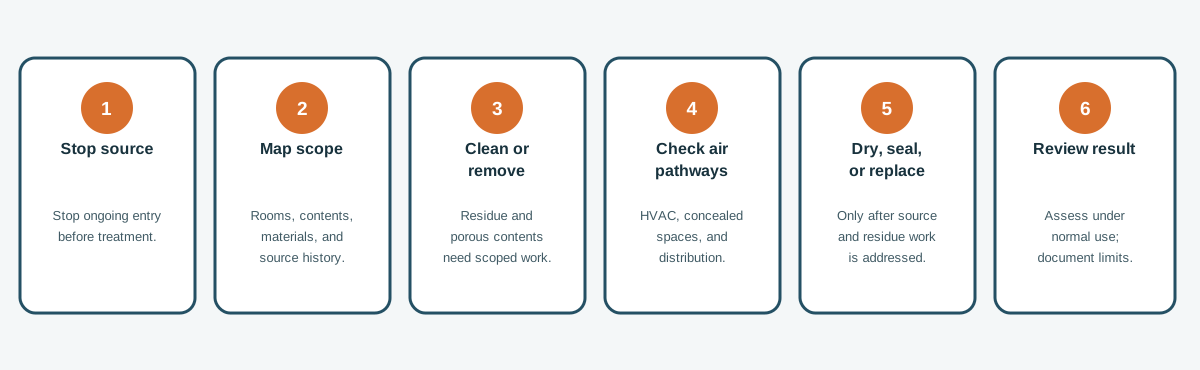
Use a staged check: source stopped, contaminated contents addressed, hard surfaces cleaned, HVAC path evaluated, materials dried, and odor assessed under normal occupancy. Keep photographs, products used, removed materials, invoices, and any test report. If odor returns with heat or HVAC operation, reopen the source-pathway investigation rather than adding fragrance.
For renovation-related chemical odors, see formaldehyde and VOCs after renovation. For particles from cooking, wood smoke, or fuel-burning equipment, see combustion and particle pollution indoors.
Use a phased remediation scope
A practical scope can be divided into:
- source and safety assessment;
- contents removal or cleaning;
- hard-surface cleaning and residue control;
- HVAC and concealed-pathway evaluation;
- drying and compatible sealing where needed; and
- replacement, reconstruction, and final review.
The phases help the owner stop paying for a whole-home treatment when a localized source is sufficient, while preserving a path to expand if residue or odor remains. They also show which work is restoration, which is environmental cleaning, and which is an optional finish upgrade.
Compare contractor proposals
Ask each bidder to describe the rooms and materials included, source assumptions, cleaning method, products, protection, ventilation, waste, contents handling, HVAC scope, sealer, replacement criteria, and final inspection. Ask whether the quote includes moving furniture, removing carpet and padding, opening cavities, repainting, and restoring trim.
Be cautious with promises that a single fogging, ozone, hydroxyl, or fragrance treatment will solve every odor. Ask what the process does to occupied air, materials, electronics, plants, pets, and residual residue, and who determines when the space can be reoccupied. A treatment that makes odor temporarily less noticeable may not remove the source.
Keep a closeout record
Document the source removed or controlled, materials cleaned or discarded, HVAC work, products applied, rooms inspected, odor conditions, and any remaining limitations. If the odor is linked to a fire or insurance claim, keep the emergency and restoration records together. The next professional should be able to see which materials were cleaned and which were replaced rather than repeating an uncertain whole-home scope.
Compare contents, finishes, and the air pathway
A smoke-odor quote should distinguish belongings that can be evaluated or treated from materials that may need replacement. Clothing, upholstered furniture, carpeting, wall finishes, cabinetry, insulation, and mechanical pathways do not respond to the same cleaning method. The contractor should explain what is included, what is only deodorized, what will be discarded, and what remains uncertain.
| Project element | Cost question |
|---|---|
| Contents | Is cleaning, inventory, storage, and return included, or only removal from the work area? |
| Porous materials | What condition would lead to cleaning versus replacement, and who approves that change? |
| Hard surfaces | Which rooms, ceilings, cabinets, and concealed areas are part of the cleaning scope? |
| HVAC pathway | Are filters, accessible components, or duct evaluation included, and who performs that work? |
| Sealing and repainting | Is sealing a defined step after cleaning, or being used as a substitute for source removal? |
| Closeout | What rooms and materials are reviewed, and what does the final report not establish? |
The scope can change if the smoke source was localized, if soot is visible, if a fire affected cavities, or if the system moved odor to other rooms. Keep emergency restoration, environmental cleaning, ordinary reconstruction, and optional finish upgrades separate in the estimate.
If insurance or a sale is involved, preserve photographs and the work record and verify contract or claim requirements with the relevant professional. An invoice for deodorizing does not establish that every residue or concealed pathway was addressed.
Keep ordinary rebuilding separate from environmental work
A smoke event can require several contracts: emergency stabilization, contents handling, residue cleaning, HVAC evaluation, material removal, sealing, and finish reconstruction. Ask the restorer to mark which tasks are environmental cleaning and which are ordinary rebuilding. That helps the owner compare bids and understand whether a quoted total returns the home to its prior finish level.
If a wall cavity, insulation, or flooring is opened, the estimate should say who checks the newly exposed surfaces and what condition would trigger additional work. A contractor should identify assumptions about soot, odor, moisture, and access rather than guarantee an entire house based on a visual walk-through. Request a written change-order process for concealed damage and additional rooms.
Where a claim or repair program is involved, confirm how invoices, photographs, sampling, and replacement items should be documented before material is discarded. Claim terms and legal duties are not the same as the technical cleanup scope, so ask the relevant insurer or transaction professional about those questions separately.