
Once occupants are safe and emergency responders have cleared the home, repeated CO readings still need a source investigation. The goal is not merely to replace an alarm or obtain a lower number on a consumer monitor. A qualified professional must connect the reading to combustion equipment, venting, pressure, occupancy, weather, or another source and establish why the home can return to normal use.
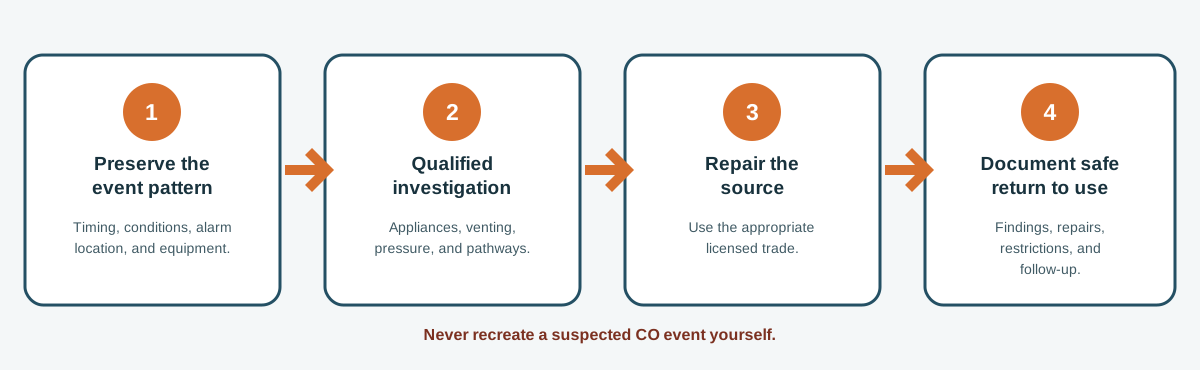
Safety comes before diagnosis
If a CO alarm is sounding, leave immediately and follow the emergency response in when a carbon monoxide alarm sounds. Do not create a test event by running a furnace, fireplace, vehicle, generator, or appliance while people are inside. Never interpret a low reading as automatically safe; concentration can change quickly and consumer devices have different purposes and limitations.
After the emergency, ask the fire department, fuel supplier, utility, building authority, or qualified technician what must remain off and who is authorized to release the equipment. If anyone has symptoms, obtain medical advice separately from the building investigation.
Preserve the event pattern
Write down the date, time, alarm type or display, weather, wind, doors and windows, exhaust fans, HVAC mode, fireplaces, cooking, laundry, attached-garage activity, and equipment operating. Note whether the event was at startup, during steady operation, after shutdown, or only under certain conditions. Keep alarm model, installation location, power source, age, test history, and any error code.
This record helps the professional reproduce the conditions without asking occupants to take unsafe risks. A one-time event and a reading that appears whenever a boiler starts may require different investigative attention. Do not remove the alarm before recording the location unless emergency personnel direct you to do so.
Check the likely source groups
A qualified investigator may examine:
- furnaces, boilers, water heaters, fireplaces, stoves, dryers, and other fuel-burning appliances;
- flues, chimneys, connectors, draft, blockages, corrosion, disconnections, and shared venting;
- combustion air and makeup air;
- exhaust fans, range hoods, dryers, and pressure differences that can affect draft;
- attached garages, idling vehicles, doors between garage and living space, and stored fuel equipment;
- portable generators, grills, patio heaters, and temporary heaters;
- fuel supply, installation, maintenance, and appliance conversion; and
- alarm placement, power, age, and interaction with the observed event.
The list is an investigation framework, not a homeowner testing procedure. The professional chooses instruments, operating conditions, and safety controls. A chimney inspection alone may not assess an appliance, and appliance service alone may not evaluate a building-pressure or garage pathway.
Why “no source found” is not a repair
CO events can be intermittent. Wind, temperature, chimney draft, appliance cycling, exhaust fans, closed interior doors, and vehicle activity can change the pathway. A quiet house at the time of a visit does not prove that an earlier event was false. The report should state what conditions were observed, what was not tested, and what remains uncertain.
Ask whether related systems were checked and whether the diagnosis addresses the reading location. A source can be in one room and travel through a pressure or ventilation pathway to another. Moving the alarm without understanding the pathway can hide a problem rather than fix it.
Repair and retesting
The remedy may be appliance repair or replacement, vent or chimney repair, correction of combustion air, garage separation, removal of an unsafe temporary source, or a combination. Correct the underlying defect before returning equipment to service. Do not accept “the alarm is old” as the complete explanation if there is evidence of combustion or venting trouble.
Ask for written closeout: source or suspected source, repairs made, equipment left out of service, tests performed, conditions of testing, retest result, and any monitoring or maintenance recommendation. If no source is identified, the closeout should say so and specify the next safe diagnostic step rather than declaring the building problem solved.
Choose the right professional
Depending on the finding, the job may involve a licensed HVAC or fuel-burning appliance technician, chimney professional, gas or utility representative, electrician, building-science professional, or fire-safety authority. Confirm local licensing and the scope of the person’s inspection. An indoor-air-quality consultant can help with pattern interpretation but may not be licensed to repair a gas appliance or alter a flue.
Keep emergency records, service invoices, alarm records, and the investigation report together. If the home is sold or rented, communicate material restrictions and repairs honestly and follow local disclosure rules. Preventive inspection and current CO alarms reduce risk but do not substitute for investigating a past alarm.
A useful diagnostic report
The report should say what was inspected, under which safe operating conditions, which equipment was unavailable, what instruments or observations were used, what defects were found, what repairs were made, and what remained uncertain. It should distinguish a source that was confirmed from a source that is only suspected.
Ask whether the investigation covered the appliance, venting, building pressure, garage pathway, and alarm location relevant to the event. A “no issue found” conclusion without the tested equipment, conditions, and limitations is hard to rely on. If weather or intermittent cycling prevented a complete investigation, the report should say what follow-up is safe.
Common false endpoints
Replacing an alarm may correct an end-of-life chirp but cannot explain a confirmed CO event. Servicing one appliance may miss a blocked chimney, shared vent, garage pathway, or second fuel-burning appliance. Opening windows may lower a measurement without correcting the source. Moving an alarm may change what it detects without changing the exposure.
Likewise, a single zero reading after the equipment is off does not prove that the earlier event did not occur. Preserve the event history and have the professional compare it with the building’s operating conditions. The investigation should end with a repair, a documented reason for no repair, or a clear next step—not a lower number with no explanation.
Coordinate the trades
If a flue, appliance, electrical supply, gas line, chimney, garage separation, or ventilation system needs work, confirm which licensed trade owns each task. Ask who verifies the completed repair and who releases the system for use. Do not have a remodeling contractor close a chase or ceiling before the appliance or venting professional has completed the required inspection.
Keep the final records with the home. Note equipment model and service date, replacement parts, alarm locations, restrictions, and the next maintenance interval. If the building changes—new exhaust fan, sealed windows, finished basement, replacement appliance, or altered garage door—revisit combustion safety rather than assuming the old investigation remains current.
Plan for an intermittent source
Some combustion or venting conditions occur only with certain appliances, weather, exhaust fans, garage use, or building pressure. A safe professional investigation may therefore require more than a quick reading after equipment has been turned off. Tell the provider what was running, what the alarm or monitor displayed, where people were, and whether the event repeated. Do not recreate a suspected unsafe condition yourself.
Ask the professional to state what conditions were tested and what could not be reproduced. If a source is intermittent, a report should distinguish a confirmed defect from a remaining hypothesis and name a safe follow-up. The next step may involve a specific appliance or venting trade, utility, fire-safety authority, or building professional.
Keep the repair scope and release decision together
A quote may include diagnostic time, appliance service, vent or chimney work, electrical repair, garage-separation changes, temporary equipment shutdown, and follow-up measurement. Ask which party owns each item and who verifies completed work. A low fee for one service call is not comparable with an investigation that includes repair confirmation and a written closeout.
If the professional cannot identify a source, request a record that explains the tested conditions, remaining limits, and the next safe route. Do not substitute a second alarm or a lower reading after opening windows for a documented repair decision. The home can return to normal use only under the responding authority’s and qualified professional’s direction for the event.
Close the investigation with an operating record
Once repairs are complete, ask the professional to document which equipment can return to service, what restrictions remain, and what maintenance or follow-up is needed. The record should identify the equipment and venting inspected, the work performed, conditions under which checks were made, and any parts or pathways that were not evaluated.
If a utility company, appliance technician, chimney professional, or fire authority was involved, keep each report and invoice together. One trade may repair an appliance while another evaluates the venting or building pressure. The homeowner should not have to infer that the whole source question is closed because one service call ended.
If the same alarm pattern occurs again, treat the new event as a safety issue and follow the emergency response guidance. Do not use an earlier repair report to dismiss a new alarm or attempt to reproduce the event. A clear maintenance record helps a qualified professional decide whether the recurrence reflects the original source, a new condition, or an incomplete earlier scope.