
Vermiculite insulation, especially loose-fill insulation in an attic or wall cavity, calls for caution because some vermiculite may contain asbestos. Appearance cannot confirm whether a particular installation is contaminated. At the same time, an attic full of suspect loose-fill should not be treated as an ordinary insulation-removal project.
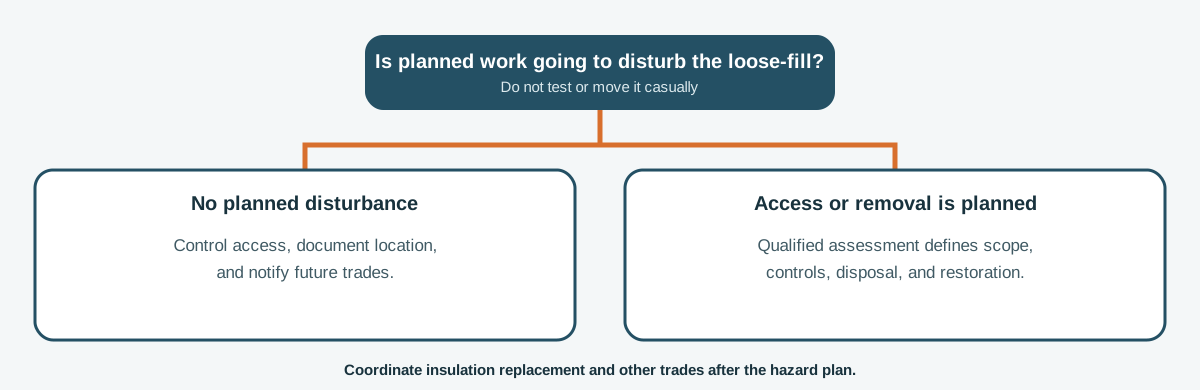
Do not disturb it casually
Avoid walking through, raking, vacuuming, bagging, moving, or sampling loose-fill vermiculite yourself. Do not use the attic for storage if doing so would disturb the insulation. Keep contractors from starting wiring, air sealing, insulation replacement, or roof work in the area until the material and the planned disturbance have been assessed.
Do not sweep or use ordinary household equipment to clean any visible debris. If material has been disturbed, limit access and tell the renovation contractor exactly what happened. A professional can decide whether the condition requires further assessment or controls.
EPA’s precautionary approach is to avoid disturbing vermiculite and use qualified professionals when access, renovation, or removal is contemplated. An intact installation does not automatically mean the entire home requires removal, and a visual guess does not establish that it is asbestos-free.
When planned work creates a decision
The decision becomes more urgent when you plan to:
- replace or add attic insulation;
- install wiring, ductwork, lighting, or a ventilation system;
- air-seal the ceiling or convert the attic;
- repair a roof in a way that requires attic access; or
- open a wall or ceiling that may connect to the loose-fill.
Ask a qualified local professional to evaluate the material, the planned disturbance, occupant access, and the requirements where the home is located. The scope should include the areas the workers will enter and any concealed connection the project could expose. A report about one attic does not automatically cover another building or a later renovation.
Test, manage, or remove?
Testing is a professional decision because sampling can disturb the material and a sample may not represent every layer, room, or installation date. Ask what the proposed sample can establish and what remains uncertain. If the project can be redesigned to avoid disturbance, a qualified professional may recommend documenting and managing the material in place instead.
Leaving the insulation in place can be appropriate when it is stable, isolated, and unlikely to be disturbed. Document its location and tell future trades before they enter. Removal may be appropriate when the project will otherwise disturb it, when access cannot be coordinated around it, or when a qualified professional recommends a controlled abatement.
Do not interpret “leave in place” as permission to install new services through it. Future access, roof leaks, pests, air sealing, and insulation performance can all create a new disturbance question. The management record should describe how those future decisions will be made.
What removal and replacement can include
If removal is selected, cost can include professional assessment, containment, worker protection, specialized labor, waste packaging and transport, disposal, monitoring or clearance where required, attic access, replacement insulation, air sealing, and coordination with electrical, HVAC, or roofing work. These are separate from ordinary insulation material and installation costs.
Ask whether the quote covers only loose-fill removal or also debris in wall cavities, damaged ceiling finishes, recessed-light coordination, air leakage repairs, pest contamination, and replacement insulation. Ask what happens if the insulation depth varies or concealed material is discovered. US market observations do not establish Canadian pricing, and local disposal rules can materially change the quote.
The cheapest project may be a carefully documented management plan when the renovation can avoid the insulation. The cheapest bid for removal may not be the lowest complete cost if it excludes containment, disposal, or restoring the attic.
Prepare the contractor handoff
Keep the assessment, photographs, material description, areas not assessed, sample identifiers, and any abatement or replacement records. Tell insulation, roofing, electrical, HVAC, and remodeling contractors before they enter the space. Put the boundary into the work order and update it if the project changes.
If the next project has a different dominant purpose—such as envelope performance or roof repair—the environmental hazard still needs to be resolved before that work disturbs the material. Use asbestos testing before renovation for assessment questions and asbestos abatement cost for a complete scope.
What to ask before sampling
Ask the professional how the material will be approached, what the samples can establish, and whether the result will change the renovation plan. A report should identify the areas seen, areas inaccessible, material description, sample locations, laboratory, result, and recommendation. It should not imply that a sample from one bag or one corner proves the condition of all loose-fill in every cavity.
If the material is left in place, ask how the attic or cavity will be kept out of ordinary traffic, how future service access will be handled, and who will be told before work. If the material is removed, ask for the containment boundary, worker and occupant protections, disposal route, replacement insulation, air sealing, and final documentation. Ask what happens if the insulation contains debris, varies across the attic, or extends into a wall.
If the material was already disturbed
Do not try to restore the area with a household vacuum or by redistributing the insulation. Keep people out of the affected area and tell the contractor or qualified professional what activity occurred and when. The assessment should account for material that may have been tracked or moved, not just the original pile.
If the attic has a furnace, recessed lights, electrical equipment, ducts, or roof leaks, include those interfaces in the plan. The abatement scope and the insulation replacement scope should be coordinated, but they are not identical. Closing the attic without documenting the hazard can make the next roof or electrical project more expensive and less safe.
Use an allowance that reflects uncertainty
An estimate should state the approximate volume or area, access assumptions, whether wall cavities are included, replacement insulation type, and the unit or decision rule for additional material. Include assessment, containment, disposal, air sealing, electrical or roofing coordination, and restoration as separate lines. A low “attic insulation removal” price may omit the hazardous-material controls that make the project possible.
Coordinate attic access with the rest of the house
An attic is connected to the occupied home through ceiling penetrations, hatches, recessed lights, ducts, wiring, and air leakage. Ask how the work plan protects the ceiling below and whether HVAC equipment or return pathways could be affected. A contractor should also consider roof leaks, pests, electrical hazards, and heat sources before deciding where workers can move.
If new insulation will be installed, clarify whether the existing material must be removed for performance, whether air sealing will be done before replacement, and how the new work will avoid covering electrical equipment or blocking ventilation. These ordinary building decisions must be sequenced around the asbestos question; one contractor’s insulation recommendation does not authorize disturbing suspect material.
Compare leaving the insulation and removing it as projects
Leaving insulation in place avoids immediate disturbance, but it does not eliminate future planning. The owner may need to control attic access, tell service contractors about the material, preserve the record, and plan future roof, wiring, ventilation, or insulation work around it. Removal can simplify later access, but it adds controlled work, disposal, replacement insulation, and possible air-sealing or repair.
The right comparison depends on whether the attic will remain unused, whether planned work requires entry or removal, the condition of the material, and which other building improvements are already scheduled. Ask the assessor to map the relevant areas and identify what remains unknown, such as insulation hidden in wall cavities or behind equipment. Do not treat one sampled location as a complete inventory.
When removal is being considered, coordinate the scope with roofing, electrical, ventilation, and insulation work. A single mobilization may reduce repeated setup, but combining trades does not authorize any trade to disturb suspect material without the required plan. Confirm which contractor owns containment, disposal, replacement insulation, air sealing, and the handoff to finish work.
A written allowance should state whether the estimate covers the attic floor only, connected cavities, access hatch, debris, replacement material, and any required follow-up. This gives the owner a useful comparison without pretending that a per-square-foot price can capture every house.
Compare the attic plan with the next building project
A decision to leave vermiculite in place should be checked against the next likely attic or roof project. Roof replacement, electrical upgrades, ventilation, pest work, air sealing, and new insulation can require access that changes the original assumptions. Ask which trade can work without disturbing the material and which task would require a qualified abatement plan.
For either management in place or removal, request a sequence showing what happens before, during, and after the insulation work. The estimate may include assessment, access setup, containment, removal, disposal, air sealing, electrical coordination, replacement insulation, and final documentation. A quote that covers only the visible pile may not include connected cavities or the restoration needed to recover the attic’s intended performance.
If new insulation is proposed, clarify whether it will be installed only after the hazard work and any roof or moisture repair are complete. The energy or ventilation benefit should be evaluated as a separate building decision; it does not determine whether suspect material may be disturbed.