
Professional mold remediation is intended to control the source, remove or clean affected materials, limit spread, dry the building, and leave a documented scope for verification and reconstruction. It is more than applying a product to a visible stain. The exact method depends on the building, material, extent, occupants, moisture history, and local practice.
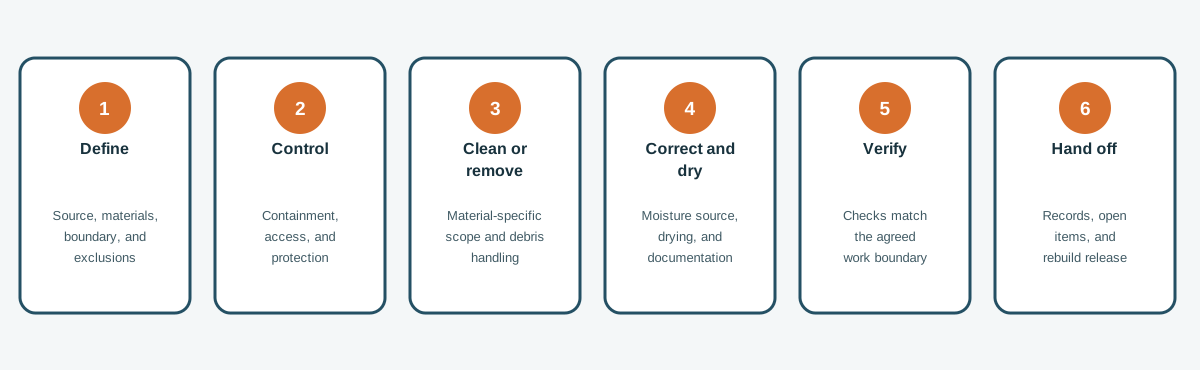
Define the problem before the work
A sound proposal begins with an assessment of the building condition. It should identify the likely moisture source, affected and potentially affected areas, material types, hidden-extent uncertainty, occupancy constraints, and work that remains outside the remediation contract.
The assessment may include history, visual inspection, moisture observations, selective investigation, and sampling only when sampling will answer a defined question. Routine mold sampling is often unnecessary when visible growth already establishes the decision to correct moisture and clean or remove affected materials. A laboratory result does not replace a building scope.
Ask for a drawing, room list, photographs, or written boundary. “Treat the mold” is too vague to compare. The scope should say whether the contractor is addressing a leak, condensation, crawl-space humidity, roof water, plumbing failure, or another source, and whether another trade must complete that correction first.
Containment is a project-control decision
Containment limits the movement of dust and potentially contaminated material while work occurs. The design depends on the affected area, building layout, work method, air movement, pressure relationships, materials, and occupants. It may involve isolating a room, controlling entry, protecting adjacent spaces, and managing air movement.
EPA’s technical mold course describes limited and full containment examples and emphasizes professional judgment. It uses 10 to 100 square feet as a general limited-containment range and more than 100 square feet or likely spread as a general full-containment example. Those figures are not a universal residential code, clearance rule, or substitute for a project assessment. A small area can still need greater control if growth is intense, the material is easily disturbed, or the building would spread dust into occupied space.
Homeowners do not need a worker-level containment manual to evaluate a proposal. They do need to know where the boundary is, how household access is controlled, what equipment or pressure strategy is proposed where relevant, and how the contractor prevents tracking debris into the rest of the home.
Remove versus clean
The material determines much of the scope. Some hard, non-porous surfaces may be cleaned when the underlying condition is corrected. Porous materials may need removal when growth has penetrated them, when they cannot be reliably cleaned, or when their condition and moisture history make reuse unreasonable. The decision is not based on a universal product or a dramatic label.
Ask the contractor to list each major material category:
| Material or condition | Scope question |
|---|---|
| Drywall, insulation, carpet, or other porous material | Is it being removed, and how is the boundary established? |
| Framing or other structural material | What cleaning, drying, and inspection are included? |
| Hard non-porous finish | What cleaning method is appropriate and how is residue removed? |
| Cabinets, contents, or furnishings | Are they cleaned, moved, protected, or replaced? |
| HVAC components | Is there evidence of contamination, and who is qualified to assess the system? |
Avoid a proposal that promises to “kill” or “seal” mold without explaining removal or cleaning, source correction, drying, and verification. Remediation is not the same as sterilizing every surface or guaranteeing that spores no longer exist anywhere in a building.
Dust and debris control
Removal and cleaning can generate dust and debris. The contractor should explain how the work area is isolated, how materials leave the area, how adjacent surfaces are protected, and how final cleaning is performed. Ask whether debris disposal, equipment, temporary barriers, and teardown are included.
Do not turn a homeowner article into worker instructions for respirators, chemical handling, or specialized cleanup. Those controls depend on the material and project and belong in the qualified contractor’s work plan. The homeowner’s decision is whether the proposal addresses them at a meaningful scope level and complies with applicable requirements.
Dry the building and correct the source
Cleaning without moisture correction invites recurrence. The source may be a leak, seepage, condensation, high crawl-space humidity, inadequate exhaust, air leakage, or another building-system problem. Drying equipment and monitoring may be part of remediation, but the roof, plumbing, foundation, enclosure, bathroom, or HVAC repair may be separate.
The proposal should identify the sequence: source correction, removal or cleaning, drying, inspection, verification, and reconstruction. If the contractor plans to close a wall or replace a floor before the source is corrected and the assembly is dry, ask why. A finish can hide the condition without solving it.
Contents and occupancy
Contents can complicate the project. Items may need to be moved, protected, cleaned, stored, or replaced. The contractor should state who handles contents, whether cleaning is included, and how the household will access the building during work.
A homeowner may need to plan for temporary relocation, work-hour limits, utility shutdowns, noise, equipment, or access restrictions. Those are practical cost and schedule issues. They are not a promise about health outcomes; occupants with health concerns should seek appropriate medical advice.
Verification and the rebuild handoff
Verification asks whether the defined work is complete. Useful components can include the original scope, source correction, visual condition, moisture or dryness observations, removed materials, cleaning documentation, containment teardown, and targeted sampling when it answers a clear question. There is no universal residential airborne-mold clearance number.
The rebuild handoff should state what can be closed or reconstructed, what remains unresolved, and which ordinary finish work is excluded. Drywall, flooring, insulation, cabinets, paint, trim, roof repair, plumbing, and ventilation work may belong to other contractors or categories. Keep those costs visible rather than treating them as part of “remediation” by default.
Proposal red flags
Ask for clarification when a proposal:
- gives a price without defining the affected area or material;
- promises a universal clearance number or health result;
- relies on fogging, ozone, coating, or a product without source correction;
- excludes moisture repair but says the problem is solved;
- does not describe containment, dust control, access, or final cleanup;
- treats every material as cleanable or every material as requiring removal;
- offers reconstruction without documenting whether the assembly is dry;
- cannot identify who verifies completion or what verification means.
These questions do not prescribe one method. They make the contractor’s assumptions visible so the homeowner can compare proposals and decide whether the scope matches the building problem.
Compare quotes by stage and end condition
Ask each provider to mark the same project stages as included, excluded, or dependent on another trade:
| Stage | Question for the proposal |
|---|---|
| Source correction | Is the moisture or other source being corrected, or is that a separate contract? |
| Affected-material work | Which materials are cleaned, removed, protected, or left for another decision? |
| Cleaning and debris handling | Are final cleaning, equipment removal, disposal, and access restoration included? |
| Drying | What building areas or assemblies are expected to be dry before closure, and who documents that condition? |
| Verification | What defined work area and completion question will be checked, and by whom? |
| Reconstruction handoff | What can the next trade close or rebuild, and what remains unresolved or excluded? |
The desired end condition should be written at the level the project can support: the source is addressed or assigned, affected materials have the stated disposition, the defined area has reached the agreed completion condition, and the next trade receives the records and exclusions. This is more useful than comparing two prices that use “remediation complete” to mean different things. It is not a universal mold-clearance standard.
Cost and next step
Price follows extent, access, material, containment, equipment, contents, drying, disposal, source correction, verification, and reconstruction. Mold remediation cost breaks those layers down. If the source is not established, use hidden mold investigation before accepting an all-in scope. If the work is complete, use post-remediation verification to define the release decision.
Plan the handoff into reconstruction
The transition from remediation to ordinary repair is a separate decision. Before drywall, flooring, insulation, or cabinets cover the work area, ask for the record that shows which materials were removed, what remains, how the moisture source was addressed, and which areas met the agreed drying or completion condition.
A reconstruction quote should identify any unresolved moisture, building, or verification work rather than hide it behind a general finish allowance. If the source repair belongs to a plumber, roofer, or enclosure contractor, agree who will confirm that repair before the remediator or general contractor closes the assembly. A finished wall can conceal an unfinished source correction and make the next investigation more expensive.
Keep the work boundary visible in photos or a simple marked plan. The next trade needs to know where containment ended, which materials remain, and whether any area is still excluded. The documentation should describe the project that was done, not imply that the whole building has been certified free of mold.
This is also the point to reconcile change orders. Compare the final work with the original assessment and note any areas added, excluded, or deferred. That record makes future repairs easier to price and helps explain whether later growth reflects an unresolved condition, a new moisture event, or a different part of the building.