
Finding a suspect material after demolition has started changes the project immediately. The visible material may be asbestos, another hazardous material, or an ordinary product that still needs a qualified decision. Do not let schedule pressure turn an unknown into a demolition assumption.
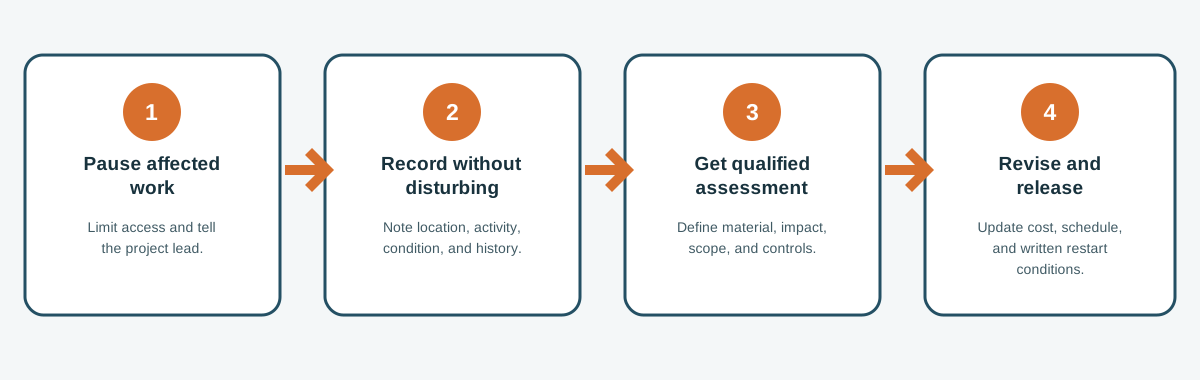
Pause the affected work
Stop the activity that could disturb the suspect material and keep workers, occupants, and visitors out of the immediate area as appropriate. Do not cut, scrape, sand, sweep, vacuum with ordinary equipment, bag, or carry the material through the home. Do not ask a general laborer to “take a sample” while continuing demolition.
Tell the general contractor, owner, designer, and anyone responsible for the building. Record what was exposed, where it was found, what work was occurring, whether material was damaged, and who may have entered the area. This record is useful for the professional assessment and for deciding what must be cleaned or rescheduled; it is not a substitute for one.
If someone may have been exposed or has symptoms, seek appropriate medical or public-health advice. An environmental article cannot diagnose an exposure or tell an individual whether medical testing is needed.
Preserve information without disturbing the material
Photograph the area from a safe position if it can be done without entering or touching the suspect material. Note the room, assembly, layer, installation history, demolition tool, approximate extent, and any dust or debris already moved. Keep the original drawings, renovation plans, product information, and previous reports available.
Do not generalize from a nearby negative sample. Different layers, rooms, renovation dates, adhesives, mastics, insulation, and finishes can have different histories. The professional needs to decide whether a sample is representative and whether inaccessible or concealed materials remain in the revised disturbance area.
Bring in the right assessment
Use a qualified asbestos professional who can assess the newly exposed material and the project boundary. Ask for a written answer covering:
- material identification and the areas included;
- sample locations, laboratory results, and limitations;
- condition and whether other layers are implicated;
- the area potentially affected by the disturbance;
- the controls or cleanup needed before work resumes;
- whether the design or demolition scope must change; and
- the local worker, notification, disposal, monitoring, and closeout requirements.
EPA distinguishes intact, undisturbed material from material that is damaged or disturbed and recommends trained, accredited professionals for assessment and major repair or removal. The exact qualifications and legal duties depend on jurisdiction and project type.
Rebuild the work plan
The revised plan may involve management in place, a redesigned detail that avoids the material, encapsulation or enclosure, controlled removal, or a combination. It may also require cleaning or decontamination of the affected work area, protection of retained finishes, a new sequence, restricted occupancy, and verification before ordinary trades return.
Do not assume that a positive result means whole-house removal. The boundary should be tied to the material and the work that will disturb it. Conversely, do not assume a small visible patch means a small scope: the same assembly may continue behind walls, under flooring, or through connected rooms.
Update the construction documents and change order so they state who supplies assessment, containment, labor, waste handling, monitoring or clearance, reconstruction, and final records. Set a decision path for concealed material before the crew reaches the next layer.
Expect schedule and budget changes
The pause itself may be short, but assessment, laboratory turnaround, professional planning, notification, abatement, disposal, monitoring, and reconstruction can extend the schedule. Keep those layers visible. A change order that lists only “asbestos” does not let the owner see whether the price covers the material, the dust already created, the finish repair, or all of them.
Ask for the cost and time effect of each option. Leaving a material in place may require redesign and documentation; removal may require containment and disposal; a changed finish may alter the appearance or performance of the room. Local rules can change both price and sequence.
Resume only on a defined release
The general contractor should not restart affected work because the material “looks harmless.” Resume when the qualified professional and the responsible authority or project documents establish the required controls, cleanup, and release conditions. Keep the report, laboratory result, revised plan, waste records, monitoring or clearance documents, and photographs in the project file.
Use asbestos testing before renovation to prevent the same problem on the next phase, asbestos abatement cost to compare the revised scope, and encapsulation versus removal to understand the management choice. If the material is vermiculite insulation, see vermiculite insulation and asbestos.
If dust or debris may have moved
Tell the professional whether demolition debris was carried through the home, whether ordinary cleanup occurred, what tools were used, and whether HVAC equipment was running. Do not assume that a later wipe or a visual check can reconstruct what happened. The professional should decide whether the affected area, pathways, contents, or air-distribution system need evaluation.
Avoid making a medical conclusion from the construction record. If a worker or occupant is worried about exposure, direct them to occupational-health, public-health, or medical advice appropriate to the circumstance. Keep the building investigation focused on controlling the work area and determining the next safe project step.
Protect the contract and the schedule
Read the renovation contract’s hazardous-material and concealed-condition clauses. Notify the insurer, lender, property manager, or authority when the contract or local rule requires it. Ask the general contractor to issue a written stop-work notice for the affected area, a revised sequence, and a cost breakdown.
The owner should not have to choose between an unexplained delay and an uncontrolled restart. A good change order states the assessment result, revised boundary, containment and disposal, monitoring or clearance, reconstruction, exclusions, responsible party, and release condition. If the material is not confirmed, price the investigation and the decision rather than assuming the most expensive outcome.
Use the pause to define the revised project
After the affected work is stopped, the owner and general contractor need a revised boundary that explains what continues, what waits, and which trade is responsible for each next step. A short written record should identify the material’s location, what work was underway, the areas that may have been affected, and who will arrange the qualified assessment. This is more useful than a vague change order that simply adds “hazard remediation.”
| Project question | Why it affects the revised plan |
|---|---|
| Is the material confirmed or still suspect? | The owner may need assessment before pricing abatement or resuming adjacent work. |
| Did the work disturb or move material? | The assessment boundary may extend beyond the material that was first visible. |
| Which trades can continue elsewhere? | Unaffected work may proceed only if the contractor can keep it separate from the unresolved area. |
| What must happen before restart? | The project needs a written release condition and a person authorized to approve it. |
Ask the general contractor to separate investigative cost, controls for any affected area, regulated work, debris handling, monitoring or closeout, and finish reconstruction. Include schedule impacts such as laboratory time, a specialist’s availability, temporary protection, and remobilization. Those costs depend on the location and governing rules; a contingency should not be presented as an official fee.
When the project resumes, keep the assessment, revised drawings, work plan, disposal information, and release records together. Tell later trades what remains in place or outside the tested area. A clean finish after reconstruction is not a substitute for documenting the hazard work that took place underneath it.
Hand the revised scope to every affected trade
Once the qualified assessment and revised work plan are ready, hold a short project handoff with the general contractor and any trades affected by the pause. Confirm the exact area under control, the allowed access route, work that can continue elsewhere, and the documents required before the next crew enters. A verbal update is easy to lose when a project has several subcontractors.
The revised schedule should show the sequence for assessment, any required notice or plan review, abatement, cleanup or verification, and finish reconstruction. Identify who receives each report and who has authority to release the area. If a material remains in place, mark it so a later electrician, plumber, or cabinet installer does not interpret a new finish as proof that the assembly is ordinary.
At closeout, compare the final invoice and records with the change order. The owner should be able to tell what was assessed, what was removed, what remains, how waste was handled, what verification occurred, and which areas were excluded. Those details help future work start from the actual history rather than repeat a costly discovery.