
Confirmed asbestos does not create one automatic scope. An intact material that will remain undisturbed may be managed differently from damaged material, material in a high-contact location, or material that blocks a planned renovation. The decision should account for condition, disturbance risk, access, moisture, future work, documentation, lifecycle maintenance, and the rules that apply locally.
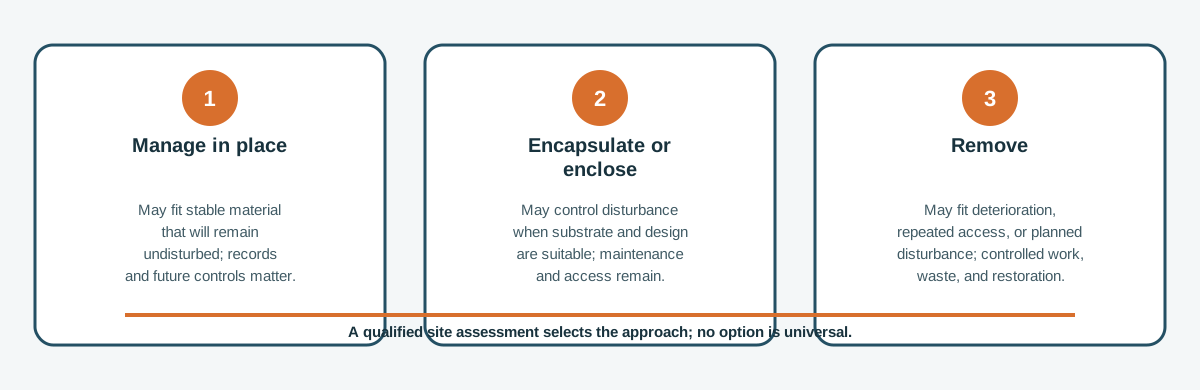
First ask whether the material must be disturbed
The least disruptive option may be to leave a stable material in place and manage it. That can be reasonable when it is in good condition, unlikely to be contacted, and documented for future owners and contractors. “Leave it” is an active control: the owner needs records, access rules, and a plan to tell anyone who may later open the area.
If the material is crumbling, water-damaged, exposed to repeated impact, or directly in the path of renovation, management in place may not be adequate. A qualified asbestos professional should assess the condition and recommend a method. Do not scrape, drill, sand, or test suspect material casually while trying to decide.
Encapsulation
Encapsulation applies a compatible coating or treatment intended to bind or seal the material. It can reduce the chance of fiber release where the substrate is suitable and the coating can be applied and maintained. It is not a universal paint-over solution.
Ask how the professional will address adhesion, movement, moisture, heat, surface preparation, future access, and inspection. Encapsulation may be unsuitable for loose, wet, heavily damaged, contaminated, or inaccessible material, or where the surface will soon be demolished. The work record should identify the product or system, location, condition before work, and how future trades must avoid damaging it.
Enclosure
An enclosure places a durable barrier around the material so it is less likely to be disturbed. Examples can include a new wall, ceiling, or other designed barrier, but the exact assembly and access details are project-specific. The barrier must remain maintainable and documented.
An enclosure can reduce immediate disturbance while preserving the underlying material. It does not make the asbestos disappear. Future plumbing, electrical, inspection, leak repair, or remodeling may still require an asbestos review before the barrier is opened. Moisture behind the enclosure or movement of the building can also create a maintenance problem.
Removal
Removal eliminates the material from the defined work area, usually under a controlled abatement plan. It may be favored when renovation would otherwise disturb it, when the material is deteriorating, when repeated access is unavoidable, or when a long-term management plan is impractical. It can also create the largest immediate cost because containment, labor, waste handling, monitoring, and reconstruction are part of the project.
Removal does not mean every similar-looking material in the home must be taken out. The scope should identify the material and boundary. It also does not authorize homeowner work: qualified professionals must determine the method, controls, worker protection, disposal, and closeout appropriate to the job.
Compare the options
| Decision factor | Manage in place | Encapsulate or enclose | Remove |
|---|---|---|---|
| Immediate disruption | Usually lowest | Moderate, depending on access | Usually highest |
| Future work | Requires records and careful planning | Requires records and barrier/coating maintenance | Can simplify later access to the completed area |
| Damaged material | May be unsuitable | Depends on condition and system | Often considered when controls cannot restore stability |
| Moisture or movement | Must be monitored | Can defeat adhesion or barrier performance | May still require fixing the underlying cause |
| Cost pattern | Lower immediate cost, ongoing management | Project cost plus future maintenance | Higher setup, disposal, and restoration allowance |
The table is a decision frame, not a substitute for a site assessment. The safest choice depends on the material and the work, not the label on the method.
Questions for the professional
Ask the assessor or abatement contractor to explain why the selected method fits the material, its condition, the planned disturbance, and the future use of the room. Request the areas included and excluded, preparation and containment, access restrictions, waste route, monitoring or clearance, repair of the moisture or impact source, and the documents that will be handed back.
Consider an independent assessment before accepting a removal proposal. EPA recommends using trained and accredited professionals for assessment and major repair or removal, and recommends avoiding a conflict where the person deciding that removal is needed also profits from selling it. Local licensing and qualification rules still control the actual project.
Plan the handoff to future trades
Keep the report, photographs, sample results, drawings, product records, disposal records, and closeout documentation with the home records. Mark the location in a way that future contractors will see before opening a wall, ceiling, floor, or service chase. Tell buyers, property managers, and maintenance workers when relevant.
Use asbestos testing before renovation to define what is known, asbestos abatement cost to compare complete scopes, and vermiculite insulation and asbestos when loose-fill insulation is the decision. If suspect material is exposed after work begins, follow asbestos discovered during renovation.
Make the closeout record usable
Before accepting the project as complete, ask the qualified professional to state in writing:
- what material, component, and area were treated;
- what asbestos-containing material remains in place, including material behind an enclosure or beneath an encapsulating system;
- which areas are controlled, excluded, inaccessible, or still require a future assessment;
- who is responsible for any inspection, monitoring, or maintenance the selected control system requires;
- what a future contractor must do through qualified channels before disturbing the retained material; and
- which reports, photographs, drawings, product records, waste or disposal records, and other closeout documents were produced.
These questions make the handoff durable. They do not authorize a homeowner or future trade to open, test, repair, or remove the material without the qualified project assessment and applicable local requirements.
The assembly matters as much as the product
The same method can be appropriate in one assembly and unsuitable in another. Pipe insulation near heat and valves has different access and maintenance needs from a ceiling texture. Floor tile and adhesive can be covered by a new finish in one design but become a disturbance risk if a future plumbing repair requires opening the floor. Exterior cement products must also be considered alongside weather, fasteners, and future siding work.
Ask the professional to identify the substrate, the material’s condition, the source of any moisture or impact, and the work that may occur later. A coating or barrier that cannot be inspected, repaired, or maintained is not a durable management plan. The record should say what must happen before anyone penetrates it.
Compare the option across future projects
The lowest first invoice is not always the lowest long-term cost. A retained material can require records, protection from later disturbance, inspection or maintenance of an enclosure, and coordination with future trades. Removal can reduce the amount of material that future projects must manage, but it may require greater containment, disposal, demolition, and reconstruction now.
| Future condition | Question for the professional |
|---|---|
| The material will remain accessible and undisturbed | What routine records or condition checks are needed, and who owns them? |
| A later renovation may cross the same area | Will the proposed enclosure or encapsulation remain compatible with that work? |
| The assembly is likely to be opened repeatedly for service | Would removal during the current project avoid repeated setup and finish repair? |
| Water or impact may damage the retained material | What source repair and inspection access are part of the management plan? |
Ask the estimator to compare options over the period you expect to own the home, including future access and the cost of reopening finishes. Do not assume that a coating is permanent or that removal is automatically better. The professional’s report should state what remains, how it will be protected, and what event would require reassessment.
A useful lifecycle comparison also separates asbestos work from ordinary reconstruction. New flooring or drywall may be required under either approach, while disposal and verification differ. Ask for those lines separately so the economic difference between the choices is visible rather than hidden in one total.
Check the record before future disturbance
A management-in-place decision is financially useful only if later owners and trades can find the information. Preserve the assessment, selected control method, affected area, product or enclosure details, inspection responsibilities, and any disposal or closeout documents. Mark retained material on a floor plan or service record that future work will reach.
Before a new renovation, compare its boundary with the recorded material. If the work will cut, drill, heat, remove, or open a managed assembly, ask a qualified professional to reassess the method and local requirements. The old control may still be in good condition while the new project creates a separate disturbance decision.
This planning cost is small compared with discovering a concealed material after demolition begins. A professional should explain whether an existing enclosure can remain, needs repair, or must be removed as part of the new scope. The homeowner should not treat the old report as a standing authorization for work that was not included.