
Asbestos is a disturbance-sensitive renovation question. A material that is intact and left alone may present a different immediate project condition from material that is cut, sanded, drilled, scraped, removed, or damaged. Before work begins, the goal is to identify suspect materials in the planned disturbance area, understand the limitations of the assessment, and choose a qualified path for testing or management.
When testing belongs in the plan
Consider a professional asbestos assessment before work that could disturb older or undocumented:
- floor tile, sheet flooring, backing, or adhesive;
- ceiling tile, sprayed texture, or plaster layers;
- pipe, boiler, duct, or equipment insulation;
- roofing, siding, cement, or other exterior materials;
- insulation, including vermiculite in an attic or wall cavity;
- fireproofing, joint compounds, mastics, or other concealed layers.
This is not an exhaustive material list and not a claim that any one product contains asbestos. Home age, material history, renovation records, labels, and planned work are screening clues. Appearance alone cannot reliably confirm asbestos.
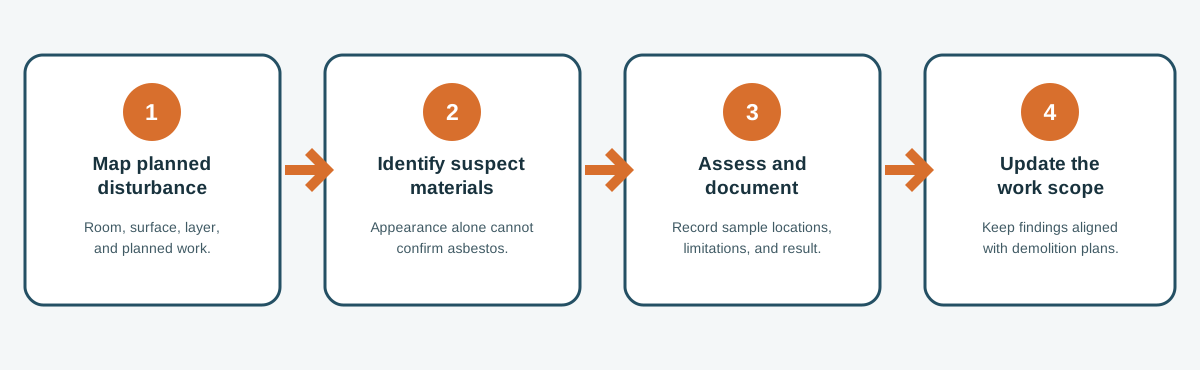
The scope should follow the planned disturbance, not necessarily every material in the home. A bathroom floor replacement, window project, attic work, whole-room demolition, and addition can expose different materials. If the scope later expands, the assessment may need to expand before that work proceeds.
Intact is not the same as safe to disturb
EPA explains that asbestos-containing material in good condition and not disturbed is less likely to release fibers, while damage or renovation can change the risk. That distinction does not authorize a homeowner to handle, scrape, or sample suspect material casually. It is a reason to preserve intact material, limit unnecessary access, and obtain qualified advice before work.
If a material is fraying, crumbling, water-damaged, or being impacted by construction, stop the affected activity and keep people away as appropriate. Do not dust, sweep, sand, drill, or use ordinary tools on suspect material. A professional should decide whether the next step is assessment, repair, enclosure, encapsulation, removal, or another control.
What a professional assessment should answer
Ask the inspector to explain:
- Which areas and materials were examined?
- Which materials were not accessible or not included?
- What visual history or construction information informed the scope?
- What samples were taken, from where, and why were they representative?
- Which laboratory analyzed the samples and what the result means?
- What condition, extent, and disturbance risk were observed?
- What work can proceed, what must wait, and what further evaluation is needed?
EPA recommends a complete visual examination and careful collection and laboratory analysis by a trained professional. A useful report identifies the material and location, describes limitations, states whether the result applies to similar-looking material elsewhere, and provides a written recommendation for the renovation decision.
Sampling and laboratory analysis
Only a qualified professional should decide how suspect material is sampled. Sampling can disturb the material, and one sample is not automatically representative of every layer, room, or product. Different installation dates or renovations can create different material histories even within the same room.
The laboratory report should be linked to the exact sample location and material description. Keep photographs, sample identifiers, the inspector’s report, and the laboratory result together. If the result is negative, ask what material and area that conclusion covers. It should not silently be generalized to a visually similar material that was not sampled.
If material is inaccessible or the project will expose concealed layers, record that limitation and decide whether the work plan must include a controlled assessment before opening the area. “No asbestos found” is meaningful only within the scope and method that produced it.
US and Canadian requirements
US federal, state, tribal, and local rules can overlap, and the EPA’s asbestos NESHAP applies to defined demolition and renovation contexts rather than automatically to every private-home project. The EPA’s large-scale residential demolition guidance explains that a thorough inspection is required for projects subject to that rule. It does not establish a universal private-residence rule or a Canadian requirement.
Health Canada advises precaution during renovation and qualified local assessment. Canadian worker-protection, notification, disposal, and qualification requirements vary by province and territory. The same practical project can have different legal or professional requirements depending on location, building type, authority, and contract.
Do not put a federal US rule in a generic “North American” checklist. Ask the local authority or qualified professional which requirements apply to the exact work.
Choosing the assessor
Look for training, accreditation, licensing, insurance, relevant residential experience, and a report that fits the project. In the United States, EPA recommends trained and accredited professionals for sampling and major repair or removal, even though federal requirements for detached single-family homes do not apply identically to every person or project. State and local rules can be stricter.
Independence can matter. EPA recommends that an asbestos professional assessing the need for repair or removal not be connected to the firm performing the work, so the assessment is not shaped by a cleanup sale. This is a conflict-of-interest safeguard, not a guarantee of quality; check credentials and references separately.
How results change the renovation
A positive result does not automatically mean whole-house removal. The decision may be to leave intact material in place, limit access, encapsulate, enclose, remove material in the disturbance zone, revise the design, or defer work. The choice depends on material condition, future disturbance, accessibility, project method, local requirements, and the qualified professional’s work plan.
If material is confirmed or remains uncertain, the general contractor should update the schedule, demolition scope, waste assumptions, and finish reconstruction. Do not let an assessment result sit outside the construction contract while the crew proceeds under an old assumption.
Budget for testing and the next decision
Assessment cost can include travel, visual inspection, sample collection, laboratory analysis, inaccessible-area planning, report depth, and follow-up. It is separate from abatement, disposal, air monitoring, demolition, and reconstruction unless the proposal says otherwise. Ask which items are included and what happens if additional samples or a wider work area are needed.
Use asbestos abatement cost for project economics, encapsulation versus removal for strategy, and asbestos discovered during renovation if suspect material appears after work has started. Keep the decision tied to the exact material and area assessed; do not use visual similarity or a neighbor’s report as a substitute.
If the planned work changes after testing, revisit the report. A new window opening, deeper floor removal, wall opening, or attic conversion can expose materials outside the original scope. Updating the assessment before demolition is usually easier to price than stopping after a crew has already uncovered an unknown.
Make the assessment fit the work boundary
A quote for testing should follow the materials and areas in the renovation plan. Ask the assessor to identify each suspect material, where it occurs, how much of it is visible, what cannot be accessed, and whether the report is intended to support a specific disturbance. If the contractor later adds a room, deeper demolition, or a different finish, revisit the boundary before that added work starts.
The report should let the next trade understand the result without guessing. It should identify the sample locations and laboratory, distinguish confirmed material from similar-looking untested material, and state what the findings do not cover. This is particularly important when a home has repeated finishes or materials installed during different renovations.
If results are positive, ask whether a management-in-place option remains compatible with the planned work or whether the disturbance makes a controlled abatement scope necessary. If results are negative, verify that the sampled area and material match the actual work. A result does not transfer to a visually similar layer that was never sampled.
Price the decision sequence separately: initial inspection and samples, any selective access, work planning, abatement and waste, verification if required, and finish repair. This avoids treating an assessment quote as though it were the full project cost and helps the owner decide whether to adjust the renovation design before the crew is mobilized.
Carry the result into the renovation contract
The testing report should become part of the construction scope, not sit in a separate folder. Ask the general contractor to identify which materials were assessed, which must remain undisturbed, and which work packages rely on that information. If a new surface or assembly is added after the report, confirm whether it is inside the original assessment.
A useful bid separates assessment, abatement, disposal, any required monitoring or closeout, and ordinary reconstruction. It should also state who pays for extra sampling if concealed material appears and whether the crew stops work until the revised scope is approved. This is particularly important when the project is priced as a fixed demolition package.
When an owner chooses a design that avoids suspect material, ask how that avoidance will be maintained during installation. A change that reduces disturbance may save work now but still require a record for future trades. The assessment is complete for a project only when the report, final drawings, and contractor’s priced boundary describe the same work.