
A wall-oven replacement is a built-in fit project as well as an appliance purchase. The total cost can include a single or double oven, delivery, lifting, removal, cutout verification, electrical work, trim or filler, cabinet modification, installation, testing, disposal, and restoration. A new model that looks similar may not fit the existing opening.
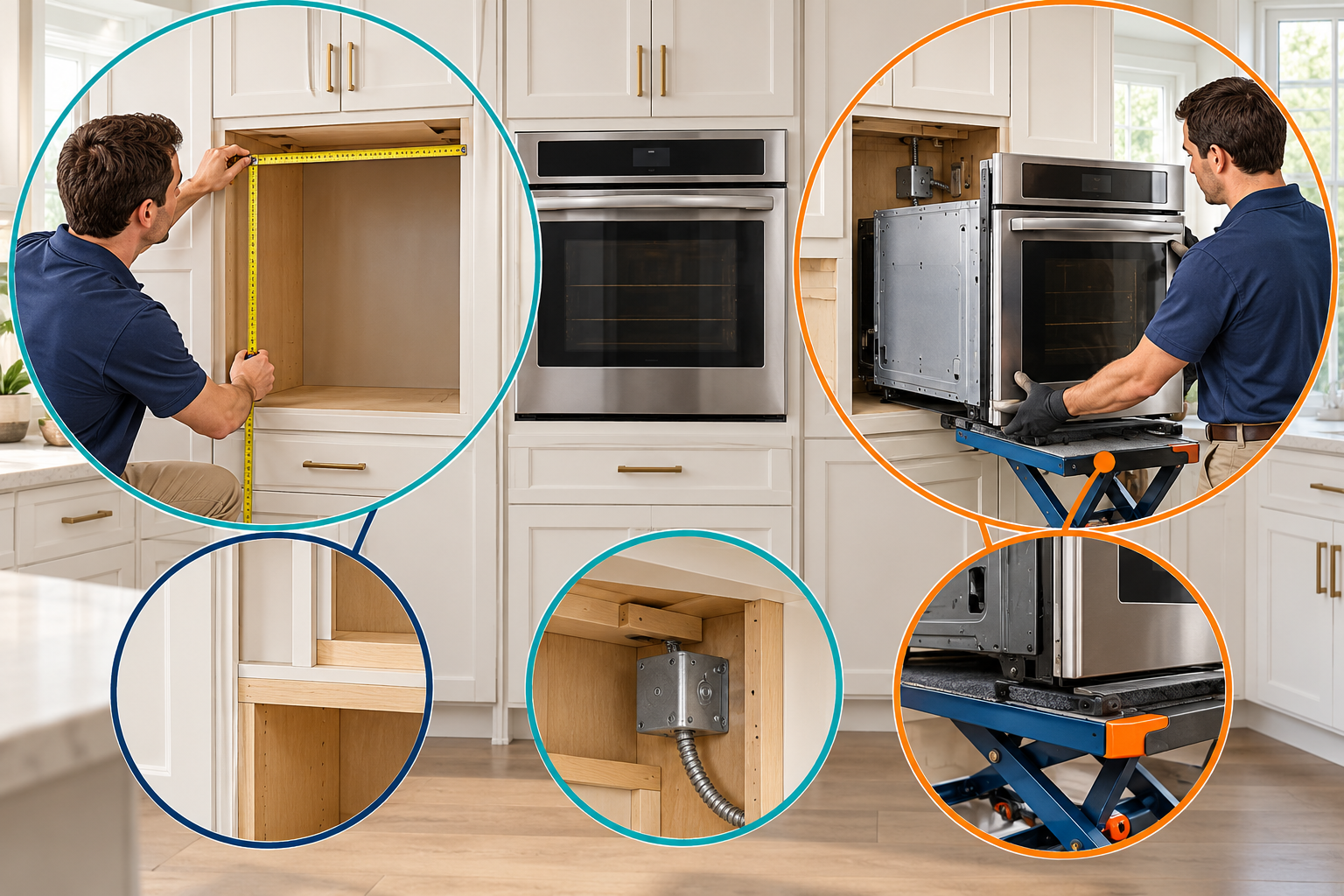
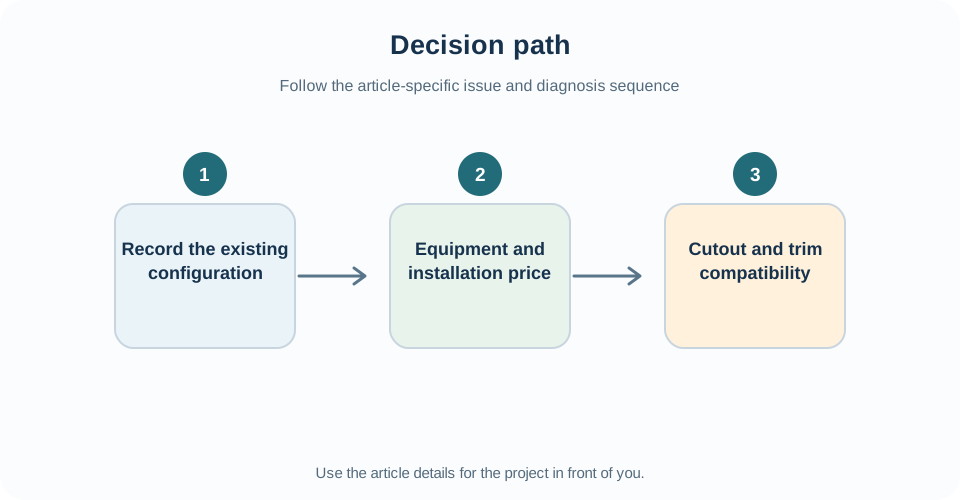
Record the existing configuration
Identify single, double, combination, convection, microwave combination, or specialty equipment. Record the model, cutout width, height, depth, trim, cabinet material, support, electrical connection, and adjacent appliance arrangement. Measure the finished opening at several points and confirm the condition of the surrounding cabinet.
Check whether the oven is above another oven, below a cooktop, or integrated into a tall cabinet. Removal and lifting can require two people or specialized equipment. Include floor and cabinet protection.
Equipment and installation price
Product price varies by oven count, capacity, controls, convection, steam, smart functions, finish, and brand. Installation labor varies with access and whether the model fits without modification. Retail packages may cover a basic replacement but exclude trim, cabinet work, electrical changes, haul-away, and difficult removal.
Ask for separate amounts and a written list of assumptions. A package that is inexpensive for a standard opening may not cover a combination appliance or a double oven with tight access.
Cutout and trim compatibility
The exact manufacturer’s installation instructions control cutout, support, clearances, ventilation, trim, and electrical requirements. Do not treat a nominal 30-inch or 27-inch class as proof of interchangeable dimensions. Check the model before removing the existing oven.
If the cutout is too small or too large, the project may require cabinet alteration, filler, trim, or a new face frame. Cabinet construction belongs to the kitchen-remodel scope, but it should be included in the total decision so the appliance quote is not understated.
Electrical connection
An existing connection may work only if it is compatible with the chosen model and local requirements. A new circuit, wiring correction, damaged connection, or service-capacity change is separate electrical work. Do not infer a universal amperage or circuit requirement from another oven.
Have a qualified electrician and the appliance installer verify the exact model. If the replacement changes configuration or adds a second appliance, assess the electrical consequence before ordering.
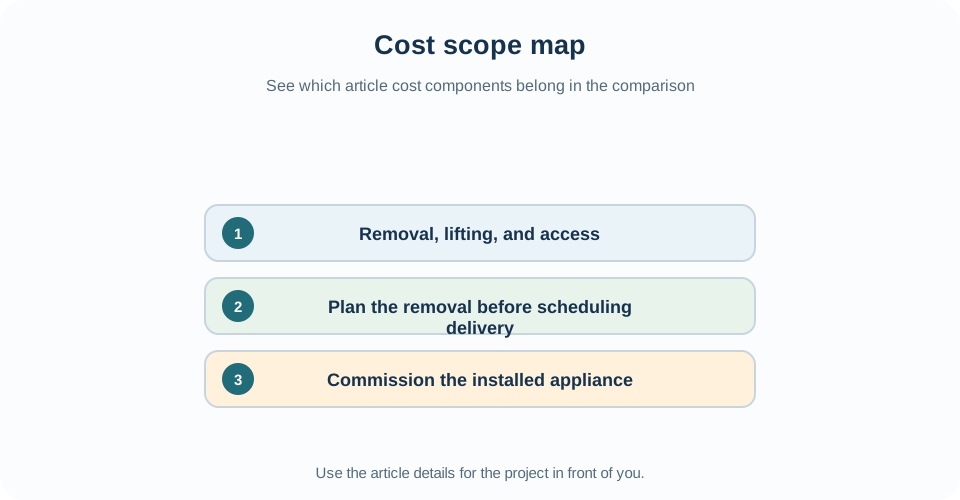
Removal, lifting, and access
Wall ovens are heavy and can be attached inside a cabinet. Removal may involve disconnecting the appliance, removing trim, protecting the floor, supporting the unit, and coordinating with a cabinet contractor. A difficult route or upper-level installation can change labor and scheduling.
Ask whether the quote includes the old appliance’s removal and disposal. If the cabinet or floor shows water, heat, or structural damage, resolve that before the new oven is installed. Appliance installers do not automatically own restoration.
Combination units and function tradeoffs
A combination wall oven/microwave can save space but may be harder to replace if the original model is discontinued. Replacing it with separate appliances may require a cabinet redesign and another electrical connection. Compare functional equivalence rather than unit price alone.
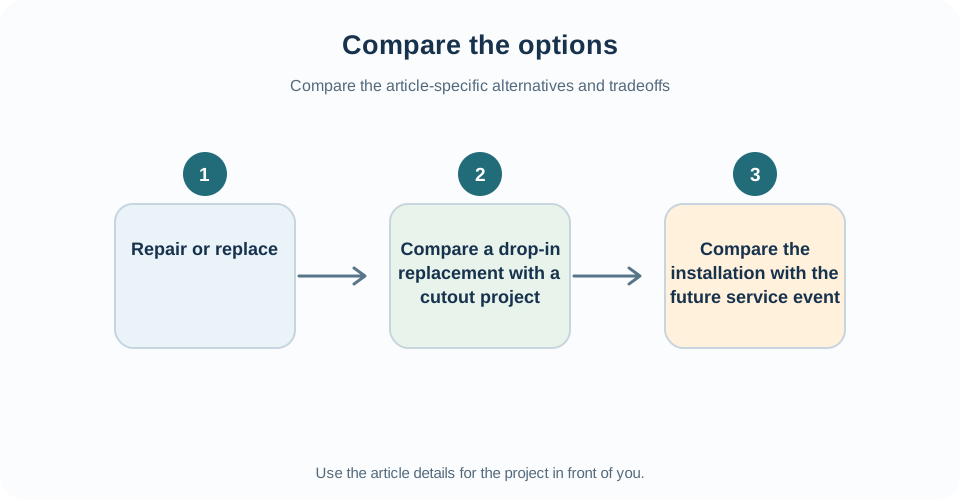
Repair or replace
Repair may make sense when the oven is otherwise sound, the part is available, and the opening is difficult to match. Replacement is stronger when controls or major assemblies are obsolete, failures repeat, the oven has a safety issue, or a compatible current model is available.
Compare diagnosis, repair, access, second visit, warranty, replacement, delivery, lifting, cutout work, electrical, trim, disposal, and disruption. Do not use a generic age or percentage rule.
U.S. and Canadian differences
Retail pricing, installation packages, taxes, parts networks, cabinetry labor, and electrical requirements vary by region. Canadian buyers should use current Canadian model and installer information. U.S. figures must not be converted into Canadian prices.
Compare a drop-in replacement with a cutout project
A practical drop-in case requires a verified opening, sound cabinet support, a compatible electrical connection, a clear delivery route, and a model whose trim and door swing work with the surrounding kitchen. The price can then be separated into equipment, delivery, lifting, installation, testing, removal, disposal, and taxes.
A cutout project starts when the new oven is too tall, short, deep, or differently configured; when a combination unit is replaced with separate equipment; or when trim and support do not match. Add cabinet modification, filler, face-frame, countertop, electrical, floor protection, and finish restoration as separate scopes. Do not order the appliance while treating the opening as an assumption.
Plan the removal before scheduling delivery
Ask how the existing oven will be disconnected, supported, lifted, and moved. A double or combination oven may require more people and a different route from a single oven. Confirm whether the delivery crew removes doors, protects floors, removes the old unit, and takes it through the disposal route. If removal exposes heat, water, wiring, or cabinet damage, the installer should state whether work stops and who is called next.
Commission the installed appliance
After installation, confirm that the oven is supported, the trim is secure, the door opens without striking adjacent work, the controls and heating functions operate, and the surrounding cabinet and floor are undamaged. The exact manual controls the operating checks and utility requirements. Save the model, warranty, installation record, and any final measurements for future service.
Canadian product and installer availability must be checked in Canada, while U.S. specialist cost signals remain U.S.-weighted context. The best wall-oven budget is the one that makes the fit, access, cabinet, utility, service, and disposal handoffs explicit.
Compare the installation with the future service event
Ask how the oven will be removed for a control, heating, door, or wiring repair. Preserve enough support, trim clearance, and access for the unit to be serviced without destroying the surrounding kitchen. If a new model needs a different cutout or electrical path, price the correction and the finish restoration before delivery rather than after the old oven is out.
Price the fit before scheduling removal
Have the installer or fabricator approve the exact model against the measured cutout, support, trim, electrical path, door swing, and delivery route. If the work includes a cabinet correction, price the design, fabrication, finish, removal, installation, and restoration as separate lines. The old oven should not be removed before the replacement and the opening are both understood unless the household accepts the resulting delay and protection plan.
Keep future service in the quote
Ask where a technician will access controls, heating assemblies, wiring, door hardware, and any combination-oven components. Confirm that trim, panels, cabinet support, and the opening can be handled without damaging the kitchen. Save the final model, manual, measurements, installer, and warranty record for the next service event.
Compare one installation event with future service
A coordinated replacement can reduce repeated disruption, but only if the exact model, opening, utilities, trim, delivery, and installer are confirmed. Ask whether future service requires removing the oven, panels, or cabinet work. Keep a record of the model and final installation because a built-in service visit depends on that information.
Confirm the completed kitchen result
The project is complete only when the oven operates, the trim and support are secure, the door clears adjacent work, the utility connection is tested, and the surrounding cabinet and floor are protected. Save the exact model, final dimensions, installation record, warranty, and service contact. These details reduce the cost and uncertainty of the next repair event.
Keep the quote model-specific
Ask the installer to tie every fit, utility, trim, delivery, and commissioning line to the exact model. If the model changes, repeat the cutout and serviceability review. This is particularly important for combination units, where an apparently similar replacement may change the cabinet and electrical project.
Keep the kitchen usable during delivery
Confirm the old oven remains safe until the replacement is ready, or document the temporary cooking plan if removal must happen first. Coordinate lifting, cabinet protection, utility isolation, installation, testing, and restoration so the household is not paying for repeated access events.
Close the project with usable records
Keep the final measurements, model manual, installer name, utility test, commissioning result, warranty, and disposal information. Those records support future service and protect the household when the next replacement must be planned around a built-in opening.
Before ordering
Ask for the exact model manual, cutout check, electrical verification, access plan, trim or cabinet scope, removal, disposal, commissioning, warranty, and tax. A good wall-oven quote answers what happens if the model does not fit and who owns the work required to make it fit.