
Replacing a built-in cooktop is a fit and connection project as well as an appliance purchase. The budget can include the cooktop, delivery, removal, a compatible seal or accessories, counter protection, cutout correction, gas or electrical work, ventilation changes, installation, testing, disposal, taxes, and restoration of surrounding finishes. A new cooktop that has the same advertised width can still fail to fit the existing opening.
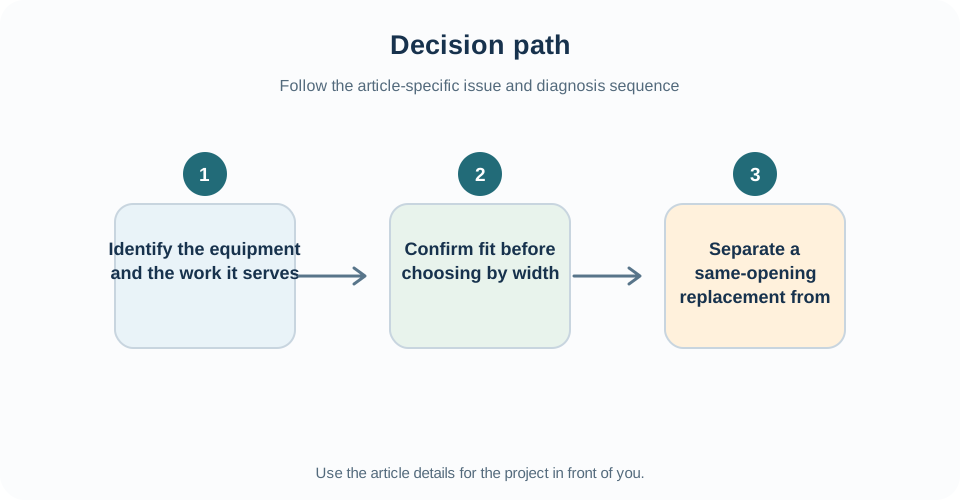
Identify the equipment and the work it serves
First establish whether the current appliance is a gas, radiant-electric, or induction cooktop, whether it has downdraft ventilation, and whether it sits above a wall oven or cabinet storage. A cooktop paired with a wall oven is a different project from replacing a freestanding range. If the replacement changes the fuel or electrical configuration, price it as a conversion with separate trade review rather than as a basic swap.
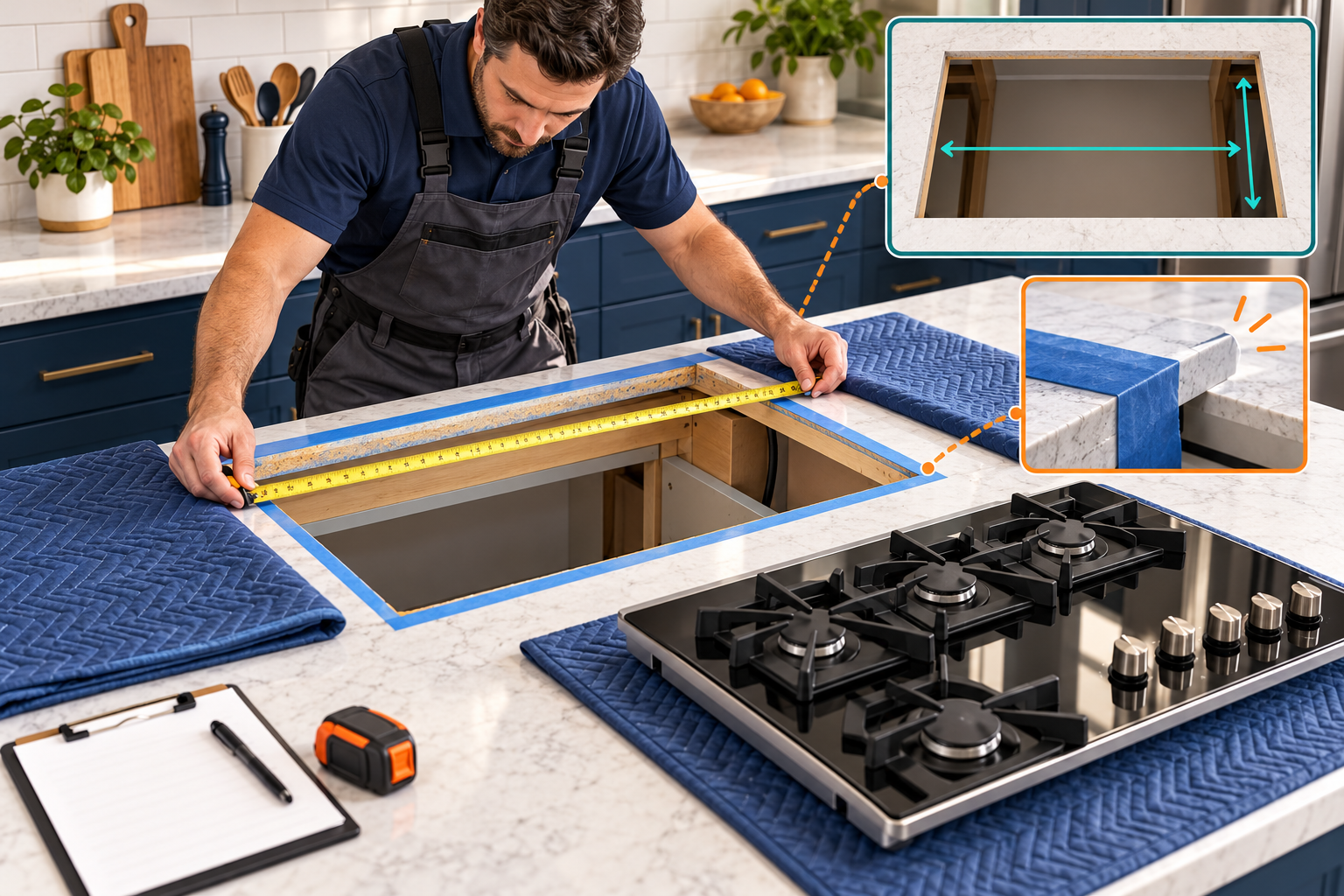
Record the make and exact model number, age, control location, counter material and thickness, opening dimensions, support below the opening, and any visible damage. Photograph the connection and surrounding space before removal, if it is safe to do so. These details help identify whether the old unit can be repaired, whether a replacement is likely to fit, and what an installer needs to quote.
Confirm fit before choosing by width
Compare the exact new model’s installation instructions with the measured opening. Width is only one dimension: depth, corner radius, mounting lip, counter thickness, required support, nearby backsplash, control clearance, and the space below the surface can all affect fit. A new model may have different clearances even when it appears to be a close substitute.
The old opening is an observed condition, not a guarantee that it matches a nominal size. Check it at several points and note whether it is square, chipped, swollen, or altered by a prior installation. Ask who will approve the fit before ordering and who pays if a delivered cooktop cannot be installed without additional work. If a substitute model is offered later, repeat the fit check rather than relying on the original approval.
Separate a same-opening replacement from counter work
A same-opening replacement is the simpler case when the selected model, support, utilities, and nearby finishes are compatible. It still requires a plan for disconnection, removal, protection of the counter, placement, connection, sealing or securing as the model requires, testing, and cleanup. Confirm which of these steps are included in the quoted appliance labor.
A correction project can involve enlarging or reducing the opening, changing a corner radius, repairing a damaged edge, altering support below, moving a control or connection, or modifying a cabinet. Stone and solid-surface work can require specialized measurement and fabrication; laminate or tile can have different repair constraints. Price fabrication and finish restoration separately from appliance labor, and coordinate the measurements before ordering a slab, trim, or replacement unit. Some openings cannot be safely enlarged because of a seam or limited material around the cut.
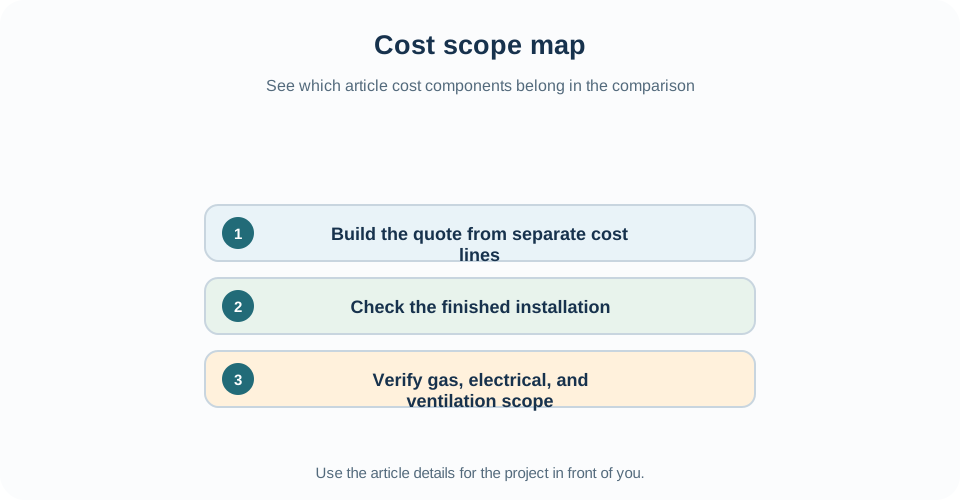
Build the quote from separate cost lines
Product price varies with size, number and type of cooking zones, controls, finish, power, smart features, downdraft equipment, and brand. Project cost adds delivery, removal, installation, connection, testing, and disposal. It may also include a model-specific seal, mounting hardware, or accessory that is not bundled with the appliance.
Ask the provider to list the labor assumptions. Does the price include removing sealant, protecting the counter, lifting out the old unit, setting the replacement, reconnecting existing compatible services, applying the specified seal, testing every zone, and taking away packaging? Does it exclude cutout correction, a new circuit or gas line, cabinet work, permits, or repair of a damaged counter? Clear exclusions let you compare two quotes without assuming that installation means the same work in each.
Removal can expose damage that was hidden by the old cooktop, such as a cracked counter edge, heat discoloration, moisture, or weakened support. Agree on a pause point if the installer discovers an unsafe connection or a surface that cannot support the replacement. A separate repair or fabrication quote is more useful than an open-ended allowance.
Verify gas, electrical, and ventilation scope
An existing connection may support a like-for-like replacement only when it is compatible with the chosen model and applicable local requirements. A new circuit, wiring correction, service-capacity change, gas line, shutoff, or connector is separate work. Ask which qualified trade is responsible and whether a permit or inspection needs to be considered. Do not infer electrical or gas requirements from another model’s manual or from a retailer’s product description.
For induction, check the exact model’s electrical requirements and account for cookware compatibility when comparing ownership cost. Do not assume the existing connection can support a change from radiant electric or gas. For gas equipment, use qualified installation and do not attempt connection or repair from general online advice.
A hood or downdraft system can also change the scope. Confirm whether the new model uses the existing arrangement and whether the duct path, cabinet space, or controls remain compatible. A change in exhaust route can become a ventilation or kitchen project; identify that dependency separately instead of hiding it inside a cooktop labor price.
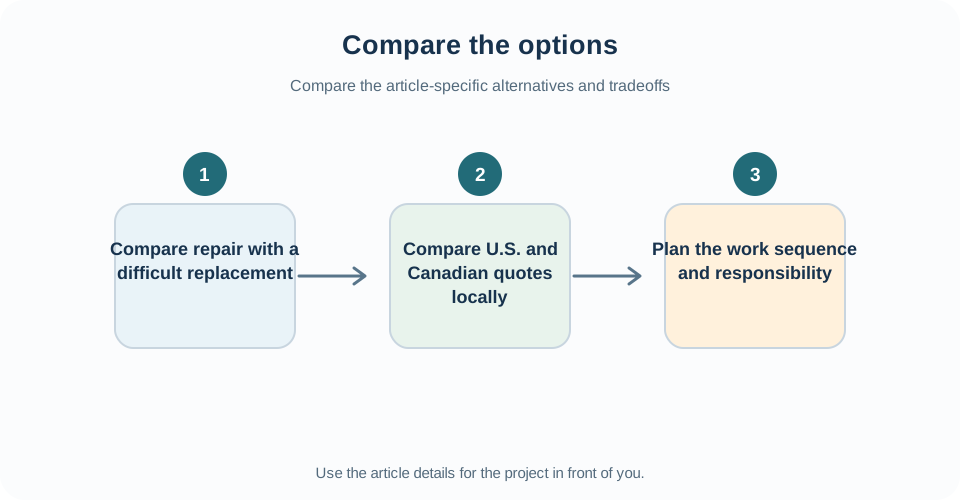
Compare repair with a difficult replacement
Repair may be attractive when the failure is contained, parts remain available, the counter opening is unusual, or replacement would trigger fabrication and utility work. Replacement is stronger when the glass or main controls are damaged, the failure is recurring, a safe repair is unavailable, or a suitable replacement fits without major alteration.
Compare the likely repair total with the full replacement project, including counter work, connections, disruption, and the risk of a second failure. Do not apply an appliance-age or percentage rule as if it settles every case. Ask the technician what was diagnosed, what remains uncertain, whether the repair includes a parts and labor warranty, and whether a later failure could change the estimate. For electrical or gas faults, diagnosis and work should remain with appropriately qualified service providers.
Plan the work sequence and responsibility
For a replacement that needs fabrication, use this order: identify the model, measure and approve the opening, confirm utilities and ventilation, price fabrication, schedule delivery, remove the old unit, install and connect the replacement, test it, and complete any finish work. A delayed measurement or model substitution can strand a household without a working cooking surface, so ask for realistic lead times and a temporary-cooking plan if the counter will be unavailable.
Keep the old unit in place until the opening and connection plan are confirmed when practical. Before removal, clarify who protects the surface and who owns damage discovered during the work. At handoff, record who is responsible for a failed fit, a damaged finish, an unsafe connection, and a callback after testing. This prevents each provider from treating the same gap as another trade’s allowance.
Compare U.S. and Canadian quotes locally
Product selection, labor, taxes, fabrication, installation packages, gas and electrical rules, and service availability vary by location. Canadian buyers should request a local quote in Canadian dollars and confirm tax and scope. A U.S. online estimate is not a Canadian quote, and currency conversion cannot account for different products or installation terms.
Ask each provider for the exact model, approved cutout, counter scope, connection work, ventilation assumptions, delivery, removal, installation, testing, disposal, tax, and any permit or inspection responsibility. Compare quotes only after these line items describe the same project.
Check the finished installation
Before accepting the work, check the counter edge and adjacent finish, the cooktop’s stability and controls, operation of each burner or zone, and the condition of the connection area. The installer should confirm the model-specific test and any required sealing or securing. Keep the model manual, final measurements, invoice, and warranty information for later service.
Also ask whether a future technician can remove the cooktop without damaging the counter, backsplash, cabinetry, or connection. Leave access to controls, wiring, valves, and ventilation components as the installation permits. A complete replacement leaves a working appliance in a protected, maintainable opening with clear responsibility for any follow-up.