
Wall-oven repair is an appliance decision with built-in access and replacement-fit risk. A heating element, sensor, control, door, fan, or electronic module may be repairable, but removing the oven can require careful lifting, trim removal, and access planning. A replacement can become a cabinet project when the new opening, electrical connection, or combination configuration differs.
Define the function that must return
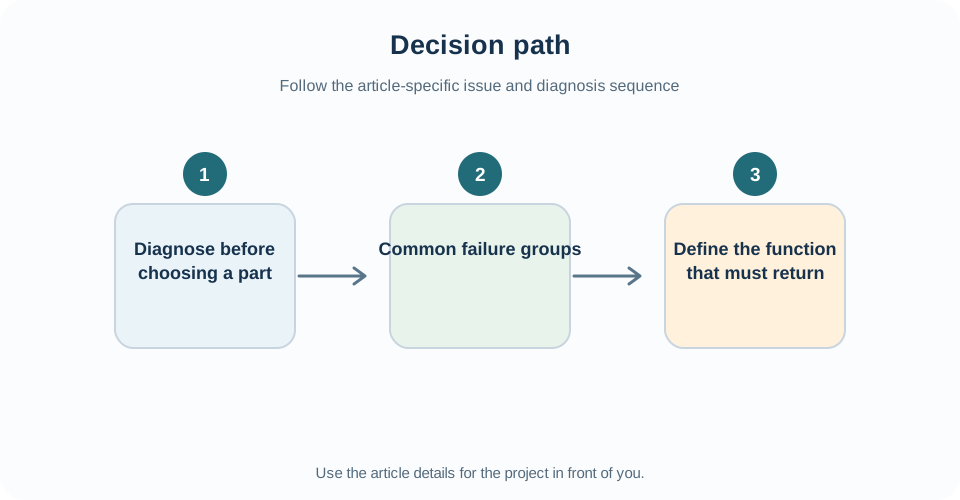
Start with what the household needs restored: heating, temperature control, display, door operation, microwave function, one oven cavity, or the full combination. A symptom can be caused by an appliance component, a control, wiring, a utility condition, or access damage. Ask what can be tested in place and which tests require moving the oven.
Diagnose before choosing a part
A wall oven that will not heat, heats unevenly, trips a protection device, shows an error, or has a damaged door can have several causes. Single, double, combination, convection, and smart ovens may use different components and service methods. Record the model, configuration, age, symptom, and error display.
U.S. specialist appliance-repair sources provide broad market signals, but they do not establish a wall-oven-specific Canadian range or a remote diagnosis. Ask the technician what was tested, what failed, and whether the proposed part is model-specific.
Common failure groups
Heating elements, temperature sensors, relays, control boards, fans, lamps, latches, hinges, seals, and door assemblies can create different repair scopes. A control board may be expensive or unavailable for an older model. A door or glass problem can be both functional and safety-sensitive. A combination wall oven/microwave may require a different service path from a standalone oven.
Do not perform electrical testing or remove a built-in unit without qualified help. The repair quote should state access, parts, labor, return visits, testing, and warranty.
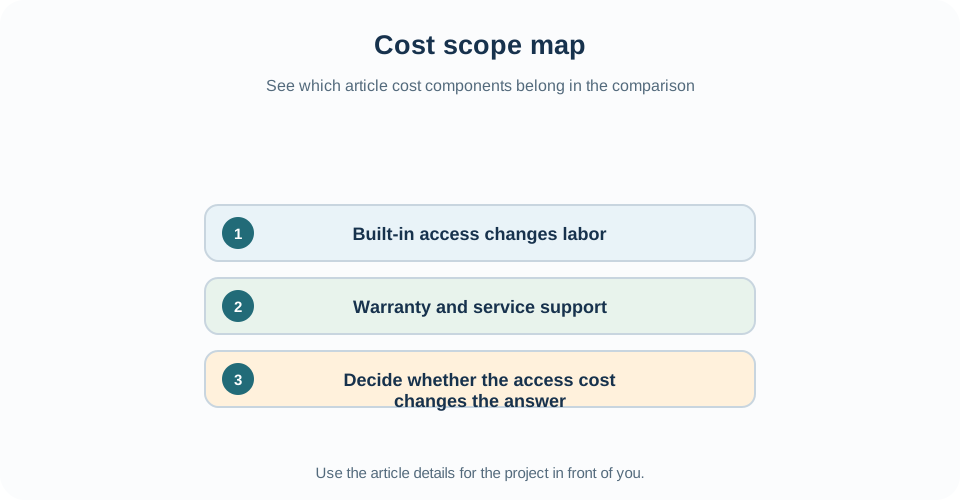
Built-in access changes labor
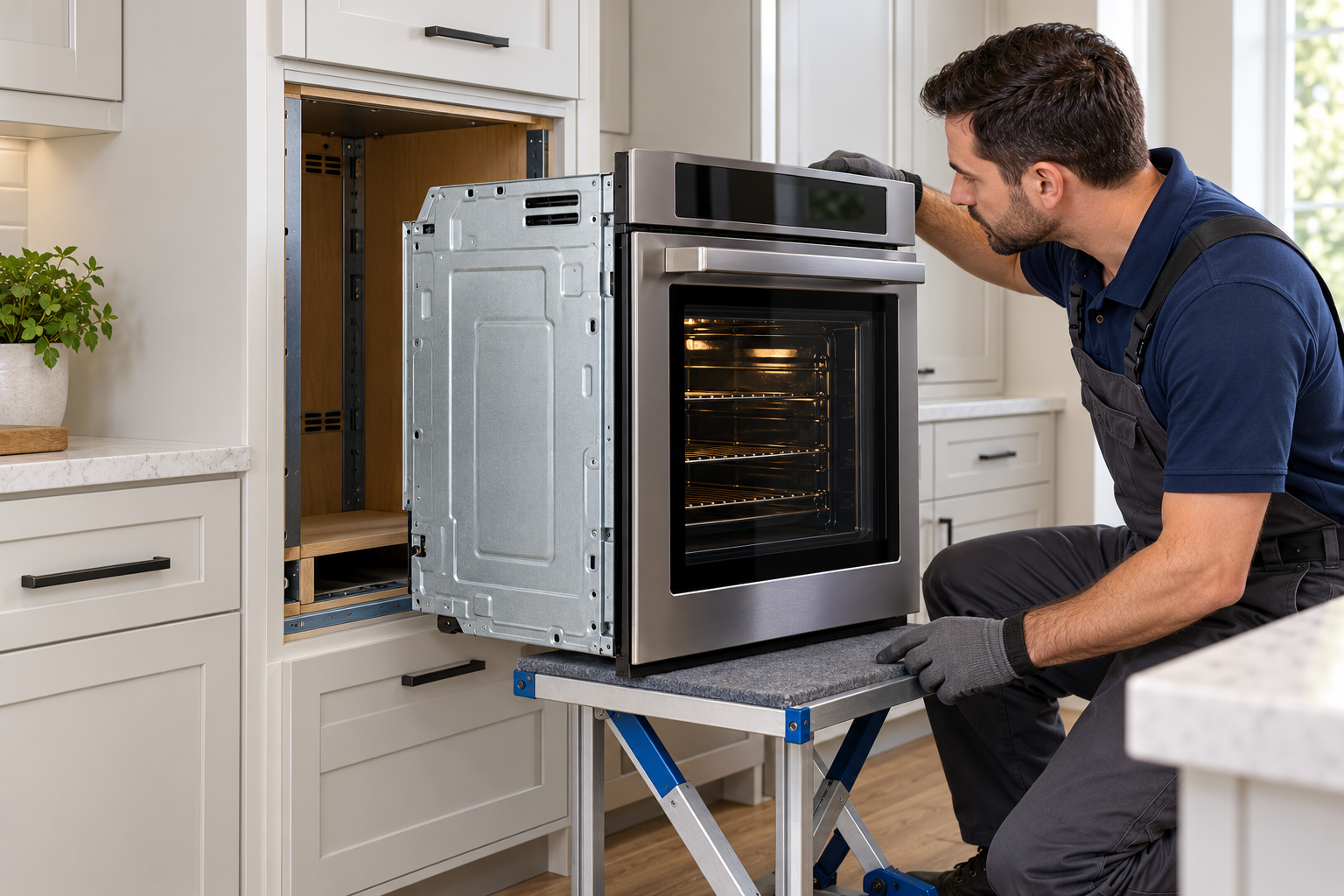
The appliance may be heavy, recessed, surrounded by trim, or installed above another oven. Service can require two people, temporary support, a protected floor, or removal of an adjacent component. If the technician must remove and reinstall the oven to reach a part, the access assumption should be visible in the quote.
Ask whether the quoted labor includes removing trim, disconnecting the appliance, protecting the cabinet, testing after reinstallation, and correcting any mounting issue. A simple part price does not describe the whole repair.
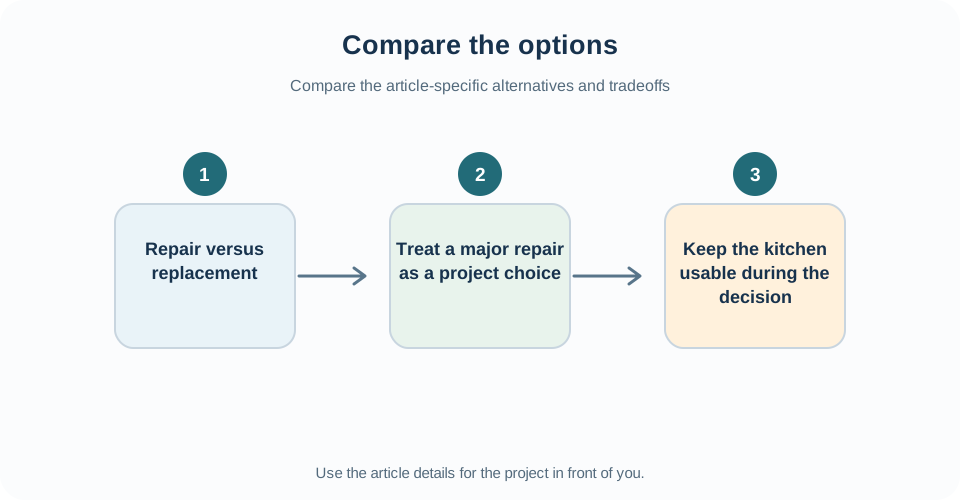
Repair versus replacement
Repair can be sensible when the oven is otherwise sound, the opening is difficult to match, the part is available, and the failure is localized. Replacement deserves consideration when the control or major assembly is obsolete, failures repeat, the oven has an unsafe condition, or a compatible current model is available without cabinet work.
Compare the confirmed repair with appliance purchase, delivery, removal, lifting, installation, electrical work, trim or filler, cabinet modification, disposal, and disruption. A new wall oven is not a drop-in replacement unless the model-specific dimensions and connections support that conclusion.
Single, double, and combination ovens
Double ovens can have more complex controls and heavier removal. Combination oven/microwave units may have different dimensions, ventilation, service, and replacement costs. A replacement that separates the functions can require a cabinet redesign; a combination replacement may be limited by current product availability.
Define which functions the household must preserve before comparing options. A cheaper single oven may not be an economic equivalent if the household would need another microwave or new cabinetry.
Cabinet and electrical dependencies
Use the selected manufacturer’s installation documentation to verify cutout, trim, support, ventilation, and electrical requirements. Do not generalize a dimension, circuit, or clearance from one model. A mismatch may require cabinetry or electrical work in addition to the appliance installation.
Cabinet modifications belong to the kitchen-cabinetry scope. New circuits or wiring corrections belong to electrical work. The wall-oven article should make those dependencies visible so the replacement quote is not understated.
Warranty and service support
Check the included warranty, service network, parts availability, and any paid service contract. Ask whether labor and access are covered as well as the component. For a premium oven, local service capacity can matter as much as the purchase price.
U.S. and Canadian uncertainty
Repair prices, product availability, taxes, installation packages, and cabinetry labor vary by location. U.S. specialist ranges are planning context only. Canadian buyers should obtain Canadian quotes and verify the current model in the local market. Do not exchange currencies mechanically.
Treat a major repair as a project choice
Before authorizing a control, heating assembly, door, or wiring repair, request the expected access sequence and a model-specific replacement comparison. The repair branch should state the diagnosis, parts, labor, support, reconnection, testing, warranty, and return visit. The replacement branch should state the cutout, trim, cabinet, electrical, delivery, lifting, disposal, commissioning, and finish work. This keeps the decision grounded in the built-in kitchen rather than a component price.
Keep the kitchen usable during the decision
State whether the household can use another oven, cooktop, microwave, or temporary setup while the wall oven is out of service. Add the actual disruption to the comparison and schedule access, delivery, cabinet work, and testing so the kitchen is not left open between trades.
Close the decision with the next action
If the diagnosis is clear and the access path is contained, authorize the repair with its warranty and testing terms. If the diagnosis is uncertain, request the second opinion or staged estimate. If the fit, utility, or service path makes replacement more sensible, pause before removing the old oven and obtain the model-specific installation scope.
Quote checklist
Ask for the diagnosis, part number, labor, built-in access, return visit, testing, warranty, removal, disposal, replacement model, cutout check, trim, cabinet, electrical, and tax assumptions. If a replacement is recommended, measure the opening before ordering.
A wall-oven decision is complete when it compares not only the repair part, but the access, fit, serviceability, and kitchen disruption that determine the actual household cost.
Compare a staged repair with a planned replacement
If the technician must diagnose first and return with a part, price the service call, access, special-order time, second visit, testing, and warranty. If a major assembly or control is involved, request a model-specific replacement comparison before authorizing work. Replacement may require a cutout, trim, cabinet, electrical, delivery, lifting, disposal, and finish scope; repair may avoid those costs when the oven is otherwise sound.
Decide whether the access cost changes the answer
Repair is stronger when the cabinet, opening, controls, and other major assemblies are sound and the model-specific part is available. Replacement gains weight when the part is obsolete, failures repeat, the repair warranty is weak, or a current model can fit without cabinet work. A built-in replacement may require a cabinet contractor, electrician, delivery crew, and disposal provider; include those coordination costs.
Do not let an installer assume that a nominal width is enough. The chosen model’s manual controls cutout, support, trim, clearances, ventilation, and electrical requirements. A quote should name the model and state who owns a mismatch discovered after removal. Canadian product and service availability should be checked locally rather than inferred from U.S. specialist repair signals.
Make the access decision explicit
Ask whether the diagnosis can be completed in place and what the removal sequence would be if it cannot. Keep support, trim, cabinet, floor, utility, reconnection, testing, and finish restoration visible. If the unit is a combination oven, define whether the household needs one failed function or the full assembly restored before comparing a partial repair with replacement.
Compare the outage with the repair path
Include temporary cooking, access preparation, removal or lifting, support, reconnection, testing, finish protection, return labor, and warranty. A repair that requires several visits can disrupt the kitchen more than a planned replacement; a replacement that requires cabinet work can create the larger project. Use the actual oven configuration and household cooking needs to compare the two.
Record the final service boundary
At handoff, document the model, work completed, tests, remaining limitation, warranty, and who owns cabinet, electrical, utility, or restoration work. This prevents a later callback from repeating the same uncertainty and helps the household compare another repair with replacement on the same scope.
Protect the surrounding kitchen
Before work begins, photograph trim, cabinet faces, flooring, and adjacent appliances. Ask how the oven will be supported during removal and what happens if the opening reveals heat, water, or structural damage. The appliance technician may identify a condition without owning cabinet restoration or hazardous-material work.
The best wall-oven decision keeps the repair diagnosis, access risk, function being restored, replacement fit, and disruption visible in one comparison. That prevents a low component estimate from hiding the cost of reaching the component or replacing the appliance later.