
An over-the-range microwave is an installed appliance, not simply a countertop microwave placed above a stove. Repair, removal, mounting, cabinet clearance, electrical supply, duct or recirculating ventilation, and access can all affect cost. A new unit may be the practical choice when repair is uncertain, but replacement is not complete until the mounting and venting arrangement are confirmed.
Define the equipment
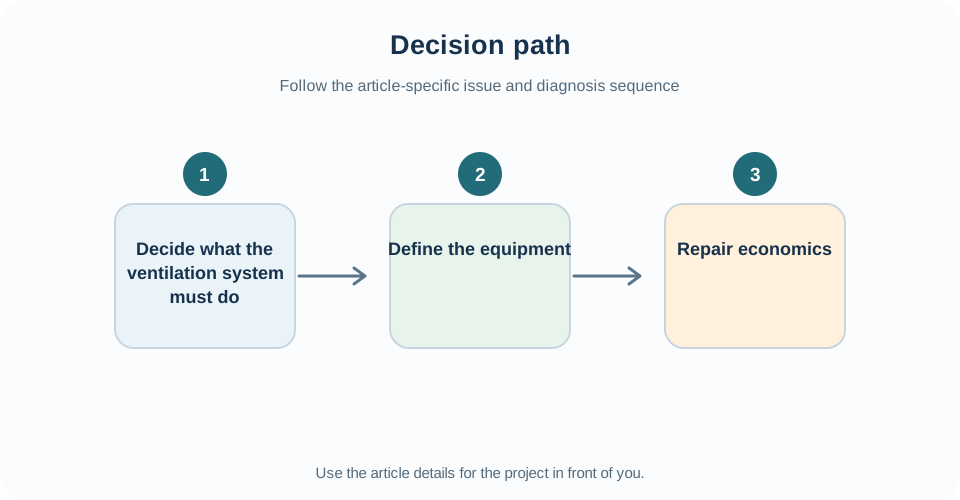
Over-the-range models are designed to mount above a range or cooktop and may include a light, fan, recirculating filter, or ducted exhaust connection. A countertop microwave, built-in microwave, microwave drawer, and combination wall oven are different projects. Do not use a countertop price as the replacement benchmark.
Record the existing model, width, height, depth, mounting bracket, cabinet, duct direction, electrical outlet, and clearance to the cooking surface. Photograph the wall and cabinet before removal.
Repair economics
U.S. specialist sources report broad microwave repair signals around $100 to $250 or $100 to $200, but those figures do not describe the access and installation labor of an over-the-range unit. A door switch, fuse, control, fan, or display problem can have a different scope from a damaged cavity, high-voltage assembly, or mounting system.
Do not perform high-voltage microwave repair or remove an installed unit without qualified service. Ask for a diagnosis, part availability, labor, access, return visit, warranty, and whether the provider can service the exact model.
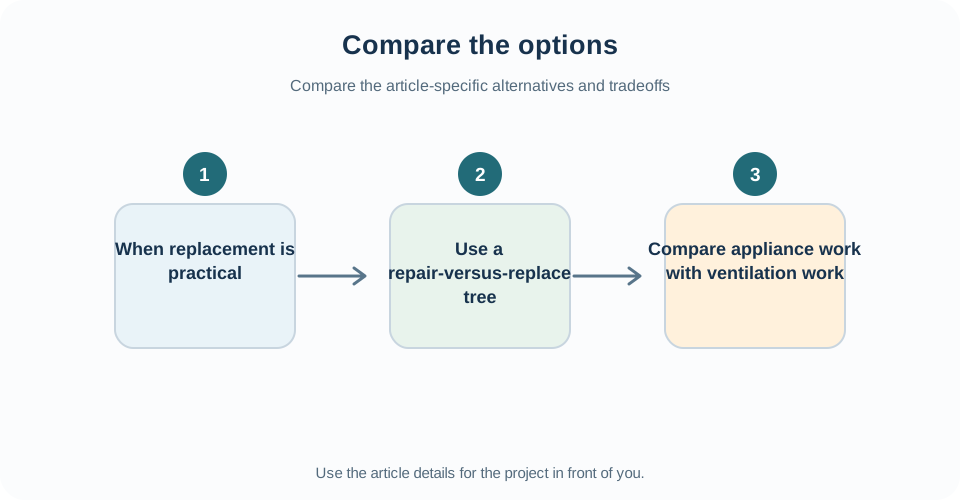
When replacement is practical
Replacement may be more sensible when the microwave is older, repair parts are unavailable, the cavity or door is damaged, failures repeat, or the unit’s price is close to repair plus reinstallation. A built-in or premium model can justify repair because fit and cabinetry replacement may be difficult.
Compare the complete replacement: appliance, delivery, removal, mounting, bracket, trim, electrical work, duct adaptation, disposal, and testing. A lower-priced microwave can become expensive if the new mounting pattern or depth does not match.
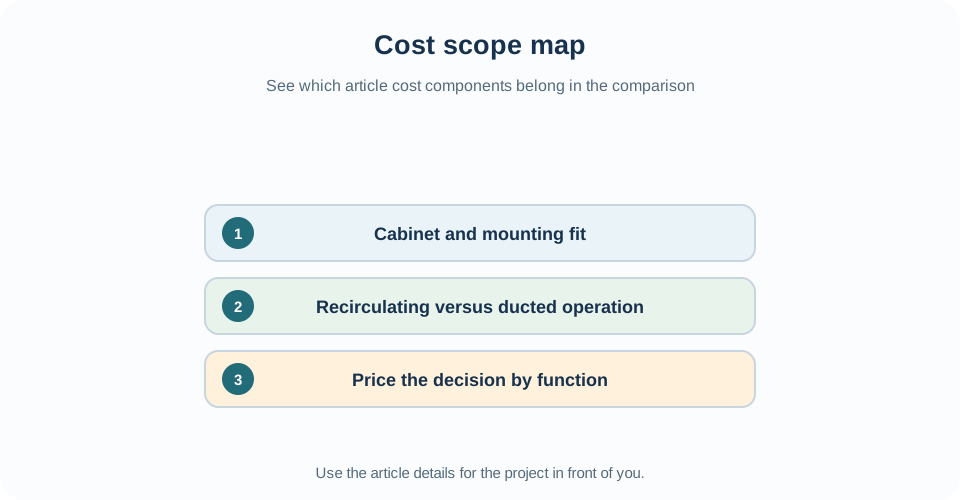
Cabinet and mounting fit
The selected manufacturer’s mounting and installation instructions control bracket position, support, clearances, and attachment. A new unit may have a different height, depth, screw pattern, or duct outlet. Check the wall structure and cabinet support before ordering.
If the cabinet or wall needs modification, separate that work from the appliance price. A heavier unit or damaged mounting surface may require qualified installation. Protect the range and counter during removal.
Recirculating versus ducted operation
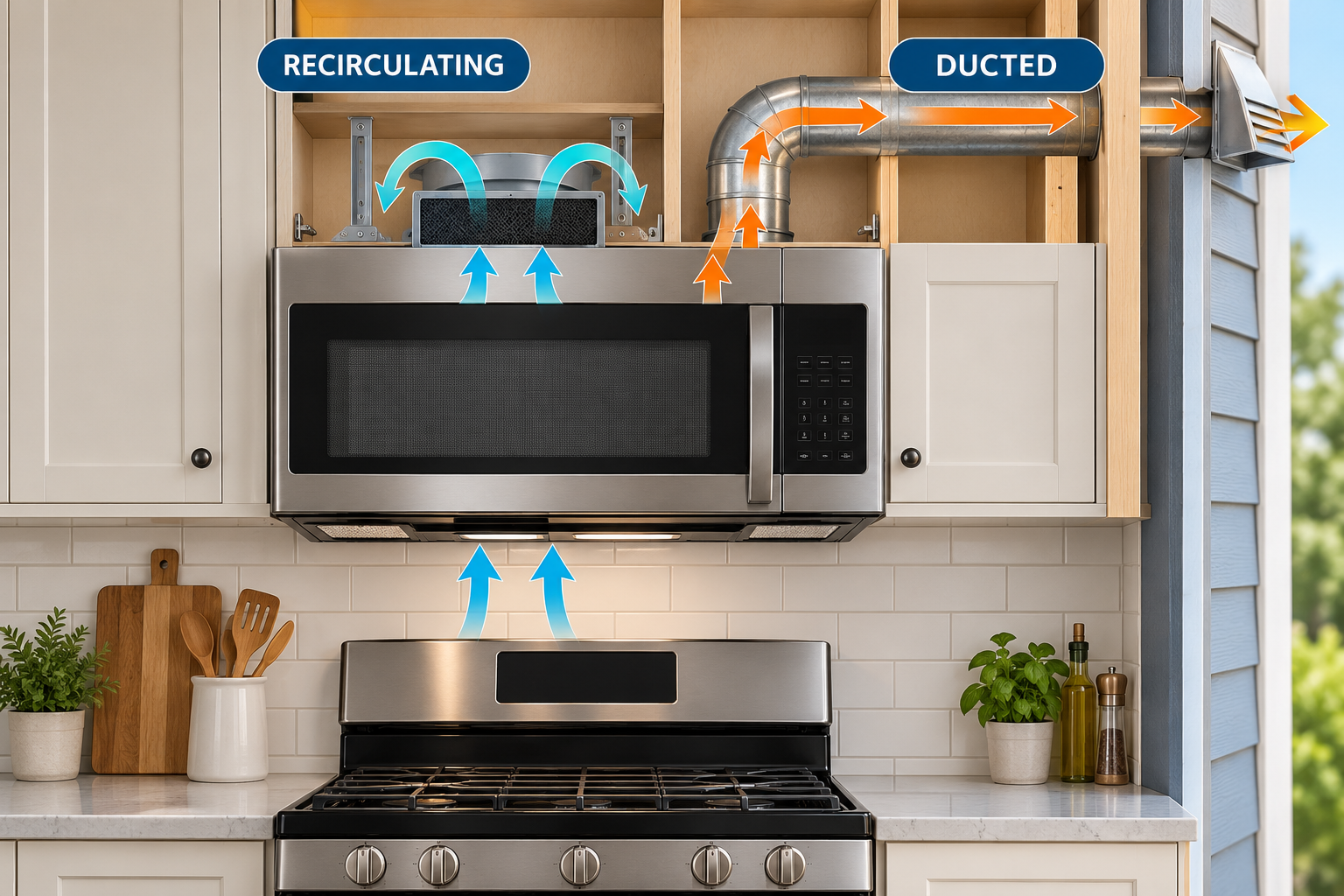
Some over-the-range microwaves recirculate through a filter; others connect to a duct that exhausts through a wall or cabinet. The replacement must support the existing arrangement or the project may need ventilation work. Substantive new duct routing belongs to the ventilation category, not ordinary microwave installation.
Ask who verifies the duct size, route, termination, filter, and local requirements. Do not assume a new fan can use an old duct without checking the model instructions.
Electrical connection and safety
An existing compatible connection may support a basic replacement. A damaged outlet, wiring correction, new circuit, or concealed electrical change is separate work. Do not make a generic cord or circuit requirement universal across models.
Have qualified installers verify the chosen product and home. Gas and cooking-surface safety remain separate from the microwave’s appliance scope.
U.S. and Canadian uncertainty
Repair prices, retailer installation packages, taxes, mounting labor, product availability, and ventilation practices vary by region. Canadian prices should come from Canadian suppliers and service providers. Do not convert U.S. specialist ranges into Canadian dollars.
Use a repair-versus-replace tree
Repair is more plausible when the microwave’s controls, display, light, fan, door, or heating function has a localized and supported failure, the mounting remains sound, and the provider can state a parts-and-labor warranty. Replacement becomes more attractive when the unit has repeated faults, an obsolete control, damaged door or mounting, unavailable parts, or a ventilation arrangement that already needs correction.
Ask what was tested and whether the quote includes access, removing the unit from its mounting, parts, labor, testing, and a return visit. A microwave may be inexpensive to purchase but labor-intensive to remove from a cabinet or above a range. Do not use a guessed part or a generic repair video for a high-voltage, gas-adjacent, or mounted appliance.
Decide what the ventilation system must do
An over-the-range microwave may recirculate air through filters or connect to a ducted exhaust route. The exact model, existing duct, termination, and local requirements control what is possible. A replacement that changes the duct location, cabinet opening, or mounting height may require cabinet, wall, or ventilation work. If the kitchen needs a new or upgraded exhaust system, that is a broader ventilation or remodeling scope rather than a simple microwave installation.
Ask who checks the duct or recirculation arrangement, who supplies brackets and hardware, and who repairs the cabinet if the mounting pattern changes. Confirm that the installer will test microwave operation, lights, controls, door closure, and the fan after mounting.
Protect the appliance and cabinet boundary
Ask who removes and supports the mounted unit, who supplies the bracket, and who repairs the cabinet, wall, counter, or backsplash if the existing mounting does not release cleanly. Keep high-voltage, gas-adjacent, electrical, and duct work with qualified providers. The homeowner’s cost is the complete supported installation, not a part or bracket in isolation.
Account for the range below it
Heat, steam, grease, and cooking activity make the relationship between the microwave and range important. If the range is being replaced at the same time, coordinate the models, clearance, controls, and ventilation rather than pricing the microwave in isolation. A different cooking technology may change the kitchen’s ventilation needs without creating a universal solution.
For U.S. and Canadian purchases, use local product availability, labor, taxes, and installation terms. The useful comparison is the complete mounted appliance and ventilation path, not the lowest online product price.
Compare appliance work with ventilation work
An over-range microwave can be tied to the cooking area through an exterior exhaust route, a recirculating arrangement, cabinet space, electrical supply, or several of these at once. Ask the installer to identify which arrangement the exact model supports and what the existing kitchen provides. A fan that turns on is not proof that the route, filter, termination, or capture performance is appropriate.
Repair may be sensible when the failure is contained, the mounting and cabinet are sound, parts are available, and the unit remains supported. Replacement is a broader decision when the microwave is obsolete, the mounting is damaged, the cabinet or duct needs correction, or the range below is changing. Price removal, mounting, electrical, duct or recirculation, finish protection, testing, disposal, and a temporary cooking plan together.
Plan the replacement sequence
If the microwave is mounted above a range, removal may require support, disconnection, cabinet protection, and a coordinated delivery. A new model may change the mounting height, duct path, bracket, electrical location, or clearance to the range. Price those conditions before the old unit is removed. If the range is also changing, coordinate the two models and their instructions.
Confirm the range and microwave together
When both appliances are being changed, verify the opening, mounting height, control reach, heat and steam conditions, electrical path, duct or recirculation arrangement, and delivery route as one sequence. Keep the exact manuals for both models and ask which installer owns the interface between them. A quote that covers only the microwave can miss the work created by the range below.
Keep repair and replacement scopes comparable
For repair, list diagnosis, access, part, labor, mounting, testing, and warranty. For replacement, list the exact model, bracket, cabinet, electrical, duct or recirculation, range interface, delivery, removal, disposal, testing, and callback. A retail price cannot be compared with a repair invoice that excludes the mounting or ventilation work.
Price the decision by function
Compare the functions that must be preserved: cooking capacity below, microwave size and controls, lighting, fan arrangement, cabinet appearance, and service access. A cheaper replacement that loses a needed function or forces a duct and cabinet project is not the lower-cost choice. Mark model-specific and local assumptions before scheduling removal.
Quote checklist
Ask for diagnosis, part, repair labor, access, removal, new unit, mounting, bracket, cabinet, electrical, duct or recirculation, disposal, taxes, and warranty. Confirm whether the crew will test the fan and microwave after installation.
The correct budget treats the microwave as an appliance attached to the kitchen environment. The product is only one part of the replacement decision.