
Induction can be a simple appliance swap or a broader electrical project. The total cost depends on whether you choose a range or separate cooktop, whether the opening fits, whether current cookware is compatible, whether the existing electrical service can support the model, and whether a rebate or operating-cost benefit applies. Whole-home capacity and fuel-switching work remain separate from the appliance purchase.
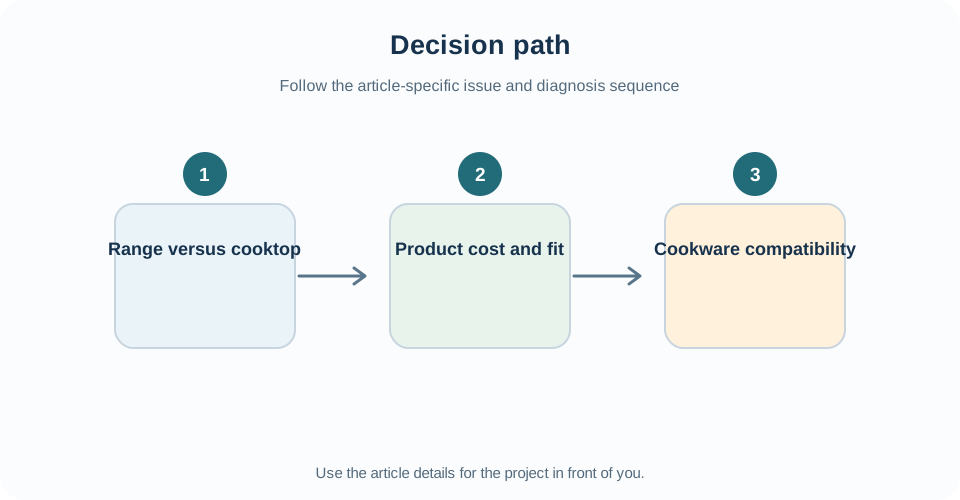
Range versus cooktop
An induction range combines a cooktop and oven in one freestanding or slide-in appliance. An induction cooktop occupies a counter opening and may pair with a separate wall oven. Their purchase, delivery, cutout, installation, repair, and replacement economics differ.
Record the current configuration, opening, counter, oven location, fuel source, electrical connection, and ventilation. Switching from a range to a cooktop and wall oven can create cabinetry and electrical work. Switching from gas to induction can require more than a new appliance.
Product cost and fit
Induction prices vary by width, number of zones, controls, power-sharing, oven capacity, smart features, finish, and brand. A lower-priced model is not an economic win if it requires counter modification, a new cutout, or an electrical project.
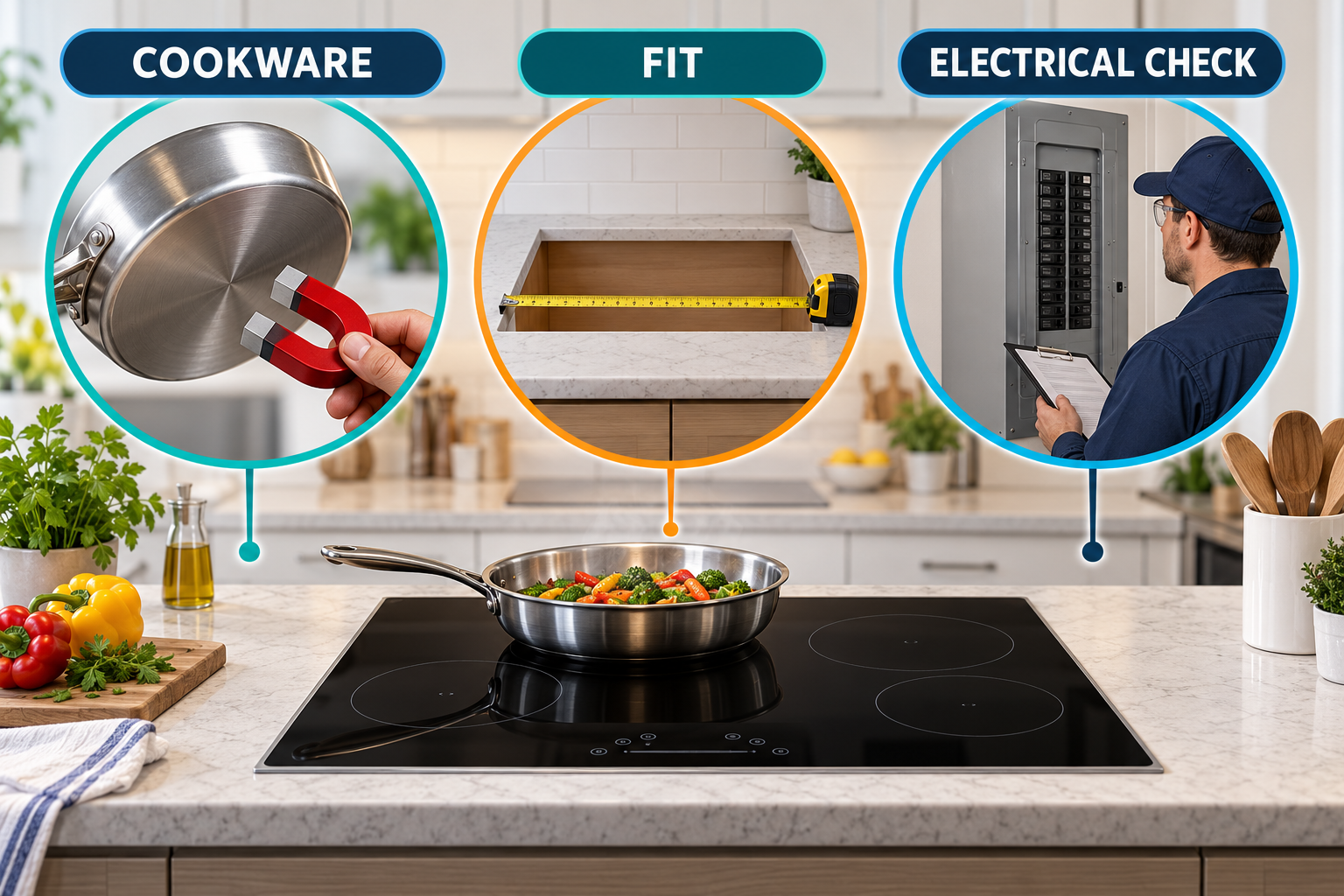
Measure the opening and check the chosen model’s exact dimensions, voltage, amperage, clearances, and installation instructions. ENERGY STAR’s buying guidance describes portable, freestanding, slide-in, and countertop-fit electric cooking products, but exact fit and utility requirements remain model-specific.
Cookware compatibility
Induction heats compatible ferromagnetic cookware through electromagnetic energy. ENERGY STAR describes a magnet check as a screening aid, and many existing cast-iron, stainless, and enameled cast-iron pieces may work. A magnet result does not confirm that cookware is flat, appropriately sized, or approved for a particular surface.
Budget for cookware only after checking what the household already owns. A full replacement set can materially change the project cost. Avoid treating cookware as a trivial accessory if the household relies on specialty pans or a large set.
Electrical prerequisite screening
The exact model manual controls the appliance connection. A suitable existing circuit may make installation similar to a like-for-like electric replacement. A gas-to-induction conversion, missing connection, unsuitable wiring, or service-capacity constraint may require electrical work before the appliance is ordered.
Do not state a universal circuit, breaker, receptacle, or amperage requirement. Have a qualified electrician verify the model, existing service, load, panel, wiring, and local requirements. A service upgrade or load-management project belongs to whole-home electrical planning and can dominate the appliance cost.
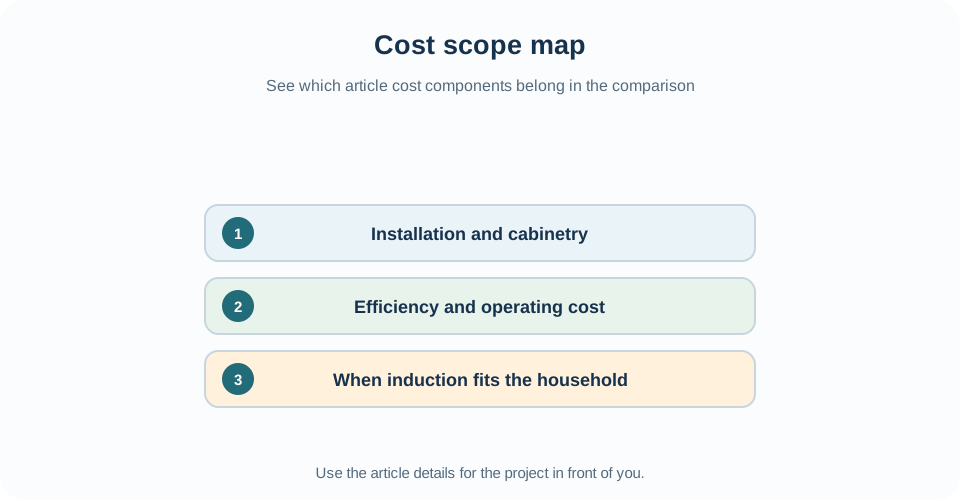
Installation and cabinetry
Installation can include delivery, leveling, removal, securing, connection, testing, and disposal. A cooktop may additionally need counter support, seal, cutout, or ventilation interaction. A range may require anti-tip hardware. Cabinet or counter changes should appear as separate lines rather than as an assumption.
If the current opening is damaged, out of square, or too small, the appliance installer may stop. Ask who measures, who modifies the opening, and who restores the finish. A replacement that cannot be serviced without cabinet removal has a higher lifecycle risk.
Efficiency and operating cost
ENERGY STAR states that certified electric cooking products are more efficient on average than standard models and that induction transfers a higher share of heating energy to cookware than gas cooking. These are program and comparison statements, not a promise about your household bill. Actual cost depends on usage, electricity and gas rates, cookware, ventilation, and appliance settings.
Use annual label data where available and model local energy costs transparently. An induction purchase premium may make more sense for frequent cooking and high fuel cost, while conversion work can outweigh operating savings in a home that already has suitable gas or electric infrastructure.
Incentives and Canadian availability
Rebates change by utility, state, province, territory, product qualification, and date. Check the current program before relying on it; do not subtract a rebate that has not been confirmed for the exact model and household.
In the United States, the federal HEAR framework allows up to $840 for an eligible ENERGY STAR electric stove, cooktop, range, or oven. The maximum is not a guaranteed rebate: programs are available only in participating locations, and state or local administrators can set eligibility and funding limits. Confirm that the local program is open, funds remain, and the household and exact product qualify before including an incentive in the budget. This U.S. amount does not establish a Canadian rebate.
Canada’s regulation and ENERGY STAR eligibility context differs from the U.S. NRCan lists. Verify Canadian product availability, EnerGuide or certification status where applicable, local electrical requirements, and any provincial program separately. Do not convert a U.S. price or incentive.
Palo Alto Utilities is a dated local example checked October 12, 2026: its Rebate Hub lists $500 for a qualifying induction range or cooktop replacing gas, or $1,000 for an income-eligible household. The applicant must have an active Palo Alto electric and gas account; the project must be on or after March 18, 2026, and application is due within 90 days of final inspection. Reservation is required before installation and funding is limited. Verify the exact model, current program terms, and stacking rules; this does not establish eligibility elsewhere.
Repairability and replacement risk
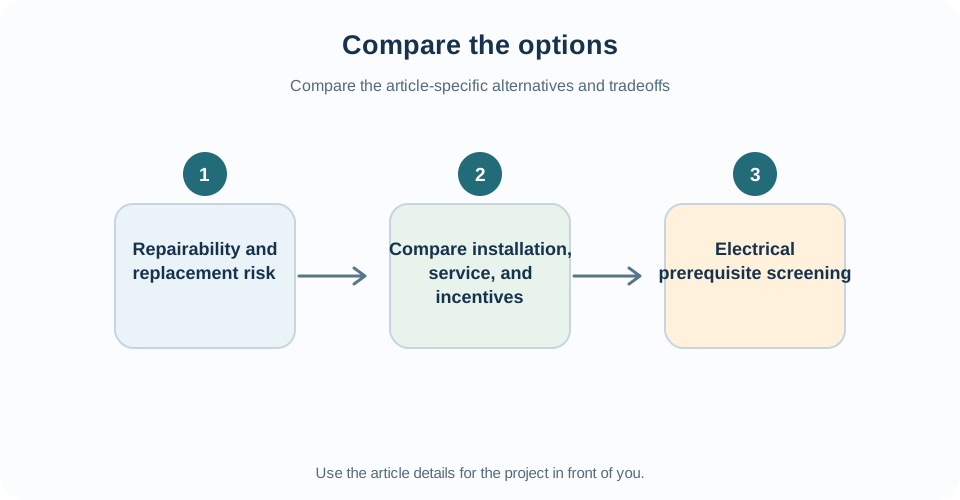
Induction electronics can make a repair more expensive than a simple radiant element repair. Ask about local service, parts availability, control-module support, and warranty. A glass surface or major power module may affect the repair-versus-replace comparison.
When induction fits the household
Induction is easier to budget when the existing opening and electrical infrastructure are compatible, cookware is mostly suitable, and the household values its cooking response and lower heat release. It is harder to justify when capacity work, cabinet change, new cookware, and uncertain incentives all arrive together.
Calculate the premium before assuming a payback
Compare induction with the closest functional alternative, not with the cheapest appliance in a different configuration. List the equipment price, cookware that must be replaced, delivery, installation, removal, electrical work, capacity or fuel-conversion work, operating energy, service, and disposal. Then subtract only rebates or credits that are confirmed for the exact model, household, market, and purchase date.
For operating cost, use annual model information where available and apply local electricity and gas rates to the household’s actual cooking pattern. Frequent cooking and high energy rates may make efficiency more relevant. A large electrical or cabinet project can outweigh a modest operating saving, especially when the existing range already has a ready connection. Do not present ENERGY STAR’s program comparisons as a guaranteed household bill or universal payback.
Compare installation, service, and incentives
A ready electric-range replacement assumes a compatible opening, confirmed electrical service, and usable cookware. A cooktop conversion adds cutout and counter checks; a gas-to-induction project may require electrical capacity, wiring, cabinet or ventilation coordination, permits, and fuel disconnection by the appropriate trade. Obtain a site assessment before ordering when any prerequisite is uncertain.
Ask whether local technicians support the exact model and whether key controls and power modules have service and warranty support. Compare equipment, cookware, delivery, removal, electrical work, counter changes, permits, commissioning, service, and disposal. Use the model manual for fit and safety. Include an incentive only after confirming household, model, timing, reservation, funds, and stacking conditions with the program.