
An appliance-repair service call is the cost of getting a technician to identify the problem, not necessarily the cost of completing the repair. A useful budget separates the visit from parts, additional labor, and any second trip. U.S. specialist cost sources currently place a typical call-out around $70 to $130 and a broader repair around $100 to $400, while another specialist source reports a $100 to $300 average repair range. Those figures are U.S.-weighted market signals, not a national price list and not a Canadian quote.
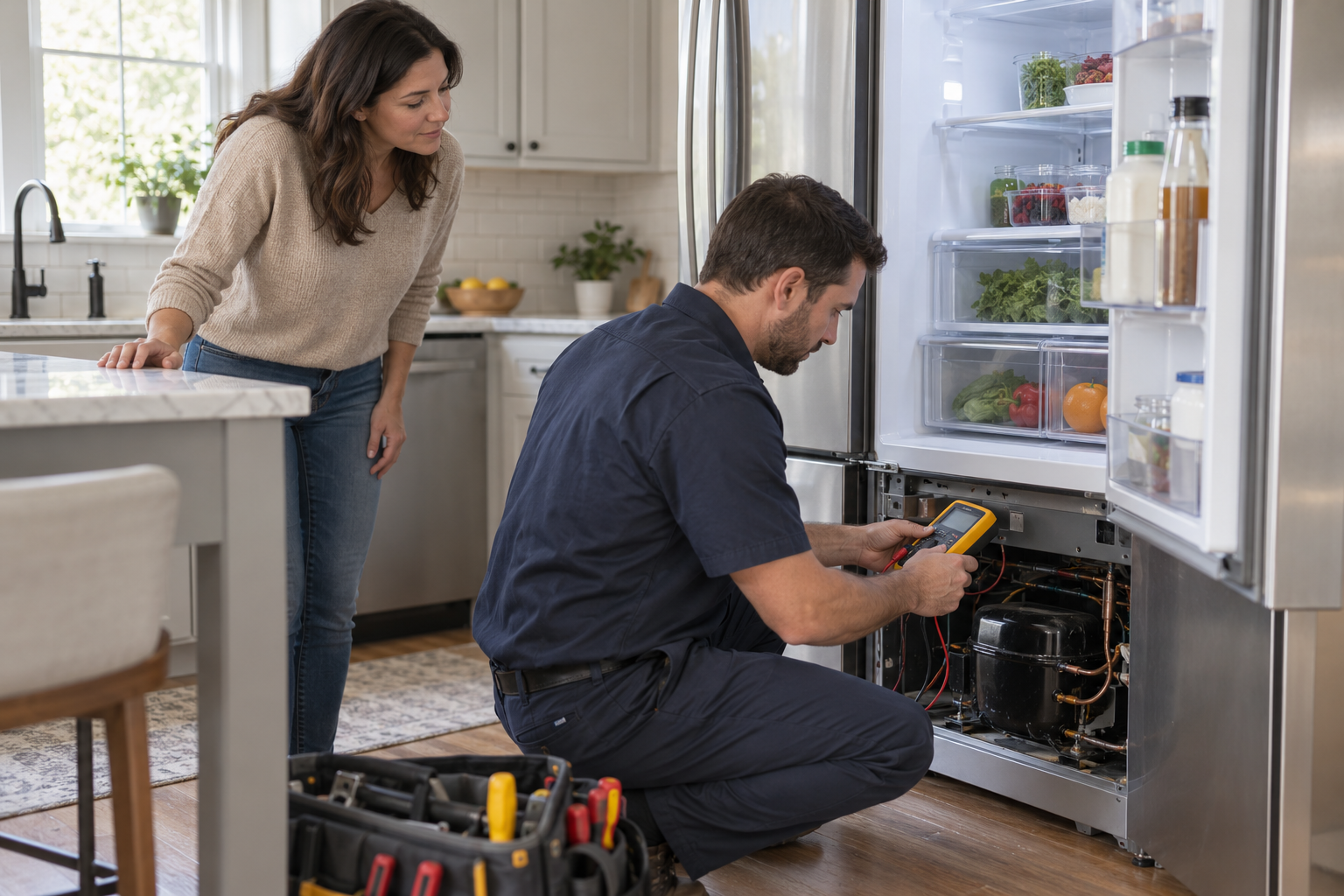
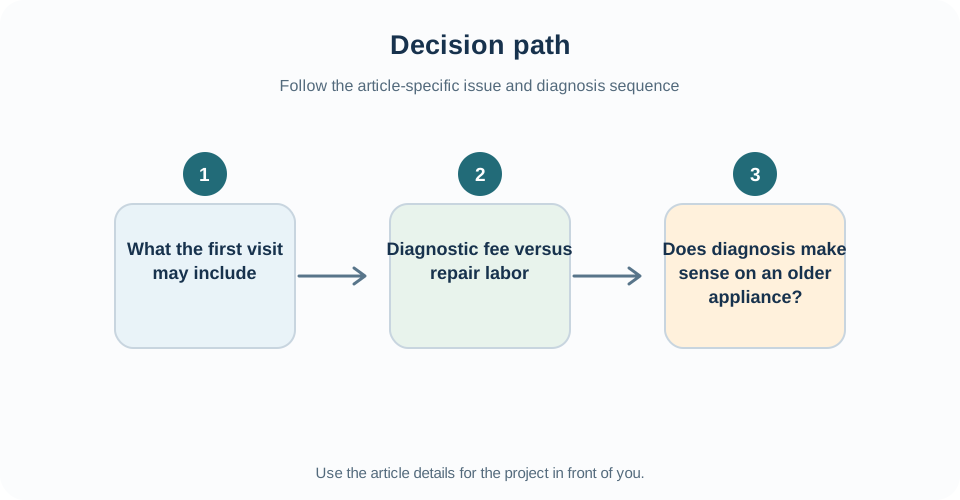
What the first visit may include
A standard visit may include travel within a defined service area, a visual inspection, operational tests, basic diagnosis, and a minimum amount of labor. Some providers describe the charge as a diagnostic fee. Others call it a service call, trip charge, minimum charge, or flat-rate visit. The name matters less than the inclusions.
Ask whether the technician will identify a likely failed part, whether the charge includes any labor beyond diagnosis, and whether a written estimate follows. A technician may be able to complete a small repair from a stocked part during the first visit. A larger or less common failure may end with a diagnosis and a part-ordering appointment instead.
The visit can also reveal that the appliance is not the only problem. A dishwasher symptom may involve the building drain or water connection. A dryer that takes too long may have an exhaust-path issue. A refrigerator leak may begin at the household supply line rather than inside the appliance. The service-call budget should leave room for that uncertainty.
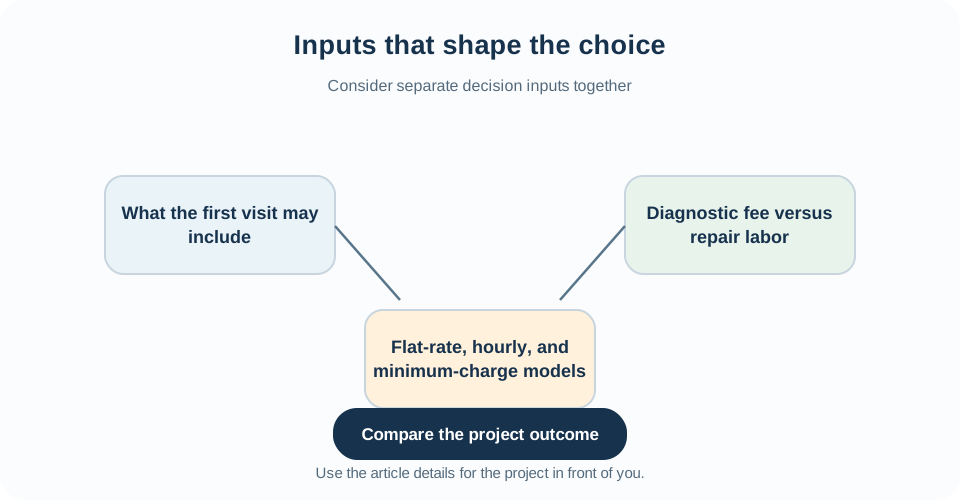
Diagnostic fee versus repair labor
The diagnostic fee pays for access to the technician’s time and the work needed to narrow the problem. Repair labor is the work of replacing or correcting the failed component. They can be billed separately, combined in a flat rate, or partly credited toward the repair.
Before booking, ask four direct questions:
- What is the total charge if I authorize diagnosis only?
- How much labor is included in that amount?
- If I approve the repair, is the diagnostic fee credited, waived, or still due?
- Does the estimate include parts, taxes, disposal, and a second visit?
Do not assume that a free estimate means a no-cost diagnostic. Some companies waive a visit fee when they are likely to win the repair; others charge for the technician’s time regardless of the decision. A credit can also be conditional on approving the work immediately or within a stated period.
Flat-rate, hourly, and minimum-charge models
An hourly arrangement makes the time component visible but can leave the final total open until the work is complete. A flat-rate repair can make budgeting easier when the provider has a defined repair category and part. The flat rate may still exclude diagnosis, special-order parts, access complications, taxes, or trade work.
U.S. specialist market information places appliance-repair hourly rates roughly around $50 to $125, generally separate from the initial service fee. A local technician may charge more or less depending on training, brand familiarity, travel, demand, and whether the repair involves a built-in or premium unit. Treat the figure as a comparison point, not as evidence that a quoted rate is unreasonable by itself.
Minimum charges matter when the repair is quick. A ten-minute adjustment may still require the provider to reserve travel time, carry insurance, maintain diagnostic tools, and make the appointment. Compare the all-in minimum rather than trying to reduce the decision to minutes on site.
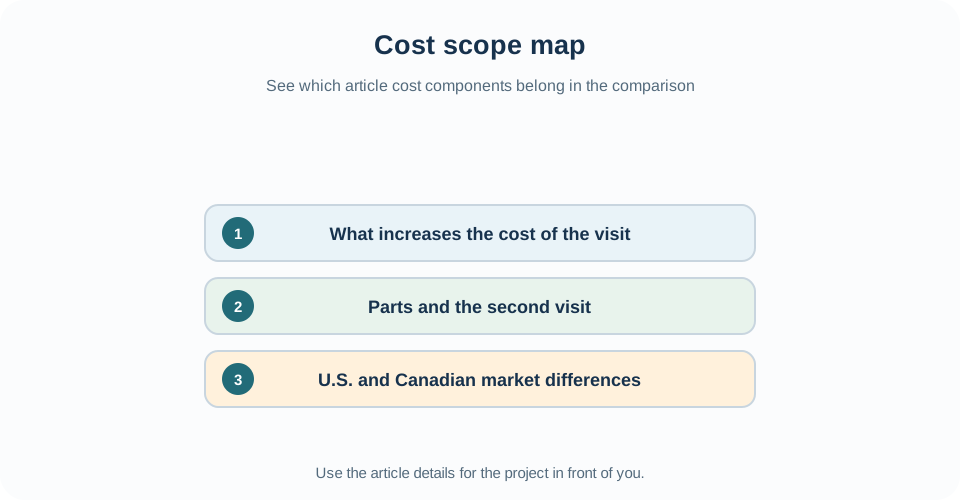
What increases the cost of the visit
The ordinary service area is one of the largest variables. Rural, seasonal, or remote homes can face longer travel, fewer available technicians, and a second trip for parts. After-hours, weekend, holiday, emergency, and same-day requests can carry a premium. Ask whether the provider has a different schedule of charges for those conditions.
Brand and model also matter. A technician may have the part and diagnostic knowledge for a common washer but need more time to identify a discontinued premium refrigerator or integrated appliance. Built-in units can require panels or surrounding cabinetry to be moved before a component is accessible. The work may remain appliance-specific, but the labor conditions are not the same as a freestanding swap.
The first visit costs more when the symptom is intermittent. A unit that works during the appointment may require error history, photographs, operating conditions, or a return visit to narrow the cause. Describe when the problem occurs, what changed, and what you observed without presenting a guessed part as the diagnosis.
Parts and the second visit
The first visit may produce a diagnosis but not a finished appliance. Ask whether the provider charges a second service fee, whether return labor is billed at the normal rate, and whether the original diagnostic credit remains valid. Find out whether the estimate expires and whether the price changes if the part becomes unavailable.
Special-order parts create both cost and delay. A repair can be technically reasonable yet economically poor if the part is expensive, the appliance is old, or a second failure is already likely. Conversely, replacing a low-cost sensor, latch, seal, or switch may make sense when the rest of the appliance is sound. The service call should provide information for that decision, not pressure you to approve a replacement part before you understand the total.
Does diagnosis make sense on an older appliance?
It can. A diagnostic visit may be worthwhile when the appliance is built in, replacement would require cabinetry or utility changes, the failure affects food storage, or the symptom could be a simple repair. It is less attractive when the appliance is inexpensive to replace, the visit is nearly the cost of a new unit, parts are no longer available, or the replacement project is already planned.
Use the visit to request a repair-versus-replace comparison. Ask what failed, what else was inspected, the likely remaining risks, the part and labor warranty, and the installed replacement assumptions. There is no universal age or percentage rule that answers every appliance decision.
U.S. and Canadian market differences
The published ranges above are U.S.-weighted. Canadian service-call structures, travel distances, provincial markets, taxes, and appliance availability may produce different totals. A provider serving a dense urban area may price a visit differently from one serving a remote community. Do not convert a U.S. dollar range into Canadian dollars.
When comparing Canadian quotes, ask for the amount in Canadian dollars and confirm whether the quoted service area, taxes, parts, and return visit are included. In either country, the most useful comparison is between itemized scopes from providers who can service the model, not between an online average and a local quote stripped of its inclusions.
Local provider examples show why the scope matters. An Ontario repair specialist lists a diagnostic fee of CAD 120 to CAD 180 and says it is typically credited when the repair proceeds. An Edmonton appliance retailer lists a $98 service call that includes the first 10 minutes, with parts and additional labor charged separately at $80 per hour. These are individual local listings, not a Canadian market range; the Edmonton page does not state an ISO currency code. Confirm the current amount, currency, tax, service area, credit, and included work with the provider before comparing quotes.
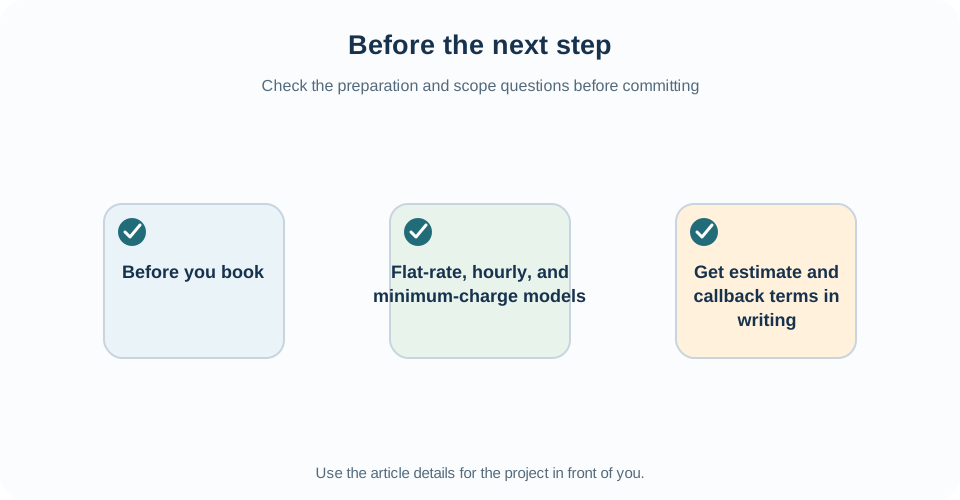
Before you book
Have the brand, model number, age, symptom, error display, and a description of recent changes ready. Ask whether the provider works on the appliance type, what the minimum fee covers, whether diagnosis is credited, and how a return visit is priced. Remove stored items only when safe and practical; do not dismantle gas, electrical, sealed refrigeration, or other hazardous systems to make the visit easier.
The service call has value when it reduces uncertainty enough to make a sound repair decision. Budget it as an information-and-labor step, then compare the resulting repair scope with replacement, installation, disruption, and disposal costs.
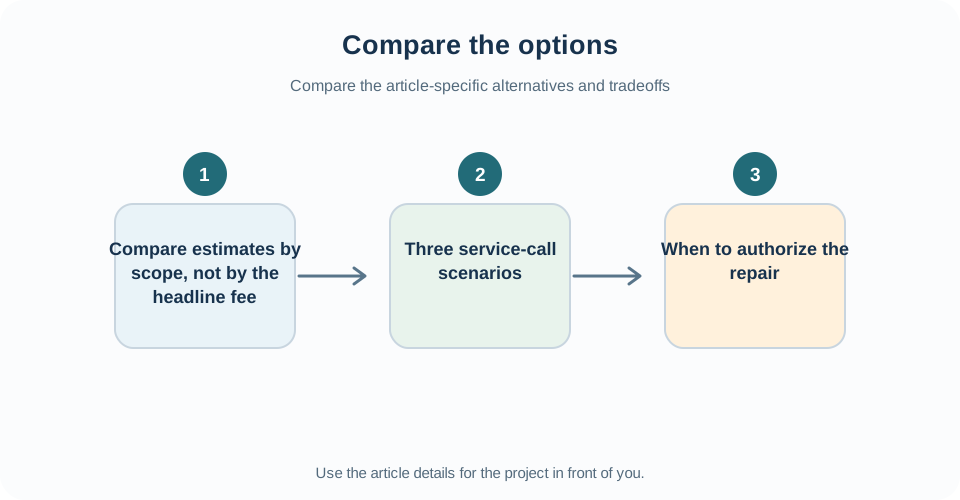
Compare estimates by scope, not by the headline fee
Two service companies can quote very different-looking numbers while offering nearly the same total. One may list a diagnostic fee and a separate hourly rate. Another may quote a flat repair price that includes diagnosis but excludes a special-order part. A third may include a return visit only if the repair is approved immediately. Put the offers into the same columns before deciding:
- travel or service-call fee;
- diagnostic labor and any minimum charge;
- parts, shipping, and taxes;
- installation or repair labor;
- access, panel removal, or built-in handling;
- return-visit and testing charges;
- warranty on the part and on the labor; and
- the point at which the estimate must be reapproved.
An estimate that does not state an exclusion is not necessarily inclusive. Ask the provider to identify what happens if the technician finds a different failure, cannot obtain the part, or discovers a building-side problem. This is especially important for refrigerators with water connections, dryers with a questionable exhaust path, and dishwashers whose symptoms may involve the drain or supply connection.
Three service-call scenarios
The least expensive scenario is a first-visit repair using a stocked, model-compatible part. The visit and repair labor may be combined, but confirm the warranty and testing included.
A middle scenario is diagnosis on the first visit followed by a part order and a second appointment. The cost includes two scheduling events, possible return travel, part shipping, and the risk that the estimate changes after the appliance is opened. Ask whether the original diagnostic fee is credited and whether the return labor is guaranteed.
A more difficult scenario is an incomplete diagnosis, obsolete part, built-in appliance, or problem that crosses into plumbing, electrical, gas, ventilation, or cabinetry work. The first payment may buy useful information without producing a repair. That is not automatically a bad outcome, but the provider should explain the next decision and the separate trade scope rather than presenting a guessed component as a finished answer.
Get estimate and callback terms in writing
Before work starts, ask what the diagnostic fee covers, whether it is credited, what repair is proposed, which parts and labor are included, and when the provider will ask permission to change the scope. Keep the written estimate, your approval, and the final itemized invoice. The invoice should identify the service call or diagnosis, labor, parts, tax, and any return visit. Ask who pays if the same fault returns and what parts-and-labor callback coverage applies.
Some jurisdictions set specific rules. Michigan’s appliance-repair law generally requires an estimate and customer approval before covered work; a dealer cannot exceed 110% of the estimate without verbal or written permission. California’s guide covers registered electronic and appliance-repair dealers and says they must give a written total estimate before repairs; customers may request removed parts, with listed exceptions. Connecticut’s consumer-goods chapter provides a parts-and-labor estimate on request, requires consent before charging more, and sets invoice requirements for work charged at $25 or more. These examples have different legal scopes and do not describe every U.S. or Canadian service call. Check current local rules and whether they cover your provider and job.
When to authorize the repair
Authorize work only after you know what was tested, what remains uncertain, what the full repair could cost, and what happens if the first explanation is wrong. If the appliance is old, ask for a replacement comparison using an installed model rather than a product-only price. If it is built in or difficult to replace, ask how much access and fit work the repair avoids. If the appliance is unsafe to operate, the decision is first about making the situation safe and only then about minimizing cost.
The most useful service-call record contains the model number, observed symptom, diagnosis, estimate, repair warranty, and any unresolved connection or access condition. Keep it with the appliance information so a second provider can evaluate the same facts instead of repeating an avoidable first visit.