
A used appliance is economical only when its lower purchase price survives inspection, transport, installation, energy, and repair costs. A refrigerator, washer, dryer, range, freezer, or dishwasher can look like a bargain while lacking a model label, installation hardware, warranty, or a safe route into the home. Age is useful context, but it cannot predict remaining life by itself.
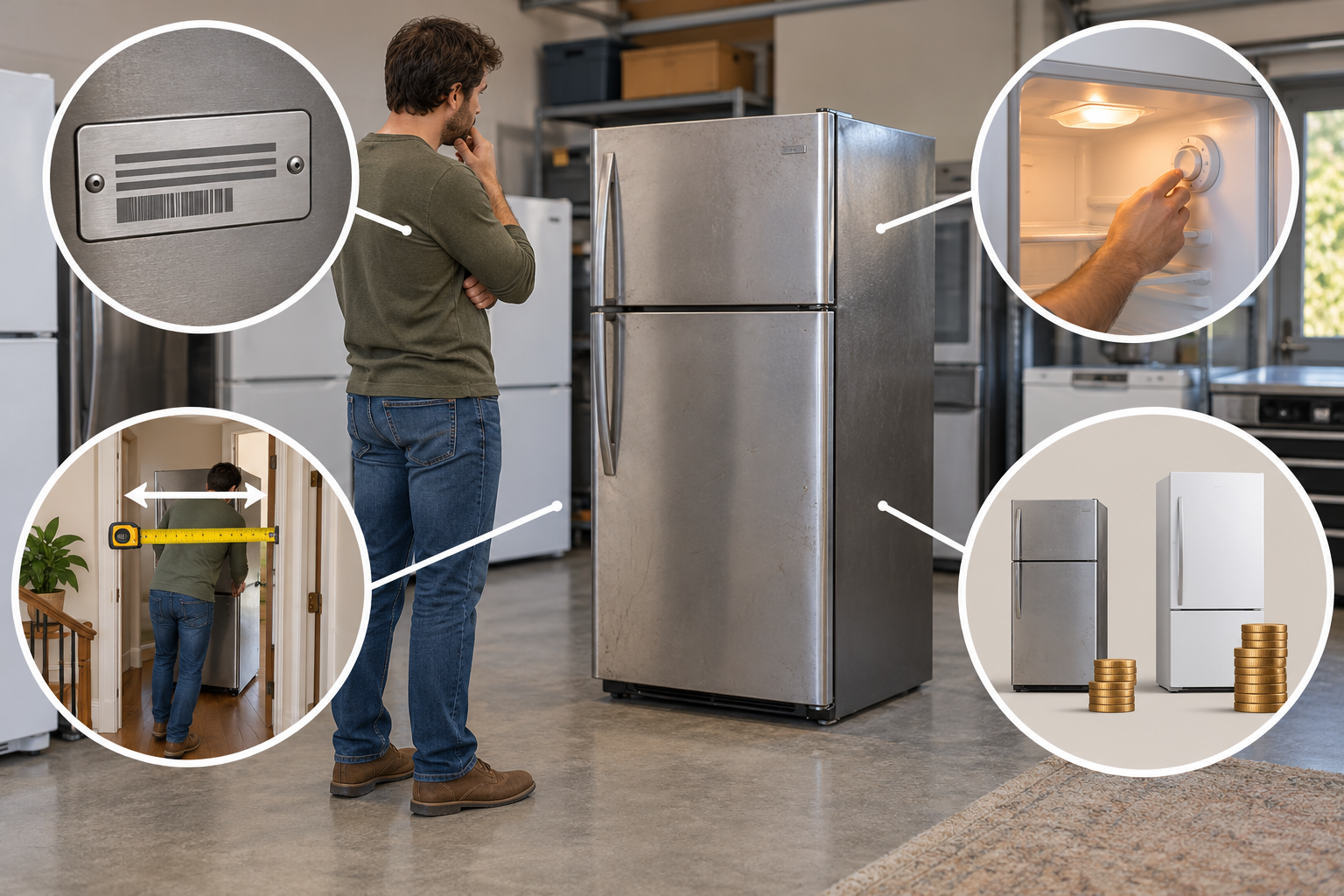
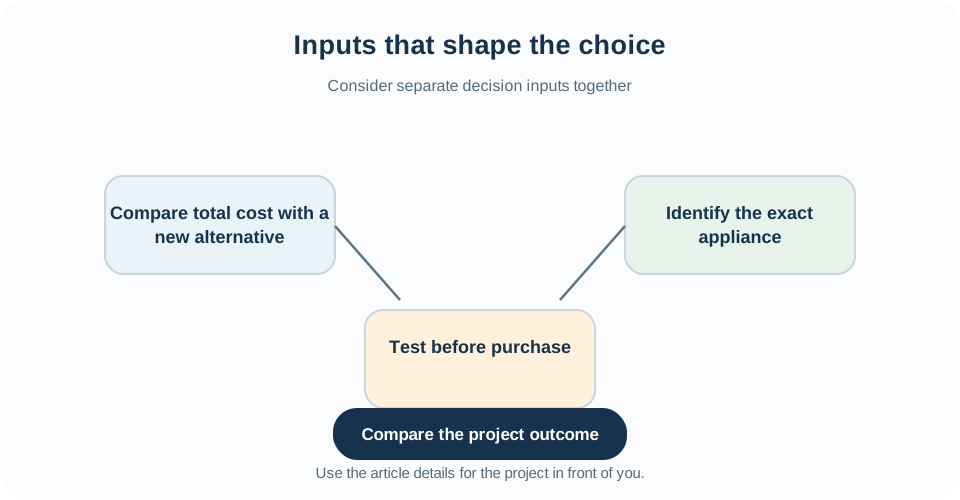
Compare total cost with a new alternative
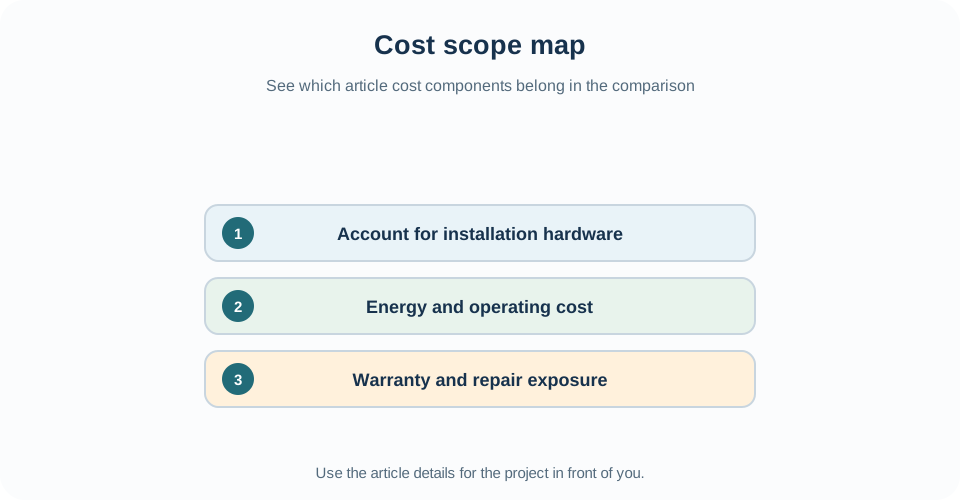
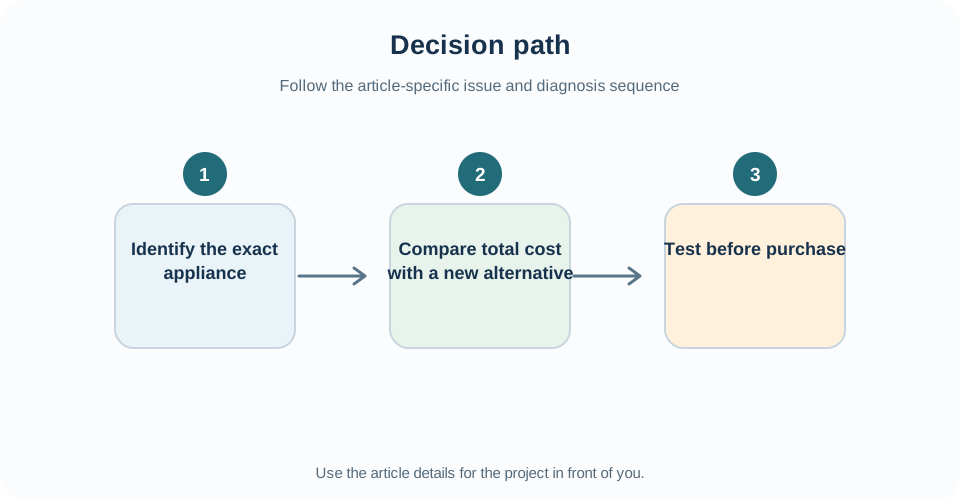
Start with the used asking price, then add pickup or delivery, stairs, moving equipment, installation materials, connection changes, taxes, testing, cleaning, and likely repairs. For a built-in appliance, add the cost of confirming the opening and replacing panels or trim if the unit fails. Compare the result with an installed new appliance rather than with the new product’s bare price.
A used unit may be attractive when the model is common, the price reflects its condition, replacement would require a long lead time, or the appliance is being used for a temporary or secondary purpose. It is more questionable when the discount is small, the unit is difficult to transport, a failure could damage the home, or the model is already near the end of parts support.
Identify the exact appliance
Find the manufacturer, model, serial number, capacity, energy source, and product configuration. Photograph the rating plate before paying. Search the exact model in the manufacturer’s documentation and current or archived parts catalog. “Similar” models can have different dimensions, controls, connections, energy use, and service parts.
The model number also supports recall research. In the United States, check the Consumer Product Safety Commission’s current recalls and safety warnings, then confirm the exact product and remedy. Canadian buyers should use the applicable Canadian recall and consumer-safety resources. A marketplace statement that the appliance is safe is not a substitute for a recall check.
For a Canadian appliance, an EnerGuide label can help identify and compare energy information, but the EnerGuide mark is not a safety certification. It does not establish that a used unit is safe, in good condition, or free of an unresolved recall. Check the exact model against recall information and separately verify any required safety certification.
Test before purchase
If the seller allows it, observe the appliance under normal operation. Check that the refrigerator cools, the freezer maintains its function, the washer fills, drains, spins, and does not show a leak, the dryer produces the expected result, and the range or oven operates without unexplained behavior. For a dishwasher, inspect for leaks, standing water, damaged racks, and unusual noise.
These observations are screening evidence, not a professional condition report. A unit can work during a short demonstration and still have an intermittent control, worn bearing, weak compressor, blocked drain, damaged seal, or hidden corrosion. Do not run a gas, electrical, or refrigerant appliance in an unsafe or unventilated setup just to test it.
Ask for the service history, repair invoices, original manual, proof of ownership, and reason for sale. Listen for “it only needs a small part” unless the part and diagnosis are documented. A transparent seller reduces uncertainty; an unusually urgent sale increases it.
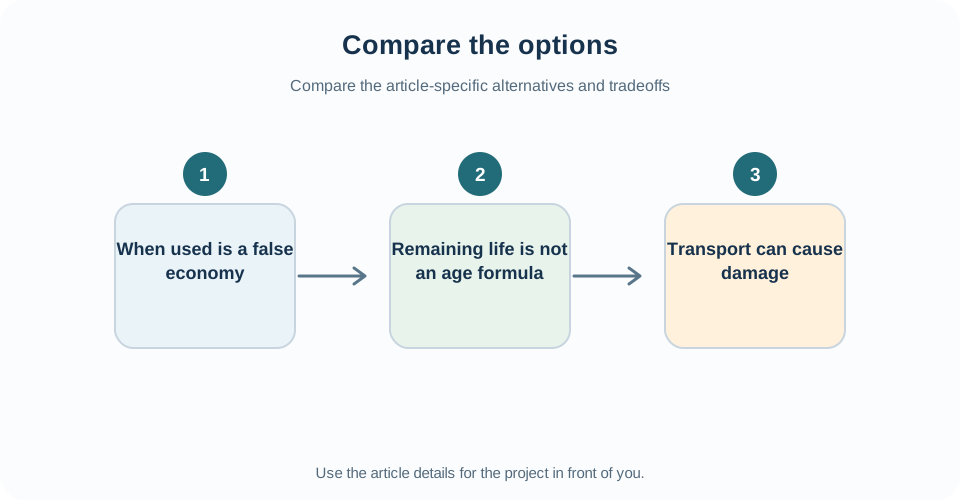
Remaining life is not an age formula
Appliance service-life estimates differ by product, model, use, maintenance, environment, and source methodology. A ten-year-old refrigerator is not guaranteed to fail soon, and a three-year-old washer is not guaranteed to be trouble-free. Consider the condition of major assemblies and how much a failure would cost in your household.
Look for rust, cabinet distortion, water marks, oil residue, cracked glass, brittle seals, damaged cords, missing feet, noisy bearings, and obsolete controls. Check whether replacement parts are available from a reputable source. A low purchase price cannot compensate for a sealed-system failure, a damaged tub, an unavailable control, or a replacement opening that no longer matches common models.
Account for installation hardware
Used appliances often arrive without hoses, cords, brackets, drain parts, shelves, racks, trim, anti-tip hardware, stacking kits, or a mounting template. The missing item may be inexpensive, but it can also delay installation or make the unit incompatible with the home.
For a range, verify that the anti-tip provision and required hardware are present for the model. For a washer and dryer, confirm stacking compatibility through the manufacturer rather than assuming that similar dimensions are enough. For a refrigerator, check water connection, door swing, and filter requirements. For an over-the-range microwave or wall oven, missing mounting or trim pieces can make the used unit a poor fit.
Transport can cause damage
Measure the route, protect floors, and use equipment appropriate for the appliance’s weight and orientation. Some manufacturers specify transport positions or stabilization steps; the exact manual controls. A refrigerator moved carelessly can be damaged even if it looks fine after delivery. A glass cooktop or oven door can break under an impact. A washer can require shipping hardware or careful handling.
Ask who is responsible if the appliance is damaged in transit. A private seller may not provide a warranty or refund. Delivery insurance may exclude self-loaded equipment or appliances that were not professionally secured. Include the cost of a failed delivery in the risk comparison when access is difficult.
Energy and operating cost
Older appliances may use more electricity, water, or gas than current comparable models, but the difference depends on the exact product. Use an EnergyGuide or EnerGuide label when available and compare similar capacity. Do not assume an older machine’s annual bill from its age alone. If the label is missing, the manufacturer cannot identify the model, or use has changed, keep the estimate broad.
For a frequently used washer, dryer, refrigerator, freezer, or dehumidifier, operating cost can erase a purchase-price discount. Calculate an annual range using your local rates and expected use. A lightly used basement freezer has a different economic profile from a full household laundry pair running several loads each week.
Warranty and repair exposure
Many used purchases are sold as-is. A remaining manufacturer warranty may not transfer or may exclude labor, installation, transportation, or a prior owner’s modification. A paid service contract can have its own transfer, age, provider, exclusion, and claim limits. Read the exact terms.
Estimate a repair reserve based on the appliance’s condition and the cost of a service call. U.S. specialist sources place common appliance repair ranges broadly around $100 to $400, but high-cost sealed systems, premium electronics, built-ins, and difficult access can be much higher. Canadian repair availability and pricing can differ. Do not treat one online range as a guarantee.
Ask for the original purchase or delivery record, seller type, model and serial number, warranty document, and repair history. In Québec, the Office de la protection du consommateur describes a new good-working-order warranty for listed appliances purchased or leased from a merchant on or after October 5, 2026; it transfers on resale when the product qualifies. The stated period is five years from delivery for washers, dryers, and dishwashers, and six years for ranges, refrigerators, freezers, air conditioners, and heat pumps. The exact purchase date, product, seller, exclusions, and current law matter, so a private resale or seller’s verbal assurance is not enough to establish coverage. Québec also requires specified written disclosures when parts, service, or repair information are unavailable in covered merchant transactions; this does not prove a particular part is in stock.
Check the current recall database using the actual identifiers before payment. Recent CPSC notices illustrate why the nameplate matters: one Frigidaire gas-range notice uses both an exact model and serial range, while a Galanz retro-refrigerator notice uses named models and date codes from December 2018 through December 2020. Only the listed product/identifier combinations qualify for those notices and their no-cost remedies; neither is evidence about all products from either brand. Follow the live recall notice for any matching unit.
When used is a false economy
Pass on the appliance when the model cannot be identified, the seller will not permit reasonable inspection, safety hardware is missing, the route is unsafe, the price is close to a new installed alternative, repair parts are unavailable, a recall remedy is incomplete, or the unit has signs of water, fire, refrigerant, or electrical damage.
Also pass when a used built-in appliance would force you to modify cabinetry before knowing whether the unit works. The apparent saving can disappear after transport, trim, installation, and a first repair. A new, appropriately sized appliance may offer a clearer warranty and a more predictable support path.
A disciplined buying checklist
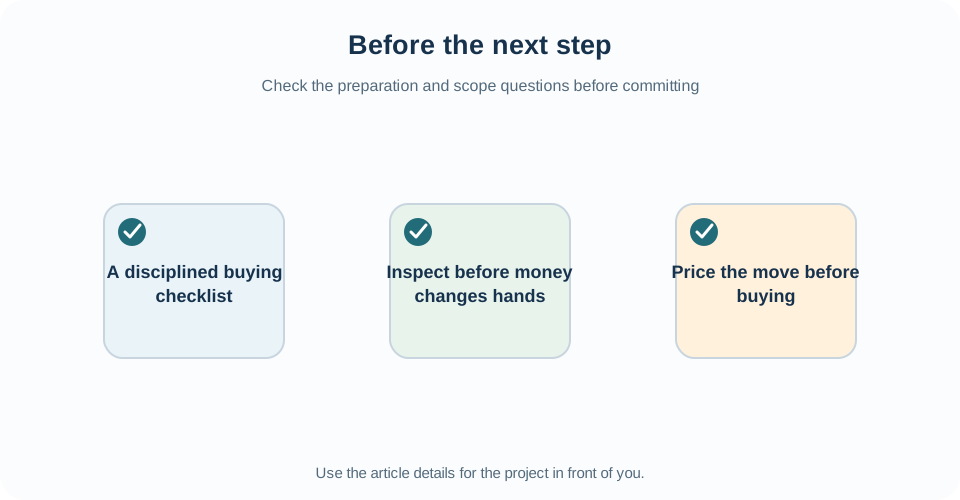
Before paying, record the exact model and serial number; check recalls and parts; inspect the condition; test normal functions; ask for history and manuals; confirm dimensions and connections; price delivery and installation; estimate energy and repair risk; and compare the total with new equipment. Put any material limitation in writing.
The best used-appliance purchase is not the oldest unit at the lowest price. It is the unit whose identity, condition, fit, operating cost, transport, and repair risk are clear enough that the discount compensates you for the remaining uncertainty.
Inspect before money changes hands
Use a written checklist that matches the appliance. Confirm the model and serial label, physical condition, doors or lids, controls, seals, unusual noise, visible leaks, rust, burn marks, and any error display. Run a normal operating cycle when the seller permits it. A short demonstration cannot prove remaining life, but it can expose a machine that does not start, fill, drain, heat, cool, tumble, or hold a door closed.
For a refrigerator or freezer, allow enough time to observe whether it reaches and holds normal operation; do not treat a cold interior at the moment of sale as a complete test. For a washer or dishwasher, look at the supply and drain areas for evidence of leakage. For a dryer or range, do not defeat guards or disconnect gas or electrical parts to test them. A qualified technician may be worth paying for when the used appliance is expensive, built in, or difficult to replace.
Check the exact model against current or archived manufacturer documentation and applicable recall resources. A recall search is a verification step, not a guarantee that the appliance is safe. Ask what remedy, warranty, or proof of repair is available and put any agreement in writing. Do not assume a seller’s statement that the unit “worked last week” answers the parts, safety, or installation questions.
Price the move before buying
Get the route cost before accepting the used price. Measure the appliance and the packed route through doors, turns, stairs, elevators, railings, and the final opening. Add moving labor, equipment, floor protection, door removal, storage, and the cost of returning or disposing of a unit that does not fit. Built-in equipment may also need panels, trim, or cabinet work.
The installation hardware can be as important as the appliance. Confirm that the unit includes the model-specific hose, cord, bracket, drain or stacking kit, shelves, panels, racks, or other parts needed for a safe setup. Missing hardware may be inexpensive for one product and difficult to source for another. A used appliance is a reasonable candidate only when the complete path—from test to transport to installation—still beats a supported new alternative after uncertainty is priced.